Strategies to Overcome Stress Before Dressage Tests
Rebecca Ashton, a movement specialist, mindfulness instructor, and dressage coach, suggests a series of exercises to help you focus before your test. You love competition.
You enjoy goal-setting, relish overcoming challenges, adore spending time with your amazing horse, and want to show him to the world.
But oh, the stress of competition day!
You forget to breathe, can't think straight, and feel like you've let both yourself and your horse down.
Sometimes you even feel fine on a conscious level, but your body and brain have other plans on an unconscious level.
Not all riders can emulate Jessica von Bredow-Werndl, but you get the idea.
Top riders will tell you that they always feel stress, but they know how to harness it and use it to their advantage.
So how?
Here are a few techniques that might help make competition day run more smoothly.
These methods help you get into the so-called right mindset; to be focused and calm without constantly telling yourself to be focused and calm, as this often just makes things worse.
These are a combination of mental and physical approaches that have proven effective.
They are like a curated selection for you to work with and see what works for you.
Let’s try these methods alongside a rider and see what is useful. Heidi Ford, a para rider, along with her gelding Rikaardt H, competes in the FEI Grand Prix level 5.
To test these methods and hear her personal insights and techniques for coping with competition day anxiety, I sought help from Heidi Ford, a successful para dressage rider and, of course, an incredible human being.
Heidi, a mother of two, bought Rikaardt H when this horse was just turning three.
She trained and saddled him herself and guided him all the way to the FEI Grand Prix level 5.
But in 2018, Heidi became seriously ill.
She was diagnosed with a rare type of cancer that resulted in the removal of her abdominal wall muscles — she no longer has core muscles — and a year later, she was diagnosed with breast cancer, underwent a double mastectomy, and completed 17 rounds of chemotherapy.
This process also led to significant neuropathy.
She said, “Amid all the pain, sorrow, and illness, Rikaardt was always the bright spot in my life.
He did everything he could for me and helped me through a tough time in my life.
I have never seen a breed that is so focused on its human when it chooses you; it’s truly special.”
After her illness, Heidi had to relearn how to walk and ride again, as she was determined to get back in the saddle with Rikaardt.
“We had to relearn how to communicate with each other.
It was a long road and really tough, but Rikaardt made dressage riding a great pleasure for me again.”
And so, they began competing together.
“Rikaardt was initially hesitant and scared, but now he has complete trust in me and gives his best performance every time; he cares for me in a way that no other horse does.”
"If I didn't have the relationship I have with Rick, I would never have been able to improve this well; with the resilience and strength that only comes from absolute trust, friendship, and support from a being that chooses to choose you.
Visualization: This is one of the old and popular methods.
It means practicing something in your mind before you actually do it in reality.
If this method has been good enough for Olympic gold medalists like Lindsey Vonn and Isabel Werth, it is probably effective for you as well.
The key point is to be specific and very detail-oriented.
Find a quiet place, relax, and visualize yourself in the same environment where you will be on the competition day; then mentally go through the test or course with the same rhythm you will execute in the real world.
Imagine it in as much detail as you can and engage all your senses; what do you see from your point of view?
What do you smell?
How does your body feel?
What sounds are around you?
The sound of hooves, announcements.
Make everything as real as possible.
The brain does not distinguish between reality and what you visualize in your mind.
Perform this mental review as positively and accurately as possible.
This enhances focus and confidence.
It's like having done a practice round before the main performance.
As that famous saying goes: 'Whether you think you can or think you can't, you're right in both cases.'
Heidi: The important point about visualization is that you really need to know your horse.
Which horse are you riding that day?
Understand the feel of that horse; imagine the horse is completely in sync with you and is soft and obedient in your hands.
When you know the environment, you know how your horse is going to be.
For example, if it’s going to be a warm day, you should visualize a warm-up in the heat, and on a windy day, you may need to deal with more tension.
Different horses have different feels, and a horse feels different in different environments.
At the SIEC for States, I had to sacrifice part of my warm-up because it was too hot.
There, mental visualization was very helpful because I entered the test with the same feeling as that warm-up.
However, from experience, I have come to understand that mental visualization can sometimes have the opposite effect if it makes you too relaxed.
And this is also part of knowing yourself.
As your relationship with your horse progresses, your mental visualization may also need to change.
If your horse was previously anxious and you had to visualize a calm and relaxed performance, when the horse trusts you and becomes calmer, you may need to imagine a more energetic and lively experience.
Music: Some people need motivational songs, while others prefer calming music.
I've even heard that 'Baby Shark' helps some to focus.
Some just need a catchy song in their mind to push away any negative 'noise' from their mental background.
Music can also draw your attention to the rhythm of the horse and your own breathing pattern; something that can bring you to a calm and focused state.
Some like to listen to a song over and over again, while others prefer a playlist."
Try it out and see what kind of music works best for you and puts you in the best possible mental state.
Heidi: As a para rider, I can have a call.
My mind may get too engaged, and I might not be able to remember my test.
When you compete, there are so many things you need to pay attention to; you have to remember to eat, drink enough water, and manage all the details related not just to yourself but also to your horse.
If the mind feels pressure and chaos, it prioritizes what to remember, and the test may unconsciously become the least important thing to focus on.
However, I remember my freestyle program because it is performed to music and thus is registered in a completely different part of the brain.
This is really interesting to me.
Earbuds can be helpful because they show others that you are in a focus space and your attention is on the task at hand, not that you are ready for a chat.
I love conversation and helping others, but there are times when you need to focus on the upcoming test.
Breathing techniques: This can be a great way to focus the mind while simultaneously sending the message to the body that everything is okay.
One of the most popular methods is box breathing.
In this method, you inhale for four counts, hold your breath for four counts, exhale for four counts, and then pause for another four counts.
Of course, these counts can vary a bit...
You can increase this number or extend the exhale count.
This is something you can experiment with to find your own suitable "box."
Heidi: In my opinion, when you hum, it definitely helps with breathing and activates the parasympathetic system.
It calms everything down.
Rick is very sensitive to sound.
If I hum, he calms down and relaxes.
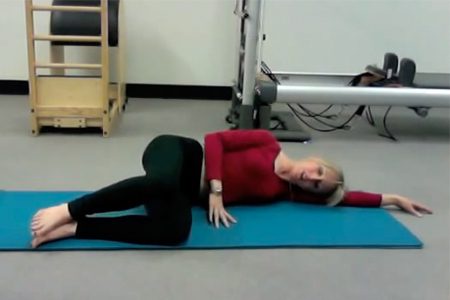
Somatic Bag: This is a device created by chiropractor Dr. Nicholas Dow.
It is a very good way to calm the brainstem, reset the nervous system, activate the body, and remap it for the brain.
Many times, the more you tell yourself to calm down, the more anxious you may become.
This device removes the right and wrong words and thoughts from the equation and allows the body to unconsciously do what it needs to do.
How does it work?
The soft and buoyant feeling created by the air-filled balls inside this bag provides a safe and fully supportive environment; an environment that the body can unconsciously recognize as a place to release patterns of mental and physical stiffness and contraction forms, allowing it to safely shape, collapse, and reshape.
This process helps the body achieve proper organization without defensive strategies based on stiffness; something that leads to fluid movement and calm mental focus.
This, in turn, leads to natural, unconscious, pressure-free breathing patterns and a feeling similar to Zen; the very state you need to deliver your best performance.
You can also combine just lying on this bag with pre-competition mental visualization practice.
Heidi: The Somatic Bag is very calming.
It felt amazing!
This is very good in the competition because I have neither a groom nor a coach; therefore, when you do everything yourself, a lot of residual tension can accumulate both physically and mentally.
You might not even notice it yourself.
Having strategies to cope with this situation is really very helpful.
I use infrared on my back to relax all my muscles.
All of this is important for good sleep, and sleep is a key factor.
I also pay attention to Rikkart's sleep.
He doesn't sleep well at competitions, which is why he actually gets hotter during the competition.
I need to be aware of this and find ways to help him as well.
Focus on the body: You can prepare your mind and body calmly for the upcoming work with small, active movements outside the saddle.
This can be as simple as performing the "shoulder bridge" to open up the hip joint and the front part of the body, countering the "fight, flight, or freeze" state that the body may adopt under the pressure of competition.
Or you might like "Hundred"; an exercise in Pilates that relies on engaging the abdominal muscles, breathing, and balance, and is part of the classic Pilates warm-up routine.
This focus on yourself and how your body feels can help you set aside external distractions and things you have no control over.
Many times the body needs neural activation, not relaxation.
Adeline Cornelissen used to do "Power Pose"; she would stand tall and raise her arms straight up to the sky to bring the best energy into her body.
Heidi: In the year I was going through rehabilitation, no matter how much I thought I was ready, I couldn't rebuild the specific fitness of a rider in the saddle.
It took months for my riding fitness to return.
My body gets very sticky, so when I get on a horse, I like to do movements like reaching my hand towards the opposite stirrup and rotational movements.
I can't do much stretching before sitting in the saddle.
I can't release the fascia too much because that's what gives me stability.
If I get a massage or do something like that, my muscles and fascia shut down.
They need to work to compensate for the deficiencies of other parts.
Standing tall with a smile and positive self-talk: Saying phrases to yourself like "I have all the solutions," "I am in control of what is manageable," "My horse is undoubtedly the best," and "We will get through this" can help organize your mind and change your body posture.
Do a little trial and error; you might find that when you encourage yourself with positive words, your body relaxes and feels like it occupies more space, becoming broader and more open.
While constructive criticism is important, it’s probably not the best time just before the competition.
You might also find a "mantra" that works for you.
If you are a dressage rider, it might simply be repeating the word "rhythm" to yourself over and over again.
And ask yourself: Is this feeling really stress?
Or what you are feeling is actually excitement?
This shift in perspective can really transform your feelings about a situation entirely.
Heidi: In my opinion, positive self-talk is the foundation of everything.
When I first started competing, I was severely plagued by feelings of inadequacy.
But now I am excited and eagerly waiting for it.
You may need to pretend you have reached that point until you truly get there, but I really feel this way now.
You just have to keep telling yourself until your body and brain gradually believe it.
But the reality is that when you enter the midpoint, everyone is equal.
You have put in the necessary time and effort, and at that moment, the only thing you have is your relationship with your horse.
When talent doesn't work hard, it is hard work that surpasses talent.
This is a skill I have consciously developed over the years.
Life works in your favor, not against you.
You cannot change what happens to you, but you can change your reaction to it.
A situation arose that took a championship away from me, but at the same time, it was a very valuable learning experience.
The person announcing the movements arrived late and started announcing incorrectly, and I had to stop.
But that moment was enlightening for me because Rick and I did not fall apart.
I just thought positively to myself: "That's in the past, let's move on."
Until something is put to the test, you don't realize you have it within you.
The positive takeaway I got from it is that now I know this will never knock me down again.
Whatever happens in the arena, I can get through it.
That movement is over, and I need to focus on the next movement.
You shouldn't let one mistake or one disaster mean the end of everything.
This means having a positive mindset.
Braiding the mane from above: Stick to your routines with your horse.
This includes both the lead-up to the competition and the competition day itself.
On competition day, your routine might be braiding your horse's mane; something that can help with your calmness and focus, or perhaps giving your horse a little massage or taking it out for grazing.
You can create a small bubble around yourself and your horse, take it with you to the busy warm-up arena, and focus only on that instead of everyone around you.
This familiarity of knowing what you will do and when can reduce the stress of competition day and give you mental freedom.
The more familiar this experience is for you, the more comfortable and calm you will be with it.
The goal is to ride in the competition as you do at home; therefore, this routine should be practiced and solidified well before the big day at home.
Heidi: I think having a routine is great, but at the same time, I believe you should be able to step out of your routine sometimes.
If something happens and your routine gets disrupted, you may lose your focus.
Routine can reduce stress, but the more things go off plan, the higher your tolerance threshold rises, and you handle the situation better.
These days, nothing shakes me anymore.
Start each time with one technique and see which ones work better for you and your horse.
Remember that skill builds confidence.
Practice at home and trust yourself and your horse.
Eileen Gu, the Winter Olympic gold medalist, has said: "I train like I've never been a champion and I compete like I've never lost."
You can also reach this point by relying on a few tried-and-true methods.
And remember why you started this journey; never lose the joy of it and don't impose your experiences on yourself too harshly along the way.
Heidi has tattooed the phrase "Keep Dreaming" on her arm.
She lives by this belief.
She said, "You just shouldn't say it out loud; you have to visualize it.
Be grateful for everything.
That same spirit of gratitude.
I want to show my kids that an ordinary person can handle it too.
Stubbornness, perseverance, and willpower can take you very far."
Source: The Horse Magazine