Training of senior hunter horses
This is an unpleasant reality for all of us: aging is not easy for people with low stamina.
The harsh realities of aging and the necessity of adhering to a regular program to maintain physical fitness are just as true for the horses we love as they are for us.
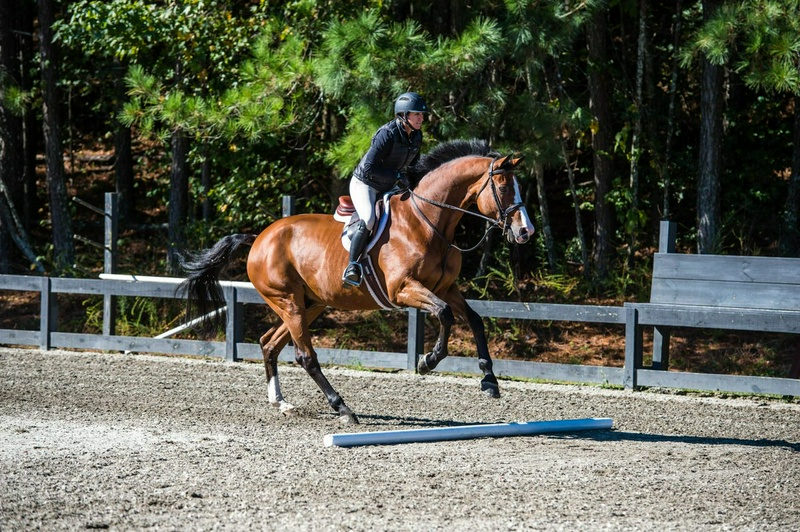
I am riding a horse named Testy; a 17-year-old experienced show horse owned by Rebecca Warren.
Most good show horses enjoy what they do.
But when they reach 10 or 12 years of age, the natural wear and tear on their bodies gradually becomes apparent.
As hunter show horses mature, we gradually move them down to lower levels; from classes with 4-foot jumps to 3 feet and 6 inches, and finally down to 2 feet and 6 inches.
For horses in their mid to late teenage years, having a second career path is a good thing and provides us with reliable and experienced horses that are ideal for a novice rider or an older adult.
If we properly care for experienced horses and have an age-appropriate training regimen, they can continue to work happily for many years.
The key to this is physical fitness; that is, horses should be kept active at least 4 to 5 times a week.
As they age, horses typically lose some of their muscle fitness, and jumping becomes harder on their joints.
Staying in the stable box is the worst situation for them.
They need to be kept fit, strong, and working to keep their entire body active.
Training doesn’t have to be intense, but it should be active.
The simple exercises below, if done regularly, will help you keep your adult horse supple, strong, balanced, and interested in its work.
And who wouldn’t want that for their equine partner?
Exercise 1: Active warm-up at the walk Why it’s effective: Older horses may come out of the stable with stiff and tight muscles.
Like older athletes, they need more time to loosen up.
You shouldn’t immediately put pressure on a stiff and tight horse.
This exercise provides a series of gradual steps to warm up an adult horse.
Goal: A gentle but purposeful warm-up that creates a calm, attentive, and flexible horse.
1.
Testy has been an athletic horse throughout his sporting career, but sometimes he comes out of the stable a bit stiff and tight; that’s why I carefully warm him up gently.
I start by walking around the arena with a loose rein for at least 2 to 3 minutes, avoiding small circles.
While focusing on maintaining balance and sitting lightly in the saddle, I allow him to stretch his neck.
After a few minutes of walking, using my lower leg and in rhythm with the walk, I ask him to engage his hindquarters more and increase his stride length.
When he responds, I can feel more energy and purposefulness in his steps.
2. Drago
While still moving at the walk, I gently gather the reins and enter the center line of the arena.
I ask Testy to move laterally to the right with the pressure of my left leg; that is, his entire body should move both forward and at an angle away from the pressure of my left leg.
As his left hind leg engages, I apply pressure with my left leg; the moment his right shoulder comes forward.
At the same time, I apply a very gentle pressure with the left rein to bring his nose slightly to the left and draw his attention to the left.
When you move laterally to the right, you should only see his left eye.
More than this means you have bent the front of the horse too much.
My external aids, meaning my right leg and right hand, are in a neutral position.
| Amy Key.
Drago 3.
When we return to a straight line, Testi still slightly deviates to the right, and I quietly correct him; I first send him forward in a walk and then correct this deviation with my right leg.
I move a few steps with an active and engaged walk, moving straight forward.
After that, I ask Testi to move laterally with the pressure of my right leg: I engage my right leg and apply gentle pressure with the right rein to move forward and at an angle to the left, bending his body.
Then I again take a few steps in a straight line, moving forward in a walk.
I repeat this exercise 3 to 5 times on each side to increase Testi's attention to my aids.
| Amy Key.
Drago 4.
Testi reacts a bit slowly to my leg, so I need to remind him that leg pressure is a serious command for him and that he should respond quickly when I apply it.
I ask him to go forward with the pressure of my leg, and if he does not respond, I use a short sound and a light tap of the whip behind my leg.
If he still does not respond, I repeat this with another short sound and a firmer tap.
| Amy Key.
Drago 5.
During my warm-up with Testi, our partnership is starting to form.
We are gradually establishing communication.
The better he responds, the lighter my aids become.
Testi has softened his back and shoulders.
He has an active walk, softened his jaw in my hands, and is on the bit.
His ears are forward.
Of course, my heel could be a bit lower, but I am satisfied with his walk.
| Amy Key.
Drago Exercise 2: Ground pole, vertical jump, ground pole Why this exercise is effective: Many experienced horses help riders who need repetition to learn.
But you should not waste the jumping efforts of an experienced horse.
This simple exercise helps you gain a better perspective for judging the distance to the jump and allows you to maintain or adjust the rhythm.
At the same time, this exercise is easy for the horse; the jump is short, and the horse does not have to compensate for inappropriate distances.
Repeating this exercise puts both you and your horse on the path to success.
Goal: To create a consistent rhythm throughout the exercise, so that the number of steps before and after the vertical jump is coordinated.
Setup: Set up a simple vertical jump.
Place a ground pole about three strides before the vertical jump and another pole three strides after the jump; that is, about 42 to 45 feet, depending on the size of your arena and the length of your horse's stride.
1.
I took a counter with a medium rhythm and 12-foot strides and approached the first ground pole while in a medium half-seat position; I was positioned over the front of the saddle in a three-point position, and my seat was gently touching the saddle.
With the help of my legs and a light contact on the reins, I made sure that Testi was moving perfectly straight.
Both of us are focused on the jump.
When Testi easily crosses over this pole, I maintain that medium half-seat position.
My connection from my leg to my hand is maintained, and I am still in contact with his mouth.
| Amy Key.
Drago 2.
When I jump over this small vertical obstacle, I keep my gaze up and forward and focus on a point at the end of the arena.
I still have my leg on him, but I let him pass over the obstacle calmly.
He is athletic and capable enough to take practically just one big counter step over this small obstacle.
I have kept our rhythm steady from the first pole to the obstacle itself, and I will maintain this rhythm over the last ground pole as well; a point where I make sure my head is up and continue riding into the corner.
| Amy Key.
Drago 3.
When we got comfortable working on the distances for the 12-foot stride, I moved the poles about 4 feet closer.
I lightened my seat a bit, relaxed my hands, and leaned slightly forward.
This allows the test to open up his stride.
We approach this pole with a faster rhythm.
After passing it, I send him forward to create three longer but steady strides to the vertical obstacle and then to the last pole.
| Amy Key.
Drago 4.
For practicing riding on a tighter line, I bring the poles in about 3 feet from the original distance of 42 to 45 feet.
By sitting a bit straighter and bringing my seat deeper into the saddle, I have collected the test's counter stride.
I use my leg and hand simultaneously to ask him to shorten his stride.
To maintain this shortening of stride throughout the exercise, my connection from my leg to my hand remains steady and consistent.
Exercise 3: Landing on the correct lead why it is effective: experienced horses usually have a pattern.
They may always land on the left or right lead after a jump.
However, if only half of the body is working in an older horse, there is a risk of overstraining certain muscles, which can lead to unnecessary injuries.
Goal: Encourage your horse to use both sides of his body by consistently landing on the correct lead.
Setup: On the line of a 20-meter circle, place a small vertical obstacle that can be jumped from both directions on the circle.
The height of the obstacle should only be about 2 feet.
If it is larger, your horse may revert back to his dominant lead.
1.
While I am cantering to the right on a circle and approaching a small vertical obstacle, I have kept my inside leg slightly on the test to help his body bend and prevent him from falling in on the circle.
I have direct contact with the inside rein to bend his head slightly inward.
My outside aids act like a barrier to prevent him from drifting outward, and my weight is evenly distributed over both stirrups.
| Amy Key.
Drago 2.
I found a calm and suitable distance to help the test stay balanced.
A long distance may cause the horse to stretch to reach the obstacle and lose balance; as a result, landing on the correct lead becomes harder for him.
I have turned my head to the right and slightly moved my inside hip back.
The test is capable enough to just pass over this small obstacle; I am not worried about his jumping form in this exercise.
It is clear that he is preparing to land on the right lead.
After that, we continue the canter, and I engage my inside leg while turning on the circle and approaching the obstacle again, maintaining the bend.
We perform this exercise 3 to 5 times to the right, then we change the direction of the circle and jump the obstacle on the opposite lead.
| Amy Key.
Drago lands on the incorrect lead: in another pass over the obstacle, Testy lands on the left lead (incorrect), so I immediately ask for a downward transition to canter by taking contact from his mouth and applying equal pressure on both reins.
When he takes a few steps of canter, I immediately pick up the right canter again on the circle and head towards the obstacle once more.
| Amy Key.
Drago's solution: If Testy continued to land on the wrong lead, I would lower the vertical obstacle and turn it into a pole on the ground to encourage him to canter over it and maintain the same lead.
After he had jumped over the pole a few times at canter, I would only raise it from the left base.
This action closes Testy's left side and encourages him to shift inward in the air and land on the correct lead.
| Amy Key.
Drago Exercise 4: Add variety by jumping from a bounce why it is effective: sometimes older horses may catch their feet or lose focus on where to place their legs when they get bored.
We need to keep them engaged both mentally and physically.
The sequences of this exercise force the horse to pay attention to placing its legs.
Goal: Maintain your horse's rhythm, balance, and agility without exhausting him.
Setup: Arrange five simple vertical obstacles in a line: one bounce, then a one-stride distance, then another bounce, and after that a one-stride distance.
The distance between the obstacles can vary depending on the size of your arena and the length of your horse's stride.
Keep the height low — about 2 feet — to reduce the pressure on the horse.
1.
I took a medium canter and rose to a half-seat while maintaining light contact with Testy's mouth to ensure he is balanced and straight.
In the one-stride distance before the first jump, I bring my hands forward onto his neck and release over his neck.
This allows him to focus on the exercise and test we have set for him.
My job is to remain balanced and centered throughout the exercise and let him solve the issue himself.
| Amy Key.
Drago 2.
This different angle better shows the feel of the exercise.
Testy approached the first bounce of this exercise very well.
On the second bounce obstacle, my weight is on my heels, my eyes are up, and my focus is straight ahead.
For both horse and rider, the second bounce comes up very quickly, so you need to be careful not to fall ahead of the horse's movement or lag behind it.
| Amy Key.
Drago 3.
Testy is focused and alert as he passes through the one-stride distance at canter.
He is balanced and shows interest in the task ahead.
I keep my leg on him to encourage him to jump through this combination with a steady rhythm, but other than that, I am just a passive companion.
If necessary, it is fine to take a bit of the horse's mane while passing through this exercise to keep your body position more stable.
| Amy Key.
Drago 4.
Like the first bounce, this one also comes up very quickly.
My focus is to stay with the test movement and not fall behind him.
My job is to be a balanced and stable partner for him while he navigates the components of this exercise.
He is calm and wants to finish the last two jumps of the exercise; the exit jump of the bounce and then the final one-stride.
We do this exercise three or four times so that he can find the rhythm and puzzle of it.
| Amy K.
Dragoo
Buying an experienced hunter horse, an old saying goes: "Both the horse and the rider are inexperienced, the result is only bruises and injuries."
If you are a beginner rider, you should always consider buying a seasoned horse; a horse that is wise enough to cover your mistakes.
Learning becomes easier when your horse knows its job.
Work with an experienced trainer you trust and look for a reliable and stable horse.
Look for a horse that has had consistency in its training program for years, day by day; a kind-hearted horse that enjoys work.
Also know that buying an adult horse is not considered a financial investment.
I always make it clear to the buyer that the financial value of an adult horse decreases over time.
However, having a safe and experienced partner in the field every time you ride is something that cannot be priced.
Building a treadmill power base is one of the key pieces of equipment at New Vintage Farm.
I bought one five years ago and saw that with regular use, my horses became stronger in their core muscles and hindquarters, and their top line improved significantly.
Now all the stable horses walk on the treadmill five days a week for 30 minutes each time.
This type of physical preparation creates a foundation of strength so that the horse can perform its job more easily.
The idea is for the horse to push itself forward, not to pull itself forward.
We always emphasize the connection from foot to hand, and everything should be produced from the hindquarters.
So the hindquarters are the starting point of engagement and body activity; in most horses, this area needs to be strengthened, and this becomes especially important as horses age.
We start by walking the horses on a flat treadmill and then gradually progress to walking on a gentle incline.
Over time, the core and back muscles of the horse will grow much more.
The range of shoulder movement improves, and horses step more easily under their bodies.
Building such strength can hardly be achieved just through riding.
If a treadmill is not available, the next best option is a regular program of working on an incline with gradual and gentle increases.
The ground should be suitable for the horse to take even steps.
Start with 5 to 10 minutes of work on the incline and then gradually increase the time from there.
You should also be in a semi-sitting position, stay away from the back of the horse, and maintain a light contact with the horse's mouth.
Move him at a relatively brisk walk to encourage him to work more from his hindquarters.
When you turn to walk down the incline, keep the horse on a straight line to continue engaging its hindquarters.
Sit deep in the saddle, keep your shoulders back, and look up.
Maintain that light contact with the horse's mouth.
About Julie Curtin
Julie Curtin is a well-known rider and trainer in the hunter discipline in the Southeast circuit.
She started riding at the age of 5 and worked in the late 1980s as a junior rider for Denny Roberts and Ron Danta; two successful partners, trainers, and judges from Camden, South Carolina.
After university, he worked for Claudia Roland, the coach in Atlanta, and then in 2004 he started his own business.
At New Vintage Farm in Woodstock, Georgia, Julie's program includes a combination of young horses in training and experienced show horses for amateur-owner riders and adults.
He is a regular rider and trainer in the indoor circuits and derbies and has earned several Horse of the Year titles and championship ribbons from the United States Equestrian Federation and various zones over the years.
His clients in the hunter and equitation disciplines have also consistently been successful in indoor competitions.
On any typical Sunday, you can find him with Jackie, his beloved Jack Russell, in the barn or at a horse show.
Source: Practical Horseman – Training