Quatre conseils de la leçon de saut d'obstacles avec Hannah Sue Hollberg
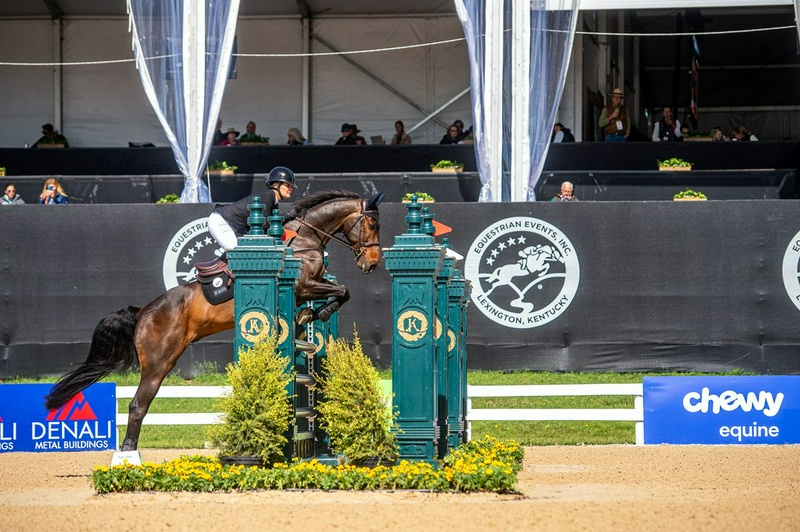
De nombreux cavaliers admettent que le saut d'obstacles est l'étape la plus faible pour eux.
Même la cavalière cinq étoiles et membre de l'équipe Prac, Hanna Sue Holberg, a rencontré des défis pour améliorer ses compétences dans cette discipline.
Alors qu'elle se remettait d'une blessure et tentait d'améliorer ses compétences en saut d'obstacles, elle a rencontré son mari actuel, Mathias "Matt" Holberg, qui est un sauteur de Grand Prix, et il l'a aidée à améliorer ses techniques.
Elle a dit : « Pour l'équitation, avoir quelqu'un qui se spécialise dans le saut d'obstacles est très utile, comme Boyd et Silva [Martin] pour le dressage.
Matt m'a vraiment aidée à réussir avec simplicité.
Les cavaliers prêtent généralement attention à de nombreux détails car ils doivent penser à trois étapes différentes.
» Hanna s'efforce d'appliquer les méthodes d'enseignement simples de Matt dans les trois étapes de l'équitation.
Pour le saut d'obstacles, elle estime qu'il est essentiel d'échauffer les chevaux pour le terrain de compétition de la même manière qu'à la maison.
Elle a dit : « J'avais vraiment besoin d'une routine, car je sentais qu'en compétition je ne savais pas ce que je faisais.
Quand j'entrais dans le terrain, je ne me sentais pas prête et j'étais toujours terrifiée.
Quand j'ai rencontré Matt, j'ai dit : 'Wow, c'est vraiment bien' car je n'avais plus besoin de penser à ce que je faisais.
C'est devenu ma seconde nature parce que je m'en tenais à la routine chaque jour.
» Hanna souligne que cette approche simple de l'entraînement est également bénéfique pour ses chevaux, car ils apprécient aussi la routine constante.
Elle a dit : « Les chevaux l'adorent parce qu'ils se sentent en confiance.
Vous ne faites rien de nouveau ou d'étrange pendant l'échauffement.
Vous suivez simplement votre routine habituelle.
» Préparer le cheval pour réussir en saut d'obstacles, Hanna dit que cette approche simple l'a aidée à mieux voir les distances et à pouvoir déterminer où elle va sur une ligne.
À la maison, elle garde la hauteur des obstacles basse et s'entraîne à se déplacer avec un nombre différent de foulées dans les lignes pour développer la capacité d'ajustement et s'exercer sur l'alignement et le contrôle de la vitesse.
Elle a dit : « Au début, je peux être trop proche du deuxième obstacle, mais à la cinquième ou sixième fois, j'apprends à égaliser chaque foulée.
Quand vous montez mieux à la maison, votre cheval performe mieux en compétition.
Il n'y a pas de truc ; c'est juste une bonne équitation.
» Hanna souligne que l'approche simple de l'entraînement est également bénéfique pour ses chevaux, car ils apprécient aussi la routine constante.
©Amy K.
Dragoo Hanna dit : « Surtout aux niveaux élevés de saut d'obstacles, il y a généralement cette mentalité que les chevaux doivent donner leur maximum à chaque saut.
Mais quand c'est si difficile, personne—ni le cheval ni le cavalier—ne peut donner le meilleur à chaque fois.
Donc, il faut leur montrer un moyen facile de franchir les obstacles.
» Elle a ajouté : « Si vous avancez constamment et montrez un moyen facile vers l'obstacle, ils sauteront bien.
Les chevaux sont les meilleurs animaux ; ils sont très indulgents.
Nous devons juste leur donner la meilleure opportunité d'accomplir leurs tâches.
» Droiture, épaules et calme : une leçon avec Hannah Sue Hollberg Dans sa nouvelle vidéo sur Practical Horseman+, Hannah, avec son cheval avancé, Diana Burnett et Mint Monster (appelé "Minty" à l'écurie), enseigne un parcours de saut d'obstacles et se concentre sur des détails petits mais cruciaux pour offrir une équitation douce et calme.
Voici un aperçu de cette leçon et quatre points clés à retenir.
1.
Lors de la préparation pour un virage à droite vers une croix de rail, Hannah conseille à Burnett de prêter attention à l'épaule gauche de Minty pour terminer le virage, le garder droit et éviter l'ajout.
Elle a dit : « Votre vitesse semble bonne, mais faites attention en regardant tôt l'épaule gauche pendant le virage.
C'est à peu près ce dont vous avez besoin.
Si vous devez ajouter, c'est parce qu'il a dépassé avec cette épaule gauche pendant le virage.
» 2.
Ensuite, Hannah a demandé au cavalier de continuer avec un petit parcours qui commence par un saut à gauche sur un vertical, puis va à droite vers un oxer.
Elle a dit : « Faites vraiment attention à être droit lors de l'atterrissage et à garder votre haut du corps.
La première fois que vous êtes passé, vous êtes tombé un peu en avant.
Concentrez-vous à garder Minty droit, surtout lorsque vous tournez à gauche après un obstacle, car il a tendance à se pencher à gauche.
» 3.
Ensuite, Hannah a demandé à Burnett de combiner un petit parcours.
Elle a dit : « Je veux que vous pratiquiez cet équilibre ouvert et beau et que vous restiez vraiment droit lors de l'atterrissage, surtout lorsque vous tournez à gauche plus tard.
Prenez une profonde respiration avant la planche et essayez de rester doux et calme.
» 4.
Pour terminer la leçon, Hannah a demandé à son élève de refaire le même parcours après avoir relevé les sauts.
Elle a dit : « Nous allons le faire deux fois, car je veux que vous travailliez sur les lignes et que vous pratiquiez à poser votre pied pour vous assurer que vous comprenez bien comment fermer l'écart.
Surtout dans les lignes, essayez de sauter et de garder chaque pas égal au lieu de ralentir et d'accélérer.
Laissez-le simplement galoper dans les lignes et voyez ce qui se passe ; c'est un endroit vulnérable, mais vous pouvez le faire.
Quand les sauts sont plus grands, ils peuvent en fait passer les lignes plus facilement.
Continuez à regarder droit devant et gardez-le exactement entre vos jambes et vos mains.
» Conclusion Au lieu de compliquer excessivement les exercices et de se concentrer sur d'innombrables détails auxquels les cavaliers sont confrontés, concentrez-vous sur la maîtrise des principes de base du saut d'obstacles — rythme, vitesse, ajustabilité et droiture.
Parfois, plus vous gardez les choses simples, mieux votre cheval peut accomplir sa tâche.
À propos du membre de l'équipe Prac, Hannah Sue Hollberg Après avoir travaillé comme stagiaire pour les cavaliers Karen et David O’Connor, Hannah Sue Hollberg a lancé son propre business d'enseignement.
Elle a participé à sa première compétition cinq étoiles à Kentucky à l'âge de 20 ans et a aidé à remporter la médaille d'or par équipe et l'argent individuel aux Jeux panaméricains de 2011 avec le cheval Harbour Pilot.
Elle a également représenté les États-Unis dans plusieurs événements européens.
Avec le cheval Capitol H I M, Hannah Sue a participé à la compétition Maryland 5 Star 2023 à Fair Hill et a terminé à la quatrième place, étant le meilleur couple américain.
Pour plus d'informations : Avez-vous des questions sur l'entraînement ?
L'équipe Prac—notre groupe de coachs experts dans les domaines de la chasse, du saut d'obstacles, du concours complet et du dressage—est là pour offrir des conseils utiles et impactants qui vous aideront à améliorer votre discipline spécifique et à développer une collaboration harmonieuse avec votre cheval.
Apprenez comment envoyer vos questions aux membres de l'équipe Prac.
Source : Practical Horseman – Training