Règlements de dressage, contre-règlements et outils magiques
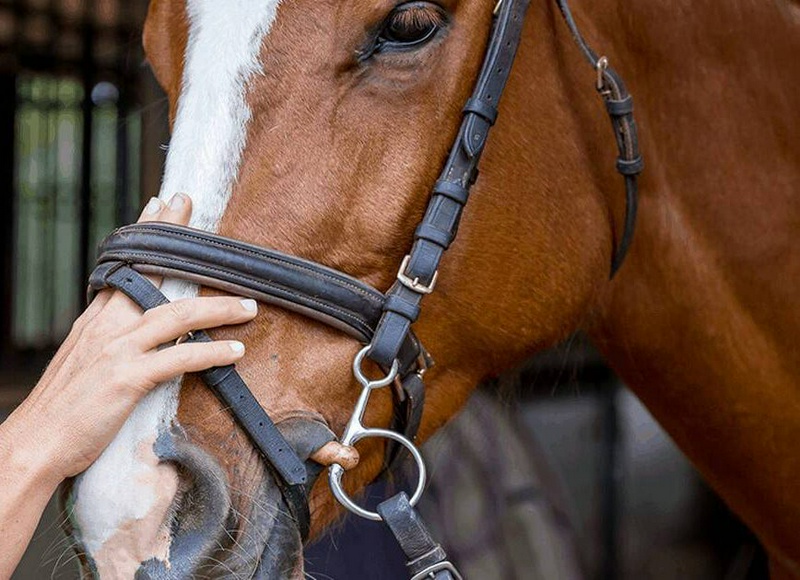
Paul Blazic, comme d'habitude, a sa propre opinion sur la question controversée des muserolles.
.
.
Chaque fois que je vais à une compétition équestre, j'ai de la peine pour les représentants techniques et les responsables du ring.
Ils doivent être ceux qui appliquent des règles changeantes et souvent contradictoires émises par des comités obscurs.
Ces règles semblent davantage être des réactions émotionnelles à divers problèmes d'équitation plutôt que des directives précises.
La précision nécessaire pour informer ces règles est souvent faible.
De plus, il y a rarement des résumés de suivi avec des preuves montrant si une règle a eu un impact positif ou négatif sur son objectif visé.
Je veux aborder une règle relativement nouvelle concernant le desserrage des muserolles des chevaux.
Les responsables ont inventé un outil magique : un dispositif en plastique qui doit pouvoir se glisser entre la muserolle du cheval et son nez, garantissant que tous les chevaux doivent être montés avec une muserolle lâche, sinon ils sont éliminés.
Deux points me sont immédiatement venus à l'esprit.
L'un est que si cette règle ne change pas dans les deux ou trois prochaines années, vous verrez une augmentation significative des problèmes de langue et de bouche.
Deuxièmement, combien de membres de ce même comité connaissent quelqu'un, ou eux-mêmes, qui utilise une protection buccale prescrite par un dentiste ?
Ces protections buccales sont très efficaces.
Elles sont souvent connues sous le nom de gouttières de stabilisation.
Certaines sont souples et d'autres rigides, et en maintenant la mâchoire immobile, elles détendent les muscles de la mâchoire.
Elles peuvent réduire les maux de tête, traiter les troubles de l'ATM, diminuer les douleurs de la mâchoire et protéger contre l'usure des dents due au bruxisme sévère.
Elles placent souvent la mâchoire dans une position plus naturelle et confortable.
Comment se fait-il que cette science n'ait pas été prise en compte, au moins en partie, dans la nouvelle règle des muserolles ?
Comment se fait-il que cela n'ait pas été soulevé dans la précision nécessaire pour la règle initialement proposée et que ce type de science puisse avoir un lien avec les chevaux et leur contact ?
Certaines études sur les effets négatifs potentiels des muserolles serrées ont été réalisées, mais il est difficile de savoir qui a commandé ces études.
Ces études sont manifestement incomplètes et déclarent même librement que l'outil magique est basé sur un mythe disant qu'il devrait y avoir deux doigts d'espace entre la muserolle et le nez du cheval, ce qu'aucune de ces études n'a pu retracer.
Autant que j'ai pu déterminer, personne n'a mené d'études sur les effets positifs des muserolles plus serrées et, comme les gouttières de stabilisation humaines, leur relation avec les bouches ouvertes, les problèmes de langue ou les troubles de l'ATM n'a pas été examinée.
L'une des études a en fait montré que les muserolles lâches peuvent contribuer à une plus grande friction du mors dans la bouche du cheval.
J'ai dressé des chevaux pendant 50 ans.
Je sens que mon opinion est plus qu'une simple expérience personnelle, car pendant tout ce temps, j'ai utilisé le même système.
Des brides avec cavesson et flash, des mors à filet placés correctement dans la bouche du cheval, avec un cavesson de longe rembourré sur le dessus, de sorte que le premier contact initial n'est pas du tout avec le mors, mais avec les anneaux du cavesson de longe.
Un jeune cheval avec un équipement de longe complet.
Photo : Karl Leck Un cheval de trois ans dans les premiers jours d'utilisation de l'équipement de longe.
Ce cheval s'habitue progressivement à un mors correctement ajusté et sans pression, et est guidé uniquement par le capuchon de longe souple.
!Rose Caslar Belasik La plupart des chevaux s'habituent à l'acceptation du mors grâce à un programme précis de longe avec des rênes latérales.
Cette méthode élimine l'instabilité des mains du cavalier et de son poids, et donne un retour immédiat aux chevaux s'ils se trouvent dans une mauvaise position de tête et de cou.
Dans ce cas, le mors devient un outil pour maintenir l'équilibre, tout comme nous ajustons notre équilibre dans une pièce sombre en touchant simplement une chaise.
Nous ne nous appuyons pas sur la chaise et nous ne voulons pas que le cheval s'appuie non plus sur les rênes latérales.
Le but ultime est d'apprendre au cheval à transférer davantage son équilibre vers l'arrière.
Un cheval de trois ans, deux semaines après le début de l'entraînement.
Les rênes latérales sont maintenant attachées et le processus de contact commence.
!PA Riding Academy Un cheval de trois ans, six semaines après le début de l'entraînement.
Les rênes latérales commencent à façonner le cou.
Il est très important ici que la muserolle garde la bouche calme, surtout si le cheval a tendance à utiliser davantage sa bouche.
Le cheval apprend à accepter le contact avec la bouche fermée.
Si la muserolle est trop lâche, elle peut encourager le cheval à ouvrir la mâchoire au lieu de montrer de la flexibilité dans la région du cou ou de pousser le mors avec les muscles de la langue, ce qui peut entraîner des problèmes très difficiles.
!PA Riding Academy Il y a toujours eu un petit pourcentage de chevaux qui ont tendance à utiliser davantage leur bouche et peuvent grincer des dents ou essayer de déplacer le mors de manière excessive avec leur langue.
Dans ces cas, il était important de serrer la muserolle pour calmer la mâchoire, pas au point d'exercer une pression excessive, mais suffisamment pour stabiliser la mâchoire et permettre réellement à la mâchoire de se détendre.
Avec le temps, le cheval s'est habitué à accepter un mors correctement ajusté.
Il n'y avait pas de problème avec la langue et le grincement des dents s'arrêtait, parfois en quelques mois et parfois un peu plus.
L'important est que les chevaux ne montraient aucun signe de stress.
En passant, je ne suis pas sûr que le grincement des dents ne soit pas lié aux programmes naturels de dentition des jeunes chevaux, car tous ces chevaux avaient trois et quatre ans.
Mais dans tous les cas, ils ont continué à avoir un contact naturel avec le mors.
Je dois dire en majuscules que monter avec des mains incorrectes peut annuler les meilleures préparations.
En regardant en arrière, je suis sûr que ce que je faisais était d'utiliser les réglages de la muserolle comme des attelles modernes pour calmer l'activité excessive de la bouche, de la mâchoire et de la langue.
Pour de nombreux chevaux, une muserolle bien serrée et bien rembourrée avec une attache flash de qualité n'est en aucun cas cruelle, tout comme une protection nocturne pour les humains n'est pas cruelle.
En fait, ces règles peuvent être utiles.
C'est là que je pense que les législateurs devraient faire attention à ne pas adopter des règles qui sont des réactions émotionnelles ou des mécanismes de défense contre des pressions politiques irrationnelles et qui ne sont pas basées sur de bonnes preuves.
C'est ce que je voulais dire par précision et recherche minutieuse.
L'adoption de règles rapidement inventées et nécessitant des modifications ne fait qu'ajouter à la confusion et conduit à un manque de confiance envers les législateurs.
Les cavaliers peuvent se demander combien de règles sont le résultat de préjugés infondés ou d'une formation incorrecte.
En réalité, il n'existe pas de longueur magique de cravache qui, après un certain nombre de centimètres, devient un outil de maltraitance.
یا un ajustement magique du noseband qui élimine les mains abusives.
À mon avis, dans la plupart des cas, les entraîneurs n'ont pas l'intention d'abuser des chevaux.
Ils aiment les chevaux et l'équitation et essaient de résoudre les problèmes, pas de les créer.
Nous devrions nous concentrer moins sur l'équipement et davantage sur les causes de l'abus : le manque de formation et les motivations incorrectes qui justifient ou même encouragent la mauvaise équitation.
La prochaine fois que vous êtes à un spectacle équestre et que vous voyez quelqu'un bien monter, si c'est la coordination ou la courtoisie qui attire votre attention, dites quelque chose à ce cavalier.
N'attendez pas l'approbation ou le rejet du juge.
Les cavaliers répondront à cette admiration.
Cela aide à encourager les cavaliers à comprendre que l'opinion des juges n'est pas la seule chose qui compte.
Je pense que les gens ont plus de pouvoir qu'ils ne le savent pour déterminer la direction du dressage.
C'est le résultat du programme classique de longe qui est utilisé pour introduire le contact.
Voici un cheval qui a été sous la selle pendant quelques mois et qui, après le début initial dans notre programme de longe, est monté d'une manière qui lui est familière et qu'il accepte confortablement.
Photo : Paul Belasik Source : The Horse Magazine