Entraînements de saut d'obstacles avec Boyd et «Bali»
Quelques jours seulement après le retour de Practical Horseman de la couverture du camp Windurra de Boyd et Silva Martin, Boyd et Cooley Nutcracker ont été sélectionnés pour intégrer l'équipe de concours complet des États-Unis lors des FEI Eventing World Championships qui se dérouleront ce mois d'août à Aachen, en Allemagne.
Au cours de trois jours d'entraînement intensif, de cours privés et de démonstrations équestres, nous avons non seulement eu l'occasion de faire connaissance avec Cooley Nutcracker et de lui donner des carottes, mais nous avons également assisté à des séances de saut d'obstacles et de cross avec ce cheval Irish Sport Horse de 12 ans, qui était auparavant sous la selle de Liz Halliday et avec elle aux Jeux Olympiques de Paris 2024.
Boyd, quadruple olympien, et Peter Wylde, champion olympique d'or et entraîneur équestre renommé, ont tous deux monté « Bali » — comme on l'appelle à l'écurie — pour un groupe d'environ 70 cavaliers et observateurs venus de tout le pays pour le troisième camp annuel Windurra à la ferme de 75 hectares de Boyd et Silva à Cochranville, en Pennsylvanie.
Wylde a rencontré Bali pour la première fois lorsque Halliday l'a acheté à l'âge de sept ans et a déclaré que ce cheval était l'un des chevaux de concours complet les plus appréciés de tous les temps pour l'entraînement et la monte.
Il a dit : « Il est très fougueux, a peur des chevaux, a des comportements étranges, mais il est incroyablement talentueux.
Il est vraiment l'un des chevaux les plus talentueux avec lesquels Boyd et moi avons travaillé en tant qu'équipe.
» Ensuite, nous jetons un coup d'œil dans les coulisses des cours du Windurra Camp avec Bali et passons en revue les points clés que Boyd et Wylde ont soulevés concernant leur stratégie pour Aachen.
Nous espérons que vous pourrez utiliser certains de ces conseils de deux champions olympiques pour améliorer le saut d'obstacles et le cross avec votre propre cheval.
Travail au sol dans le saut d'obstacles de Bali Wylde, en plus d'être l'entraîneur de saut d'obstacles du Windurra Camp, est également l'entraîneur de saut de Boyd et a travaillé avec lui pour affiner les compétences de Bali.
Il a dit : « Autant que nous le sachions, il semble être né comme ça.
Astier Nicolas, cavalier français, l'avait monté avant Liz et avait dit que même à un très jeune âge, le cheval était anxieux.
Parfois, cela peut refléter qu'il a été un peu effrayé dans son enfance, ou peut-être qu'il a été trop sollicité dans sa jeunesse.
» Boyd a souligné l'importance de comprendre comment votre cheval s'échauffe le mieux pour le saut d'obstacles et a rappelé que cela devient encore plus crucial en compétition.
Après avoir terminé le cross, vous devez changer son état d'esprit pour le saut.
Pour échauffer Bali, Boyd et Wylde ont conclu qu'il est absolument essentiel de le rendre très rond et souple.
Peter Wylde, médaillé olympique en saut d'obstacles, qui a monté Bali lors du cours de saut du Windurra Camp, le prépare à être rond et souple avant de travailler sur les obstacles.
©Amy K.
Dragoo Wylde, lors du travail au sol, ajuste ses étriers un ou deux trous plus longs que pour le saut afin de mieux enrouler ses jambes autour des flancs de Bali.
©Amy K.
Dragoo Boyd a dit : « Il est très important de prendre le temps pour ce cheval et de faire un peu de travail de souplesse supplémentaire.
Si vous regardez le travail au sol de Peter, vous verrez qu'il travaille beaucoup sur l'allongement et le raccourcissement des foulées et rend Bali vraiment souple.
Peter garde la base de son cou souple et élastique et crée également beaucoup de flexion et d'arc dans son corps.
» Un autre point important que Wylde a enseigné à Boyd lorsqu'ils ont commencé à travailler ensemble, c'était que pour le travail au sol, les étriers devraient être un peu plus longs que pour le saut.
Boyd a dit : « Cela est particulièrement utile pour les cavaliers de grande taille comme moi, car cela aide à enrouler davantage vos jambes autour des côtes de votre cheval.
Peter et moi réglons généralement les étriers un ou deux trous plus longs pour le travail au sol que pour le saut.
Mais lorsque les obstacles deviennent plus grands, des étriers plus courts sont nécessaires pour rester avec votre cheval dans les airs.
» Utilisation des obstacles d'échauffement Pour les obstacles d'échauffement, Boyd et Wylde demandent généralement à Bali de sauter un obstacle vertical des deux mains, puis de passer à un petit oxer des deux mains.
Tous deux croient que Bali est un cheval de saut talentueux, mais après avoir franchi les obstacles, il devient généralement raide et laisse tomber son dos.
Wylde, lors du travail sur les obstacles d'échauffement, se concentrait sur la réduction de la vitesse et le retour au pas, ou sur le redressement et l'assouplissement après les obstacles, car c'est dans ces sections qu'ils perdent généralement le contrôle et la maniabilité.
Boyd a dit : « La première fois que j'ai monté Bali, après les sauts, il levait la tête et partait comme un cheval de course, donc ce type de secouement de tête et de raideur a été une partie importante de notre entraînement au saut.
Remarquez comment, du côté de la réception, lorsque Bali voulait partir rapidement, Peter réagissait mais calmement.
» Boyd a dit aux campeurs lors de la leçon de saut que Bali a parfois des problèmes à atterrir sur son pied gauche après les obstacles, mais qu'il a constaté qu'il est souvent préférable d'ignorer ce problème.
Wylde l'a dirigé plusieurs fois de suite avec le même cavalier à la sortie du pied gauche et Bali a trouvé son chemin tout seul.
©Amy K.
Dragoo Boyd a expliqué aux participants du camp que Wylde utilisait également un Chaharnal plus lent et plus régulier sur les obstacles d'échauffement pour encourager Bali à décoller plus près de l'obstacle.
Il a dit : « Les premiers sauts sont plus une question de contrôle et de ralentissement pour l'encourager à sauter plus haut.
Si vous pouvez le faire décoller plus près de l'obstacle, même à une distance un peu inconfortable, il sera obligé de lever davantage son corps dans les airs pour franchir l'obstacle.
» Un autre défi pour Bali en saut d'obstacles est d'atterrir sur le pied gauche.
Son corps se coince généralement sur les obstacles et, par conséquent, il préfère atterrir sur le pied droit.
Boyd s'est d'abord concentré sur la résolution de ce problème, mais avec le temps, il a adopté une autre stratégie.
Il a dit : « Plus vous faites semblant au début de ne pas voir ce problème, plus il commence à nous donner le côté gauche.
Quand vous voyez Peter aller à gauche après un vertical, il n'a pas du tout changé sa conduite.
Il est simplement sorti de l'obstacle avec le même pas et du pied gauche plusieurs fois de suite, et la deuxième ou troisième fois, Bali a compris le problème.
» Boyd a souligné que l'atmosphère dynamique du jumping ring à Windurra Farm a aidé Bali à réagir moins aux nouvelles vues et sons dans des compétitions avec des environnements plus imposants ; Course Work: Putting It All Together Boyd a dit que pour les chevaux plus expérimentés comme Bali, après les leçons de saut, ils font une quantité considérable de warm-up et de hacking out, mais ils gardent la partie saut de leurs sessions d'entraînement relativement courte, environ 20 minutes.
Wylde et Bali, lors de leur démonstration de show-jumping, passent la deuxième ligne courbe avec un oxer à vertical.
Il a expliqué : « Peter avait conçu le parcours avec beaucoup de soin pour que la gymnastique du bounce soit placée au milieu du parcours.
Donc, vous parcourez les obstacles 1 et 2 sur une ligne courbe et ensuite vous devez vraiment rassembler et équilibrer votre cheval pour la gymnastique avant de passer à la ligne suivante.
Parce que les chevaux deviennent progressivement plus rapides et leur tempo plus chaotique au cours d'un jumping course, Peter intègre des éléments comme le bounce pour maintenir l'équilibre dans le parcours.
» Boyd a expliqué que la combinaison de bounce est un très bon exercice pour Bali et tous les chevaux d'eventing, car cela leur apprend à se détacher rapidement du sol.
Il a dit : « Peter a délibérément raccourci les distances pour encourager les chevaux à utiliser davantage l'arrière de leur corps et à sauter avec puissance.
» Il a ajouté : « Les distances plus courtes peuvent être un peu inconfortables pour les chevaux au début, mais cela les aide à apprendre à lever leurs pieds plus rapidement.
» La combinaison de bounce dans le parcours de show-jumping de Wylde à Windurra Camp 2026 a permis à Bali de se détacher du sol plus rapidement.
©Incanto Sports Boyd a expliqué aux participants que Wylde avait délibérément conçu le parcours avec un gymnastical bounce au milieu pour obliger les cavaliers à garder le cheval rassemblé et équilibré entre les lignes courbes.
©Amy K.
Dragoo Boyd dit que lorsque Bali fait une erreur, il est important de marcher calmement et de répéter l'exercice.
Il a dit : « La pire chose que l'on puisse faire avec un cheval sensible comme Bali est de perdre son sang-froid.
C'est pourquoi Peter reste si calme et détendu, et après qu'il soit devenu un peu rapide sur le parcours précédent et qu'il ait été quelque peu déconcerté après le vertical bleu Stübben et en voyant le drapeau Philippine, il continue de travailler avec lui au sol.
J'aime aussi qu'il franchisse la ligne de bounce rouge et blanc sans toucher l'obstacle.
» Après que le parcours ait été pratiqué plusieurs fois, Boyd a noté des améliorations subtiles dans la technique de saut de Bali, en particulier lorsque Wylde l'a aidé à se calmer et à aborder les obstacles avec un meilleur équilibre et rectitude.
Après la partie saut de la leçon, Wylde a continué à travailler au sol avec ce gelding.
Il a dit : « Souvent, après que les cavaliers aient sauté le dernier obstacle, ils marchent environ 10 pas et considèrent le travail comme terminé.
Mais ici, nous voyons que Peter continue de travailler avec lui au sol ; un travail qui aide à la self-carriage de Bali et lui permet de s'étendre un peu au trot avant de se refroidir complètement.
» Wylde a rappelé que comme Bali est un cheval qui s'effraie facilement et réagit parfois, la présence des participants de Windurra Camp pour ajouter à l'atmosphère d'entraînement était une expérience utile.
©Amy K.
Dragoo Wylde a déclaré après cette leçon que la présence d'un groupe plus large au Windurra Camp aide à gérer dès maintenant tout problème d'entraînement potentiel qui pourrait survenir en compétition.
Il a dit : « Ce cheval est vraiment énergique, mais c'est justement cette caractéristique qui le rend incroyable.
On peut déjà voir ici à quel point la patience est importante lorsqu'on travaille avec un cheval comme lui.
Vous ne voulez pas marcher sur la pointe des pieds autour des problèmes, mais vous ne devez jamais non plus adopter une attitude agressive pour les résoudre.
» Il a ajouté : « Bali a eu un printemps calme après Kentucky, donc nous devons juste le remettre un peu plus en forme pour la compétition.
Plus nous travaillons avec lui, mieux c'est généralement.
Et quand il devient plus calme et que son corps se déplace plus librement, il commence à offrir des sauts vraiment spectaculaires.
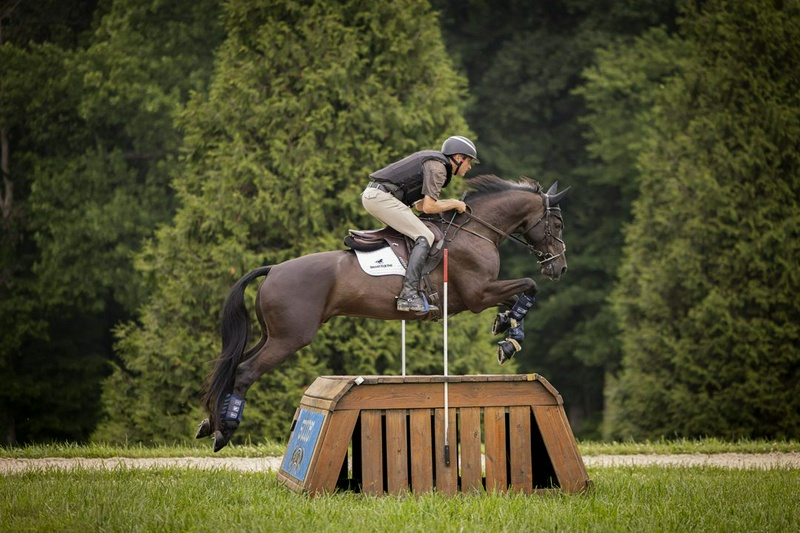
» La leçon de cross-country avec Boyd et Bali lors de la dernière matinée au Windurra Camp, les participants du camp se sont rendus sur le grand terrain d'entraînement de la ferme pour assister à la démonstration de cross-country de Boyd et Bali ; là où ils travaillaient autour d'un obstacle de table sur une petite colline et Wylde expliquait avec son haut-parleur ce qui se passait.
Il a dit : « Tout comme la leçon de saut d'obstacles, tant que nous sommes juste ici et que nous ne levons pas les mains en l'air, c'est en fait bon pour Bali de nous affronter à nouveau.
Quand vous allez à Kentucky ou à d'autres cinq-étoiles avec une atmosphère excitante, il doit faire face à beaucoup de choses.
Donc c'est bien qu'il affronte aussi ses peurs à la maison.
» Les participants de Windurra observaient pendant que Boyd et Bali s'échauffaient pour la démonstration de cross-country, et Wylde expliquait ce qu'ils avaient fait avec ce cheval castré.
©Incanto Sports Boyd, après avoir fait quelques changements de pied et assoupli Bali avant de commencer les sauts de cross-country, lui a demandé de partir au galop tranquille.
©Alana Harrison Boyd, pour s'échauffer en cross-country, a d'abord fait quelques changements de pied puis a fait avancer Bali un peu plus vite pour franchir quelques obstacles avec un bon rythme et en douceur.
Il a ensuite travaillé dans un schéma en huit pour franchir quelques obstacles en boîte à la fois avec le pied droit et le pied gauche ; un exercice qui ressemblait beaucoup à leurs échauffements en saut d'obstacles.
Wylde a expliqué : « Pour que Boyd et Bali atteignent le temps nécessaire dans les grands cinq-étoiles, nous devons tout faire avec le moins de pas possible, bien sûr de manière sécurisée et sans compliquer les choses.
L'équitation de haut niveau en cross-country doit sembler sans effort, mais cela doit aussi être pratiqué dans une certaine mesure avec le cheval.
Boyd reste calme et détendu pendant l'échauffement, et cela se manifeste plus tard lorsqu'il demande à Bali de réaliser des combinaisons plus difficiles.
Quand il devient un peu rapide et nerveux après un obstacle, Boyd le rassemble après l'atterrissage pour le corriger, puis continue avec douceur et liberté sur le parcours.
» Wylde, lors de la visite d'hier du parcours de saut d'obstacles avec Wylde, a parlé des calculs nécessaires lors du saut du parcours et a dit que cela s'applique également au cross-country.
Il a dit : « À des niveaux plus élevés, l'importance de ces calculs devient encore plus grande.
Quand les sauts sont sur un terrain plat, vous faites presque un pas de moins que ce qui est nécessaire dans un round de saut d'obstacles.
» Il a ajouté : « Mais quand le terrain change et que l'eau et les banks s'y ajoutent, ces calculs peuvent devenir plus complexes.
» Wylde a expliqué que pour que Boyd et Bali rattrapent le temps dans les cinq étoiles, ils doivent tout faire avec le moins de foulées possible tout en restant en sécurité, sans que le parcours ne devienne brutal.
©Alana Harrison Wylde fait référence à un parcours à Luhmühlen CCI5 il y a quelques années qui avait une combinaison difficile ; comprenant un rail suspendu qui descendait vers une barrière en bateau dans l'eau, puis tournait vers un chevron et atteignait ensuite un autre bateau.
Elle a ri en disant : « Quand nous avons marché cette combinaison, nous avons tous vu des chiffres différents.
Pour le premier obstacle, nous avons vu six, sept et huit ; au milieu trois, quatre et cinq ; et pour le dernier deux et trois.
» Elle a ajouté : « Mais ces distances ressemblent en fait beaucoup à celles du saut d'obstacles, car cela signifie que vous pouvez ralentir et vous regrouper pour les sauter solidement et correctement.
» Boyd a dit que l'une des parties les plus difficiles de la préparation pour un événement cinq étoiles est le manque de temps ; surtout quand il veut préparer au mieux les trois phases.
Après avoir revu la leçon de saut d'obstacles de Bali avec Peter quelques jours avant au camp, il a noté que ce hongre a bien sauté mais était très énergique.
Boyd a expliqué : « Comme Peter l'a dit, il a eu une pause depuis le Kentucky, donc aujourd'hui en cross-country, je voulais faire quelque chose que j'appelle une mini école.
Souvent, avec ces chevaux plus expérimentés, il faut prendre le temps et faire quelques rappels.
» Après le travail de cross-country, Boyd a dit aux campeurs qu'il voulait garder deux points en tête à partir de maintenant.
Il a dit : « Au début du parcours, quand il est un peu frais, s'il y a une question de virage à gauche, il a un peu de mal.
» Il a ajouté : « Par exemple, si le 4AB est un virage serré à gauche vers un étroit ou un angle, je sais qu'il s'excite, donc nous travaillons dessus calmement et progressivement.
» Boyd a dit aux campeurs qu'après avoir revu la leçon de saut d'obstacles de Bali avec Peter quelques jours avant au camp, il a remarqué que ce hongre a bien sauté mais était très énergique.
Pour remédier à cela, il a pris du temps pendant la leçon de cross-country et a fait quelques rappels.
©Incanto Sports Pour aider davantage à cela, Boyd s'entraîne pendant les échauffements des compétitions sur le saut et la préparation pour le virage à gauche.
Il dit que Bali est l'un des chevaux les plus honnêtes et qu'il saute chaque obstacle sur le parcours, mais depuis le Kentucky, il a également compris qu'il devait concentrer ce hongre plus tôt sur les sauts de précision sur le parcours.
« Il a dit : « Bien qu'il soit encore un peu hors rythme dans certaines sections, je sens qu'il est vraiment en bonne forme.
Et parfois, avec ces chevaux expérimentés, moins c'est plus ; il vaut mieux juste faire un peu de révision et de rappel et il n'est pas nécessaire de sauter chaque obstacle du parcours.
C'est le résumé de Cooley Nutcracker.
Mais ne l'applaudissez pas et ne tapez pas des mains !
Parce que cela pourrait suffire à gâcher sa journée.
»» Boyd a plaisanté.
Nous sommes impatients de voir ce couple en tant que partie de l'équipe Defender U.
S.
Eventing Squad aux Championnats du Monde de Concours Complet FEI 2026 qui se dérouleront du 13 au 16 août à Aachen, Allemagne.
Boyd et Liz Halliday se serrent dans les bras après que lui et Cooley Nutcracker, son ancien cheval et coéquipier aux Jeux olympiques de 2024 à Paris, ont concouru dans la section dressage du CCI5-L lors du Defender Kentucky Three-Day Event 2026 à l'extérieur du Rolex Stadium au Kentucky Horse Park.
©Alana Harrison Pour plus d'informations : lisez ici quelles autres combinaisons de cavaliers et de chevaux feront partie de l'équipe d'événementiel des États-Unis aux Championnats du Monde d'Aachen.
Regardez une vidéo de notre couverture du Windurra Camp cette année, où Boyd parle de ses entraînements de cross-country avec Bali ; ici.
Pour plus d'informations sur le Windurra Camp annuel de Boyd et Silva Martin, cliquez ici.
Source : Practical Horseman – Training