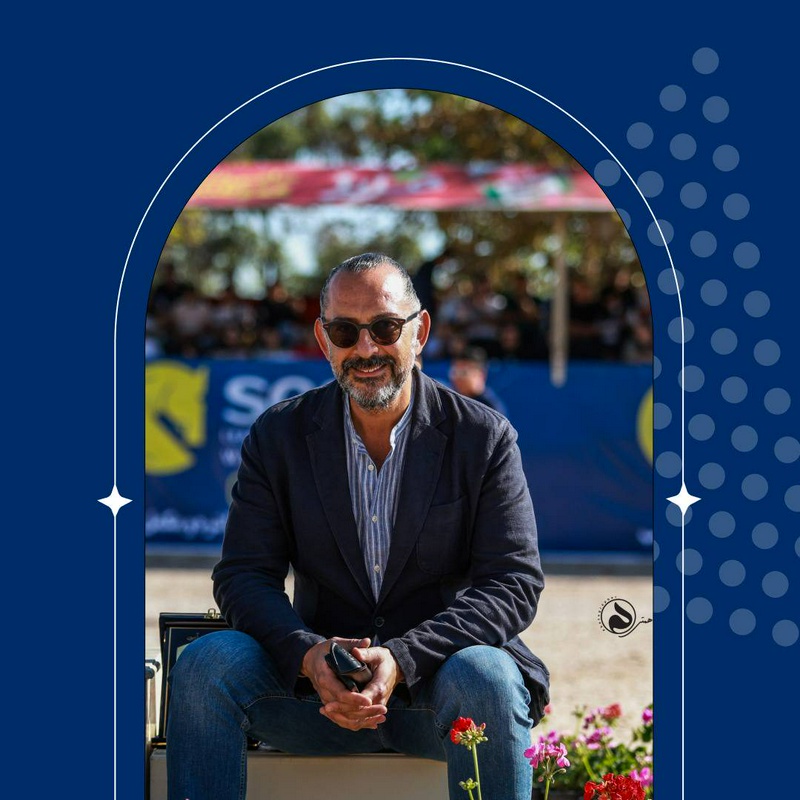
Dr. Ali Hosseini on pre-purchase examinations of horses
خلاصه
In this interview, Dr. Ali Hosseini, a prominent equine veterinarian in Iran, emphasizes the importance of pre-purchase examinations for horses and addresses the need for cultural awareness in this area. He points out that in developed countries, these examinations are a standard procedure, but in Iran, there is still a need for awareness in this regard. Dr. Hosseini highlights the challenges in diagnosing horse diseases and the necessity for appropriate equipment and expertise to conduct examinations. He also mentions the importance of conducting doping tests and clinical and radiographic examinations as key tools. He emphasizes professional ethics and honesty in addressing horse problems and notes the need for advanced medical equipment and specialized centers to improve diagnostics. Finally, Dr. Hosseini stresses the love for learning and patience in the veterinary profession and encourages young people to benefit from the experiences of veterans.
نکات کلیدی
- معاینه قبل از خرید اسب به جلوگیری از هدررفت سرمایه کمک میکند.
- آموزش اصول معاینه اسب به علاقمندان ضروری است.
- معاینات خرید اسب نیاز به تخصص و تجربه دامپزشک دارد.
- استفاده صحیح از ابزارهای تشخیصی در معاینات بسیار مهم است.
- رادیوگرافی و معاینه بالینی باید به صورت مکمل انجام شوند.
سرفصلها
- اهمیت معاینه قبل از خرید اسب — بررسی دلایل اهمیت معاینه و جلوگیری از هدررفت سرمایه.
- فرهنگسازی معاینه در ایران — بحث درباره نیاز به فرهنگسازی معاینه قبل از خرید اسب در ایران.
- روشهای تشخیص مشکلات اسب — معرفی روشهای معاینه بالینی و رادیوگرافی برای شناسایی مشکلات اسب.
- مدیریت تضاد منافع در معاینات — نحوه مدیریت تضاد منافع در انتخاب دامپزشک برای معاینه اسب.
پرسشهای متداول
چرا معاینه قبل از خرید اسب مهم است؟
این معاینه به جلوگیری از هدررفت سرمایه مردم و اطمینان از سلامت اسب کمک میکند.
آیا در ایران فرهنگ معاینه قبل از خرید اسب وجود دارد؟
نه، ما هنوز به آن نقطه نرسیدهایم و نیاز به فرهنگسازی در این زمینه داریم.
چگونه میتوانم از سلامت اسب هنگام خرید اطمینان حاصل کنم؟
باید دامپزشکی که معاینه میکند، آموزش دیده باشد و از ابزارهای تشخیصی مناسب استفاده کند.
چه نوع آسیبهایی را میتوان در اسب تشخیص داد؟
آسیبهای قدیمی، جدید و مادرزادی که ممکن است در آینده مشکلاتی ایجاد کنند.
چگونه تضاد منافع در معاینات هنگام خرید مدیریت میشود؟
خریدار باید دامپزشک را انتخاب کند و در صورت وجود تضاد منافع، دامپزشک باید از معاینه خودداری کند.
متن کامل گفتگو
In the name of God. Greetings to all of you dear friends and good companions of the radio, you who have kept me energetic and motivated with your diverse support.
We are your guests in another conversation in episode sixty-eight of Radio Chahar Naal. My conversation is with Dr. Ali Hosseini, who is one of the most experienced and knowledgeable veterinarians in the horse and equestrian industry in Iran. In my conversation with Dr. Ali Hosseini, we discussed the very important and practical topic of pre-purchase horse examination, which was very informative for me personally. It is interesting to know that in developed countries in the field of equestrian sports, this topic is used as a completely normal procedure for purchasing horses.
I hope that with this conversation, this culture will spread, and I can raise the awareness of all dear ones with your help on Radio Chahar Naal to prevent the waste of people's investments in this beautiful field. My colleagues in this episode are also dear Farshid Jahanbazi, the designer of this episode's poster, Negar Goudarzi with that beautiful voice, and dear Erfan Moghaddam, the composers of the opening and closing credits of the radio.
I won't talk more and invite you to listen to this very informative conversation. In the name of God.
Dear Dr. Ali Hosseini, thank you very much for giving your time to me and Radio Channel and agreeing to talk about a very important topic in the field of horse veterinary. The truth is that this conversation is both an honor and a learning experience for me, and I hope it has the same impact on the audience. Please say hello so we can move on to the rest of the questions. Mohsen, have a good day, you are very kind. I am also very happy that you chose me, and maybe it is an opportunity to fulfill some of the duties we have. Because in fact, we can provide some clarifications and information that we might not be able to provide to horse and animal lovers at another time. Be healthy, thank you again for knowing that despite all the busyness you have, you have come from Shisheh to now from sports and then gone and done the work of two or three horses, now you have honored us by coming. Doctor, in recent years, we have been very involved in medical issues. Now, due to the advancement of science and the various devices that have entered this field.
Our access has increased, but culturally we have not yet reached the point that if in the modern world of football and professional sports, a player is to be transferred from one club to another, they definitely have a complete medical check. But we still, in my opinion, especially in the sports section, have not reached the belief that we need to do this. I want to see, given that you have a long history in riding, before you entered university, I know through a friend whom I had the honor of knowing and was familiar with horses, and now you have entered this system.
What has been the outcome of this process over several years of riding and veterinary and various courses you have seen around the world that led you to conclude that we need a veterinary check? Mohsen, see, I did not enter horses from a nervous community. Unlike you, who opened your eyes in a horse family, I came from outside, and this was a suitable opportunity to enter the system and see the gaps and distances that exist between a person interested in horses who was not familiar with this section from childhood and the problems and distances that a professional system should have filled but did not. For example, when I was a child, I was very interested in riding. Naturally, riding clubs were not in sight and accessible. Many of them were outside the city, many of them did not have a sign, and I, who loved horses, did not know where to enter, and riding was only spent in the north, by the sea, on the sandy ground by the sea. But I thought that's all it is and how much.
For example, an event caused me to become familiar with the Shahraki club at the age of 13-14 and go there to ride. You were always quite lucky. Yes, yes, I went to other places too. Anyway, I went to the Siahpoosh club, I went to Chaki, and at first, but as you said, I started. But I want to say that the gaps and distances that existed on the way for a child or teenager interested in entering horses, now where should they go, what should they do. It is not necessarily necessary to have a horse to ride. These were things that took me a long time and were very difficult.
It was very long, maybe I would say I loved horses for many years, and it only included going to the north and riding by the sea until I don't really remember what happened by chance, maybe a family acquaintance, for example, introduced me to the Shaki club. Then I rode for several years. Then I went when I was accepted to university in 1989, well, I was studying in Urmia. I distanced myself from Tehran. Then one of the friends who lived in Lavasan said yes, I sometimes see horses passing by my house when I go. Then I found out there is a Siahpooshi club, and I don't know, gradually I was able to enter the club and have a coach with me. You know this.
It was a difficult event, and I want to relate this to the point that just as a person who is now older, interested in horses, has the purchasing power but knows nothing at all about the ABCs of this work. If someone wants to buy a car now, it is clear to them that there are centers that check the car's body, check the car's engine. But for someone who wants to buy a horse and is interested, we have not put any way in front of them to know that there are principles called pre-purchase horse examinations. Maybe some of my young colleagues also do not know that in the world it has an alphabet, it has secrets, it has points, it has stages that must be passed. Not just listening to the heart, listening to the digestive system, and saying it's good. There are principles that, although they differ slightly in neighboring countries, for example, European ones, they are all common in principles. America may be very different from Europe, but they are common in principles. Now, where are we in Iran? Do we have veterinary principles? No. Have we put anything in front of the person interested in horses who comes and may, God forbid, enter a system, for example, as a horse riding enthusiast, enter a club and be told, well, now you have to go buy a horse?
Buy a horse, how do you know that I have bought a horse? This task is like buying a car and even more, because a horse is a living creature with its own secrets and mysteries that must be handled by a specialist veterinarian. Anyway, over time, as a veterinarian myself, you know that as a developing country, our veterinary system, unfortunately, like any other developing country, is involved in meeting the basic needs of the people. Therefore, our veterinary organization is 99% concerned with ensuring that our veterinary faculties have also.
They have moved towards solving the problems of animals that are consumed as food. Therefore, from the age of 19-20, when I moved a little away from basic sciences and entered clinical courses, which naturally led us towards large animals, well, I was interested in two areas: pets and horses. I always asked the professors, and later when I graduated, I quickly went in search of learning. Or I heard from others who said Ali Hosseini, who was teaching there? Our greatest dear professors, I will never forget that.
They were exceptional, for example, even now in large animal veterinary and in the internal section, I will never forget when I graduated and with difficulty and effort and connections entered the Aghdasieh Riding Club, I completed my military service. I didn't know how to insert an NG tube, which is both a diagnostic and therapeutic method in colic, and I couldn't sleep at night from this grief. Because we didn't do fieldwork there and many things were taught to us, but at least in the horse section, we were much weaker, and as I said, we were more involved with large animals and had practice.
And one of the big concerns of my life was why I couldn't, for example, diagnose colic well at that time. Unfortunately, I have to say fortunately because we were trained during military service, unfortunately, because military service is not a place for learning, university is the place for learning. Anyway, there was a lot there. We tried so hard, asked around so much, read so many books to learn a trick, a moment, a sentence that might not be written in a book. And NG tube, I'm telling you, go all the way, the simplest, the simplest radiography of a horse to diagnose limb diseases, to lameness, to block, to joint injection, to.
Limb ultrasound, all these things that you think were really very difficult. And I was saying that perhaps for young veterinarians and certainly for many buyers who, like me, were in love with riding in their teenage years and didn't know how to enter, those who are older now and fortunately the number of clubs has increased, we have a number of clubs, they have signs, I don't know, relatively we have television, we have the internet, as you say, I don't know.
Public and private media may pay more attention to this matter. Even the buyer who is interested and has financial ability, I don't know if he or his children or his family like it, still doesn't know that when buying a horse we have a booklet, in fact, we have something documented in the world, although not in Iran, called the Paper Examination of the Horse, examinations at the time of horse purchase which now we go forward is divided into several sections.
I don't know just clinical, clinical plus radiography, clinical plus radiography, ultrasound and endoscopy, anything you think of has no end. Now we are a bit more limited in Iran, but 95% of what is done in purchase examinations in the world, of course, we do. A question that perhaps many of those who are in the field, as we say in colloquial terms, before buying.
How much can it guarantee that this horse's health is okay? This is a question. One part is healthy. The second part of my question is what kind of injuries do you as a veterinarian diagnose in that area that, for example, this injury is old, this is new, this was congenital, this is, for example, 2 years old, if it goes forward like this it will get stuck here. I want you to explain these so that our radio audience goes into the phase that if we want to buy any horse at any price, we have a series of bases before buying. Mohsen, see in response to your first question.
You really can't say a number. There is no number anywhere in the world, but I have to tell you a lot, which well has principles and conditions. The person who is actually doing this veterinary work has been trained in this field. Because as I said, in our universities, a large part is not dedicated to horses, I think in advanced countries, well, I haven't seen their course syllabi, but most likely, for example, they don't come in the unit, I don't know, their horse limb, for example, they don't spend six hours talking about purchase examinations. They don't do this. So even though you know I.
I completed the general course in 1996 and then came in 2013. Considering the knowledge I gained and the love and interest I had, I went for a specialization in diagnostic imaging, which is very related to this purchase examination section, and I actually knew what field I was choosing as a specialty. But I want to tell you that again I eventually went to countries that have something to say about horses and are the best in the world, I took courses as a supplement to become familiar with this subject. So I want to tell you it depends on several factors. How much a veterinarian in this field.
Has familiarity, expertise, and experience. Two tools and equipment. You know, even if we ask the best specialist in any field to do something for us, if they don't have the necessary tools and equipment, they can't do a good job, and the diagnostic work won't be correct, and in fact, their work won't reach a conclusion. Therefore, those tools and equipment and how to use those tools are really very important. If I have a device in hand, now in this section that we are talking about, for example, the radiology device and the ultrasound device, well, how am I using these? Can I make the right diagnosis? I.
Despite my specialization, I have repeatedly gone to European countries for training just to sometimes understand how many degrees I need to turn my hand to give an angle for a radiograph to correctly diagnose a condition or not miss it. Therefore, you are still in the process of updating. I strive to do this at least once or twice a year if conditions permit, and I have been doing it for many years. Because otherwise, it is not possible. You know that medical sciences are said to escape by a certain percentage each year and disappear, and secondly, science is advancing, and the world is producing it at a great cost.
If we are unfortunately not producers of science at this point in time, at least we must obtain the output from the producers and use it in our daily lives. Returning to your question; it cannot be quantified, it is very much. I am really thinking now, maybe there have been one or two cases over the years where I have sincerely tried to provide everything I could to the buyer. Maybe there have been one or two cases that slipped through my hands.
Now, one of the reasons is that you know in advanced countries they take a doping sample from the horse and freeze it. If after one or two months, God forbid, if the seller had used a drug in the horse, the drug would be cleared from its body and...
If a problem or lameness or incident originally occurred, it is possible to request the sending of that doping sample to purchase laboratories. This is done, meaning a blood sample is taken and frozen to see in the laboratory whether this poor creature has been injected with something or not. Yes, we have also tried to establish this here at times. Anyway, it takes a little time and costs a bit. So far, this has not become routine, but a part that really should be beside me is not. Well, this issue can be easily started with a series of coordinations. Let me tell you that therefore...
I really have to tell buyers that a very large number of horse problems can be observed in pre-purchase examinations, which should at least be accompanied by radiography of the limbs and, if necessary, ultrasound. And you asked what categories of problems? Because you know in pre-purchase examinations, for example, we do not have much access to the horse's digestive system. For example, we have this system in the world. Ultimately, they do an endoscopy. If you mean very very well, in these courses that I have gone through and seen a lot, I might tell you very very very rarely...
Less than the fingers of one hand has it happened that it reaches the point of doing an endoscopy. Usually, the routine is the same 90% of what they do is clinical examinations and radiography of all four limbs, sometimes the back and mistakenly the neck. Here, I have to tell my young colleagues that according to Dr. Sudaysen, who is one of the only survivors of the Radiography Book era known as Butler's Radiography, I had the honor of being in her class.
And one or two other English equine veterinary specialists. It is really perhaps one of the good opportunities that suddenly came to my mind to use here and tell my young colleagues. They believe that radiography of the neck during pre-purchase examinations in horses not only does not solve any problems but adds to the problems. Why? Because its interpretation is difficult. Therefore, I suggest that during pre-purchase examinations of horses, if radiography is to be done to prevent...
The occurrence of this problem, which the Butler Radiography Book is like a bible for us, meaning it is the book I love the most, the veterinary book I love the most and I want to put it under my head when I sleep at night, it is so valuable. Not for me, for anyone who works in the field of limbs and radiography. And one of the only survivors among the authors of this book is Ms. Sudaysen. Because it is important, I repeat, she says do not graph the neck during pre-purchase examinations. Because one of the duties we have is not just to...
Put a stick in the wheel, for example, of the buyer and seller and want to say something that makes us feel comfortable that the deal is not done. So now if a part of the horse also had a defect and we did not understand, no deal has been made. In fact, if we want from the veterinarian, now if it's myself, I take it to the horse dealer, to the rider, to the farrier, to the buyer, seller, trainer, equipment seller, they should benefit and this industry should turn, buying and selling must be done. Yes, that is, after all, the market determines the survival of an economy and a market. If it wants to...
Become exclusive, pricing becomes exclusive, I don't know if we want to go to that phase where a few do this, well naturally it becomes like many other places where we took imports in Iran, domestic prices went up, monopoly was also created and a strange rent and corruption that really cannot be included in this so-called literature in the article. Doctor, one thing that may be very important is that you examine injuries through radiography, how much is the diagnosis now clinical examination? You realize with all this process that you do this injury...
Is from the foal period, for example, from a month ago, a year ago, or for example, it was born this way. Buying, well, the guy said, for example, this had it since foalhood, well the buyer, for example, is not convinced. Then they go and investigate, now they take statistics, now we go into the issues, for example, the information of this story. A month ago, for example, it fell somewhere but that, for example, because it did not know or for what it did not understand that this is from a month ago. I told him it is from its foalhood. How much can these two be understood in this process that you take it forward? Look, the buyer has his money in his pocket and wants to buy a healthy animal.
Or at least buy a horse whose problems that exist in its body are compatible with the level of riding the buyer needs. Right? Therefore, in my opinion, although now I tell you there are scientific methods to determine approximately when in fact that problem occurred, but in my opinion, the buyer does not care much. If the horse now has a problem, what difference does it make to him whether it was from foalhood or a month ago. He wants to buy a healthy horse or at least know what issues are with it at the time of purchase. Therefore, my duty as a veterinarian when...
From the buyer's side, I am obliged to go check a horse, and I feel like I am that person's attorney and must deal with complete honesty and integrity. My duty is to inform the buyer of any issues, even if I can't specify the exact time, as there are certain methods to determine it. However, some changes in ultrasound and radiography can indicate whether the issues are old or chronic. For example, in ultrasound, the formation of fibrous tissue or in radiography, the severity of, say, the emergence of osteoarthritis, and...
The extent of changes or, for instance, if there is a fracture on the horse's accessory bone, how much callus has formed, the amount of, in simple terms, the whiteness and blackness of its edges, how soft or rough or sharp they are. These can largely help diagnose whether it's acute or chronic. But in my opinion, it doesn't make much difference to the buyer. The buyer should either buy a healthy horse at the time of purchase or know what issues exist in the horse's body. As the saying goes, yes, there's a color spot too, they should know nothing.
Doctor, a question has come to my mind that is very interesting because I know you are in a position that is like a double-edged sword in terms of work. I am fully aware that you have had suggestions, for example, saying see how much not seeing this costs in terms of income, and a suggestion that, for example, someone has made to you, like, Doctor, can you overlook this, now that we are friends, come take some money. You know, how much have I tried to buy you until now? Simply put, it becomes this. I was teaching a course at the Applied Science University of the Equestrian Federation, and I always asked my friends who were my students to give a speech. One of my very good friends who was a student at that time and unfortunately is no longer with us, said a very beautiful sentence at the end of his speech: "We may not be the best rider in the country, but we can be the most horse-loving rider in the country." It was a striking sentence. Even now, it really gives me goosebumps. I remember that during that time, whether it was the beginning of my career or the middle, or I don't know, ten years into my career, I really decided that if I'm not the best veterinarian in Iran, I should be the most honest one, and this is something that goes back to a decision and is quickly executable and doable.
And I have always tried to do whatever has been asked of me, which was my duty, in the best way possible. In response to the question you asked, yes, it has happened and not infrequently, and I have always told them, depending on the era, based on the price of the horse, I said whenever the price of the horse becomes 100 times what it is now, making my share 10 times the price of the horse, then think about coming to buy me. Right now, the numbers are not at a level that I pay attention to. When someone deals seriously for a while, naturally these requests decrease. It may happen that someone doesn't know you, for example, comes and says a sentence, but no longer...
In the past, naturally not. I once heard a sentence, they said, you know, they say if you want to buy a horse, ask so-and-so to go check your horse, but if you want to sell a horse, don't let him come. Well, at first, this really upset me. I was really upset. I felt like I was losing a large part of my clients with this action. But after a while, it settled in my mind, and I saw that it wasn't so bad. It was actually an interesting metal. It wasn't bad. I'm very happy that the suggestion was how much, I really don't remember. It never reached that point, meaning that yes, it never fortunately reached numbers.
Doctor, because now we also have a large main population, but the athlete population, anyway, we have races and sports, I don't know, and I don't think the world knows. Then now I don't know sports. We, who anyway use the horse as a sports commodity, have a resource limitation in Iran. In my opinion, meaning my belief, meaning half that we are a little involved in some sidelines due to resource limitations, the number of clubs, the number becomes production.
Veterinarian, farrier, I don't know any part you think of, we have a limitation that unfortunately has raised the final prices due to the limitation. Because we also have a limited number of veterinarians who think like you and work in this field. Has it ever happened that, for example, I say, well, for example, I use myself and Mahmoud as an example, who is my brother. I, for example, am supposed to sell Mahmoud's horse, and you work with both me and Mahmoud. Well, what's the situation here? What do you do? How do you handle this ethically? See, first of all, let me say that it is the buyer who should determine the veterinarian. Dear buyers, pay attention, the one who should specify the veterinarian to go check the horse for examinations at the time of purchase is the buyer. Be aware of this right of yours. Secondly, there is actually a term, a sentence in purchase examinations called conflict of interest. Exactly the interest is that if in an event just a few days ago, someone had gone to buy a horse from someone who was the owner of a club.
And the veterinarian of the same club had gone to check the horse, and naturally, there were things in the purchase radiograph that at least should have given a hint to the buyer to be careful or that this exists. Anyway, after a few months, I told the buyer, see, anyway, it was a tough job that you asked the veterinarian of the same club, who spends three days a week in this club doing a large part of his daily, weekly, and monthly work, to come check the club's horse. In fact, maybe in the first step, you acted a little unprofessionally. But I have to tell my colleagues that many times when...
I have seen that I really can't go to a club where a large part of the horses of that club are in my hands, and they ask me to go see one of them, I say I won't go. Now either the buyer accepts or doesn't accept, or I make an excuse, or I say my back hurts, or I say I'm traveling. You don't answer the phone. We know conflict of interest... not answering, I still don't know the subject to tell you that... and if I go, I really tell the seller, I say I am someone if you accept to see me, I will say everything I see. If you think it will cause a dispute in the future, I won't come. Because I am someone who says.
Another seller says, "Yeah, maybe it's better not to come, for example." Therefore, the conflict of interest is an important part that is taught during purchase examinations as one of the chapters, and you should, if possible, avoid getting involved in such an examination. Mr. Challenge, which did not happen to me a few years ago, but well, one of the kids, colleagues...
Were involved, it was the replacement of radiography. That is, they brought the horse from Europe, and there was a radiography behind that horse, and then they found out that the radiography belonged to another horse. That is, the veterinarian who came and discussed the ultrasound, now performed the radiography, said this does not belong to this original. Now, considering the measurements that I think you have the expertise and I don't have the knowledge, how can these be verified? Doctor, let me first say this before I answer this topic...
Let me tell you that many times they tell me to go do a clinical examination, and if you suspect something, do a radiography. This sentence is fundamentally wrong. Yeah, you told me that time too. Because you find some things in clinical, and other things in radiography. Radiography may reveal things hidden in clinical to you. Radiography may tell you some issues related to the future of the horse. Currently, it may not yet be a big problem. Therefore, let's look at these two as complementary, not that if you suspect something in clinical, usually the examination of the transaction is probably canceled and does not continue. Therefore, you in...
Radiography always finds things that are hidden from you in clinical examinations, but regarding your question, for me as a radiologist, radiography is like a fingerprint and completely unique. During the short period I was on the horse import committee in the Equestrian Federation, in the first session, for example, they put 40 or 50 radiographs of horses in front of me, which well, a person might make a mistake. Out of each 20, for example, I felt in the middle of the session that I had seen a radiography that I had seen before. I went back and looked at all the previous radiographs and saw yes, for example.
They had put one horse's radiography for two horses. This is now the funniest until they come and crop a chip a little higher or even give a bad angle or actually adjust the devices so that chips that have not yet reached the whiteness of the bone, you cannot see. There is a lot of fraud in it, and I always say these sentences: Don't think the neighbor's chicken, don't think now if a veterinarian over there, God forbid, might be like no prophet, I don't know or that.
Their devices are very good. We had a radiography coming from Europe, my friends still have this annoyance with me, and I repeat after several years that the import committee is over and I have left, they say that for example, the radiography was taken in Europe but you rejected it and said to go and do the radiography again, because the quality of the graph was so bad that you couldn't see anything. So yes, this fraud that you say exists. Therefore, my suggestion is that if even a horse has been radiographed abroad and someone is importing it for you, definitely when it arrives here if the horse is valuable, which it certainly is, a clinical and radiographic examination must be done.
To make sure that the graphs previously given to you were indeed taken from your own horse. This was a very interesting sentence that each radiography is specific to itself, meaning its fingerprint was a very interesting thing. Now, God willing, this will be verified because really, what we are currently dealing with is capital flight of all kinds, whether human from rider and worker and owner or its financial resources which become owner and club owner. Unfortunately, a change of situation must occur, otherwise, I am not very optimistic about the future of equestrian sports with the current economic conditions.
Now, God willing, we must find a solution ourselves. We are always involved in the fact that the board and federation are public, and since we are not even among the last in the sports defined in Iran, we have to think for ourselves. Now, God willing, we will go in that direction. If each of us does our duty correctly, I am not saying we can advance this section better than other parts of the country, but at least we can prevent its fall. Yes, we really must prevent the fall. Now, in my opinion, this avalanche and we have fallen into a slope that if we do not control it.
In the future, we all have to think of another job. I am already going for a second job. Now, of course, it's a joke, God willing, we won't get there. Sir, something that has always been my curiosity as someone whose job is this and buying and selling has always been alongside my work, what is the youngest age we can now examine a horse before purchase, check it, radiograph it, what age is this? Mohsen, this is a very, very excellent and very practical question. One of the problems that, in my opinion, currently.
Shakes every producer in Iran is really these chip factors. Well, you have the authority, see I am a veterinarian, not an investor, not a producer, not a buyer, not a seller, but really sometimes and many times I get up from my seat that a horse with a very excellent physique that has been produced in Iran, well, I know how much effort has been put into it, after all, I was riding at 12 or 13 years old, for an hour of riding, half a day was gone.
Imagine how much time and investment it takes to produce a horse, to sit next to the horse box until it is born, the costs you have for pulling, preparing the mare, sitting for eleven months until it is born, giving birth without problems, I don't know, the horse grows up, at two, three, four years old, its radiography, oh dear, it has a chip, for example, this horse that was supposed to be worth three billion, its value is halved or less. Now, I don't want to price, unfortunately, currently, there is no center that is taken seriously and removes the chips, I am not saying there is no center, I am saying a center that is taken seriously by the horse owners or at the speed they have in Europe.
They remove the chip, each room fortunately you paid for a series of films you kindly made in Canada, in Canada, all the places that actually have something to say in the horse industry have this section. An operating room for chip fracture is connected to two recovery rooms so that one work on the left, one on the right, so that the first horse has not yet gotten up, the second horse's surgery is finished, and actually, 45 minutes, an hour, a little less, a little more depending on where the chip is, they operate. That is, chip factor one.
A challenge for the producer that might now be resolved with a 600-euro or 1000-euro amount. You know, a big problem that no longer significantly reduces the price of the horse. Let me say again, chips have different levels of importance. Not every chip everywhere means that the horse is harmed. One or two, chips occur at very young ages. For example, a chip that occurs in the stifle joint, Europeans themselves believe that it should be removed by one year of age or under one year of age.
The knee joint in the hind legs, yes, let me tell you that they recognized this at one year of age, and it might happen at one year of age. It's really interesting that this monitoring and follow-up is there; in a year, well, if we have this chip, what other problem do we have for production? The problems are really much less. Fortunately, some of our colleagues, one in Mashhad, we all know well.
They are performing chip surgery, two centers around Tehran that have recently started. Now we hope they certainly have enough experience, but we hope because the appearance of the horse is important, meaning even if you remove the chip, suppose you removed it on time, it hasn't caused arthritis depending on the importance of the joint at the time the chip should have been operated on, but now the joint has become deformed, well, this creates a problem again when buying and selling, meaning with the smallest complications and side effects and actually the effects that remain on the joint, I hope we reach the stage quickly where the chip is removed and this concern too.
Is actually taken from the producer, a 14-year-old having a chip, we remove this, and at 14 years old, in my opinion, if it wanted to create complications in the joint, the chip has created it, so it shouldn't be provocative for my principle, I'm very worried they say accidental findings, you might see the main one at four years old when buying that the joint is healthy.
They call it an accidental finding, and we don't give it much importance, and we tell the buyer even if this chip is in an important place, but really in all these years, it most likely would have caused a problem by now if it wanted to. Therefore, more in middle-aged and young horses, I said for the stifle joint, which is very young horses, and now the rest of the joints depending on their location and type of importance, the chip should be removed at younger ages.
Anyway, I think in the past 20 years from the 1980s until now, both the population of our clubs and the population of our horses have increased. Now, aside from the fact that recently due to economic conditions, which I think five percent of this decline is due to side issues that we are all aware of, we have some declines, let's move on.
Why in these few years, I mean in these 24 years from the 1980s, I'm coming, before that I didn't care, in these 24 years we never went towards saying, sir, we keep having. You now have the most up-to-date ultrasound device, we have the most up-to-date dental rasp, for example, you have the most up-to-date radiography device, why when we have all these devices really for all these in Iran, why have we never wanted to have a specialized hospital, now I did this the other time in a discussion we had together, why don't you who are the doer go towards it.
Mohsen, you pointed out a painful point which is really painful, unfortunately, one of the sorrows of my life. Look, firstly, this device that we carry with us might do 90% of the work but it's not everything. I always say radiography is the cheapest and most accessible modality for diagnosing, for example, horse limb problems. If radiography was complete, for example, they wouldn't have come to make and invent CT scans with all those costs and these, or ultrasound is one step from radiography for diagnosing soft tissue problems, if ultrasound was also sufficient and complete, then MRI wouldn't have been made.
Therefore, yes, with a lot of effort with the devices we have available, we can do a large part of the work, but in some places, our hands are tied. We want CT scans, we want scintigraphy, we want MRI, and actually, we want a series of stronger and better diagnostic methods which unfortunately are also much more expensive. We want a center. Several years ago, with the cooperation of the federation at the time, we actually did a series of activities in this field, and there were sponsors.
The problems are very numerous. We brought a lot of issues on paper. We invited a few veterinarians from Germany and Canada at the time, we brought a lot of issues on paper, the costs, anyway, it hasn't reached that point until today, and one of the professional life frustrations of mine is this. There are a few centers fortunately scattered around Tehran now doing a series of activities, it's very good, it's not complete, but if they are supported, it would be great, yes, you see anyway.
The talk is about numbers, for example, you calculate tens of billions, but it is a duty that someone who can do this work should really do it as an Iranian. I hope, doctor, I have a concern that was outside my question, but it was a pity not to ask you now. Now, due to the friendship I have with you, meaning the kindness you have bestowed upon me, I am now very afraid of something. I want to see after a few years anyway, we finally have a work limitation, everyone now due to age, the conditions of age go up, our physical wear and tear.
The reality is high pressure, who is the replacement for Ali Hosseini with the situation that our educational system has, an expert comes out in terms of text but in the so-called field system, you don't see that skill, why don't we have a replacement, my concern now is why don't we have a replacement for Ali Hosseini, what should we do because the young generation I see is not in this system, they neither have the knowledge nor the money nor the market opens for them, this was a challenge that might be outside our discussion but well, my concern really Hossein, this is your kindness to me, not now me.
I don't see myself in that condition really without flattery that now in my absence a deficiency or shortage would be felt, fortunately, our young colleagues are also coming and replacing, fortunately, our young colleagues are also coming and with love and interest and actually energy they are replacing, but I had a literature teacher in high school who told us a sentence that really took years to feel and understand what he said, at that time he said the student must have the pain of seeking.
I didn't understand it at all; it stayed in my mind as a sentence, but I didn't understand it until I grew up and felt this pain of seeking within myself, this pain of learning. See, every human being, we went to university at the height of limitations and at the height of shortages in every aspect, I felt this need, I felt this love for learning, I felt this need at the time when I was a soldier. I remember, for example, my veterinary colleagues were older than me, they naturally knew more. I would talk to the owners of your horses at Aghdasieh club, saying, for example, this case is one that, for instance, Dr. X should come and see.
Well, I would create conditions for my colleague, who had more experience than me, to come to that horse club and visit. I would stick to him, learn the work from him. At one stage, I felt, well, now I should go a little beyond the borders, for example, to complete my information and learn. So I started traveling here and there, essentially educational trips to take some veterinary retraining courses in various fields, and I learned that pain.
Let's go back to that great literature teacher in my high school days. If that pain, the pain of seeking, exists in a person, a person will learn knowledge no matter what, and surely any cost a person incurs for education and learning, in my opinion, wherever I spent any cost to go and learn, now if someone is worried about the costs, it definitely has returns, and certainly, both equipment and knowledge will return to a person many times over. I think in the next generations, you in equestrianism, unfortunately, we are also dealing with it, we don't have the patience factor.
I mean, we are not patient. Now, for example, someone has come and worked for 10 years and really expects that now super facilities will be provided for him, a sponsor will come from a planet, it really can't happen. As I always give an example to the kids around me, I say, sir, now bring the world ranking list from one to ten, maybe in this list, for example, two of them are between 30 to 40, now maybe exceptionally one is also 20 to 30, but most are over 40 years old, and when you look at them closely, the dust of work is on their shoulders, meaning their faces are sunburnt, their hands have worked after all. We don't want this patience and resilience in work. I hope that at least this talk of yours will be accepted as advice.
Accept that this path finally has many pits and requires a lot of patience. That you say I have to have an income at this age, I know you work every day, and finally, this work brings you income. As they say, if you fall, you close the ticket for a week or ten days. Last time we said that I went to such and such a clinic in such and such a country and learned two points for which I spent several thousand euros. I hope this happens in the young generation.
The word "Talabeh" in my opinion is a beautiful word. Now it may be connected to religious and spiritual matters, but I say this being a seeker should be a lifestyle in all parts of life where a person works professionally, always seeking something. I hope we reach this too. Well, Dr., I really thank you for taking the time and coming. I know you were in the middle of work, and you did me this kindness and honored me. Now we've reached the end of the discussion because I want the audience not to hear the sidelines, and that's why I try to present the topics very professionally. As a closing remark, what advice do you have for your young colleagues? And now let's say advice that they are at the beginning of the road and have a few years to reach a point. And also a recommendation to the entire equestrian community, whether buyer, seller, producer, rider, or farrier, all those who hear your words as a professional in this field. What are these recommendations that I also learn from? Hossein, something that now I think from zero to a hundred, I reached 60 myself.
But if I reached here, which I'm relatively satisfied with, considering the limitations, it was really love for my work. If I really don't do radiography for a few days, I get sick. That is how much I love the work I do. Therefore, I tell my young friends and colleagues, if you have love, continue this work and continue with love. And the same sentence that I really always used, that if I wasn't the best veterinarian in Iran, I tried to be the most horse-loving and animal-loving veterinarian in Iran, and that became the source of many good changes for me. Don't rush and never stop learning. Learning really this.
The verse that says "Do not cease from learning for a moment," many tell me, you are now going into the age of, for example, 53, what do you want to learn? I say, man, if above specialization, for example, if there was a subspecialty in radiology, I would definitely go and study. Because one of the most beautiful periods of my life was the periods when I was going to university for a few years of specialization and on the way, I would scream with excitement when I was enjoying university. I really love my specialized radiology books and have placed them where they are in front of my eyes. I enjoy seeing them so much.
Don't forget education, don't forget love for work, and if you don't have love, love doesn't get created. Go after what you love. And I tell horse buyers that yes, there is a chapter called veterinary examinations when buying a horse, that if you like a horse, entrust this part to someone who has knowledge, experience, and expertise in this field. Many problems that you may soon encounter, you will not actually face, and this will make our equestrian community grow larger. I have always said if we can support a person who has entered this line in such a way that they are not harmed, they will bring a few more people, and this community will grow larger and larger, and that is what we want. But if, God forbid, they are treated in such a way that if two other people also talked and said horse, they would say, sir, don't go towards these, where the essence and the interest and love of your investment disappear, then this community becomes more shriveled and smaller. Unfortunately, sir, again, thank you for taking the time and honoring us. I personally learned a lot before, now that before we record one of these, we talked many times together, and generally, whenever I see you in any club we are in, you saw that I come and stand and watch because I myself am thirsty for learning.
And I feel that a new chapter of learning has just happened to me at this age. In every field related to horses. God willing, may God grant you strength and health so that you can continue to serve the horses. Because I personally come, my livelihood revolves around the grace of horses, and I know this is yours. Now you also work with dogs and cats, but I truly wish you health from the bottom of my heart, and God willing, what is important to me is that Ali Hosseini will train and educate not just one, but several veterinarians in the future. Because I believe that when someone reaches a point, their lasting legacy is what they leave behind, and in your field, I think the discussion of an expert veterinarian is the most important item. Again, thank you if I am grateful to you for the final hour because with this beautiful work, we sat together once in Qom in that restaurant above the club and you brought up this subject for me. I said to myself, he won't do such a thing, something came to his mind last night, and he'll forget it tomorrow. A few years have passed since then, I think it was 400 there. Yes, three or four years have passed and.
It's very interesting that you pursued it with such seriousness. You really filled a part of the existing gap. You are working very professionally. It was your support. I didn't support at all. Even that day when you told me, I said in my heart, well, now he's talking about this for ten minutes, let him speak his mind. But I didn't think it would come to this. You filled part of the gap. You are kind, and for all of us to become an industry like the links of a chain, we must connect. Otherwise.
Not only will the situation not improve, but it will also get worse. But well, I hope it always moves forward. I really want to add a prayer in the podcasts, and that is that God willing, give importance to all those who are beside horses so that we can be together, and I think there is no way out, as politicians say, from this crisis except solidarity in the equestrian system. I would like to thank Arash Gholami here for providing the club for this interview. Hamed Equestrian Club and may you always be healthy. Thank you again. Thank you. Have a good time.
I hope you enjoyed listening to this conversation. The biggest support you can give is to share the radio content with friends interested in this field. Thank you all, and as always, take care of your horses.