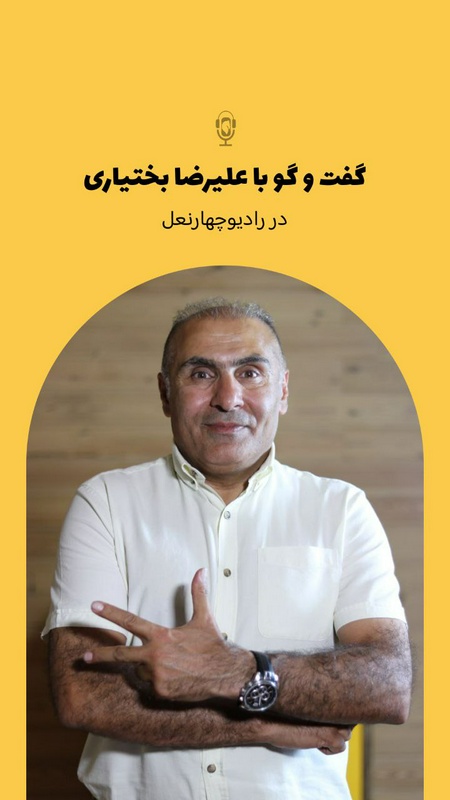
Master Alireza Bakhtiari on the pyramid of equestrian principles
خلاصه
In the sixty-seventh episode of Radio Chaharnal, Professor Alireza Bakhtiari examined the main pyramid in equestrianism and the impact of mental and physical factors on horse behavior. He emphasized the importance of understanding the horse's conditions and emotions, stating that changes in the environment can affect the horse's performance; therefore, riders should focus on calmness and effective communication with the horse instead of pressure. Additionally, Professor Babak Mohammadi's views on the horse's mane and its impact on strength and flexibility were discussed. The concept of "impulsion" and the importance of maintaining rhythm and balance in movements and jumps were also emphasized. Professor Bakhtiari pointed out the necessity of straightening horses before training and proper riding techniques, introducing continuous education as the key to success in this sport.
نکات کلیدی
- تغییر محیط میتواند بر رفتار اسب تأثیر بگذارد.
- ایجاد رابطه اعتماد با اسب مهم است.
- برای کاهش ترس اسب، باید به تدریج او را با شرایط جدید آشنا کرد.
- تماس نرم و پایدار باید از عقب اسب بیاید.
- ایمپالشن به معنای شوق و اشتیاق اسب برای حرکت به جلو است.
سرفصلها
- رفتار با اسبهای ترسو — روشهای کاهش ترس و ایجاد اعتماد در اسبها.
- اهمیت تماس نرم و پایدار — چگونگی ایجاد تماس مناسب با اسب و تأثیر آن بر عملکرد.
- نقش ایمپالشن در مسابقات — تأثیر ایمپالشن بر عملکرد اسبها در مسابقات و روشهای ایجاد آن.
پرسشهای متداول
چگونه میتوانم با اسبی که از چیزی میترسد رفتار کنم؟
میتوانید بدون اینکه به آن چیزی که میترسد نزدیک شوید، از فاصله دورتر عبور کنید و به تدریج فاصله را کاهش دهید.
چگونه میتوانم به اسب اعتماد بیشتری بدهم؟
با ایجاد رابطهای دو طرفه و احترامآمیز بین خود و اسب، میتوانید به او اعتماد بیشتری بدهید.
چگونه میتوانیم تماس نرم و پایدار با اسب داشته باشیم؟
تماس باید از عقب، از موتور اسب بیاید و با یک تماس ملایم نگه داشته شود.
چرا ایمپالشن در مسابقات مهم است؟
ایمپالشن در مسابقات باعث میشود اسب با انرژی و شوق بیشتری حرکت کند و در نتیجه عملکرد بهتری داشته باشد.
چگونه میتوان اسب را صاف کرد؟
برای صاف کردن اسب، باید به ریتم و صاف بودن توجه کرده و از تمرینات مناسب استفاده کرد.
متن کامل گفتگو
In the name of God, greetings to all of you dear friends and esteemed members of the equestrian community.
With the sixty-seventh episode of Radio Chaharnal, I am once again your guest, and I hope you have been satisfied with the content produced by Radio Chaharnal so far. I do my best so that you enjoy these talks and discussions and learn from them just like I do. Episode sixty-seven, like episode sixty-six, was recorded with Master Alireza Bakhtiari, and we had an extensive conversation about the main pyramid of equestrianism, from which I personally learned a lot and am sure that.
Many of you, like me, are interested in listening to these valuable talks. Unfortunately, the Zarinpal website has currently blocked access links for individuals, and I will not talk about financial support for now. Just having you present and following Radio Chaharnal is the greatest asset and wealth for me. My colleagues in this episode, like in previous episodes, dear designer of this episode's poster and Instagram cover, dear Negar Goudarzi, and the lovely Erfan Moghaddam are also the composers.
Of the opening and closing of Radio Chaharnal episodes. I won't take more of your time and invite you to listen to the sixty-seventh episode of Radio Chaharnal. Well, sir, we got a little away from that pyramid, but I really enjoyed and learned from this conversation, especially about the center in your talks where we had a discussion on relaxation. We continue, reaching the mental parameter item, the essence of things that go through the horse's mind that might disrupt that calmness and change the system. Now give some explanations there to see if the mind and physique do not cooperate, first let me say it doesn't have that softness and flexibility. Now I think in modern science it's called nerve and muscle coordination.
One of the things that have a great impact, if I want to mention an example because it might have a great impact on every horse, is how it slept at night, what it ate, how it was treated in the stable, all these have an impact. Let's leave these aside, but for riders to understand what mental engagement means, let me give an example. Imagine you have gone to a competition or a new place with a young horse, you see a simple hand change or a step that you always do easily at home, you can't do it easily there.
Because the horse, just by changing its environment, has become mentally tense. I really like to be comfortable when our place changes. Yes, changing conditions is very broad, and I think the horse needs to be understood to know its state. But when a horse always does everything very well.
One day it doesn't, instead of putting pressure, let's find out why. If we don't find anything in its physique, let's look into its mind. What does that mean? It means seeing how it slept in the stable last night, whether it slept on its side, how it drank water, let's examine those. It might be many things, it might be many things creating that tension for it. Maybe the manege environment has changed, now its place has changed. The horse's perspective is different from ours.
In the club, we shouldn't think we can solve it with pressure because if we hit it with a whip, we actually create two problems because we say, well, now every time you see this monitor, there are two problems: one is to be scared, and the other is that we are going to hit you, then it becomes two problems, the mind gets conditioned, yes, instead of doing this, you can gradually familiarize it with, it doesn't matter if you don't jump in the competition, it doesn't matter, but you solve it, you solve it forever.
Until you finally want to somehow, now thank God for the laws that have been put in place, beating and such things are no longer possible, but before when there were no laws, those events would happen, and then the horses wouldn't get better, meaning those who write the laws are thinkers, they know, they are very knowledgeable, that's why they write these things, it's not their way, if it was, be sure they wouldn't have put the law because it's not their way, it's not in the rider's interest nor the horse's. A question arose for me in the middle that I'm sure is a question for many of my audience, if a horse is afraid of something.
As a rider, what behavior should I show? I have done it myself many times, it is afraid and results in an obstacle from something that is now in the manege and creates a bit of fear for it, it runs away from it. What should I, the rider, do? Because I think it relates to relaxation. There are two ways. If you are riding, you can without going directly towards what it fears or even getting close to it, for example, seven or eight meters away.
Do shoulder-in and pass by so it doesn't see it. Next time you come, make it 5 meters, next time make it 3 meters, next time pass by it at a distance, go much further, much further, come back maybe the whole manege, maybe it's very big, now half by half you come and with a shoulder-in constantly, my own method starts this way. After a while, because all horses have it in their blood to be afraid of something when they are born, they are foals, nature in nature shoulder because they were always hunted, right.
How do we give them this courage? I give it this way myself, and now when I'm not riding, I'm on foot, my work is much easier. Much, much easier. I mean, a horse that is very, very scared of something, in 10 minutes when I'm on foot, it's much easier. What do you do there if you can see in the picture, first I form a relationship, I form a relationship between us two, five minutes, five or six minutes, a relationship not a relationship of respect and.
It's mutual and like the relationship that horses have with each other in the herd, I establish the same relationship, and then it doesn't fear anymore, I go, it trusts me, wherever I go, it follows me, we were riding, it didn't jump, then we got off, took the reins, it came behind us, jumped, it's easier, meaning there your connection is easier, why because it's something that the horse is not supposed to think when it is born that it is going to be ridden later, but at first, when it forms its connection with other creatures on the ground.
It recognizes and understands that connection more easily than when someone is above, for example, horses don't know what the steam in the bathroom is, what's inside the bathroom, put the outside leg, they don't know what outside is, from the horse's perspective, it only has one front leg, from the horse's perspective, we have two front legs, it has one water drinker in its mouth, that's it, we have two, outside front leg, inside front leg, we talk about these things, for it these don't exist, but it recognizes relationships on the ground better, when you come lower, it's much easier.
We understand each other's language better and can advance better. In an interview I had with Professor Babak Mohammadi, they talked about the topic of a horse's mane, saying that whichever side the mane is on, that side is stronger and, so to speak, softer. Then, as we were talking before recording, we discussed this issue. I want to see what your opinion is about this topic of the mane and which side it is on.
Of course, Professor Mohammadi, who is a veteran and completely respectable, I will now give my opinion on this technical discussion. While confirming his words, which are completely endorsed, but from the side where the mane is, it usually turns more easily to that side. However, in my opinion and with the resources I have, it does not mean that it is softer or stronger there. It's not stronger there, it's softer there, it turns more easily but it's not stronger. Why is that? The reason is that the muscles on the opposite side are stronger and therefore stiffer and less flexible. That is, we think we have a horse whose mane is on the right side and it turns more easily to the right, but this same right side is also weaker. Meanwhile, its left side is stronger and less flexible, and when we work to combine the two, I can practically show you this if you want. We should remember that if I show you in riding how we turn more easily on the side where our horse's mane is, but its head does not come down easily and comes down later with more difficulty.
The reason is that it is weaker there, it turns more easily but its back and inside leg and that side's back are weaker. For this reason, its head does not come down easily and then we say to shift the weight and not change the diagonal. Without changing the diagonal, shift the weight to the left side. Then you see its head comes down. It's interesting how easily it can be proven. Let's say this is what Mr. Mohammadi said completely correctly, meaning the side where the mane is turns more easily.
Compared to its other side, its opposite side is weaker. Let me tell you, in this production process, now on September 18, Radio 4 Naal will be two years old. Perhaps the person who learned the most from it was myself, due to interviews with the biggest news like you, like Mr. Babak Shaki, like Davood Khan Bahrain, and many dear ones who, Mashallah, have been a real educational class for me. I really have to admit this honestly. Well, now we have to go to the topic.
The contact is important, a contact that is very practical, and I personally feel that explaining it in words is difficult. It is about discovering and feeling. Now I would appreciate it if you could explain it in the simplest form possible, which is also understandable, considering the knowledge and skills you have had over the years.
In relation to what the FEI has defined, meaning a soft connection between the rider's hand and the horse's mouth, soft and stable is correct. Well, this soft and stable means the drinking fountain, meaning the hand does not become loose in front. There is a contact like holding a bird in your hand and you neither want to pull it nor let it go. This is to this extent. Now when you have this connection, where does it come from? This connection comes from the back, from the engine. In principle, everything starts from this engine and comes through that longitudinal flexibility.
In the previous discussion we had, meaning that top line, those muscles from the tail to the horse's ears, this comes and is transferred to the mouth and to the rider's hand. If we have this with a gentle contact and keep this engine running here, gradually the horse becomes a drinking fountain. Over the years, it may take a month, six months, or a year, or a year and a half. But to come and ride in one day and now immediately set the drinking fountain, in fact, we do not set this because the horse should go towards the drinking fountain, not that we.
Pull the rein into the drinking fountain. Here several problems arise. One is that the horse's head falls very low, in front of the center, and its weight falls down. To jump, we must give the weight back. Well, here we are doing the opposite work. We encounter many problems in jumping and when it wants to rise, it sits on its legs, no longer sits on its legs and its weight falls. Here we are working so much and we are actually bringing it to a dead end that.
The contact of each horse is different from another. The body format says keep 200 grams of weight, one says 300 grams, one says we feel this. 500 again 300 grams return somewhere, increase somewhere, decrease somewhere. But mainly our contact is soft and stable. That is, of course, all of it is soft but in any case, somewhere we may apply a little more pressure. But in any case, for things like half-halts, for transitional work, we may do this but for gathering the head, we should not at all.
The horse's head does not happen from the front. Everything comes from the back here to our hand and then over time, slowly the horse becomes on the bit. Look, let me tell you something. When I myself look at horses from a distance, I understand from a point how the horse is on the bit. Is it the appearance of the matter or reality? There is a connection between the neck and the horse's head, the horse's jaw. Yes, there I should be able to put one finger in and out. There should not be an empty space there. When I look from.
How much it is pulling, what it is doing. From a distance, I may not be able to tell if it is pulling or not, if it is doing its work little by little or not. I understand from this, it is correct. Because this connection, that connection when you are with pressure, that empty space, where it is empty, I can beautifully put one finger in. There it comes, you have such a heavy mouth tool that is formed under this, which is also very thick. You touch it, it comes into your hand. Even my foot told me that we.
In the new science of riding, we do not put the horse on the bit and do not make the muzzle perpendicular. That is, we brought it from 90 degrees to 80 at most 85 degrees. This perpendicular brings a terrible pressure even on the neck disc. Following your words that you said and now with the ninety, in any case, the horse itself may want to. You have a gentle contact, over time when it becomes experienced, in that very flexible walking, very relaxed, it may take it to ninety itself.
I see this in many places, it has been done very correctly, it may take it to 90 but without any pressure, without anything it behaves and usually does not go back to 90, usually does not go and the subject is that the rider should not do this with his hand. Because when he does this, he messes up the two previous stages, messes up the rhythm, and messes up the flexibility issue, creates tension, and then locks the perfume. The sign is that your horse is walking, its legs are working a lot but its front is just like this.
Small steps, what does it mean? One of the signs is that I see someone riding a horse, and because they are applying pressure, the horse is lifting its leg, working to some extent, but it's locked in front. This means we must refer to the rider's hand. Yes, the incidents that happened to the rider, either in the same session or previous ones. That's correct, but what has been done with that horse can soften and move provided that the speed and tempo are not disrupted.
Here, one must be careful. We go back again, all these are interconnected. You can't sacrifice one thing for another. Then, while maintaining these foundations, we take a step forward and add this. When the rider's hand is very rough or wants to take the horse to the water trough intentionally, one of the signs is that the neck becomes short, the horse's neck drops, and the weight falls on the hand. These problems that arise, so I repeat once more.
We have no choice but for the horse to first follow the movement from behind. We move very gently forward, meaning an extremely soft connection. Initially, we gradually increase this contact, while maintaining the movement, we have a steady rhythm. Slowly we come up, hold the hand until we reach and now somehow hold it at three years old, five years old, and ride there. Again, half a round, now we do the necessary tasks.
Gradually, in 6 months or a year, it becomes gentle to the bit. The only way that exists so that its freedoms are not reduced is this. With maintaining the natural form and rhythm and that calmness and flexibility, we gradually move towards the bit, not rushing.
Because we are destroying many other things. Perhaps it looks nice. In recent years, I have witnessed a lot that everyone who comes towards riding, if their knowledge answers, they do this in the short term. If not, they go towards Nolan. Then, well, the bit organization of the person who produced it, I don't think its most production is in Iran. At home in Iran, for example, 20 hanging Rasuls.
In various models of two-piece and three-piece, the egg is tall. The reality is that the body itself is not balanced, just correct its rhythm, it comes by itself. As a while ago, I was watching a video that unfortunately, the name of that person is not in my mind, emphasized that sir, have something to do with the position.
Correct the rhythm, let your horse be calm, be forward, it finds its neck shape and becomes compatible with its back. From the beginning towards quickly putting on the bit and these stories. But unfortunately, we still have a lot of work in this place. In my opinion, specifically the topic of contact, well, this requires awareness. Meaning if you show many riders what happens to their horse, give them this awareness, they avoid it. These are just the virtue of seeing. What virtue when mounted said wow.
Another one there said wow, another one there looked and said wow, a virtue seen. Exactly now if we come and tell him this that well you have this, you are doing a job. I have a formula that I invented for myself. I put a 23-meter distance and say trot through this count. Count every step that comes down. Those who have done this with their horses usually don't put below 9. Those who have bitted, those who have forced the bit, eight and a half, nine, these take more steps approximately.
Those who have worked freely with their horse come to 6 and 7. It has its movement and then balance and water trough has also become over time and then 6 to 7 hits there without its speed increasing, its tempo has increased. Meaning it hits six steps, seven steps, and reaches medium and upright. Because finally medium and size if we want to talk about a pony or one, for example, about warmblood and balanced from balanced I am talking about now understand.
It's a criterion for me, it might be for a horse the same 9 goes free, completely free is counted, completely correct account the parameter selection has a rule. When I put it myself, I look and see these if they are free, they hit seven to six to eight. Correct, but the one that was stuck hits ten to eleven to nine in this thing with the same but I prove it right there meaning I say right there that well come look one is smaller.
7 to 8 to seven and a half it goes becomes 9 I say look how much difference there is in 23 meters step two steps it hits more it's locked and right there its hand becomes soft meaning from right there this starts a start its belief changes changes it comes takes softly I have done it many times I have gotten a lot of results this is if you can give awareness exactly.
And people become aware, riders no longer do that. But because they have always seen and have not seen those defects, unfortunately, reference to reference and book is very little and we go forward based on our experiences. Meaning I personally give an example so that no one gets offended. I don't come to think that sir if I am stuck this person in books I search find the correct reference. Now also no one can say sir I don't have its resources. The world of resources you have to translate in 15 seconds here based on such and such source book Mr. written by Mr. so and so.
The mental model that sir I want to change this for this need to form in me that sir this method has a flaw. I always tell the kids around me sir for you to be a coach be a rider you have to have a complete toolbox. There is a classic example in psychology. If your tool is only a hammer definitely everything all problems for coaching you have to increase the circle of words for the principle your knowledge experience tool your science.
The text you read the book you read the reference you molded or not a mentor whether I am stuck here what to do now send a film how is it there where we don't go towards that sir let's hear new words it seems the end point of work is right in this sport something remains to add to contact no thank you very much well sir we came up a level.
And the important topic of Impartial that I really don't know what translation can be made in Persian but some translate it as movement translate it as speed. I don't understand to choose a Persian word that conveys that concept. It also asks a lot with its wrong rhythm what's the difference. Well, many unfortunately like me don't know sir this pulse you translate explain I don't know you translate you explain say it in a way that I also understand. See that energy transfer that we had in the previous discussion that came yes through those muscles.
The horse's longitudinal muscles become engaged with the bit here, and this energy returns to the back, making the legs more active again. This is called impulsion. Now it's the same movement but something beyond that movement. The translation we usually do in Iran. I'll give an example of how this example manifests externally. The same example you want to give, which is the external manifestation of these elements. Actually, well, if I say this now, that too behind this example, let me say the example first, which someone now.
I make changes to the example. Someone gave me the example many years ago, maybe 20 years ago, 25 years ago, but it stayed in my mind, and I might have made changes to it, perhaps improved it from my perspective. Imagine you're driving a car at 30 km/h in 5th gear, in 5th gear at 30 km/h, the car has no power, meaning it will stall. Well, now imagine the same car at the same speed of 30 km/h.
It has energy. It's very mental. It's very mental. You can't remove the mind here. It's very mental, meaning it comes and goes back. The horse's legs become more active, and then mentally, it wants to move forward more, and when you're riding very energetically, very majestically, anything means riding becomes much easier for you.
You can easily open up, easily gather, easily do everything without the horse stalling, without it bucking, meaning the horse is mentally eager to move forward, and of course, let me tell you, this has a limit. You shouldn't ask too much of the horse. Now I wanted to ask where we constantly, for example, if we want, for example, since we talked more about jumping, for example, in a 130 120 park.
We should have it in all parts of the park except from the start line to the finish line, or we reduce it somewhere, for example, for a line, we use some obstacles while maintaining rhythm. See, we want this eagerness in movement from the horse's step, it becomes more evident there, it comes out more in the canter, but well, we give rest, these are for training, right, but when you go to the competition, if those 60 seconds you have are with this impulsion, the horse is constantly eager to move forward, and you see this impulsion with that.
Passage and piaffe that comes and goes up with a lot of suspension shouldn't be mixed. This is the background, right, its method increases more, but our goal from this impulsion is not a lot of suspension, our goal from impulsion is the eagerness and enthusiasm that this engine comes back again, the engine comes again, meaning we're going with second gear at 30, not with fifth gear at 30, we're going, yes, it has itself, meaning we're ready to accelerate at any moment or release the gas a little, feeling the power under our feet.
During those 60 seconds that you're jumping the course, you constantly have it at every moment of the competition, you give rest, work more calmly, I don't care there, and there it has several benefits for you, one is that you don't get time faults because you want to take it on the course, you held it a little, it's that it wants to go with eagerness and enthusiasm, not that it's too much to be uncontrollable, that it takes it away, I'm not saying that, that's not its name, right, that energy that comes and is controlled, I've always inferred about this that, for example, I say, for example, this park, for example, today I want to jump 35.
On the course sheet, it's written with a speed of 350 meters, determining how my rhythm should be, now suppose I turned, for example, towards a three-part combination, for example, a double part where the entrance is a small oxer, because I went to the game, I know that I have to move with more eagerness and enthusiasm there to be able to get out of the width of the oxer, it might, for example, give me a collected line behind it, for example, put a pole that I'm forced to take a small step while maintaining both rhythm and the same movement, I always that this gentleman, a moment's.
It's used, but your opinion is that, for example, I come into the course, for example, 145 50, we have that 350 meters 370 meters per minute, along with this impulsion throughout the course, meaning impulsion is not speed, impulsion is not additional speed, the translation is eagerness to move forward, right, the result is more suspension, the result is more movement, not its meaning there, see, let me tell you this, you gave a very good example, you say the double you have, you say with a speed of 35 km, let's say to be more understandable, for example, with 30 km if we go towards.
This double our horse passes, which 30 km has width, which 30 km, 30 km with fifth gear or 30 km with second gear, right, you're going with 30 km, but the essence under your feet has that feeling that it's moving energetically and strongly, or do you feel that it's off, has no power, like that car. For example, if the car has power and your horse really has power and is going towards the obstacle, there you have this impulsion, the speed is the same, you have two, one, both speed is the same, rhythm is the same, you have two, one, but in this.
Has power, doesn't have power, its translation is a bit difficult, its explanation is a bit difficult, but the car is completely on, this is when you're going towards the oxer, your speed doesn't increase, this impulsion goes higher for the upright you have, but for that, it's much more necessary, so for the oxer, it's much more necessary, it wasn't wrong that for some parts of the course, we might, due to the end of the course, for example, give a double oxer, for example, the last line, there's no power left, there I have to organize the movement well.
Have it here, for here we have a lot, you're passing, but when it becomes an oxer, if you have this impulsion, you pass very easily, and when it's less.
You pass with more difficulty, much less, it's much more difficult, very well, well, sir, the topic of impulsion really stuck with me, it really had many educational points for me, honestly, we go up another level, meaning the fifth level and the level of straightness or being straight, which I now want to tell a story here, it's very interesting that Mr. Fashan, when he became the coach of the Iranian national team.
He was one of the first people who took the kids, went across the hall, stood straight, and well, there was a challenge the kids had, really, then he did the trot and these, and a lot of the topic, meaning I realized there that sir, this straightness is one of the hardest things in equestrian that now in Mr. Mohammadi's interview, they said you should be able to walk straight, and we don't have straightness or being straight, meaning what you explained very well, see, when we look, these hands and feet cover each other, meaning we see two axes, we see two axes.
It is very important, why is it important? First, let me explain that Mr. Mohammadi, I heard, said correctly that you believe all horses are born crooked. Yes, yes, the reason is exactly how they lie and live in the womb. They come with a curvature, although many of them straighten during training, and that's exactly our job.
If we don't straighten the horse, we can't ask it to work. In this case, one side of its body goes one way and the other side goes the other way. All stages of rhythm, contact, and flexibility are lost, and you will not have collection. If this is not there, none of them will be there, and all of these come into question.
In this pyramid, if it is placed here, it is not because we should forget it. When we have done all of these and reached here, we start talking about straightness. From the very beginning, straightness is important because if it is not, we do not have rhythm either. From the very start, we constantly pay attention to rhythm and straightness to reach this stage. At this stage, we need to look at the subject more carefully and professionally. Of course, I have an explanation that some may not like and others may be surprised by.
In the definitions that have come from the past, they say when you move in a circle, the horse's spine takes the shape of that circle, and this is called straightness. This is not necessarily something that, if it was correct in the past, is correct today. It may change tomorrow, as is the case in all sciences.
A heart surgeon does not open the chest like 50 years ago. Today, work is done with a camera and through the veins, and there is no need for a full opening. Everything is updated, and this should be updated too. However, some sentences and words have become rooted, and it may be difficult to change them. In books and various places, we have drawings of horses moving in circles with a complete curve. But in reality, the only place a horse can bend is the neck, which can turn and scratch itself. Under the saddle, movement is almost zero, and there can be no rotation. If it were possible, the spine would break.
Almost close to zero, the vertebrae have movement and can have curvature. This is important and needs to be corrected. One day, I was beside a trainer and looking from above. The trainer told his student to put his foot and use the spur. This was a mental image of a curve seen in books. But the reality is that such a thing is not possible. In books, it is drawn for beauty. If you refer to those who have done dissections, you will understand that such a curve cannot be made.
The neck and tail have movement, but under the saddle, movement is very limited. Movement occurs in the soft tissue of the body. When I walk on my feet, the spine may move, but if I am on all fours, the movement stops. Under the saddle, movement is almost zero. Even in photos, they separate the neck and say this curve is fixed. In reality, the pelvis rotates, and the tail plays. They should know not to expect too much and not to bother unnecessarily.
Even in shoulder-in, the body is straight, and the curvature of the body is straight. Only the hands and feet have different axes. In shoulder-in, you see three axes, and the horse's body moves straight. There is no curvature in the back and midsection. The solution for straightening horses is that the biggest problem in straightening is two steps, which is difficult. Trot is easier and then becomes difficult again. If the horse opens up more, it straightens more easily.
As stride length and speed increase, the horse straightens more easily. The only way is to ensure you are in balance, and if the horse is crooked, correct it with shoulder-in, circles, and bends. By executing these correctly, we achieve straightness. I remember being in Qom, and you were coaching. I heard you told someone not to go on the fence line and come to the center. This is the place. I was surprised that someone was giving these teachings in Qom.
When you move on the fence line, you do not allow the horse to straighten. The horse's croup is larger than its chest, and when on the fence line, its outside leg comes between the two hands and does not go straight. Even if you take a half distance, it creates a psychological issue for the horse, fearing it might hit something.
Well, now we have to do all these to be on the right path. If we are not on the path, I am not saying someone should not go, but if someone wants to go, they should use it and go inside. I don't know, maybe they do a side job, but they should not expect straightness on the path. They should know that when they are not straight on the path, they should come three or four meters to this side to move straight. We learn this by default and tell the student to move on the correct path and keep the left hand to avoid colliding with others.
If separated, it is torturous for them. They should keep a three-meter distance or, for example, move in a circle. Because the horse is accustomed, and psychologically, their job is to align with the line. Students move with the same system, and when you want to bring them to the center and do extra work to separate from the line, it is psychologically torturous for them and makes them feel incapable.
The next topic, well, we have reached the top of the pyramid and collection. In various sources, whether among children, trainers, veterans, and even some books, there are subtle disagreements about this collection, how much we need this collection, and where and what process should occur for this collection to happen. That is, where this pyramid should work to ultimately reach that collection. What is collection? Mr. Bakhtiari, see, collection means that your horse's weight is transferred to the back. Not completely, but a large percentage of it. The stride length becomes shorter, and the steps become higher in terms of height.
The problem we have is that if someone does not know collection, it is better not to do it. It is more beneficial because it is something dangerous. It is a double-edged sword. Many think collection means shortening the stride. If the horse's stride has shortened and the back is engaged but the front has not become lighter, it is not collection. Collection should be such that the weight is transferred to the back. Our main issue in collection is that the weight goes to the back. Initially, the center of gravity moves to the back, then the strides become slightly shorter, and the stride height increases.
If you only aim to shorten the stride, you throw the weight forward and work against collection. In your mind, you think you are working on collection, but the stride has become small and heavier. This is not collection. Training in collection should be such that the front of the horse becomes lighter. If the front has not become lighter, it is not collection. That is, we can say that the level of the croup comes down, and the front goes up, and it is forced to move its back more.
The back becomes rounded and the croup goes down a bit, which is why the back becomes slightly rounded. We shouldn't think about the picture shown in dressage that represents collection. In jumping, it is of no use to us and is harmful to our horse. As I said, you can't bring a horse that jumps over one meter. We must ensure that the front of the horse is light. If the front is not light and the stride has shortened, we are not in collection and we bring the weight forward. Release again, let go so the horse moves again and test it. By maintaining those previous five stages, we must progress step by step.
When we reach collection, we must take long strides while maintaining collection. The stride should be comfortable, the horse should be free, and the front should be light. In full control, but with a long stride. This means we can take both small and large strides while maintaining collection. Of course, when the center of gravity shifts back and the stride has height, collection occurs and the stride naturally shortens a bit. But our goal is not to shorten the stride. Our goal is to transfer the weight to the back. For this reason, collection occurs and the stride shortens a bit.
In collection, if we want to say for a young horse, for example, a four-year-old horse can travel 10 meters while maintaining balance, this is sufficiently in collection. In Europe, when I saw up close with foals, there was no talk about collection at all. They just said move forward, learn to walk. They emphasized not to be on the bit at all. Your rein should only have a touch. In the discussion of contact, we said that the movement that comes from behind should be softly transferred to our hand and we should hold it so the back becomes more active.
After that, we maintain straightness and ensure the hands and feet do not go astray. All of this is ruined if we do not reach collection. When we reach collection, we should feel the lightness of the front. If only the stride has shortened and the front has not become light, it means our hand has become stiff and the stride has shortened and collection has not been achieved. It means the weight has not been transferred to the back and we have ruined the base.
We must gradually and carefully reach this stage so we can use it for jumping. The explanations you gave about these six parts or six levels of the pyramid, each has a detailed and complex story that by maintaining one, we correct the next and preserve those two others. This means these levels must be traversed calmly and over time for the rider to reach that stage.
We certainly should not have shortcuts, and if we do, the horse does not have shortcuts. Moreover, even when we reach collection, it does not mean that you think you have released the contact and that is enough. We are always upgrading all these aspects and correcting all of them. It may take eight or nine years to reach collection, but even when we reach good collection, if you come and ride a year later, you see how much better it has become. At nine years old, it is still better, and this is due to continuous improvement without destroying it. One of the problems we have is that when we want to achieve something, we look at the appearance and destroy everything. One of the biggest problems is that some horses may lose their quality in Iran, just because of this collection and contact which leads to the decline of the horses.
If you do not execute these two matters correctly, without a doubt, any horse in six months or a year, no matter how trained, will be ruined and lose all its capabilities. We have reached the end of our discussion, and I can boldly say that this interview was one of the most informative parts that happened on Radio Channel, and I personally learned a lot. I honestly admit this. I always say at the end of the interview that if you, as an expert in this field who has both experience and knowledge and is up-to-date and has worked in a professional atmosphere, whether in your own city, in competitions, or in Europe, have always been in that professional student mode, if you want to give advice about this pyramid or generally about the topic of riding, whether in the youth era or in riding quality horses and at any level of riding because the audience is from every age group, what would you say so that we benefit better over time?
I say we should learn so much and seek education so that we do not need to use the whip and there are no blood marks on our horses' bodies from the whip. The use of the whip should not cause the horse's body to bleed. To reach this stage, two things should not happen to you. We must always learn. I myself say that I must always learn so I do not have to use the whip, because if I use it, no path will be right for me except that everything will be destroyed. It can be done easily. Now those who were there and saw know that in Europe in reputable places, without using the whip, with knowledge and without the need for whipping and hitting, they work. The important thing is that I myself believe in this issue and tell others that if you want to reach this stage where riding becomes easy for you and riding becomes very easy and simple for you and all its problems are solved, we must learn more.
Thank you very much for taking the time and the honor you gave me and the radio. I hope that if there were other topics, you do not avoid them and if it was a scientific discussion and I knew it, I would be at your service. I hope you have listened to the end of this episode and by sharing these words, we help others learn, especially those who do not have access to first-hand resources. Take care of yourselves and your horses.