Arash Gholami about the 1404 National Adult Championship and its controversies
خلاصه
In the sixty-ninth episode of Radio Chaharnal, Arash Gholami, a veteran equestrian, discusses the national championship event for adults in 1404 and the challenges facing equestrianism in Iran. He points to the reliance on imported horses, the shortage of prominent trainers and riders, and the poor management of competitions, emphasizing the need to focus on the quality of horse care. Gholami also stresses the importance of timing and the needs of horses for better training and addresses the mental and technical challenges faced by riders in international competitions. He mentions the importance of continuous learning and staying updated in this sport and shares his experiences with others. Ultimately, he emphasizes the necessity of veterinary supervision in competitions and the importance of respecting horses and enhancing skills, stating that staying a champion is harder than becoming one.
متن کامل گفتگو
Hello and greetings. The sponsor of this episode of Radio Chahar Naal is the equestrian equipment store Asb. Asb is a specialized brand in the retail of equestrian products.
This collection was established by a group of experienced specialists in the production of feed and equestrian equipment. With a precise understanding of the needs of horse owners, this year they opened their first physical store in Kordan, and at the same time, you can buy their products online through their active website and Instagram and receive them anywhere in Iran. Certainly, by purchasing from Asb, you will have a different experience in acquiring equestrian tools and equipment.
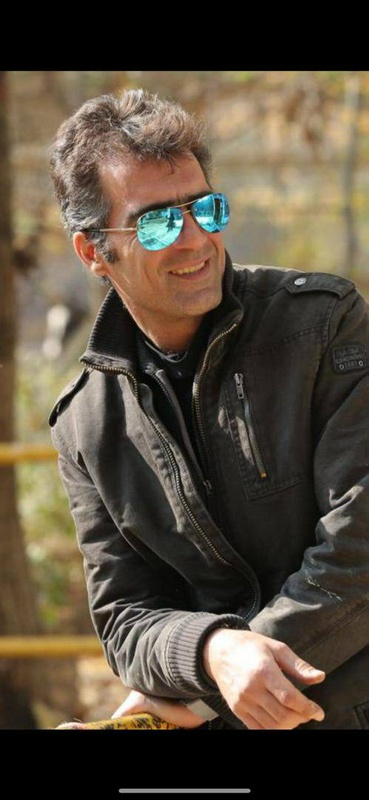
You can find the Instagram link and also the Telegram channel of Asb in the description of this episode. Greetings to all of you good listeners of Radio Chahar Naal. I am here again with the sixty-ninth episode of Radio Chahar Naal, and this program is about the Adult National Champion event in the year 1404. My guest in this program is dear Arash Gholami, who is one of the experienced riders and in a way a veteran in the field of equestrianism.
He honored us by being a guest on the Radio Chahar Naal program. I am trying to also create programs about other aspects like veterinary and the event's organization model, and I hope those involved will accept and talk to me so that we are all informed about the process of organizing this event. My colleagues, as always, are dear Farshid Jahanbazi, the designer of this episode's poster and Instagram cover. Negar Goudarzi and Erfan Moghadam are the composers of the opening and closing credits of Radio Chahar Naal episodes.
Let's listen to the sixty-ninth episode together. In the name of God. Mr. Arash Gholami, thank you for honoring me and, due to the long-standing friendship you have with me and my family, accepting to be a guest on my program on the radio and to talk extensively about the topic of the National Champion. It is truly an honor for me personally that...
You sat as someone who has almost forty years of experience and has participated in many competitions. Regarding the topic of the National Champion, which I asked you to monitor the entire event before it happened and to create a program together. You accepted all this effort and the honor that...
If you have any greetings, please do so, and then we will start talking. Greetings to the esteemed audience of Radio Chahar Naal. A special thank you to you, Mohsen, for taking the initiative to start the radio and informing many people...
You have put the main programs in place and contributed to the progress of individuals. You are truly kind. It is your support that motivates me to continue. Well, if you allow me, during the interview, I will call you by your first name due to the friendship we have. Arash, you were present on the first day of the National Champion, and considering that you yourself have been jumping in the Adult National Champion event since 1987 for 30 years and were among the top national players in the 2006 Asian Games in Qatar and have jumped in many foreign arenas.
How has the start of the 1404 National Champion been compared to these 30 years that you have seen all kinds of it? I must say that on the first day of the National Champion that I saw, no National Champion of this size was out of the list. I can almost tell you that we had over 10 percent eliminations just because of the problems the horses had.
And this can be a warning for our coaches, owners, and federation. Because I see it's a pity. In the past decades, the kids have progressed a lot. The level of riding has gone up, the level of courses has gone up. The very beautiful course by Rakhshan Radpour that I enjoyed from the first day to the last. It was very enjoyable, beautiful, technical, very technical, very technical. An extra breath could...
Cause an error, an extra step could cause an error. It was very beautiful and worthy of a championship. Now let's thank dear Rakhshan for his course, and we have many other course designers whose work has become beautiful and we have progressed. But Mohsen, in any case, we have become a consumer country. We have become a country that only imports horses. Now for every level, it's not just the country. I mean, if we look at our owners' competitions, they also...
Want imported horses. Youth and junior competitions, everywhere we look, everyone is after foreign horses, they are imported, and this training story in Iran has reached zero, and it is very regrettable for a country like Iran, which was once one of the greats of world riding. Yes, exactly. Now look at the Arab countries. A rider becomes Al-Faris. Why? Because the first time an Arab saw a Persian on a horse, and now I think a big plan should be made for this story.
We have good riders. Now I really want to say that we have very good riders. Although in this year's championship, some of our stars were not present, and maybe if they were in this year's National Champion, this championship would have taken on a different shape and color. We had many absentees. Yes, the big ones whose names are mentioned, our exceptional ones, who may take years to fix their limp and we cannot find them in this form, are not there. Now Davood Pour Rezaei...
Nagmeh Khanom Khanjani, many others, Masoud Makari-Nejad, many were not there, and each of you, Abolfazl, your name truly adds weight to the event program. You were greatly missed. Now let me say that we also saw very beautiful rides. Abolfazl Mansouri rode very beautifully. I can tell you that maybe a small percentage was bad luck. Now he hit two poles, and one of his poles...
Maybe his horse got a nail stuck in that distance and didn't come up, and now dear Maziar used his vast experience. Now he had a very good, top horse under him. He used his experience and could have stood in front with one mistake from Abolfazl, and it was a beautiful competition. I don't know, it was a beautiful ride, but we have never faced this many expulsions in any year. Now let's return to the same topic and check because I think it is very fundamental and...
In these few years, exactly as you say, we have only consumed resources of all kinds. Even in maintaining horses, I think we have not done well. I mean, I personally feel that given the resource limitations, whether it's sanctions or the Euro becoming expensive for us or horses not coming or a directive, all these have caused us to even consume what we have now, and we are not really using it properly.
What do you think? Why do we reach this point? What could be the reason? Is it a medical reason? Are the reasons the names of the competitions? The conditions for holding the competitions? Which of these do you think can manage to minimize the usage time for us? You pointed out all the factors that affect it. The number of competitions is high, next season the heat can be influential, the ground next. Well, all these make the conditions bad, lower the quality of the horses, and again we are consumers because we don't have trainers. Right now, we actually don't have any.
Well, so with the first mistake and the second mistake, the person wants to change their horse and doesn't go to fix it, but rather thinks about replacing the horse. This is not very good. We hold a competition where the conditions are not good, and one of the things that really bothers every year, and this year bothered a lot more, is the issue of spectators. Everywhere in the world, spectators are valued, but we sell a ticket for X tomans.
The person comes, and it doesn't matter to us whether they sit on a chair or on the rail around the arena. Well, this is very bad. These require planning, which I think the elders in the federation should finally come up with a plan and program for it. Yes, the reality is that this year in the championship, of course in the last two or three years, when the Nowruzabad championship came out a bit, meaning it came out of Nowruzabad and the Shohada club, we lost that quality in managing the competition discussion. I am ready to discuss this in detail with anyone who listens to this podcast.
And it seems that the dignity of this equestrian family and all the people who come and sit that day is not important, where they sit and how much space is allocated for them. In the parking space, well, this really cannot be blamed on the club. I mean, even the club, in my opinion, is doing a favor by holding the national championship with all the difficulties it has. But I think in the federation management, we will get to it later. Arash, you mentioned the issue of horse maintenance, which we really, in this matter, compared to everything, I mean, the park has changed, updated, we have imported very high-quality horse equipment into Iran.
But I personally feel that we did not produce knowledge to the same extent. I mean, we didn't go after what we have, what we produced and what we imported, to be able to use them. I want, as an expert in this field with a long history, both yourself and your great father, who hopefully will be with us all, to say as someone who had the patience for this work for many years, what should we do to keep the horses better. My point is that we are a bit stuck in our production story because...
The story of one head two heads has become popular in Iran, which is not an issue anywhere else in the world. When the name of one head two heads comes up, I think dear trainers don't spend much time on them. Two or three thousand horses have been produced, how many of them have reached the level of 130-135 and above, very few. I don't think they reach the number of fingers on two hands, very few, and this is our weakness. I mentioned that we might not have trainers, everyone is a rider, everyone is a rider. We need to have a program to strengthen our trainers.
Our horse training should have a new dawn, give importance, value, and time to our horses. Look, they don't give time, horses come to 120 and are finished. The same discussion you say, maintenance is one of them. Don't put pressure on it because of selling, because you want to bring your horse up faster and finish it. Every level needs its own horse. If you have a horse that is also produced in Iran, at least you can train it for the young seedlings level, but we don't spend time.
You guys, the time when we now from the early 80s, our import volume increased so much, before that it was very limited and rare. But from the 80s, we really had a very large import volume. You guys, well, because I grew up alongside you, I saw the racing, those that we brought retired from the course, we stood, you just spent time working. You rode Tizpa for many years, it was a racing horse, its bloodline was for running. Why is this patience no longer there? Why don't we have patience anymore? As I mentioned at the beginning, we have become consumers, we go and say we pay money, we go for expenses, we ride.
At that time, we didn't have it. We friends and colleagues who are from my era, even older than me, riders of the 60s, let me tell you this way, we were moving forward with minimal facilities. I mean, if our stirrup strap was torn, we had to go sew the same stirrup strap and ride with it. There weren't so many supplies, so we had to preserve them. Now that condition is no longer there. Now it says it didn't work, no. I told you, with the second mistake, the horse says it's over, sir, let's sell this, get something else. But it wasn't like that in the past. Right, let me tell you, I brought Tizpa out at the age of 18, became fifth in the country with it. Its bloodline wasn't for this work but it was possible. I mean, it's not impossible now. We don't have trainers in Iran, what should we do? The federation should have a program, a program to produce a series of trainers, original specialized trainers. Yes, the very old trainers were with all of them. Mr. Reza Ghadiri would go to Gonbad, buy two trucks of horses, bring them. From his two trucks, three...
Jumpers would come out. Many others, Mr. Nourmohammad Habibi would go, I don't know, bring a horse from the seaside Azizi Pour, he would pull a fishing net from the sea, bring it here, work with it. From the insurance policy of Morvarid, Morvarid yes, became the national champion. Dressage so beautifully, it's not impossible work. We don't have trainers. The one who is at the top should come and encourage, provide facilities so that the trainers can start their work again. Now they don't have any work. The trainers say what should I do?
Should I work on a horse for two years, make a deal, come here and there, I get good money, get a better horse. What do you think is the share of these financial resources in this story? A lot, how much are we involved in commission and sudden big money and this story. But the reality is that we burned everyone, I mean we didn't stand anywhere. You exactly said the main story. Now also think someone who is a novice comes into this work, says why should I go and eat dust, work on a horse for two hours, bring it up 15 cm higher in two months, get a commission from someone, it's over, goodbye. Goodbye Mohsen, we have competitions that have become popular in recent years called tours, now small, large, medium, young, we have everything. Some of it is solvable for me but some of it is not. We come and put a small tour, how high is our height? 15, 20, 25.
These are training levels. In Europe, if you go and see, you say a horse that you are going to jump in 120 is training. But what do we do? We want to beat each other's time second by second. Well, this horse gets destroyed at this age. Obviously, if 50 horses come to the small tour and fight like this, in one year, two years, 50 will remain 5. We go into the story of injections and I don't know, repairs and these things come up. We don't give time, the type of competition is all pressure, 45 degrees heat, it's not right to come and jump.
The rules talk about something interesting, I made the temperature above 32 degrees dependent on the organizer, regarding the conditions. Hold it above 30 degrees, above 32 degrees, consider the elements, the space for cooling the horses, the humidity level, the course designer must be careful. It's not in their rulebook, but the recommendation is that if you hold the event above 30 degrees, these conditions must be met. If not, you cause damage. Now, a question I have, do you think this small tour and these stories affect the riding level or not?
It affects, but at what cost and in what way does it affect that eventually some riders learn how to carry their load. Its hand is positive. Overall, if you want to calculate, no, because its cost is heavy. Its cost is the cost of a horse. The retirement of a horse. Look, a good rider is expensive. In what way has it been costly? It has been costly for years. If you want to calculate, a good rider blossoms in several years.
How much do we pay for a good rider? The golden sentence: a good rider is expensive. A good horse is the same. Yes, really, if a horse, for example, at 10 or 11 years old, is jumping a level like 140 or 150, certainly a lot has been spent to get there. A good rider is the same. We don't consider these and are indifferent. That's why maybe our stars are leaving one by one and are not there. You saw this year they weren't there. Really, three people, now Ali wasn't there. Overall, I saw many of the kids who are slowly whispering that we should go and not jump.
What is the point? One interesting thing that I think now you are more informed than me, the price of horses doesn't match the prizes at all. I mean, it's really funny. Yes, sir, for example, I don't know, the final of the big tour of such and such a cup, for example, the first place prize is 60 million tomans. Then the price of a good horse is something astronomical. I mean, I even say, sir, that prize is not even a tenth of my horse. I mean, the expense is really maybe one or two months of a horse, maybe even one month. Maybe finally the class of maintenance costs doesn't even become one month. Yes, maybe you see the costs.
That nothing is an example, just enough for its honor to want to remain. Just you know one point that is there, a misunderstanding that is often made in tours is that the price of the competition goes up, but practically with this closed market and limited number of horses, the prices circulate among ourselves and then the fewer the number of consumers becomes. I mean, now, for example, I say there was an exceptional horse but a horse that was jumping in class.
No matter how much added value they have, how many people can afford to buy such horses with the conditions we are in now? How do the prices of horses that jump improve? Their training must become stronger, their level should go up in addition to maintaining their health. Now how much can we implement and maintain these? Now I wanted to ask you some issues. The same discussion of the youth tour, do you think a competition like 110 or 115 really needs a cup now even?
Provincial boards, even county boards, should hold it themselves. That sir, they come, for example, now I don't know the prize really, I mean, it's not in my mind how much the final of the young horse tour is, well, but I don't think it pays the cost at all. No added value is produced either. I mean, the price that comes on my horse is reducing the quality of the horse in terms of physical and wear. If you were to make policy about young horses, what would an expert suggest? If I could make a program to do something for young horses.
I try to make it annual. I mean, I don't just let my young horse come to competitions. They must score at the end of the year so that with the points that young horse has gained, I put a championship for them. I put one championship for the youth, but throughout the year it must come and jump in competitions. The type of competitions should be such that it doesn't put pressure on it. Its rider shouldn't be forced to squeeze. I mean, I try not to involve time too much. I remove the top. I try to have my riders and coaches work on the quality of the horse.
We don't have the quantity in mind in the past in Iran, but I heard this that, for example, there were a series of competitions where they said, sir, the time of this competition is eighty. Whoever gets close to 80 would open. We had it in Iran. How was it? For example, they would set the course time, for example, as you say, 60 or 70 seconds. If it was 60 seconds, they would say the closest to this 60 seconds becomes the first place.
They would calculate the course distance and say if a horse wants to go at this speed, it should cross the finish line in this time. Whoever gets closer to this means they went more correctly. Whether you go faster or slower, you would miss the prize. You had to get close to that prize, close to that time. Yes, very Arash, you jumped as a national champion for nearly 30 years and well.
A mountain of experience in this story. I want to see you as an experienced rider if you were to, for example, I say for the year, be a national champion regardless of the discussion of readiness and training and the care you take of the horse, do you have a routine as a rider? Because I haven't seen in these few years, for example, a rider this year I jump, for example, in this last month of the championship, I don't do a series of things. For example, I organize my sport, make my sleep routine, adjust my diet. I personally haven't seen anyone say, but I personally haven't seen the kids have such a professional routine like other sports like wrestling like.
Individually, no, the reality is that there isn't, and any program unless they put a program for their horses. After all, anyone who wants to participate in the championship, I think it is necessary to have a camp. This lack of a camp can cause this to not have a proper plan for their diet, not their training. After all, we need good physical readiness too.
Apart from the fact that the athlete must also be mentally prepared. You step into an arena full of anxiety. Full of anxiety. All those eyes are watching you, and it's the best competition of the year. If you have a memory, please tell me, I would love to hear it. Actually, yes, to be honest, in the 2006 Qatar Games, when I entered the warm-up arena, I had just entered with a third of the audience.
I felt a slight shiver. I would love to hear this. Now, later we are supposed to talk extensively about 2006. My friend, I will record and capture your memories. What was that shiver, Arash? Well, finally, see, we entered a place where many countries were bigger than us, and I thought that when I entered that story, I entered the arena, and for a moment I felt weak. I wasn't wrong. Indeed, compared to our strong country, we were weak.
In terms of horses, facilities, and everything, where did you see the most prominent weakness? Which part was very clear and striking in its weakness? You were riding at that international level. Look, I came to the Asian Games with a single horse of 120 or 125, but here I remember you selected the national team and jumped 40 or 45 in two rounds. Yes, I remember the nausea cracked, but there it reached the arena and.
On the day of the warm-up, I say it wasn't even the final day, I had just entered the arena. The arena, with its grandeur, was better than the arenas of the competition day. What did you feel there that you wished we had here? I wish we had such a thing, for example, besides that horse which, in terms of quality, gives a lot of confidence to the rider. What other item was there that the kids went there with their own courage?
A sports psychologist was by your side, influencing you, but you didn't have one. No, I remember you really went there empty-handed. I mean, I will extensively record our competition memories with Masoud and even with yourself, Khoshdil, because I think it's an important historical document. But this part where you say, sir, we gathered, I think that the space gap should be closed, yes, you don't agree, we should go forward with knowledge to where, yes.
There, you felt the need intensely in that position and these facilities and this obstacle, and now we came here alone, no one is there to coach us, not as coaches because I personally have many friends among other athletes who were and are professional athletes, even now, they have a psychologist constantly by the team, especially those who participate individually. I know the Taekwondo team kids have a psychologist by their side, those who reach the final day individually should sit in front of someone and talk. I have a competition.
In 2000, we also went to Hohhot, China, for horse exchange, well, sorry, it was a borrowed horse, it wasn't very difficult there, it was very enjoyable, the height was 120, and it was a very good experience, it was here in 2006 that I thought we need to become more up-to-date, from that time I became more persistent, when I went to Europe, I remember I tried to go to people who could upgrade me, and I was first with my father.
Then Ramin Shaki, may he rest in peace, because I remember when you went to Ramin Shaki, you had something to say in the field, you stood in many competitions, meaning your rank was ahead of Ramin, this was very interesting to me, why I ask you this as a cultural question because I'm sure many radio listeners would like to know what conclusion Arash Gholami reached that I hit ten competitions, but now I need to work, where did this feeling form, Arash, in those conditions when you were just becoming a champion yourself.
Your great father's working system, you didn't have the knowledge, I thought I didn't have enough knowledge compared to what I was doing, my knowledge was lacking, and someone was in front of me now that I could use who had up-to-date world knowledge, and indeed, may God bless him, he helped me a lot, taught me many things, I'm really grateful that I could use his knowledge and do many things, it's very interesting because we.
In your generation, those with more experience, there should be more foreign coaches, a condition should be there, meaning your generation is among the first ones to rush the most to enter that class, but unfortunately, in the new generation, I don't see, the younger class kids take one or two prizes and don't bring claims of learning, this should always be remembered, say it again, the saddle brings claims, the saddle brings claims, it's interesting, it brings claims, but this story doesn't have a T, meaning no matter how much you pursue it.
Every day, there is something new to learn, and a more successful person is the one who follows these, it's true we went into memories that I really like to stay in, but well, I say here because we wanted to analyze more about our country's champion, the level of riding, meaning if you want to make a distinction between riders in the west of the country 44 that I know you watched with all accuracy and noted many of its points, what items did successful riders have and riders.
Younger or perhaps less knowledgeable would be a better word, didn't have, Hossein, those riders who chose the right rhythm and line were more successful, who could rank based on their experiences, the advantage of an experienced rider, yes, if you noticed, chose the best.
Lines and rhythms with his big horse, even in a round, he rubbed a mistake on time and did the right thing and succeeded, really because it was very instructive, this was, meaning exactly when he bought time for inexperience and the chance that other competitors would shoot, that bad luck, well, there the poor thing, bad luck, four strides went forward, the fate of the championship would change, let's go back again to the same issue you were saying, what other things are there, Arash, in your opinion, you who have years of experience jumping championships at that height.
Look, the most important of them was the right rhythm and line that a rider can choose with balance, see, at that height, maintaining balance is very important, riding comes down from the obstacle, from that height, can return to its place in its own time, balance its horse again, and in front of those obstacles, won't show wrong reactions, soften earlier, stay firm, we witnessed a few mistakes from our riders who were lucky, now they went into obstacle clearing, but.
He could maintain his rhythm and not go, but no championship has that many disqualifications in the arena itself, the same, they went the day before, on the first day, we also had four disqualifications, unfortunately, it was a very disastrous statistic, and this shows that these alarm bells, as you say, have sounded, we need to think about it now, this thought, I don't know, we need to make it so that the athlete falls into place, Mohsen, let me tell you this way, we need to move forward with time.
We should look at what our stronger countries have done. At one point, three refusals meant elimination, and at another, falling off the second time meant elimination, but now that's no longer the case. We should see how a strong country like the Netherlands is executing its championship. One of my questions is exactly this, Arash: right now, the Netherlands has a four-round championship, even though they are producers and exporters of horses. We still have an opinion that a rider who has been competing for years should jump four rounds.
I remember in Farabod, it was a year or two ago, and in the test, you mostly jumped five rounds. From now on, it can be said approximately 74, if I'm not mistaken, 76, with 50 remaining. Yes, and do you think we need it? When we are a consumer country, it is correct that we should find our champion under the best conditions. We should not allow someone who is not deserving of the championship to rise. I completely agree with this, meaning it's not that I say loosen it so much that it becomes a matter of luck, but we should also value our investments.
We should value the audience, value our horse, value our rider, and protect them. In my opinion, see, the first round that is being executed in our championship is correct, it's a one-round speed, but you look at it, in my personal opinion, the first round of the national champion can be a warm-up and a table setter because many times, on the first day, for example.
To all of you, it gave a lot of faults, it went in such a way that I think it was 130 or 135 on the first day, and we all really have worrying faults, but on the last day, it didn't reach, yes, it was eliminated in the first round, it determined its fate and its horse. In my opinion, this is what I'm saying, it's better to refer to advanced countries that are working in show jumping, see what their rules are, and based on their work, we plan, but also consider that we.
Right now, we are consumers, and for the next four or five years, we will remain consumers if we do nothing. Do you think if we don't find a good coach, don't produce so that we can have it for the championship, we will have to import? So, for the next 5 years, we will be in the same place, the same. Maybe the quality, yes, so it's better to preserve, it's better to maintain. Let's see how they preserve their horses with five rounds, it's correct, one round makes a difference.
But it becomes much less stressful. On the first day, we can have a barrage, it has its own attraction. This way, we no longer have a garage. When there are four rounds, it can have a barrage, and the competition can be very beautiful. Practically, it became 5 in the end, but you know the barrage reached those horses that eventually reached with the best readiness. What is the table we have? From the first obstacle to the last obstacle, the side hits and falls, yet it passes exactly.
But at that time, this story will not be like this. How was Rakhshan Radpour's course in 1404? In my opinion, it was excellent. Are you saying this as a spectator? If you were jumping there as a rider, would you have the same opinion? It was a championship park, after all. The course after the championship park was very indebted, I liked its beginning very much. I liked its other days very much too.
It had angles that if the rider made a slight mistake, it was exactly there. It had a critical point, do you agree or not? In my opinion, this year, the most different championship course was set from each of its days and each of its lines. In my opinion, it was a championship course, yes, I liked it. I liked its course. Now, let's move on, maybe some say, sir, its left and right were not equal, this one had two more, that one had four more. Well, this cannot be a correct criterion. It can have one hand with two more, two less.
Its rider planned its sunrise, sunset, or anything else, and in my opinion, we had a very good course design team. Their work was beautiful and attractive. I enjoyed it. The course designer was. I mean, the kids who now have levels 1, 2, 3, and 4, we are really in a good place compared to the world. That too, again, thanks to Rakhshan's management in those years when he really made a series of innovations in this sport as a secretary that I feel if those events hadn't happened, we wouldn't even be where we are now. Now again, better, you know, 100%.
We have a good technical staff, and I think we should thank our dear veterinarians who have been careful from check zero to taking difficulties that horses with problems really don't come into this category and get exhausted. Well, it had a lot of margins. Now I am supposed to interview one of the veterinarians who was present at that event about this veterinary topic. But well, margins were produced that I think we need to raise our personal culture a bit in dealing with these problems. Anyway, the veterinarian's opinion and.
Completely definitive with one of the people who were part of that committee on that day, I am interviewing. But the only place where in international competitions and official and major competitions no objection is made to it, is the veterinary vote. I mean, they might be able to object to anything, even the sheriff's vote, but they can't under conditions to the veterinary vote. Another question, would you have liked to jump in that park? Very much, God willing, next year, trust in God. Now, one of the questions that was on my mind to ask you, we talked on the first day, but here I ask you, the first two days of the national champion that you saw.
Which riders did you think would make it to the last day and stand in the top five? I want to see how accurate the prediction was from that day to the final day. The first day I saw the kids, I thought Abolfazl would be there, Maziar would be there, now to one side or the other, Arash Rahmati would be there, Faramarz Babol-Havaei would be there, Ali Rahmati. Then you think that this fault difference now, the games hit one obstacle in practice, which now went four seconds on its time on the first day and.
Major with 7.75 if I'm not mistaken, hundredths of a fault became the champion. Abolfazl with 8 faults, but we had the fifth person Safheh-Nejad with 20 faults. The fault difference was a lot in my opinion in the championships. Well, after all, this is it when there is a class difference between horses and riders, this fault difference also arises. Here, 100% you consider the share of the quality of the originals in this story a lot, that quality.
How much, Arash, as someone who jumped and preserved this event's championship in terms of the mental model, the management you have over yourself in the last round of the national champion's course as a rider, what are the important items when you know that every shot of yours moves you one or two steps? I didn't quite understand your question. I mean, if you are supposed to jump the last round of the national champion and know that you are in the top three or first, or for example, I say keep it faultless, you stand in the top five, what elements do you need there in your riding?
The stamina of an equestrian who has experienced being there, see, controlling emotions because in that round, you have to pay a lot of attention to controlling your emotions. We must first pay attention to the fact that this year, Maziar was very mindful of this issue and rode with a lot of experience. Yes, indeed, his work was enjoyable. The most important item there, yes, aside from technique and all these things, we all say we have to be able to control our excitement and emotions.
Lack of control may cause displacement in this equestrian you saw, which of them perhaps didn't have this and got displaced? I'm sure the kids won't be upset now, those who seem to be admirable to the kids who come that far, honestly, it's no joke. Now, maybe many will say, sir, it's easy, but really.
In that parkour, in those conditions, God willing, the person ahead of you will have a song played for them, now let's see how you feel inside, then come and sit and talk. As an experienced person, I can't give a recommendation for equestrianism that may be in the next year, the year after, two years later, however many, because many young people are hearing this voice.
If you want to say what you want to achieve, you have to go through this process to reach that championship. As an equestrian, this sport has a long dawn and dusk; you must be patient, you must experience, you must seek learning, you should not want to keep yourself on a platform of peace, you must throw yourself into battle, into hardship. Yes, this hardship is of the kind Arash, of the kind that finally.
Think that you are successful in a category now and keep yourself here with the same quality, with the same method; this is a completely wrong thought. You must seek progress, seek a coach. All good equestrians in the world have a coach. All good equestrians in the world are still seeking to learn. This is a long path, yes, this sport has a long dawn and dusk. Now, unfortunately, one thing we've been dealing with for many years is that we are very much looking for shortcuts in most of the kids who are now young, I am observing.
If I have a horse, it's all over. Becoming a champion might be easier than staying a champion. Then the kids should plan to remain champions, not just become champions once, meaning their character should be set on staying a champion. We won a championship one year, now we want to stay on that and live with that one title for years. If you want to remain a champion, you must update yourself, you must always learn and improve. Very well, I really thank you for taking this time. I interrupted your work and you gave me this honor.
As a final word, Arash Gholami, who is over forty years old, I won't say exactly because I know it's almost over 45, I'm estimating based on your age, has experience. You've been in the racing course, went to jumping competitions, went to international competitions, were a member of the national team, and now at this age and experience, if you were to teach me something as I sit in front of you, considering all the words of all these years, what advice would you give to the main kids, I say, you who earn your living alongside the horse, respect this animal and preserve it. For equestrians, what do you say for themselves? Seek improvement. Many are concerned that the coach should do this. In these few years, I don't remember the federation, for example, doing this. Is it the federation's duty to say, sir, please come to class? You went to Europe, worked, cleaned stables, I know, yes, well, you washed your head, cleaned the saddle, well.
But now the new generation of kids should do something. I completely learned from you and am giving back my lesson. This story is completely self-taught. That is, if I want to learn, I have to come and say, Arash Gholami, may I please stand by you? I stand and just watch. But we expect a savior angel to come, gather us, and take us away. Unfortunately, this is not a culture. You should think about improving. You do something for the federation so that your knowledge increases so much that the federation needs you. What a golden sentence you said. In 2000 when we went to China, the expenses were out of our pocket.
No way, in 2006 when we went to Qatar, Mr. Mousavi got us a plane. Now it was detached, just planned and arranged some documents and gave them to us. Arash, thank you very much for taking the time. I personally learned a lot from your talks. May you always be healthy and I hope to learn more about some technical issues from you in the future and build a better program together.
Well, I hope these talks have been useful for you and that you, like me, have learned, and until the next episode, I entrust you all to the great God. Thank you and as always, take care of your horses.