Majid Hosseini-Nejad
خلاصه
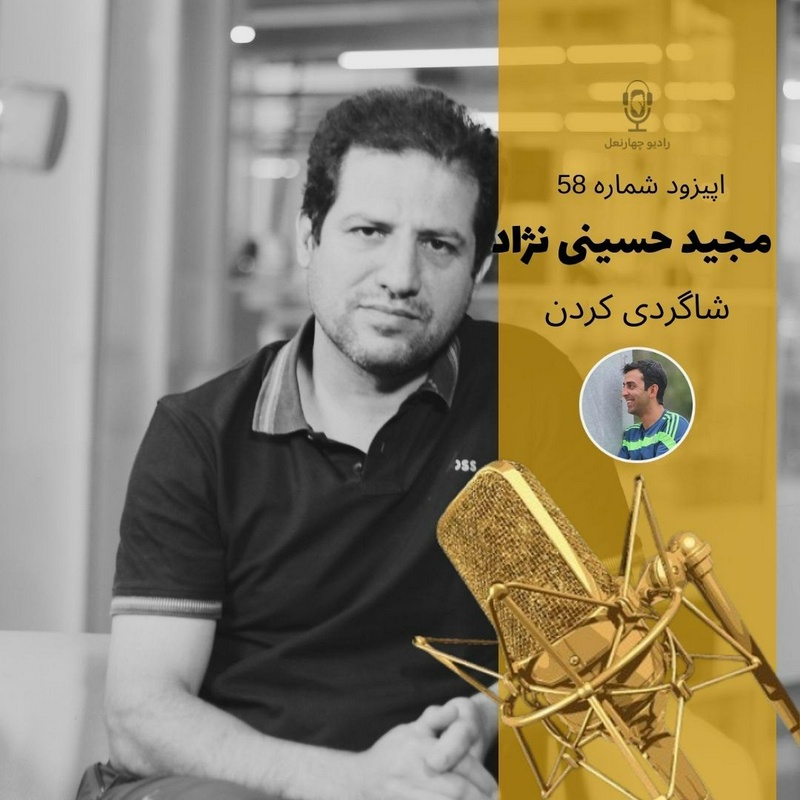
In the fifty-eighth episode of Radio ChaharNal, Majid Hosseini-Najad, the founder of Alibaba and Jabama platforms, discusses his experiences in the equestrian industry. He talks about his emotional bond with horses and his challenges in overcoming his initial fears, emphasizing the importance of trust in the coach for the progress of riders. Hosseini-Najad describes the riding club as a family-friendly and lovable space that creates a sense of belonging and a deeper connection with horses and coaches. He stresses the need for the industrialization of equestrianism in Iran and the improvement of the economic and professional structure of this industry, believing that with the increase in the number of riders and clubs, more opportunities for growth and advancement will be provided. He also highlights the importance of accountability and constructive criticism in the development of this industry and emphasizes the necessity of dialogue and self-awareness in solving social problems.
نکات کلیدی
- مجید حسینینژاد به تدریج و از طریق تجربیات جدید به اسبسواری علاقهمند شد.
- کرونا باعث تغییر در فعالیتهای ایشان و مراجعه به فضای باز باشگاه شد.
- اعتماد به نفس و ارتباط با اسبها از نکات کلیدی در اسبسواری است.
- باشگاه به عنوان یک مکان اجتماعی و خانوادگی اهمیت دارد.
- یادگیری از شکستها و نادانی، کلید پیشرفت است.
سرفصلها
- آشنایی با مجید حسینینژاد — نحوه علاقهمندی ایشان به اسبسواری و تجربیات اولیه.
- تأثیر کرونا بر فعالیتهای سوارکاری — چگونگی تغییر فعالیتها و استفاده از فضای باز باشگاه.
- نقش باشگاه و مربی در سوارکاری — اهمیت باشگاه به عنوان مکان اجتماعی و نقش مربی در پیشرفت سوارکاران.
- یادگیری و پیشرفت در سوارکاری — نقش یادگیری از شکستها و ادامه دادن به یادگیری در هر مرحله.
پرسشهای متداول
آقای حسینینژاد چگونه به اسبسواری علاقهمند شدند؟
ایشان با ورود به باشگاه سوارکاری و تجربههای جدید در این زمینه، به تدریج به اسبسواری علاقهمند شدند.
چگونه کرونا بر فعالیتهای آقای حسینینژاد تأثیر گذاشت؟
کرونا باعث شد که ایشان به فضای باز باشگاه سوارکاری مراجعه کنند و همزمان با سوارکاری جلسات کاری نیز برگزار کنند.
چگونه با اسبها ارتباط برقرار میکنید؟
با نوازش و در آغوش گرفتن اسب، اعتماد بیشتری ایجاد میکنم.
نقش مربی در سوارکاری چیست؟
مربی باید در بزنگاهها به سوارکار انگیزه دهد و او را تشویق کند که ادامه دهد.
چگونه میتوان از شکستها یاد گرفت؟
تجربه شکستها به من فهماند که قدرت در نادانی و شاگرد بودن است و باید همیشه در حال یادگیری باشیم.
متن کامل گفتگو
Greetings and respect to all you dear listeners of the radio. I am very happy to be your guest with another episode and I thank all of you.
The guest of this Radio Chahar Naal program is Mr. Majid Hosseini-Nejad, the founder and CEO of the Alibaba and Jabama platforms. These platforms are among the largest in the industry of various airplane, train, and bus tickets, as well as the Jabama application, which is active in the tourism industry. The reason for recording this program was that Majid Hosseini-Nejad is a horse owner who is also active in the equestrian industry and has been seriously involved in this field for years.
Before recording this session, we had a conversation session and exchanged very good talks, which motivated me to invite Majid Hosseini-Nejad to be a guest on the Radio Chahar Naal program. Our main discussion was about apprenticeship. I would be happy for you to hear these informative talks and if there is any point, please leave a comment for us so that I can learn as well. As always, the financial support link is available in the description of this episode. If you wish to support the channel, I am grateful for your generosity.
Besides this, I kiss the hands of each of you for your attention to Radio Chahar Naal. I have one more request, and that is to please support the Radio Chahar Naal YouTube channel, subscribe, and if the videos were useful to you, please like them and send them to your loved ones so they can learn from these teachings, even if basic, and say a good prayer for me, Mohsen Pourheidari, and my colleagues in this episode, as always, Ms. Negin Goodarzi and dear Erfan Moghadam, the composers of the podcast's opening and closing themes.
Also, dear Farshid Jahanbazi, the complete designer of the Instagram post and poster. I invite you to listen to episode 58. Majid Hosseini-Nejad, hello. Hello, it is very interesting to me that after all this thinking, you are present on the radio. I hope you are well.
For me, sitting here now, in your office, this is an advanced introduction. From the fact that the introduction of Hosseini-Nejad, the CEO of Alibaba Holding, and many of these stories are familiar. As usual, we have put the financial support link and it hasn't come much. The figure came, now what should I say?
I looked at the Radio Chahar Naal account and said whoever it was probably made a mistake with a zero. Then I went to the Zarin site and called Majid's number, which is a number that has only two or three more digits. Thank you, I am so-and-so, thank you, but you made a mistake. You said no, this was it, it was correct. Then I didn't know who you were. The reality is I said interested, until I was watching the podcast Tabaghe 16, again I saw its post, again I didn't recognize until you posted our story where we are and then this intimacy was found, it is an honor.
The podcast's generosity, a kind of acquaintance for me. Well, I am a very amateur person in this industry. The equestrian industry yes, the podcast for me was like opening a world. Well, as Mr. Maziar says, I come running, I put it back. I wasn't much in the riding world but the podcast opened doors to me with things I wasn't accessible to before and it was great for me.
And that amount is just a thank you for me. No, it was very valuable to me. The figure itself really doesn't matter to me. Anyone who does this means they support me. But what I wrote here now, that I am sitting here and doing, is that it is certainly a learning class for me. Because you are in the startup and high-tech field, as they say, a pioneer in this field. I mean Alibaba. Now I would really like to suggest that the kids who listen to the radio definitely listen to the podcast Tabaghe 16 and its episode number, I forgot, episode 72 I think, episode 172.
Soheil Alavi with Majid Hosseini-Nejad which I listened to twice. Thank you very much. Well Majid, let's go to the main world. When Corona happened, my daughter Tara, I mean we went and got a dog and then brought it home. Well at first when it was small, one or two months old, for a while we started anyway this bouquet was giving water on the floor. Then the trainer came yes.
As it got bigger, the trainer we got, this trainer would come and say well we have to command it. My daughter was small at that time she would say no, for example, we shouldn't talk to it like that. In short, nothing finally we reached the point that I was cleaning the whole floor of the house once in the morning, once at night. Then it got to a point where my wife and I saw that before we were all good together, now we all had a fight. That too at the peak of Corona was getting very complicated and we saw in short we made an agreement with a thread.
Call one of my friends, my dear friend Ali Rajabi. I said Ali this is how it is, what should I do with this? He said that coincidentally I have a friend this dog for example said I want or I like or anything. Then we brought the dog there to Maziar. Before that, I hadn't seen any equestrian club but to the extent that I went for example took a spin and came back. Until now I have ridden maybe once or twice I had ridden a donkey more I used to go to the sea as a child. No, my dad really liked donkey riding.
Then I came, when the club opened it was June, these tall trees and this road and I said God how beautiful it is here. Tara also really liked animals. I mean she was always very good with animals. Daddy we should for example come every day to see this. Coincidentally, Maziar's photos and videos a lot of its name Mars now in the TV program we took with Maziar it was a concern that now it comes forward itself. Beauty I went and saw that every day we want from.
Niavaran to Firooz Bahram well here we ride a horse. Then after that since my daughter was a child every sport she went I also went with her. I mean I went skating with her. I was always for example I was accompanying. Then I said well I came here to stand myself and do sports. Yes then it was Corona. We also brought the company kids we said well here is an open space. Then we come here both ride and hold meetings. You shifted Alibaba to Maziar's club. Yes it was Corona well it wasn't possible to be in a closed space much. Although we maybe didn't observe that much but anyway it was a space. Next to it we quietly did barbecue and.
Then I got attracted. Then from a point on I saw I like this. I mean I never had a bond with animals like that to say I had feelings with them but something happened. Then I can't say I still have a bond with the horse but one day I have for this Darino and my new one for example after riding I give it apple I give it carrot and these. The club kids were like let's celebrate Majid is doing something for the horse. You ride you would get off yes I really from that.
I am a student who, for example, didn't observe this, but gradually it came into my hands. A few times after I groomed the horse, I did its tasks, I don't know, the word is very excellent, I think of the whole grooming. Yes, yes, it was a very good feeling. There is also a little bit that I got, it was good that I was afraid of it. It would bite, kick, and buck, all the good behaviors in the world.
This fear caused a deeper bond, meaning it became a bridge. Every time I want to ride, I hug and caress it. I also respect it. There was a point in Maziar's plan in the previous encounter that we didn't know him, not our role as an individual.
How charismatic was it for you to enter this field, or did it have any impact at all? No, you were so absorbed that it didn't matter to you who that person was. Look, our work started in a small arena where we worked with Houman. He is a great person, and for me, that experience was very extraordinary. I think it took about a year to learn those steps. Initially, I really liked the club environment.
The club was really a place we went with family. It was such that we took it, for example, with my wife and son. My son started riding, Ryan, and then our friends would come. The club became like a home.
I want to use the word club in its literal sense, meaning a place to be. It was a place where sometimes I didn't even ride, I would just sit. Our Thursdays and Fridays took shape. We didn't always know what to do on Thursdays and Fridays, but they took shape. Our friends would come, and the weather was good, and we would come in the evenings when it was cooler. When autumn came, we would light a fire.
I was drawn to the club, but as I went further, maybe from the second or third year. How old were you when you started? I started at 42, 41-42, and from a certain point, as I went further, Maziar would sometimes come alongside Houman's work and say jump like this. This attracted me more. What attracted me? If I want to say the word, I say mastery. Mastery for me means the sense of trust I find in that person.
I told you a memory. Well, I think this has a lot of room. The same principle of Darino that Maziar mentioned a year and a half ago. For example, I had been riding for two years, more than 3 and a half years, now I ride for more than 5 years. I have been riding for exactly 5 years. I rode for three and a half years, and then I came to ride.
The boy who was giving me the horse said this is very... my heart sank. Now, I'm not the type to break my arms and legs. In short, I got on and took a turn, warmed up, jumped an X, raised it a little higher. I was very scared. From the moment I wanted to ride, because it had emptied my heart, it was going bigger than a skyscraper.
And well, my previous horse was very manageable, very soft. Darin means it's not like I fell between two lines of these once, it went the rest of the way. It was like, well, let it go. It's a very charismatic horse, and I could see it wasn't in my hands, not like my own horse was. When Maziar saw I had this hesitation, he realized I was scared, he told me you can do it, don't worry, go. This you can do it, don't worry, go is very valuable to me. When I make that trust, when he said you can do it, my fear seemed to melt away, as if it dissolved. Whereas you know, I've done a lot of sports. Sometimes a coach tells me trust me, for example, come do this, but my hands and feet tremble, I tense up, I can't do it.
Because that fabric of trust isn't there, that context of trust isn't there. This is very important to me for someone who is a student like me to have that trust that when that person says you can, you go. Maybe I couldn't come. Now I jump small classes, it's very big for me. It's not the height, I understand.
But maybe I could never have reached here if that trust wasn't there. I would have given up there, I would have fallen there. Well, this trust is very important. Well, the result is that in these four or five years that I was there, I saw the club is very professional in a word. It's not like, for example, my friend who introduced me there, Ali, had ridden years before, then came to Maziar. And well, Ali took me there, we were classmates. He's a really great guy.
He told me, sir, rest assured here. You want to buy a horse, it's very interesting. I wanted to buy a horse. Well, we are like this, we always want to take the smart and clever way. Yes, at first, I wanted to buy a very expensive horse. I remember Maziar's sentence was something like this, if I'm not mistaken, that well, you can't buy a Porsche and go to the corner to buy ice cream with it. It's of no use to you? It's not good for you at all. You should start with a lower horse. I had a price range until now I bought. For example, all of it at today's price might be 700, 800 tomans, 900 tomans, one toman, these things. Unless I want to bring them all to today's rate. And well, at first, I started with a horse that was 17-18 years old. Well, this was very good. If I had gone and taken it quickly, I.
I've heard, I haven't really seen, that people might come early or I see in competitions. For example, the first time I jumped as a beginner, I wanted to jump, I was very stressed. I came, it was with me. I came and looked, I said they made a mistake registering this class. My God, this is very high. Then I said well, if I say they won't let me jump, let me not say it and go jump secretly, have this experience. I always close the parenthesis well, I forgot where we were. We were in the parenthesis that the horses you bought and.
You were at a low price. Then the story was about fear, fear. I was very scared when I went and sat in the spectator area. Well, a number of riders who jumped, I saw them, my confidence went up. I mean, well, now look, I really see my own riding. I wish I could ride like Tara or ride like many of these riders who sit so cleanly. If you ride like this, it's enough.
Some people really ride beautifully. Then when I saw them, for example, their hands were like this. Now I do this myself but much less. My confidence returned. I mean, yes, I said actually the first time I went without error and I want to say that the process that I calmly took the principle suitable for myself and this trust was built with that coaching team that is now Maziar and Houman.
This is a great asset for me to keep going. Well, many times in the middle of it, you get tired, you fall down, but that asset and the trust that exists alongside the club environment, which is a healthy environment. My daughter used to go to the club by herself since she was a child. For example, someone would take her there. I wasn't there, her mother wasn't there either, but we were always at ease with the trust we had in the club. These are all assets. One point that has been very interesting to me in your words is that...
It is exactly like a coach, meaning that at a critical moment when you felt you didn't want to continue anymore, or your body couldn't take it, or you were afraid and wanted to quit, it played the right role, put a hand on your back, and said with words that you can go, you can do it, and this "you can do it" is priceless. Now, for example, we say it's a friendly gathering, meaning it's become a family radio here, advertising Maziar, I don't know, you give it a lot of value, but that's not the reality. When someone does something, it doesn't matter if their name is Maziar or Mohammad or Asghar or anything else.
A person named Maziar came and at a time when you were afraid, put a hand on your back and said you can go forward, and I think this is valuable, meaning the value of a coach is in these things. Otherwise, I always tell the kids head up, heels down, we all know how to say it, we are all selling content. Now, what kind of language we use, at what critical moment we use which word, that's a matter of things that I think are innate. A rider must have experienced things to know at that point that now is the time...
To push, to encourage this person. Majid, the main thing I wanted to talk to you about, even before the conversation was recorded, in the program we had together, it was very important for me to see you up close. We had a session together that was very educational for me, and we talked a lot about the topic of being a student. I want to see now, well, you are in your office at Alibaba, now I look and see 400 people are working here, coming and going. Well, anyway, you are the owner of this collection, you are at the top of the pyramid.
How do you, as Majid Hosseinnezhad of Alibaba, in the common startup term, well, you come to the club behind the equestrian month, you put aside Alibaba and all that, a Majid in the arena. Where did this originate from? We often have a problem, for example, now a social title, my position to speak, see, I say a class of myself and I am also in this class anyway, is that we think we know.
I know, I succeeded. Now my class can be an industrialist, it can be a businessman, it can be an actor. My class means a class that apparently has achieved some success which I think a big part of it is luck. At least for 16 people who listen, I say my achievement is not Alibaba, my achievement is actually the kind of relationships I built with those around me. But for whatever reason, I say to myself, I puff up, I walk like this, for example, well, I know and then...
When I go somewhere else, I go to a political discussion, again I know, then it becomes a social discussion. This being I know, it's not that I think I know, no, I am I know. Well, the luck I had, now someone might say how do you consider luck, I failed a lot in my life, I lost a lot of assets and I remember I had a Prado, I sold the Prado and bought one. Now you say the neighbors are watching, this is natural. I came on the highway 100.
I was like this with the steering wheel that people are pointing at me, well, it's an illusion. That illusion becomes an illusion. Thank God in these experiences I had, I actually discovered access to ignorance that sir, I don't know. Now I might know some things but the power is in ignorance. My experience tells me the power is in being a student. In fact, your mastery is in being a student. Someone who is a master is someone who is still learning.
And now one of my friends told me you mention five or six masters in your podcast, for example, this Maziar, Hooman, Hamid, Dr. Imani, for example, now your masters in different fields. My understanding is that the power is in being a student and being a student is not necessarily being Mohsen's student. You can learn something from an ant doing something, from a dog doing something. Being a student is something in my being and if I want to come with my knowledge, well, I don't learn anything. Because I know, I've seen many people come into the arena.
With that I know atmosphere, they come, sir, just because you say I have 500 people, 100 people, 50 people, sir, that's another job, another job, that's a title, that's the invisible backpack of assets behind it. They expect that sir, no, here I know, what art do you have, for example, you want to teach me, for example, I do this myself. Yes, then my experience says that every top-notch coach definitely has their work accompanied by acts of violence. I don't know what to say about acts of violence, harsh.
You have a level of this harshness in one way, the level of that smooth glass. Violence, strictness, toughness, and well, it leaves a scratch on your soul and psyche that gets into your being. When you want to be, a rider's nature is being, its nature is not knowledge. I don't become a rider by reading books. As my master says, it must fall with kilometers to become a rider and well, at some points your fears come into play. If that...
Strictness, violence, I don't want verbal or physical strictness, ruthlessness, ruthlessness that yes, you were scared, I have to say no, you have to ride again. I've seen in the club whoever falls, if they are not injured, the coach definitely makes them ride again. I myself, if maybe once or twice I fell, I would ride again, I couldn't anymore. Or I remember once I kept spinning, I would give myself from the front and fall again from the ground, then I would give myself back, it's still in my being today. Just today I was watching a film that, for example, Maziar says why do you give yourself back.
He said it's okay, take another round. If you give yourself back on the obstacle, you will fall right here, for example, your hands and feet will also break. See, its nature is of violence. Otherwise, a good person who is somehow a polite person says well, you were scared, thank you, you got off. But you want...
Giving another person a sense of being, you have to take their hand and bring them forward, and he said it very well, indeed he said thank you for expressing your fear, thank you for saying these things, but you will fall here, so come forward. I gathered all my being, took a small step forward, and eventually rescued myself from that predicament. But I, who know, I, who am myself, I am big, well, I do not submit to this violence, I do not go there and say I am afraid, I bring it and say the horse is like this, bravo I love to blame the external horse.
I love that sometimes I get off, our groom often says you ride, he rides and says this is good with you. I keep looking for a way because I see that it is hard for me to accept that I am making a mistake. It is easier to say that poor thing has no language, a bad climate and land. My point is that if I want to summarize all the words, my experiences of failure taught me that power is in ignorance, power is in asking, power is in discovering and this really...
I see this as a strength. Being a student anywhere, even in my own work which I think I do at a good level, I am still a student. That means I still learn something from my friends, or I go to class, or I take courses. Anywhere I can learn something, I do not spare myself and definitely engage in it to achieve it. Anyway, working with someone like Maziar is not easy; he has high expectations and demands. But I have learned to see him as a master. That trust exists for me and I can gain a lot from working with him. Not just me, but in my opinion, I have not worked with anyone else in this field, but I have had coaches in other sports. In my opinion, all the top coaches in this industry, and there are many of them, certainly enforce strictness in places. If they do not enforce strictness, the work does not progress. Now, everyone may enforce strictness in their own way. For example, I have seen Houman...
Moral constraint in such a way that if you say I won't do it, it is as if you are very... everyone in their own way, but they advance the work very well. Without you knowing, they extract what they want from you. In my opinion, that is also the application of violence. Violence means having that ruthlessness. Because you care, because you love them, you are strict with them. Like you are strict with your son, like you are with your daughter...
You are strict so that they learn something. Going for what it is, going for what it is, is a kind of shedding skin. It is painful. Now regarding this discussion of being a student, I need to introduce a podcast that I have listened to many times myself. Mohammadreza Shabani-Ali called The Art of Being a Student. That we must be students at all times and just look at what element we can add to our learning. Now, God willing, we pay more attention to it.
Majid, you started at 41 and anyway you saw this in yourself that you came forward. What was the vision you had for yourself when you started? Say until now I have to gather my confidence. They say a lot that wishing is not a fault for the young. I am not young, but let me start from here until I catch my breath. I love being seen, I die for the microphone.
I love these kinds of things. How beautifully he confesses. And I do not play under the Olympics. I gathered a lot of confidence to say in front of the greats of this field that I am. With this bouquet that today I did not reach the second part of the competition. Small which is 115, but the power is also in being a student.
And I believe that we are together. My attraction the day I wanted to participate in Radio Chahar Nal was for this industry to grow. This work that you are doing is in a way the work that other coaches and riders do. This industry should grow and this industry helps a lot to the GDP and economy of our country. Well, for example, in these distant countries and in my opinion, we are the best with a distance from everyone. Even if I criticize, you hit the scene a lot, but...
Really the kids are masterpieces. They can be much better. But what I really see our coaches doing, is both a rider, a coach, and a club owner. It's like you think a football player like Taremi is both a player, a team coach, a club owner, and also pays attention to the hay. Well, it is much more complicated. You have to train the horse. Really, it has been pulled to this point. I think it is a very big burden. Kudos to all of them. The previous ones and those who are doing this work now.
The top 20 in the ranking really even those who are not in the ranking, now everyone is doing it in their own way. My understanding is that if someone is supposed to go to the Olympics, we have to build their industry. To build their industry, if you ask me what your dream is, well, I definitely want my dream to be the Olympics. The champion of my country is not satisfied. Don't hit me anymore. You asked what the dream is, I said I really liked it. I have a master who says take your commitment big. This work that we talked about, I learned a lot from you. He also tells me to take your commitment big.
My imagination is that when that event happens, this industry that has reached here with the effort of so many people and really hats off to their honor. I am using the fruit of their labor. This is an industrialist, industrialist in the sense of someone whose work is economic, a space must be provided for the rider to ride. That person has a lot of concerns. Only with practice is the principle.
Prepare himself, his psychological space, he still wants a coach himself. The world champion comes, goes, jumps with a coach. In your podcast, I realized I learned these things. He wants a coach himself. Because someone wants to support him, support him, tell him things he does not see. This happens when it becomes more professional, more industrial, more economic. And this is one of my dreams that I definitely participate in this work. In my opinion, it is definitely possible. In fact, this work that has national interests and the interests of young people...
It is in it. Because really equestrianism is an extraordinary sport and we also have the talent for it and in this several thousand-year history, for several thousand years we were the best riders in the world, we had the best horses. 300-400 years we realized that we fell behind. But this work that has been done in all these years before the revolution and after the revolution, in my opinion, is a masterpiece. Today we also had a conversation that well 170 people were in the small. I am happy there are so many people. This shows that this economy has room. If there were 10 people, it means there was no room for work. But when people come, people like me invest for their entertainment, for their interest.
These are the factors that drive the economy of this work more, providing more space. Now, well, with 170 people, at least to avoid standing for 4 hours to jump, some push themselves higher, come to the medium tour, push themselves higher, and jump in the big tour. And in my opinion, this is how its economy works. If you ask me, Majid, what is your dream, well, first the Olympics, that's nothing, like Nissan who went. The second is to participate in the development and establishment of this industry as a professional and profitable industry for everyone.
It's very interesting to me that you had a very attractive perspective. Because I always look at it as someone whose job is this. For example, I mention Maziar, whom everyone knows now. You are also very aware of him. As you say, he manages the same club, he has to deal with hay checks, and he has to organize the competition. It's broken. You look at this, and then this amount of work doesn't match this income. Now it's interesting, GDP is the gross domestic product of every country, which you introduced in the podcast, and I really learned a lot from it, it was said very beautifully.
It hasn't taken a step towards industrialization yet. I mean, I feel that in many places in Iran, the feudal system is still operating, it has unfortunately become feudal, and this is really a big harm. That only the coach, for example, says, "Sir, I'm here, today I'm not supposed to coach a student, today I just want to jump." Interestingly, the day before yesterday, a few days ago, I was talking with Maziar, with Faramarz, with Baba Mohammad Makar. This competition was very good because we weren't involved in anything.
It's very good that in the last 20 years, the early 80s, our community has grown significantly. The number of clubs and riders has increased. But when I say, for example, 1070 people jump in the small tour, what should we do? 170 people participate in the national championship final, and we have to jump in so many competitions throughout the year.
Ownership is much more visible in the owners' category. Many owners may like it, but they cannot compete with others. I say, what should we do so that some of your riders are not allowed to jump below 140? For example, now you jump up to 140, then it becomes the GDP per capita in my opinion.
My perspective is really very amateur, meaning as someone who is very distant, but I have a positive feeling. Look, I see, for example, today when we were jumping, well, many of the best riders in the country are jumping themselves and reaching their students. Meaning they jump two themselves and have two or three students, then jump in the medium tour afterward.
It's a lot of work. I say these individuals are the foundation of future growth. Meaning in every society, you see that there have been people who have really stood up and endured hardships. We are a nation that used to dig qanats. I really say it makes my hair stand on end.
Today I was digging a qanat. This qanat was supposed to go to the lower village and wouldn't reach my village, and I knew it would reach there hundreds of years later. This is a very big task, really epic. Meaning I dig a qanat and go down. Such a difficult task, in my opinion, those who are doing this today are both training students, managing the club, and somehow training the horse themselves because they are jumping and bringing it. Someone who jumps the national championship, for the owner or for themselves or anything.
In my opinion, these people really carry the burden and move forward. My feeling is really positive towards the people I see. Of course, these criticisms are also empowering. Meaning the criticisms I see, many criticize. Well, it's clear that a system wants to grow and must be criticized, and my perception is that we really have this potential as an amateur. I have a lot of confidence in saying these things. My perception is that we have this potential as an economic activist. I really have a positive feeling that I should come and invest in this industry and be able to do this in a more industrial way. By process, I mean production, then training, and then, in fact, at that time, all the industry's factors have less burden on them and can delve deeper.
It doesn't happen at 50 degrees, at 70 degrees, 80, 100 degrees, suddenly it boils. Meaning there is a point where that first molecule, that person isn't the one who carried the burden, no, it's the result of all those actions and reactions, and these actions and reactions are many of the things that are happening. The reality is that my question was, now that we have entered it and are involved in it, I want to say, Mr. Majid Hosseinnezhad, Alibaba, I repeat Alibaba, it's not an advertisement. Sir, you have an industrial economic perspective.
Well, if you want to manage these gaps with this economic perspective, for example, to enter equestrianism or, for example, I give an example, suppose these brands in the startup field like Digikala, I don't know now a thousand other brands that we are, come and invest a corner, the community really grows. Now you who are looking from the outside as Alibaba, in the equestrian community that you are now, where is the gap that no one has come, or if they want to come, what should they do? Look, suppose we are in the year...
1300 and, for example, 88, we are sitting and talking about startups. 1388 why startups in Iran because, for example, there was no 3G, no 4G, no internet infrastructure. If you go back earlier, there was no Shaparak payment. For example, the person who started online sales in Iran was the Raja site, and you had to go to a bank card, I think it was Bank Saman, and you could only buy from that gateway from Bank Saman. It was from the year 1382 and three or four, something like that. I say this happens when...
That's why I see 160 people very positively. I wished all these 300 people were there. It would go because when it becomes like this, no one comes to invest as a social responsibility. Although companies do this, for example, I know Mehram did it in basketball, and really kudos to their honor, they raised the country's basketball. Someone might do this, like me, be interested, come. Anyway, my daughter is also riding in this field, and I am also interested in entering this work, but in the end, its economy is necessary.
In my opinion, we are moving towards an economy that focuses on equestrianism, but these are separate islands. One imports horses, another is producing in Iran today, and yet another is both training and distributing. I say, you came and created a podcast, which is very advanced. We didn't have anything like this. The voice that I, as an amateur, listened to from the old-timers who were narrating, became more attracted to this work. I say this event is inevitable. The ecosystem itself, these criticisms show that there is a need today as you and I are talking.
I remembered this thing about the moon. They wrote the beginning of the novel, then, for example, several decades passed. Just as we are talking, it seems like its mental space is being created. For example, today I saw with you, one of the kids has launched an app, failed, then I saw another one in Isfahan has launched an app, struggling. I imagine that we are moving in this direction and certainly in the coming years because we have a lot of riders and many enthusiasts, and I understand that you...
In 934, in my field, if you bought a plane ticket from an agency or a site, one out of every ten tickets was fake. You would buy it and go, and your name wasn't on the list. Today, this event might reach one in a million. Why? Well, the system grew, it improved itself. Today, you and I sit and say that maybe a coach...
It seems very obvious to me that a coach might sell a horse to someone at a higher price or give them a horse they don't need. I say in a few years, these will become very rare. These podcasts, these apps keep coming and improving this space. We will reach a point where a person buys from you with confidence, saying this is the app's opinion, this is the expert's opinion, this is the price, this is the broker selling, and this is their rating compared to others. As the number increases, and this increase in number, again I say, I am a positive person.
The deadlock of thought that I say if we fill this, for example, what power do we gain when so many new people enter this industry, what power do we gain. The more this number increases, the more demand increases. Certainly, in a period that I can't find the word for, the opening comes after that. At first, when the population increases, or I, Majid Fake, also come and sell a fake horse, meaning I sell a lame horse to Mohsen.
When you take money, as something grows, people like this also increase. When it reaches a stage of maturity, these people are cleansed, these people are eliminated, and those who are more authentic remain. But the point is resilience. I, who am also a coach today, my understanding is. As a person who is somehow similar to all these people, I am also in my work now.
Let me read the sermons again for the podcast. There have been days when I wished I hadn't been born. I really recommend that podcast for the kids to go and listen to. If I want to continue on the radio, really tough days have come for everyone, resilience is key. Meaning the person who has five students, jumps five horses, has their own club, reaches the hay.
You don't know, a student arrives, sees a new student, wants to take one horse, the other horse is lame, another ladder comes. I tell Maziar so much that when people came, the issue of diversity was raised with you. If I were in your company, I would become a volcano. I really can't say one by one, you delegate this volume of work, the diversity of your work. I say resilience, resilience builds that ecosystem, and today I see people have that resilience.
People are doing this work. Each competition is jumping itself, its student is jumping, more students are coming, and these top-notch people, who are not few in number, thank God, they are transforming the equestrian industry, God willing. As someone who knows the economy well, now you admit it was a chance that I can't interpret as a chance but.
In any case, it's an attractive confession. I have also experienced many failures, and at some point, it became a winning card for the equestrian community. You say, sir, it must grow, this opening must happen. Now, you who are looking from the outside, if you want to compare with the field you are in, what is the biggest threat that might hinder progress or create a contraction or a challenge somewhere, in your opinion? I say those authentic people, those top-notch people who are really numerous in this industry, they.
Let it go, meaning at some point say forget it, it's not worth it. I say, assuming Majid, if I got a position somewhere, let me give this example this way. A few years ago, I decided to migrate. One of our kids from Sharif came, he is my colleague, a very top-notch person, very young. During the time I was dealing with this issue, he came to me and said if you leave, what will we do, you who have been a source of hope and inspiration, what is our fate? It was a very heavy statement for me.
It was very heavy, I can't say this changed my decision, this statement is not accurate, but it certainly had a deep impact on my mind. I say if I became a person who is effective, if I became a person who people's eyes were on me in the industry, I am no longer my own person. I can't say let them hit their heads on the wall, I have to stand by the work, I have to make myself smoother and more polished, if there is a flaw in my character for any reason, I have to address it.
I have to strengthen myself, I have to be the driver, this fake Majid shouldn't come and take my place, the fake person shouldn't come and become like a captive person. I say if it's my responsibility, not my fault, these are two different subjects. Sometimes it's dirty here, I'm not to blame for the dirtiness, I didn't spill it, but as the CEO, I'm responsible for it. You come and say what kind of management is this that I can't say I didn't spill it, I'm not to blame for it, but they say you are responsible, well, someone should have come and cleaned it, I say.
The responsibility for the progress of this industry lies with me, who people look up to, with me, who have been and am a pioneer in some way, I am one of those main people, one of those who are working, I am a coach, I earn my income from this path, and I earn my bread from this path lawfully. I say these people must be pioneers, and it's their responsibility. If you tell me, Majid, as an amateur in the industry, I expect from them, tomorrow I will hold them accountable, now no one answers us, but.
When I'm alone with myself, I say these people are responsible, these are in our work, and in my own work as well, that if it's dirty here, if it's messy here, or if you buy a ticket and it's a fake ticket, even if I haven't provided it, another provider, because I'm not a ticket provider, we are a platform, but because you buy the ticket from me, it's my responsibility. If I go and my colleague gets disappointed, it's my responsibility. I say we have to bear this burden, those of us who have put myself beside them, I mean those first-class people.
They, you who certainly think about my concerns this way, maybe the coach of first-class people is their job, they have to stand, be pioneers, make themselves more polished, account for themselves, strengthen themselves in all dimensions, so now suppose I'm a person with crooked clothing, everything is fine, that person's clothing comes, dresses well, takes my place, my duty is to go dress well, you know what I'm saying, my duty is not to let someone else come.
Become a driver, and today it is very much like this, thank God, and the duty of the radio is to have this comprehensiveness, to cover all these people who are somehow people working in this industry, as similar as possible to a mother, for a mother is a very beautiful and lovely term, that I become the mother of this industry, the mother of space, create the space so that this space actually gains more power and.
I continued horseback riding with hope, one day someone told me, I think it was Maziar, he said, sir, we had an Olympic rider until the age of 68, there were 12 periods, let me give you an Iranian example, just today Mr. Vojdani jumped.
Yeah, I don't know their age, but before the revolution, let me give you an example to encourage yourself, General Nader Jahanbani was someone who started riding at the age of 40, Mashallah, where do you take it, becomes the national champion at the age of 45, even back then it was really big.
Now let me tell you something interesting, Majid, the equestrian community that you saw, now horse rider and rider compared to our horse-owning community, we are the size of an ant, let me give you an example, in Rafsanjan, for example, 6,000, yes, in Yazd 8,000, wherever the recent podcast was talking about this, that the volume of Persia compared to all horses is very small, now we very much.
You were talking about a new field, not a new field, I cried, say it again, that was an episode for the disabled, for them he was working.
I mean, tears gathered in my eyes that if he is working, I am an idle person compared to someone who works so lovingly for the children of the country, I was really ashamed of myself. I work very hard and do a lot of work, but compared to someone who spends time so lovingly, you won't believe it, my being was filled with passion. Or this gentleman who was on eventing in Kermanshah, I really enjoyed it. That's why, look, you can see this.
What factors have caused our equestrianism not to reach the Olympics so far? Suppose, in this recent period, you can ask this question like this: how do we reach it? I say these two texts are the same, their content is the same, their context or texture is different. In the first, I am contracted, in the second, I am expanded. How do we move forward? But if you ask why we didn't reach it, it's like we're stuck. I say let's ask it like this, how do we reach it. Man, all these first-class people, really, you interviewed them, I really enjoy it, sugar melts in my heart, I am proud.
How many people do we have who are very professional? I mean, we have a group that gathers and talks about the possibility of making Iran prosperous or more prosperous. I told this there, really with a sense of pride that I am Iranian. There are times, there is a moment when you stand up and want to say how good it is that I am Iranian. You know, and really that was one of those moments. Let me tell you something interesting, Majid, now I'm suddenly waiting. Well, I know the kid, he's a veteran, kind of relative to me at least. The day we talk about horseback riding, I went to some of his competitions.
Crying is hard for me, but somewhere the kids looked at my camera, I saw that they saw its positive side. I mean, it was all towards hope. Even where I had taken it out for a period, they had returned. The words were pure, really. That's why I say I don't know, I just remembered these now and I just listened to this podcast. The feeling is very.
For what first-class people are doing things that we don't see at all. Our media is weak, we can't go to editing. Now look, we are a generation that has to bear the burden. You told me a sentence, I really have a lot of attractive words from you. It's a sincere confession, this dead-end thinking.
Instead of saying why didn't you go to the Olympics, ask how do we go. These two texts have the same content, but in one, you are towards the future. The reasons for not going are the same as the ways to go. This is just the reasons for not going, those are the ways to go, these are both the same. I don't know if I can give the example I gave there, let me say. I can tell my colleague that if you eat junk, you will get fat. I can say eat healthy food, you will be healthy. These two are the same, it's obvious they are the same. Well, sir, but in one, I am associating junk and obesity with it, and when I say this, I am contracted myself. I didn't tell him you are healthy and fit. In one, I didn't tell him you are junk and fat. None of these were there. In one, I am telling him if you eat junk, you will get fat, in the other, I am telling him if you eat healthy food, you will be healthy. The point is what.
In what context am I saying this? In the expanding context to empower him, this should be empowering or in the contracting or disempowering context that it becomes contracted. I say your power is that in our country instead of saying issues, we say challenges. You solve the issue at best and go back, but you create an opening from the challenge. This is a big difference. Now let's call this an issue or a challenge. I say it makes a difference because you create an opening from the challenge, but we solve the issue at best and go back. It's like it has a backward approach.
I have a challenge, my age is going up, create an opening, exercise more, eat healthier food. But I go, I don't know if I want to go, keep going back to become young. Well, I can't, but I can create an opening from it, create wisdom from it. In life 47, sir, the final closing talk, I learned a lot. Your gathering is one of the moments I don't want to end because talking in the middle of work is pleasant and instructive. I hope that.
I hope we get more opportunities to chat. I would be happy. I love my microphone. The power of the microphone and camera is that it allows a person to know themselves, otherwise, you have to cover these things up. But people see whether you want them to or not, and when you see, you are freed from wanting to attract attention. You can put it into something that empowers you. What I put it into is the development of Iran. Into something you told me about, a friend of what.
Yes, well, in this expanding context that we are actually talking about, we can sit and complain about why, for example, water is in the pump, why the meat grinder is in the pump, why I don't know Majid is in the pump. I can see what I can do. Our work is good, it's a platform. For example, in Java, our job is to connect the guest to the host, to ensure that the host.
Fills well, has good income. On the other hand, make sure the guest receives the quality of service they expect, and if something happens, it is addressed, and in fact, these two expectations and needs match each other, and this market keeps growing. Now I checked your site, it's very interesting to me. You are Iran, yes, in a concern I always had. Because I lost my father in childhood, those children and the father were always somehow in.
The corner of my mind, I was always somehow engaged with it. I wanted to set up an orphanage. Then a back-and-forth conversation showed me it's a very heavy responsibility. If one day I can't continue, those children will be very harmed when they return to the previous environment. This remained in the mental space. At some point, we came to this conclusion, I don't know, maybe it was like innovation, that why should we even set up an orphanage. Let's dissolve the issue of adoption in Iran, not solve it, dissolve it. How to dissolve it? I used business literature.
We should bring it into social startups, into works where there is a supply in this domain. That is, a certain amount of children with poor guardianship or without guardianship here. Well, if I create a demand, meaning I make more families interested in adoption and facilitate their work. Previously, this work took several years for a family to have a process. Now, under two months, we started doing this. The closer we got to.
Welfare, at first we were like, oh, these are ruined. For example, the view we always had, but when we went, we saw how much they carry. How much burden welfare has with 163 missions. One of them is this, and you see how big the rest is. The elderly, abused women, girls, there are many. Those with mental disabilities, I don't have a presence of mind now. One of them is this. Then when we entered, we saw that it's not like we sit outside and say do it, but the one inside the pit is working very hard. When we stood by them, the doors opened to us.
Today I can say that our team that does this work in the provinces under our control, the orphanages are empty. That is, the Ameneh orphanage was shown on TV. If you come, it's like the hospitals shown in movies that are deserted. You open the door, the crib is empty. There were about 400 and some children, now there are 30-40 who have come in the last couple of months, and we are doing this work across the country. Then the children aged three to six years, and then six to nine years, and.
And then we go, now we are also doing work in the domain of 9 to 18 years. These children are looked at as problematic children in some way, but these children have divine gifts because of the challenges they had in childhood, because of those concerns and damages. They are very much seeking attention. Of course, attention can be guided. There is a power in them that can be guided towards making them top entrepreneurs.
Come and become a champion horse rider, go into wrestling and become a wrestling champion, and this is what we are doing. Today, nearly 50% of the country is in our hands because in some provinces adoption is not very common, but in Tehran, I think Tehran, Mashhad, and Alborz are in our hands. A team is doing this work. They are their own children, we just support them. It formed within us, our power was also here that we did two things. One was that we didn't come out fighting with that responsible institution to complain and curse.
The second was that we brought in business literature. For example, I remember in the first few years, the kids would come to me and say, oh, we gave a child who was sick, the family cried, and then I would say, well, thank you. How many? For example, they would say six. Then I would say, well, how big is the whole market? What does the market mean? They would often say, I can't find another word. The total number of children for whom this work should be done. In our terminology, we say how much is the total accessible market? I would say the total number of children we should in their country.
Are you working on a market? In the activity, you don't really know the numbers, the data was very little. Now we have data, now we have segmentation. We say, for example, we come and divide, these become about 8 to 9 categories. Then we separately address the categories using objective criteria and I don't know its Persian, we use that and these children came just like our other businesses alongside others. For example, we monthly review all businesses. They budget and then month by month we come and review whether they hit the budget or not. If not, why not, what happened? We brought this into the same framework. When it came into the framework because business is for optimizing resources, the best output when they came into the business literature framework, they gained power and that is also a truly remarkable work we are doing and it gave me the belief that a lot can be done. It gave me the confidence that a lot can be done.
This is not an extra advertisement. I say well done to the supporter. Yes, that's right. Thank you. Bless you. Hopefully, we go to the Olympics together, jump together or your group takes a picture. Bless you. Thank you very much for being with me until the end of this episode. I am infinitely grateful to all of you.
I hope you have learned from these talks like I have, and if you liked it, share it with others. I leave you all to the great God, as always, take care of your horses.