Analysis of Para-Dressage Competitions
خلاصه
In the thirty-eighth episode of Radio Chaharnal, the competitions of para equestrian and para dressage are analyzed. This program is held with the efforts of the Equestrian Federation and the Para Dressage Committee, and various guests are present. Discussions about the necessity of supporting riders with mobility limitations and improving their conditions are raised. The importance of education, cultural promotion, and changing societal attitudes towards individuals with disabilities is also emphasized. The Vice President of the Tehran Equestrian Committee mentions future plans to support athletes and highlights the need for transportation facilities and suitable amenities for riders. Additionally, Dr. Montazem refers to efforts to establish a special equestrian committee for these individuals and to hold competitions. Finally, the importance of financial and moral support from the federation and hope for success in the Paralympic competitions is emphasized.
نکات کلیدی
- مسابقات پارا سوارکاری نیاز به توجه و حمایت بیشتری دارد.
- کمبود اسبهای مناسب یکی از بزرگترین معضلات این سوارکاران است.
- آگاهی عمومی درباره معلولیت باید افزایش یابد.
- حمایت از افراد دارای معلولیت نیازمند توجه به منابع و امکانات است.
- برنامههای حمایتی برای بچههای دارای معلولیت در سوارکاری وجود دارد.
سرفصلها
- اهمیت پارا سوارکاری — تحلیل نیازها و چالشهای پیش روی پارا سوارکاری در کشور.
- نقش فدراسیون و نهادهای مرتبط — بررسی همکاریهای لازم برای ارتقای سطح مسابقات و حمایت از سوارکاران.
- چالشهای سوارکاران دارای معلولیت — مشکلاتی مانند کمبود اسب مناسب و نیاز به فرهنگسازی.
- برنامههای حمایتی و آموزشی — اقدامات انجام شده برای حمایت و آموزش سوارکاران دارای معلولیت.
پرسشهای متداول
نظرتان راجع به مسابقات پارا سوارکاری چیست؟
این بخش از سوارکاری در کشور ما نوپاست و نیاز به توجه و حمایت بیشتری دارد.
چگونه میتوانیم سوارکاران دارای محدودیتهای حرکتی را بیشتر دیده کنیم؟
باید فدراسیون همکاری کند تا در مسابقات، زمانهایی برای نمایش این سوارکاران اختصاص داده شود.
بزرگترین معضل سوارکاران دارای محدودیتهای حرکتی چیست؟
کمبود اسبهایی که امنیت سوارکارها را تأمین کنند و به یادگیری آنها کمک کنند.
چگونه میتوان به افراد دارای معلولیت کمک کرد؟
با حمایت و کمک به آنها، به ویژه در زمینههای منابع و امکانات.
چه توقعی از نهادهای ذیربط دارید؟
توقع دارم که نهادهای مردمنهاد و انجمنها با کمال میل کنار ما بیایند و کمک کنند.
متن کامل گفتگو
Greetings and respect to all of you dear listeners of Radio Chahar Naal. I am happy to be with you with another episode and thank you for accompanying me.
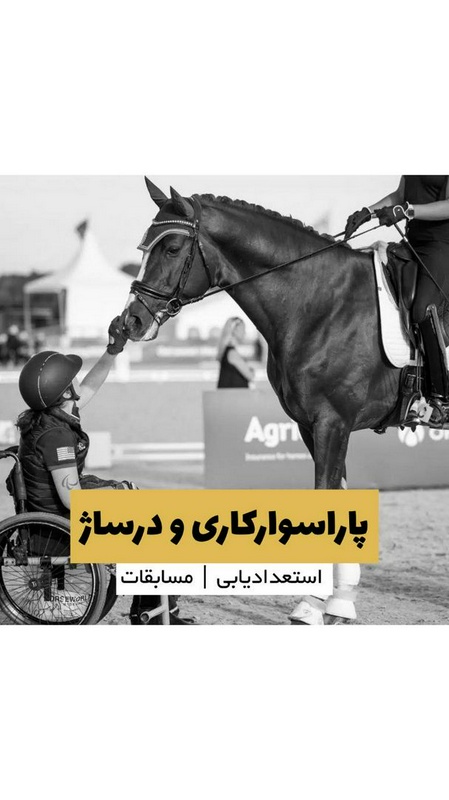
The thirty-eighth episode of Radio Chahar Naal was an analysis of para-equestrian and paradressage competitions held by the Equestrian Federation and the hardworking Paradressage Committee. This event was held over three days, both as educational classes and a day of competition. Before anything else, I must apologize because during the recording of these interviews and conversations.
I was in noisy environments, and surely you will hear sounds for which I apologize in advance. And now my guests in this episode are Master Ezzatollah Vojdani, the first part of the conversation with Mr. Dr. Nasser Najarioun, occupational therapist, the second part, the third part with Mr. Dr. Hassanzadeh.
Secretary of the National Paralympic Committee, the fourth part with Ms. Engineer Anisi, Vice President of the Equestrian Board of Tehran Province, the fifth part with Ms. Amal Salami, President of the Para Equestrian Board of Khuzestan Province, the sixth part with Mr. Asghar Tahmasebi, a national champion in Taekwondo and a member of the Para Equestrian Committee, the seventh part with Ms. Hoorieh Zamandari, a rider in this field, and the final part of my conversation with Ms. Ghazaleh Montazeri, President of the Para Committee.
Country. I hope you enjoy listening to these talks. My request is that you listen to the end of this episode and my other request is that each of us should define a social mission for ourselves in relation to these dear ones and riders with movement limitations. These dear ones do not need pity, they need support. With anything you can think of to support these dear ones, from equestrian equipment, the most important being the horse, equestrian venues for these great ones, and many other things. And as always, the design.
The poster cover of this episode and the Instagram cover designer of this episode is my dear friend Farshid Jahanbazi from Australia, and I thank him for his support. I am Mohsen Pourheidari and I invite you to listen to the thirty-eighth analysis of the competitions.
Well, I was very lucky to meet a dear one here today, practically Master Ezzat Vojdani was very dear to me. It was really delightful to see you here and thank you for giving this time to me and the radio. What is your opinion about this part of equestrian? Greetings to you, our dear viewers. Well, today we had the honor of having the purification competition, where I also have a student who was fortunate to be here today among friends and we were able to cooperate with the organizer of this competition.
If there is anything we can do, we are at their service. God bless you. This part of equestrian is both new in our country and not very visible, as we see today that none of the media, photography, or filming people in the equestrian field are here today. What should we do to make these kids more visible, spend more time on them, and help them progress more? Well, it is very good to do this work. Now we need to have cooperation with the federation so that instead of having the competition, of course, I don't want to say that its place is not good here, around Tehran and this for autistic kids or those who are entering.
It is difficult to come. This should be in Tehran, in the middle of good competitions that if held, have a lot of spectators, spend 10 minutes or half an hour and these kids are seen there and people see that there is such a thing. Maybe some people are not aware that there is such a ride for kids that they want to come and use and their kids benefit from this so-called activity that friends have for these autistic kids and work.
If we can pull this cooperation into the federation itself, which it certainly does, Mr. Kazemian should be able to hold this in Tehran or in federation competitions where there is a larger crowd and we can be more visible. The biggest problem that perhaps this group of riders has, because after all, they are riders, is the lack of horses needed for this work.
Practically ensure the safety of the riders and help the kids learn more. What is your opinion on how we can at least help a little so that the kids can use better horses? Well, as I said, if we bring this to be more visible, other kids who come, coaches will also be interested in providing better horses to work with. These kids who ride can easily give effect and this so-called because this much ability.
Giving effect must be done by the coach to prepare the horses and this is the only time something can be counted on and seen and so-called spend more time on it is to be seen and our good coaches also see these competitions do more work and we can now have one that we have a student now riding well every day we are working on this principle and we are working with very fine hands effects to work with it so that with the smallest effect from the hand that.
Our rider can hit a minute or stop or move. These are things that really take this field to the next level that I should know. Right, sir, thank you for your time and I am honored to wish you health and God willing, wherever you are, your watch is above us young people. Thank you, I also thank you and the organizer of this competition and the federation, thank you and health.
Well, in this section, I will tell you about Mr. Dr. I will say professor and they were very insistent that I mention their name and surname in the service of Mr. Nasser Najarioun and I prefer not to speak and you start. Thank you very much for giving this time to the radio and me. Today we are here in the land of Iranians Island for endurance competitions with the help of the Para Committee and its always companion which is your excellency and the rest of the kids who work in this collection we are at your service. Stay alive, thank you.
Thank you for inviting me, I am happy to meet you. Since 2009, alongside Dr. Montazem, we started hippotherapy and rehabilitation with the help of horses. The root of this idea and thought goes back to years ago when one of my clients went to Hungary for rehabilitation. It was there that I realized that rehabilitation with the help of horses is one of the common practices throughout Europe and the central reference centers alongside.
The rehabilitation that is being done on them has regular hippotherapy sessions and it is one of those so-called things that is regularly done there. I was very eager to do this work in Iran. I had several unsuccessful attempts, the clubs were not cooperating well, they were not very motivated until finally, in 2009, I met Ms. Montazem. It was there that I saw how enthusiastic she was and how much she welcomed this subject and alongside her, we tried to do work all these years. One of the projects we did was that a number of equestrian coaches.
They underwent a special course and it allowed them to actually do this work in various clubs in different cities. That is, you practically started the work and trained people to spread this subject. One of the good points that Ms. Patricia, the coach of Parsash, who came from France, emphasized to us a lot was that she said she does this project in many countries around the world, in Africa, in India, and many places. She said that you have paid a lot of attention to the infrastructure and your first step was a project for 90 people, training 90 coaches of which 33 succeeded.
Fortunately, they were properly distributed throughout Iran and in every club and city, we fortunately have the opportunity to work with these dear hippotherapists. In all these years, what has been the biggest challenge you have been involved with? Raising public awareness and trying to teach each other and increase each other's information. One of the points that the media, our mainstream media, and social networks should pay attention to.
Familiarity with disability in such a way that we are no longer surprised to see people with disabilities in society. When we see someone walking differently or looking differently, we can control our behavior and have appropriate behavior and remove the illusionary look from ourselves. One of the untimely reactions is staring. What feedback does staring have for that person who has a disability? Look, simply put, it's harassment.
I was talking to someone living in Norway and found out that in Norwegian kindergartens they teach children the 2-second rule. In this way, they explain to them that we have the right to look for the count of two and there is nothing wrong with it, but if we want to look for more than 2 seconds, it's like shining a flashlight in their eyes. They practically show this to the children that looking for more than two seconds is like shining a flashlight in others' eyes and this may disturb their peace and create harassment and we are not allowed to do this and enter their private space. Of course, I give people the right when they look because they haven't seen.
I have no complaints from people that when they see a person with a disability, well, they stare and look. It's their right because they haven't seen it until now. This subject should be seen in the media and taught, which unfortunately does not exist. In our country, the main media pay no attention to this subject and it is not their concern and only the social networks and ourselves are left to teach each other that seeing people who are different is not strange and people are very different and this event is a natural occurrence.
It is not anyone's judgment, nor anyone's anger, nor revenge, nor do I know we made a mistake in our previous life. This is a natural global event and we must learn to get used to it and learn to get our eyes used to these scenes and increase our acceptance. Well, in these years that you have practically tried and worked hard along with Ms. Montazem, I feel that you have not received its spiritual reward by not being seen and valued.
I, Mohsen Pourali, am sitting in front of you now to ask you what path should I take to help your efforts and those kids who are now involved in any movement limitation to be seen more and given more value. I want to talk about a guideline together. Practically, I want to first remember Ms. Avizoon Montazem alongside Ms. Ghazaleh Montazem. She was also one of the founders of this work and helped us a lot especially in the early days. I thank her from here. I want to answer you with a sentence from Arvin.
The book Love Therapy says a golden sentence: If our clients knew how enjoyable it is to be a therapist and how much energy and good feeling it gives us, be sure that not only would they not pay us money but they would ask for a fee from us. No, we who think all those who do any loving work have received their reward and are not in search of reward because the work itself and the pleasure they get from this work is enough and I have received more than my share, more than my size.
I have received good energies, good feelings, and golden sentences from each of my dear clients, each of which is a medal of honor on my chest and why we have been seen enough attention has been there, but well I would like the subject to get much better. But I am thankful and grateful to each of my clients, each of the dear ones who have been in contact with me and I will never forget the big medal and the golden sentences they have said to me. Of course, it is from your nobility and greatness that.
You use such words but the reality is that I who was close to these kids today and had the honor to be with you and these kids, I felt as an equestrian that the main resources of these kids are very limited and it is worth it for us who do this work to really support more and help more. If necessary, team up with their horse riding, if we have tools that are needed, really help, because today I saw up close the reality that these kids have such a lack of resources in terms of cars, club facilities, and now the most important part is really.
I hope that now by listening to this podcast and these talks we get a little more motivated. Well, the entire podium is at the disposal of the Para Committee, at your disposal and all the kids who work hard in this field. Now as someone who has just been with these kids, what expectations do you have from the relevant institutions of this story? Because I want to practically convey this voice that sir, this part has been very neglected. We are so busy training horses and I don't know buying and selling and these issues that we really don't see these at all and I want to see what request do you have from those who now for any reason have a responsibility in this field? I ask government managers not to interfere in this matter at all. The government sector destroys everything wherever it steps. There is a famous saying that says: You hand over the management of a desert of sand to the government sector, next year you will have to search there for sand and find sand.
I have no hope in individuals and just ask them not to enter this field and have nothing to do with us. But from institutions, non-governmental organizations, associations, and individuals who are in this field, I warmly welcome and ask them if they want to come alongside us lovingly and honestly and help us in any way they can and I am sure they have helped us a lot so far. We have received good motivations from club managers. Many club managers are known that as soon as they realized their client with a disability has a financial crisis.
They have accompanied us financially and had this love and whether coaches, riders, owners, and club managers and many associations have helped us and we are grateful to them and I am sure they will find and connect this channel themselves as it has been until now, we just have to inform them and make them aware that we are doing this work and we would be happy to have them alongside us. As a final word in this section, what do you have to say?
I just want to thank each of the friends who have been alongside us all these years, worked hard, were not seen but worked hard. I know coaches who without any expectation are busy working with autistic spectrum kids from morning to night. I shake their hands and admire them and I know they enjoy this work so much that they don't need anyone's praise and they know how much they love their work and I am happy that like me and like many people they were able to give meaning to their lives with this work. I am in rehabilitation with the help of.
The meaning of life I am happy that they gave me this honor to be alongside you. We must thank each of our clients, each of the people with disabilities who honor us and come to us and be happy that this honor has been bestowed upon us. If they find the slightest improvement, the slightest good feeling, I will be forever indebted to these dear ones and my neck will be under the burden of these dear ones. May God give you health and long life. Now I am confirming your talk about meaning, of course, in front of you that my manners are you are a book person but.
I introduce Dr. Frankl's book "Man's Search for Meaning". Now if someone wants to go and flip through it. I learned from it at least. Sir, again thank you for your time. I was very honored to sit in front of you with this distance and have such a friendly chat. The radio team is entirely at the disposal of the Parsaa kids and the kids who work hard and it is enough to just will that I be present and perform my duty. Again, thank you for the time you spent. Dear great one, take care of yourself, be healthy.
Well, in this section I asked Mr. Dr. Hassanzadeh, who holds the position of Secretary of the National Paralympic Committee, to give me the honor and take a few minutes of his time. I am very happy that at first, you gave me this honor. As a private individual, it is an honor for me to be in your presence and thank you for taking this time and I know from Tehran to here it was difficult and your workload and you gave me the honor and the kids who came. I am at your service. In the name of God, the Most Gracious, the Most Merciful. We are also happy that we had the opportunity to be with the para equestrian kids. Considering that equestrian is one of the sports supported by the Paralympics and equestrian is one of the cooperating federations and subsidiaries of the general Olympic collection, with the new management that Mr. Kazemian's presence in the equestrian federation and he.
Again, after years, activated the para equestrian section and with the previous cooperation we had with Dr. Montazem in our festivals and the help she had, we decided to be active again in this section. The federation also had very good cooperation, especially we thank Dr. Kazemian a lot and we support their efforts to do talent identification and infrastructure work in the section of equestrian for the disabled and able-bodied and.
Our future view is that God willing, we can with the efforts and cooperation of our friends in para equestrian be able to have this sport very actively and actively in the future Para Asian Games in Japan and now maybe it is early to say this but we even hope for a medal in this section. Now if the federation needs supportive help we are certainly at the service of the federation management. Dr. Kargari, the president of the Olympic Committee, with the talks that were held.
He paid attention to this sport and supported it. We made a contribution at the end of last year and certainly this year we also have contributions to the para section and God willing, we hope that in the section of national champions and talent identification whether in the physical movement section or now maybe it is not very active in our section but in the mentally disabled we also have athletes to help this para equestrian section to come to life and I think it has been away from the collection of disabled sports for many years. God willing, we can with the help of.
The federation revive this again and be at the service of friends. God bless you. Really how good news you have. Personally, I was very happy really because this section of society has always been neglected unfortunately and how good it is that you pay so much attention to this para sport section. Do you think now what you have certainly monitored in these years and today you also saw up close, what percentage of these kids have the ability to participate in those events and the possibility of winning a medal? I think with the familiarity I have with Dr. Montazem and the information we have.
I think in the physical movement section we can if the federation cooperates and we also have the long-term program we really expect and hope for a medal in the para Asian section and I think 3 years the time we have until the Japan Asian Games is not a little time for this work, both in the talent identification section and in the youth section and with the talented forces that exist. Now maybe we were not very familiar with them up close but through films and things we saw and information that.
From the federation, our hope and expectation is that this capability exists to get there. Our expectation is also that the federation continues this path it has started with strength and we also promise that we can be the federation's help in this path and as now a staff force. Now the execution of work is certainly the responsibility of the federations. In the section of