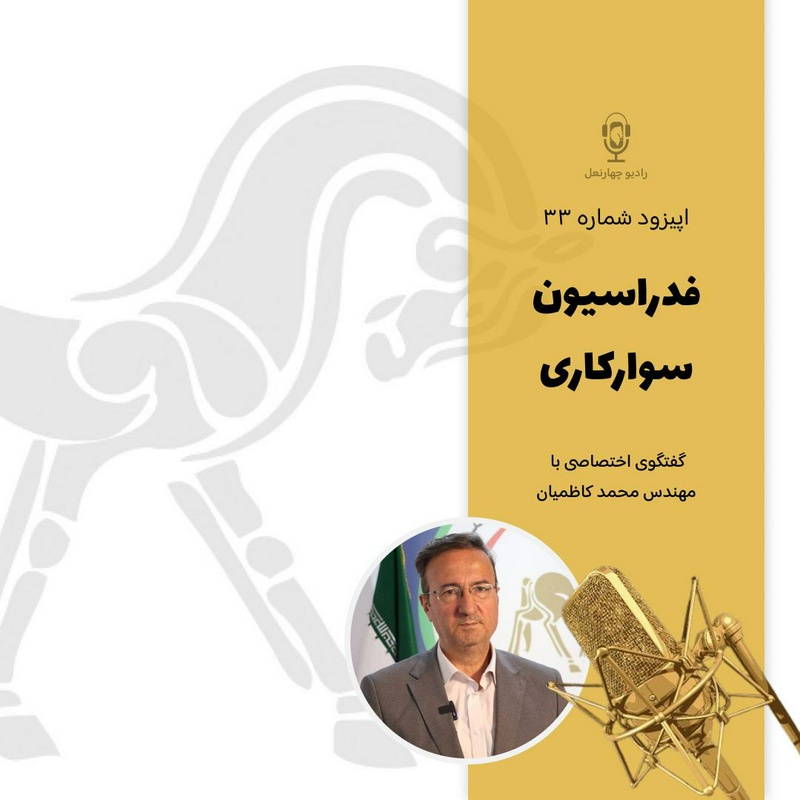
Mohammad Kazemian, President of the Equestrian Federation
خلاصه
In the thirty-fourth episode of Radio Chahar Nal, the second part of the conversation with the President of the Equestrian Federation discusses the challenges and opportunities in equestrian sports in Iran. The President emphasizes the need for organization, education, and creating order in equestrianism, and reminds about the importance of breed improvement and targeted production of sport horses. He also points to the need for genetic counseling to prevent arbitrary breeding and stresses the use of pure Iranian breeds to strengthen sports brands. Decentralization of equestrian sports and the emphasis on holding training courses and competitions in provinces to utilize local experiences are also among the topics raised. Finally, the promotion of equestrian culture and the establishment of specialized departments in the federation to improve the conditions of riders and foster closer connections with the equestrian community are emphasized.
نکات کلیدی
- فروشگاه بنیامین با ۴ شعبه در ایران و امکان خرید آنلاین لوازم سوارکاری را فراهم کرده است.
- تولیدات اسب باید هدفمند و بر اساس مشاوره ژنتیکی باشد.
- استانها باید به برگزاری فعالیتهای ورزشی و آموزشی پرداخته و از تمرکززدایی بهرهمند شوند.
- آموزش و فرهنگسازی در سوارکاری اهمیت زیادی دارد.
- حل مشکلات سوارکاران و ایجاد فضای مناسب برای فعالیت آنها
سرفصلها
- معرفی فروشگاه لوازم سوارکاری بنیامین — فروشگاه بنیامین با ۴ شعبه در ایران و امکان خرید آنلاین، لوازم سوارکاری را به علاقهمندان ارائه میدهد.
- تولیدات اسب و اهمیت مشاوره ژنتیکی — تولیدات اسب باید هدفمند و بر اساس مشاوره ژنتیکی و رکوردها انجام شود تا کیفیت بهتری داشته باشد.
- تمرکززدایی در ورزش سوارکاری — تمرکززدایی در ورزش سوارکاری باعث کاهش هزینهها و دسترسی آسانتر به فعالیتها در استانها میشود.
- اهمیت آموزش و فرهنگسازی در سوارکاری — آموزش و فرهنگسازی به بهبود وضعیت سوارکاری و ارتقاء سطح توقعات کمک میکند.
- حل مشکلات و توسعه سوارکاری — با ایجاد فضای مناسب و حل مشکلات سوارکاران، میتوان به توسعه و موفقیت بیشتر در این رشته دست یافت.
پرسشهای متداول
فروشگاه لوازم سوارکاری بنیامین کجا قرار دارد؟
فروشگاه لوازم سوارکاری بنیامین دارای ۴ شعبه است؛ یک شعبه در کرج و سه شعبه در تهران.
چگونه میتوانم لوازم سوارکاری را سفارش دهم؟
میتوانید از طریق سایت و صفحه اینستاگرام فروشگاه بنیامین سفارش دهید و لوازم را در خانه تحویل بگیرید.
چگونه میتوانیم تولیدات اسب را هدفمند کنیم؟
با مشاوره ژنتیکی و استفاده از رکوردها برای انتخاب مناسب خط خونی اسبها.
چرا تمرکززدایی در ورزش سوارکاری مهم است؟
تمرکززدایی باعث میشود که افراد در استانها بتوانند به راحتی در مسابقات شرکت کنند و از هزینههای سفر به تهران کاسته شود.
چگونه میخواهید مشکلات سوارکاران را حل کنید؟
هدف اصلی من این است که مشکلات مردم را کم کنم و فضایی را مهیا کنم تا بتوانند در ورزشهای سوارکاری موفق شوند.
متن کامل گفتگو
Wherever you live in Iran, you no longer need to worry about buying equestrian equipment, whether for yourself or your horses. The Benjamin Equestrian Equipment Store, with 4 active branches — one in Karaj and three in Tehran — is ready to serve all horse and equestrian enthusiasts, and also has a very practical website and a professional Instagram page.
For those in different cities, it has made arrangements for orders to be delivered to your home. Just check the episode description and visit their website and page directly. You'll realize you don't need to worry about getting the equipment you need. You can order from international brands as well as good Iranian brands. Let me not forget to mention that Benjamin produces some of its own equipment, which is on par with foreign brands.
And it is also very economical. Being a supporter is a characteristic of the Benjamin brand; it supports horses, riders, competitions, and episode 34 of Radio Chahar Naal. Don't forget the description of this episode. By clicking on each link, you can visit the Benjamin store's website or Instagram, and I'm sure you'll easily find the equipment you need there.
Benjamin Equestrian Equipment Store.
Greetings and respect to all you good listeners of Radio Chahar Naal. I am here with another episode for you dear ones, and you are going to hear the continuation of Mr. Kazemian's talks, the president of the Equestrian Federation, in episode 34.
I am very happy to have had the honor to arrange this interview, and the president of the federation agreed to sit in front of the Radio Chahar Naal camera and talk about his plans, leaving the space open for all those who are interested in Q&A. I feel that this kind of behavior is necessary and professional, and it shows that not every president has to sit in their office and just sign letters. I hope you enjoyed listening to episode 33, which was the first part of my conversation with Mr. Kazemian.
These talks in episode 34 are a continuation of the talks in episode 33. I suggest if you haven't listened to that episode, first listen to episode 33 and then this episode. And another request is that Radio Chahar Naal is practically run with my personal expenses.
And no sponsor or institution is helping me, and the only support I ask from you as the audience of Radio Chahar Naal is to just send the posts, stories, and episodes to other dear ones so that they can also enjoy these talks, learn, and plan. I won't take more of your time and invite you to listen to episode 34 of my conversation, Mohsen Pourheidari, with Mr. Mohammad Kazemian, the president of the Equestrian Federation.
Well, Mr. Kazemi, one of the issues that you are much more aware of than I am is the number of local horses and riders scattered across Iran, and in many places, they keep horses as a family member at home and only spend money, and they have no cohesive market, no order, no discipline. For example, one example is...
What measures and decisions have you made for them to get out of this chaos, get a framework, maybe change their work model a bit, and deal with horses in a more horse-friendly way? Look, fortunately, our country is one where people are very fond of horses.
And many of them breed and even carry out activities in a local native form, as you mentioned. Equestrianism needs to be a bit more organized, to prevent violence against horses. A series of actions and behaviors that might, for example, harm the horse can be organized, turned into regulations, into laws to be observed. So far, these things have happened. We started some things in past years, some people are working, we have set up a committee, and we support it. We will follow its competitions in the way that society now accepts and they have been able to do this work for years in that locality. But it makes the use of helmets a bit more regulated.
We have tourist and recreational riding that has now become popular in many places. Well, we have come, our tourism committee should be a bit more prominent. We had a meeting yesterday, it should work a bit better, we can even bring tourists, even bring people, earn income so that these horses, which as you said, are only bought and produced now, have some utility. We have some beach competitions.
On the coast of our country, one of my dreams is to be able to organize these. People, for example, should not ride horses barefoot, with slippers, with shorts, and then get their feet caught in the stirrup. Sometimes I myself, for example, when I watch sports in those areas in the morning, I see they don't even know how to saddle, even the bits they use, even the drinkers that are in the horse's mouth, these are not at all suitable for that horse and its condition. If we can organize these, we have asked the boards that now have these conditions to organize them, to participate in educational classes. They are very eager to learn.
In some provinces, we even look at their patrols, even the girth under the horse, a mare that has its milk vein swollen, this girth has caused the milk veins to be distressed. They haven't even paid attention to this, and so this shows we need education. Whenever we talk about education, everyone immediately thinks we are talking about coaching. No, many small, precise educations can exactly create a suitable environment for the growth and development of equestrian sports.
Let's organize the equestrianism that is being done with our local native horses. We must think about sports activities for our horse in any case. For example, we have Yorga horses in the Khorasan area.
Well, the Yorgas were tied to carriages for a long time. Now carts that no longer have that utility, but there are people who lovingly keep them even though they are below the poverty line. What should we do for them? Well, maybe carriage driving can help a lot. If we can launch the carriage driving discipline, this can accommodate many of our native horses in eventing competitions. Horses that we were talking to Iranian purebred Arab horse producers yesterday. Eventing or three-day competition, which was translated, I don't say three-day because it doesn't have to be done in three days. One part is a simpler jump, one part is easier, and one part is cross-country.
They are stable titles that jump and the distance they must now cover in their own time and specific rules. So we can have functionality for these horses with sports activities. Now many other disciplines can also be active. In these disciplines that have Olympic medals, we can bring them in, add them, and define sports functionality for them. Once it becomes a sports function, now the productions are bought and sold, found, and become purposeful.
But another topic, I want to refer again to pedigree and breeding improvement. In our country, horse production is done based on personal taste. For example, if two people want to marry within a family, they consult a genetic counselor to ensure their children will not have problems. Now we have expensive horses, and their breeding is done easily and based on taste. I have a mare, and I like a stallion and want to breed from it. We need a center.
Provide genetic counseling and return to the records, meaning your mare with a specific bloodline must be bred to prevent tasteless and unproductive productions. This is one of the tasks we can do together. The research institute and training center can help us improve our productions. Producing horses without purpose and consultation and based on taste can harm the country's economy, families, and clubs. Therefore, we must make our productions purposeful.
I have even seen villagers who want to produce mules, and they are very careful in choosing the donkey used for mule production, saying it has the best production. But in many places, even though people are educated, their productions are based on taste and emotion, and we must get out of this state. If we produce purposefully, we can produce good sports horses, and this is one of the dreams for the future.
Our horse industry should reach a point where, using good genes from pure Iranian horses that are resistant, like the Turkmen horse, Kurd horse, Arabian horse, and Caspian, we can produce good sports brands for show jumping, dressage, racing, and sell them worldwide. We should not preserve these pure horses. That's why I have repeatedly said that we must support the producers of pure horses.
The federation might say it has no budget and is conducting sports activities, but our support is not just financial. We can explain in many places, educate in programs, and raise public awareness. A bad thing is that wherever we talk, they say equestrianism is for rich people. It's not like that.
The rich people, who unfortunately are few, drive the economic cycle of this industry, but the majority of those who produce in the country are the ones producing native and pure Iranian horses. Today I say, and I dare to say, that they are truly under the pressure of costs and maintaining these horses, which are not few in number.
So we must help. If we can get subsidies, I have talked to friends in jihad. If there is a place for subsidies and we can provide facilities for producers and pure horses, they have priority. We can procure fodder and other needs appropriately and develop sports functionality for those horses. It is the federation's duty to do this, and then, God willing, very soon, which we are already late, start breeding improvement and producing purposeful horses for foreign exchange earnings for the country. Today, I boldly say that all horsemen say wherever we talk, because our audience is the equestrian community, and officials may not see our programs, but many people in the equestrian community have good connections and can make officials aware that horses can have non-oil exports like oil and many other things and bring foreign exchange to the country. We just need to do this with purpose and proceed correctly. One point is that I think we, at least the people, are unaware of the vast geography and climate diversity that allows us to work, and all the breeds you mentioned are truly the heritage of this country and can reach income and foreign exchange with proper education and culture-building.
The adaptation of our horses to the climate and environment and diseases is very interesting. Let me tell you that, for example, the same Arabian horse we mentioned, our pure Arabian horse, is a very strong horse that can work in eventing, in various disciplines, in endurance. But the horses that come from abroad, now under the name of very delicate and beautiful horses, but their functionality is only beauty, which is not enough.
That is, a horse that comes with very delicate hands and feet, where in sports can we use it? But it's beautiful, this beauty is not enough. We should not mix these and must preserve our pure horses. I boldly say that our Turkmen horse is very strong. Today, when we hold sports activities for the Turkmen horse, how excellent it is. Our Caspian is extraordinary and not at all comparable to the ponies that are bought and sold at high prices worldwide and maintained. We have many beautiful horses in the country that have a beautiful appearance and are enjoyable, but they are not at all comparable to our pure Iranian breeds.
We must appreciate these breeds and help them. More than wanting to import, I am not against imports, but imports that we need and are purposeful, for winning medals and competitions where we can achieve results. But in the long run, with all the elites we have in the country, plan to produce horses that we can export to the world, God willing.
Mr. Kazemi, one of the issues that many have given to Radio Payam and followed up on for me to ask you is the situation of the counties and their complaint that everything is concentrated in Tehran, and this concentration has led to the destruction of infrastructure in the counties. That is, any county you think of, they have messaged me that we have no coach here, no club, no certified coach, no female coach, and our training is like this. Their situation is very chaotic. What do you want to do for them?
Don't wait for the federation, you have to start yourself. That is, your board president, your board, not at all your club itself. But in any case, they are looking to the federation for help. I completely agree with you, that is, that everyone just sits and waits for the federation to do something is a mistake. We must first identify the needs of the people themselves. For example, in a province, they may not even know what they need. This is where our work is to make them aware that they have talent in this field and can work. But to tell the truth...
We need to work more professionally in the provinces. For example, just coming to observe, I remember when anyone wanted to build a manege, they would come and look at the Tehran manege to see what dimensions it had. No one would go study or see what discipline was active in Tehran. I agree with decentralization, but not completely. We have started and now we have held our own assembly in the Yazd province. Why should it be Yazd? This is very costly for us and difficult for the people. Some have to come from Tehran to Yazd. We need to understand what a province like Yazd, which has this level of activity, has done and is doing. For example, they have taken over a sports complex again and have done great things that I won't mention now, hopefully, our friends in Yazd will say at that event. So first, we need to give our provinces to them. As a main person, I think this way. In my opinion, federations and clubs are the main arms of the federation. So, to do this, I suggested that clubs and federations apply to hold educational and sports activities.
What does this mean? It means now, for example, a club in a province can apply to hold an educational course in coordination with its federation. This educational course can benefit from the digital systems I explained and hold its class. It can apply to hold sports activities. At the same time, we can have competitions that are held in the country and federation, and provinces can also have competitions. Until yesterday, these were not there, meaning they said when Tehran has a competition, no province should hold a competition, and everyone must come to Tehran or wait until Tehran does not have a competition. Tehran always has competitions.
Or let me say another thing, for example, in Tehran itself, when we have a competition, like a beginner horse and rider competition, a person has to spend 6 million tomans or 7 million tomans to come from east Tehran to west Tehran and participate in the competition. This is something that was previously approved by the assembly but was not implemented. We will implement this. All clubs that have the necessary infrastructure can hold beginner horse and rider competitions. To give value, the decentralization I am talking about is not just about Tehran to the provinces. Sometimes it is also about east and west Tehran. Meaning decentralization must be broken. It should not be necessary for a club itself to be able to hold beginner horse and rider competitions. What happens? You calculate five to six to ten people want to come with their horse.
Here, if we spend ten times 6 million tomans, it becomes 60 million tomans. They can hold a competition, four judges, a plan, and a course and other people who, if connected to jumping, can be invited. A job is created for them. They can have work because the number of judges has increased. This discussion may not be feasible in the provinces because the provinces are, for example, smaller and more compact. They hold a competition simultaneously because the horse and rider are for a larger place, but other provinces can request national competitions. They can request regional competitions. They can plan. Today the federation supports.
Not disorderly and lawless work and so on. Yesterday we had a meeting with specialized committees like judging, police, course design, and these. We say that our job is no longer to sit and choose a judge or speaker for the competition. Our job is supervision. We let the people do the work themselves. We let the clubs, but within the framework of regulations and law. For example, these people at this level must be in these competitions. This has regulations, and everyone must be approved by the board of directors and the assembly to do legal work.
Because in any case, for a long time, we did not have an assembly, the legal discussion was very important to me, so we must follow this form of work and our provinces to get out of this state. Now many of my friends, I know, talk about our federation president, for example, not being a horse person. The federation president does not need to be the main one. It is enough to have managers who benefit from specialists, experts, and experts in that sport in that province. One of their problems, sorry to interrupt, is the lack of consensus. Meaning every federation president who comes selects some people and leaves some behind the door.
Everything becomes exclusive, and some people protest, and some work. In the end, no one complies, and ultimately, the real enthusiasts and riders are harmed by this issue. The worst thing I see in technical work is sulking. For example, today Kazemian becomes the president of the federation, Mr. Puri Mohsen Pour Heidari does not like Kazemian, sulks, leaves the federation, and sits for four years until, for example. Well, this hurts, and it is also in the federation. I think instead of sulking, instead of chasing positions, it is not a position. I really say.
In equestrian sports, in sports, I don't think the president is a necessity. Let alone now we want to say committee responsibility. I think people should come and participate in decision-making, in execution, in technical and specialized work if they know. If they don't know, well, we can help them from other provinces. For example, a few days ago, we were talking with a federation, and they said, sir, I need someone else to come and go, it doesn't work. Someone should come and stay for a year. Many of our coaches in Tehran now do not have such strong work. A few are very prominent, have a lot of horses. Well, they can go to the provinces.
If I were, I would do this. A single coach who has facilities or is married, it doesn't matter. He can be with his family, go to another province, have at least some facilities, can have income, and can help improve the knowledge level of that province. The level of equestrian knowledge. Of course, this was my experience. I was in a province for a year, I won't name it now. Of course, many people know. But no one welcomed it except for the one who built that complex, and I felt this in the county that.
It seems they don't want to progress, and that is again the fight, and that is the war, and that now I have to be, and you shouldn't be, these words have caught their system.
The federation and we ourselves have the responsibility to do cultural work. As you say, put aside sulking and childishness. Sir, what is the essence now? It is a competition. What is coaching? Let's see what we can do now. But unfortunately, practically, power struggles have happened in the counties. See, depriving the equestrian sports community of our presence, even if we know an epsilon, in my opinion, is a mistake. We should not give any position to anyone. Nothing. Sir, not a committee, but you come and help with two things you know.
Those who say that people have left the provinces, there is still a way. We can assign someone from the federation with a decree. For example, we can say Mr. X was introduced as a coach by the federation and is obliged to collaborate fully for at least one year in the development of that province. The individual should not be sidelined.
If it is purposeful, instead of the individual migrating, it may not be necessary, but it is enough for the committee and the federation to support that person, provided that the person is chosen correctly. Their motivation should not be buying and selling horses and such businesses, but rather the goal should be to promote a love for teaching children and enhancing the technical knowledge of those individuals. We hope wherever you live in Iran.
There is no longer a need to worry about purchasing equestrian equipment, whether for yourself or your horses. Beniamin Equestrian Equipment Store, with four active branches, one in Karaj and three in Tehran, is ready to serve all horse and equestrian enthusiasts, and also with a very practical website and professional Instagram page for those in different cities, it has made it possible for them to receive their orders at home. Just watch this episode and visit their website and page directly.
You will realize that you do not need to worry about obtaining the necessary equipment. You can order from international brands as well as good Iranian brands. Before I forget, let me say that Beniamin produces some of the equipment itself, which is no less than foreign brands and is also very economical. Supporting is the characteristic of the Beniamin brand, supporting the horse, the rider, the competitions, and also supporting episode thirty-four of Radio Four.
Don't forget the explanations of this episode. By clicking on each link, you can visit the Beniamin store's website or Instagram, and I am sure you will easily find the equipment you need there. The equestrian equipment store is one of the issues you mentioned in your talks, the discussion.
Importing horses and facilitating their path, which of course, we talked about, if you think we should add more points to it because many now say, sir, we brought it, we want to bring it, we are stuck, they don't give permission, the federation is such and such, this one doesn't allow, that one doesn't allow. As a main person, as an expert, I say everyone accepts my word. Bringing in horses that are not useful and can only, excuse me, put profit in the pocket of that individual or two or three people or work, harms both the country's economic resources and sports resources. Suddenly, we are filled with horses that are not useful for sports, but on the contrary.
On the other hand, bringing in horses that can promote equestrian sports.
Increase our chances of winning medals in various disciplines, enhance our riding level. Why today I don't want to name some sports disciplines that maybe even people don't know what they are, but their name is so promoted by the media, such and such athlete went because I listen to the radio a lot, I am a radio person, not, for example, naming such a person, but unfortunately, our top riders, our riders whose horses are so expensive, moving them is costly for them, participating after months, we have a kind of self-harm like Mr. X, not because, for example, I didn't receive it, I didn't at all.
Our talk is that we also hit ourselves, our sport which is expensive and costly, and competing in it is difficult because, after all, countries that have money can succeed much better by buying more expensive horses, and on the other hand, we have neglected this issue, so let's all once gather our resolve, the one who buys and sells horses can do this with a good horse, let's raise the level of our expectations, raise the expectations of our owners. A few days ago, I was talking to one of the wealthy individuals in our society, and he recently bought a series of horses.
They had told him so many things that were not true about his horses, well, you can't say the horses I bought for you are wrong. I ask our coach to come today, now that they have these people beside them who can buy more expensive instead of cheaper horses, and it also helps our coaches to have more chances of winning medals, be part of the national team, go to international competitions, win medals, this is one, secondly, that owner finally realizes what level this horse he bought is.
Today, now I don't say, tomorrow someone else says, he goes to the field himself, sees instead of us talking and judging each other, we want to prepare the field for them to show themselves in the field. My point is not that a good horse must be expensive, you may buy a horse with an expert look, buy it cheaper, work with it, put in the effort, and it turns out to be a very good horse, that is another discussion, a completely technical discussion, but let's raise people's expectations, both us who are in the federation by holding good and high-level competitions, those who guide the owners by giving money and.
I bought less but bought better, I hope that until now in these talks that are supposed to be done, that is, we don't sell dreams to each other to the owners and coaches and kids who work with horses because unfortunately, many have fled this sport and left because of dream selling, well sir, dressage and a lot of unspoken words and this challenge that I never thought would be solved in these few years, what should we do with it, in my opinion, it is solvable, there is no problem.
Why because I saw young people, I was hopeful when I look, with Caspian horses, kids are doing dressage, I was very hopeful, very, see, we must respect the veterans, they are our crown, that is, they are our elders, we must use their experiences, on the other hand, we must also rejuvenate, we must bring new blood into it, we must slowly now this will also be corrected, it is enough to have four movements, I think the problem is solved, I don't want to say I solved it, the problem was solved when the little kids.
I rode and went to participate in the competition, this is the lower level of the pyramid that the bigger we make it, in the future, we can create a space for championship, for winning medals, I think just know how important it is for this federation that today Yehresu becomes the secretary of the federation and our view is that we are the mother of equestrian sports and we must help it.
It is more culture than, in my opinion, a discipline, we must learn the culture of dressage, we will practically see its result in jumping. A few years ago, I told you, now I don't know if you remember or not, I said, sir, of course, it was implemented in 81, anyone who wanted to jump would take a test before, but well, a few years later, it was completely blocked, it was forgotten, as you have definitely seen in the competition now.
There are levels of riding that I'm sure the person jumping in that category can't even make a simple circle, but with the pressure of the coach, buying a horse, and such talks, a beginner gets encouraged to move to a higher category. As we saw in last year's national championship, 20 people on the final day, 5 fell, and one person had a flawless record, who was working a bit ahead of them, the one who became the champion, and I think this is due to the lack of dressage culture.
I see that 70 people, one mistake, 5 on the ground, some say dressage, some say dressage, I saw wherever we talk, even for something, let's simplify it a bit, make it easier, lower steps, I still completely stand by this statement, we still have its booklets, we must introduce children to different disciplines, we don't even say they should know proper groundwork.
Let's start, let's start until we reach higher levels, this is possible and.
We must take it very seriously, and we are talking about it now, planning, if God willing, we can solve these side issues and problems that are quite heavy upon entry, and focus on the essence of the sport, and again the essence is the same education, even if we do a little bit of work in this area, the same tests that we have tried once again, let's come and establish them, let's start beginner competitions, not just jumping fever, we can also do two groundwork exercises, start a good rider again, see someone who is riding well again.
Now we have become one, meaning I look that day, no one thinks well, go hit one, with that form, that young horse is supposed to come there, practice a bit, it's not supposed to come first, I don't know what happened to this state, now we will return to it, God willing, maybe more of its cultural work is on your shoulders to be able to create culture in society, very excellent.
Well, Mr. Kazemi, we reached our final part, and I tired you, and our discussion became very long, you, Mashallah, speak fluently and smoothly, that I practically just watched, I want to end the last part of the conversation with this practical example, if I tell you, sir, only in these four years that you are here and sitting.
You have to do one thing, and put aside the rest of the things we said and talked about and the job descriptions, what is that one thing that Mr. Kazemi is interested in taking forward, it's a very difficult question, I haven't thought about it until now, meaning instead of doing other things in these four years, just do one thing, you have no other duties, before I answer this, let me just explain, what really hurts us and damages us.
It drains our energy and doesn't allow us to progress, is a way of judging each other, a way of destroying each other, a way of belittling each other's good deeds, a way of not seeing each other's full glass. In my opinion, the only thing if I have to do one thing in these four years and it is very important to me, I would prefer to focus on culture-building and education, education is very big, it's a very big word, and that we teach people what.
Where to enjoy each other, dear Mohsen, one of my main friends said a beautiful thing, one of them has a factory, he said one day, to escape the tired environment of the factory and have peace, I came to the equestrian environment, today to escape the equestrian environment, I go to my work, and see what happened that we don't know so much about being together, maybe a stress contraction in society, maybe economic conditions, maybe becoming competitive, maybe becoming professional, I don't know.
But what we have to do, in my opinion, is to teach each other, teach each other to enjoy being together, enjoy having a horse.
Enjoy being in the club, enjoy the competition, enjoy socializing with each other, from the fact that today you kindly are doing this interview, and all these happen when that culture-building, that education happens, maybe now our generation says a generation that is over, maybe we can't shape it, I don't believe that they say people are like tree branches, dried up, can't be returned, I say the opposite, I say until the last day we must change, until the last day we must learn something, until the last day we must learn from each other and learn something and be able to correct ourselves for change.
The need to learn, for learning, there is a need for education, in my opinion, if we can do one thing, education, and again this education is at all levels, you gave a beautiful example, you said our children can't learn what to do until they go out, like our driving, when for example you go to another country in Europe, you learn to drive between the lines, when you want to cross the pedestrian line, we who go out say somewhere else because everyone is crossing the pedestrian line, we must put this culture in the equestrian community, respecting each other, respecting each other's expertise, respecting the veteran.
Respecting the one who came to us, spending money to learn something from us, we must pay attention to all these, there are very subtle points when we talk about culture, many think that this culture is for example religious issues, worship issues, no, it's much broader than these, whereas we really have lost our heroic culture, we lost it, one day we had great men like Takht, one day we had culture.
We lost these, maybe all looking for I don't know, maybe economically our view has become materialistic, instead of this, if we can in our sport again in this one thing I say in these 4 years maybe a person can't do it in four years, some people talk, they say when some issues happen, maybe more time is needed, we can teach that from being together, from working together, being next to each other, enjoy and learn something from each other and not destroy each other and not judge each other, allow that everyone who is trying, that part, even if it is small, because they are trying, that full part.
Teach it to someone else or for example use it, respect it, and I think the only thing that can solve our problems, the problems we feel, whether in technical and specialized discussions or in cultural discussions, is education, if it's like this, if I want to choose one option, I prefer to choose education, and this education has many different branches and can be done very extensively, very excellent as the final talk, what.
I would really like to say that the ideas we are working on now, fortunately, we have very good friends. Now many of the main kids know that we have good relations with the FBI. One of the kids who is in the FBI, of course, he is a great man, a medalist, a champion himself. I learned something from Mr. Jean Philippe.
What he taught me a few years ago, and at that time, since I was not the decision-maker, I could not implement it, was the discussion of the department. Of course, one or two of our dear main friends, who have been working on this subject for years, I remember even in 2014, they suggested it to the president of the federation, but it was not done. I prefer to shape my committees as departments. Now I have formed the Jumping department. We will have various departments anyway, Dressage department, but because it does not fit with our organizational chart, because there is no department in our statute.
The committees are in the form of committees and subcommittees, but in fact, we will have the same department charter for managing and administering our committees. For example, the Jumping department will have its sub-branch, for instance, or a committee that works under the Jumping department, such as judges, marshals, event organizers, riders, coaches, training. Everyone in their department can perform specialized tasks. Again, each of those committees that are under the department can have their own members, and in short, my point is that we can use the expertise, experience, energy, and technical knowledge of the equestrian community.
Use different sections for the development of that discipline, whether it is the Jumping department or the Dressage department, and do good work. In my opinion, this can help. Again, dear friends who are specialists, if they help. This is something we talked about with federation friends before, and whenever I had the opportunity, I could talk to Philippe because he is a very specialized person, and I observed for a few days. Yes, I got ideas from him in meetings. He is a great man in Iran.
The coaching system first planned that. For a long time, we attended classes. The coaching that we started in Iran in 2007 was a translation of the same materials that were working at that time. Anyway, I say I am very eager to learn and I want to learn new things, and now that we have this opportunity, the equestrian community federation, we can hopefully implement these and ultimately my main goal, and to say it as a slogan, this is my whole idea that I came to do as much as I can to solve people's problems.
Reduce, solve, and provide a space for them so that hopefully they and their families can succeed in the country's riding activities and equestrian sports and work with peace and comfort, God willing. I want to take a promise from you so that people are aware of the affairs and now the federation also hopefully helps. Every three months, if it gets delayed or advanced, we have an interview together, the work process, if someone had an idea, they told me or told you about it.
Let's talk. I really thank you for the time you took amidst all these engagements, and it was an honor for me to sit down and have such a friendly chat with you, not in a media way, and I wish you and your team health and increasing success.
Thank you for taking the time. Thank you, Mohsen Jan. I am grateful to you and all the dear friends who took the time and watched. I have a request from you to be our communication bridge with the community as a media. Maybe not all the people in the country have the opportunity to contact or something. Sometimes, like the nice things you did, survey the people, get their suggestions. That was a nice thing that you are the president here, what would you do, I follow this work wholeheartedly. We don't want to think about things that are dreamy, things that can be done. This belief should be there, I myself really want to at least to the people.
In the ministry section and the National Olympic Committee, we have a series of periodic reports, but we should also report to the people. I know that many of the things I want and maybe I can't do by the end of four years.
But I will do my best to prioritize important tasks and do them, and again I promise you that whenever necessary, if we have done four things, we are not supposed to talk or act very dreamily, as you say. The things that have been done or the problems we have. I prefer sometimes when we have problems to convey the problems to the people, to say, sir, these are the problems. I wanted to do this work, but until today we got stuck here and we can't do this work. Talk very realistically and honestly with the people and let them know that we are trying here to move forward in line with their goals in the federation. I said it is open to everyone.
This does not mean that, well, for example, I say all friends come to the federation and we can immediately do whatever they say. No, this openness means the federation is the equestrian house. I am also soon looking to put a sign here or maybe we can get another place because you know we are tenants here. Have a place where at least it is written above, the equestrian house, so that people feel that this place belongs to them, not to a specific class or a team that is there for a while. I ask people to say their suggestions and criticisms, come here first.
If we can't solve it, we ourselves will seek help from the Ministry of Sports, the National Olympic Committee, and other institutions that we can do this work. I know there are many flaws, I know there are many problems, we need time to find people who can solve these problems, replace them, put them there, and in the end, these works are not done quickly, but we will do our best to do these works. I will definitely be at your service and the community of styles. Thank you very much to all friends. Health, I think if that friendship feeling between the federation and.
Practically the equestrian class of the society from riding happens again, our engine will become stronger. Again, thank you for taking this time, and for all the dear ones who listened to this file and see your and my image, I wish health and increasing success, and thank you. Thank you very much. Goodbye.
I am glad that you were with me until the end of this episode, and it is an honor for me that you are a listener of the Radio Charl podcast, and I hope that in the future, with your help and your opinions and criticisms, I can create better programs for you. One of the promises I made was to analyze equestrian competitions from each of its important titles that.
I hope that those who are responsible and organize the competitions will cooperate in any way and be willing to talk, and I also invite our veterans, if they hear my voice here.
Come and make suggestions themselves to discuss, critique, and review the competitions. Until the next episode, which is about the analysis of Turkmen horse competitions, I entrust everyone to the great God. Take care of your horse.