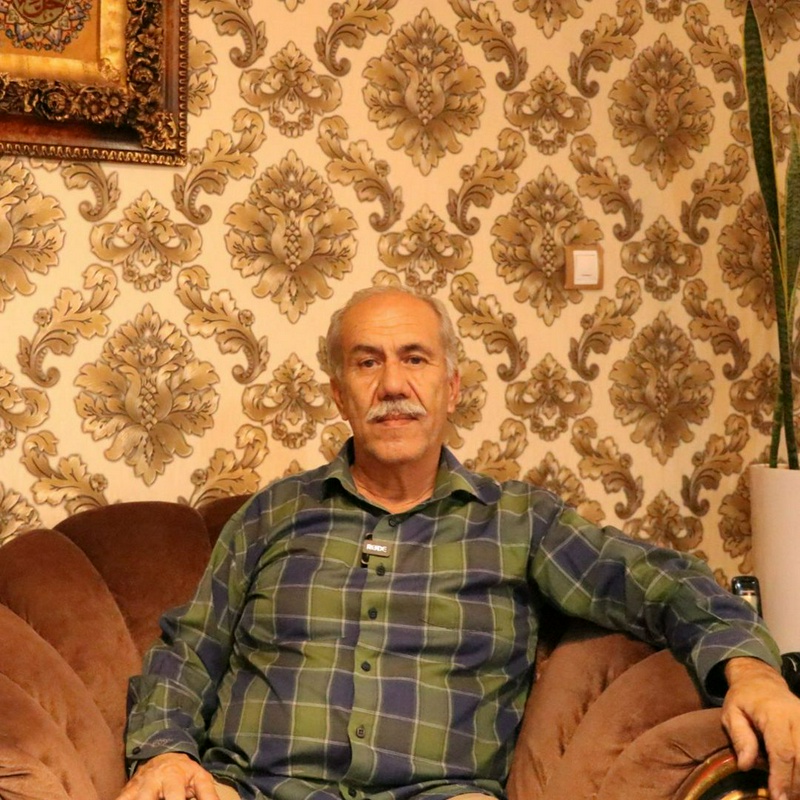
Ostad Karim Hedavand
خلاصه
In the twenty-seventh episode, the second part of the conversation with استاد کریم هداوند, the speaker refers to the critical situation of the people of سیستان و بلوچستان and asks the listeners to help these individuals. استاد هداوند discusses his history and experiences in the field of horse riding and recounts memories of riders and various incidents, including a tragic event that led to the loss of several horses in a stable. He mentions the horse racing competitions in گنبد کاووس and his successes in winning awards, sharing challenges and interesting memories from betting and riding during different periods. Additionally, استاد هداوند points out the problems that arose for horses and clubs after the Islamic Revolution, including food shortages and horse auctions, and talks about the management changes in this regard. This interview presents an engaging narrative of the experiences and challenges in the world of horse riding.
نکات کلیدی
- مردم سیستان و بلوچستان در سیل گرفتار شدهاند و نیاز به توجه دارند.
- اپیزودهای رادیو چارل هر دو هفته یکبار پخش میشود.
- شرطبندی در مسابقات اسبسواری جذاب است و سوارکاران باید اطلاعات دقیقی درباره اسبها داشته باشند.
- تجربه سوارکاری در گنبد و موفقیت در مسابقات از خاطرات مهم سوارکاران است.
- مشکلات اسبها بعد از انقلاب و مدیریت نادرست.
سرفصلها
- معرفی استاد کریم هداوند — گفتگو با استاد کریم هداوند درباره تجربیات و خاطرات سوارکاری.
- تجربیات و خاطرات سوارکاری — بررسی خاطرات جذاب و چالشهای سوارکاری در دوران گذشته.
- مشکلات پس از انقلاب — بررسی وضعیت اسبها و مدیریت نادرست پس از انقلاب.
پرسشهای متداول
چه کسانی در سیستم سوارکاری و کورس مانند شما بودند؟
مهدی بخشی، کریم اصغری، همایون وجدانی و کاظمی.
داستان کشیدن در اسبهای کورس چیست؟
کشیدن یعنی جلوگیری از مقام گرفتن یک اسب با همکاری سوارکاران.
چه اسبی سوار بودید و در کدام کورس؟
من اسبی به نام لاله را سوار بودم و مسافت هزار متر بود.
چند تا جایزه گرفتید؟
هرچی سوار شدم جایزه شدم.
چرا بعد از انقلاب وضعیت اسبها بد شد؟
خوراک نداشتند و مسئولین نتوانستند به درستی مدیریت کنند.
دوپینگ در اسبسواری به چه معناست؟
استفاده از مواد غیرمجاز برای افزایش عملکرد اسب.
متن کامل گفتگو
Before I start this episode, I wanted to mention something that I think is very important. The people of Sistan and Baluchestan have been caught in floods, and their news has been lost among the news of elections, the dollar, inflation, and the end of the year. Those poor souls are far from the center and their voices do not reach anywhere. If you are going to do a good deed at the end of the year and earn some merit, in my opinion, the most deserving people right now are the people of Sistan and Baluchestan. Do not forget them. Thank you for listening to my words.
Greetings and respect to all you dear listeners of Radio Charnal. I am happy to be your guest with another episode. I am very grateful for your support so far, and Radio Charnal is moving forward with energy.
As many of you have noticed by now, Radio Charnal episodes are broadcast every two weeks so that the talks are heard, and you dear ones have the opportunity to listen to the episodes. Another point is that one week is oral history, meaning talking with one of the elders and veterans about the past, and one week we talk about technical issues, current affairs, and our problems.
If you have issues and problems around you, be sure to share them with Radio Charnal. So far, many have kindly sent messages and told Radio Charnal about their issues and problems, and I am doing my best to share the issues and problems with experts and news in this field so that, God willing, we will see fewer problems in the future, and there will be more hope for all of us. I will not talk more and invite you to listen to the twenty-seventh episode of Radio Charnal, a conversation with Master Karim Hadaband.
Let's get to the course. The information I personally have is that you have a lot of course experience. Please explain who, like you, entered the equestrian and course system during that time. Mehdi Bakhshi was there, may God protect him, and Karim Asghari was also there. They were in the TRC collection. What I mean by my question is who, like you, had jumping competitions in the royal equestrian system and then went to TRC. Besides you, who else was there? Homayoun Vojdani and Kazemi were also riding alongside you.
Mitra also rode, and anyway, Mitra rode, which was both the first and the last. It was her last course. Yes, that course had a story. Homayoun Khan said that the horse was supposed to be pulled. Pulling it was different. Those who did this were different. What is this pulling topic in course horses? Pulling means if they want to hold a horse with the cooperation of the rider and prevent it from getting a position, meaning they hold it back, or, for example, several riders agree to keep that horse back. That was the pulling topic. Now the story was that Homayoun was supposed to pull the horse and not win a prize. Correct.
What was the distance of the horse pulling? The distance was a thousand meters. You were riding. Who else was riding? The riders of that course were Akhchali and Aref Dourani. What horse were you riding? I was riding a horse named Laleh. The distance was a thousand meters. Another rider was riding another horse. The horses were from the same Faraabad. I don't remember its name now. If I remember, I'll tell you. When they pulled the horse, I came in fourth. I mean, I came in third, but they counted me as fourth. Again, they put Homayoun ahead of me. Who came first in that course? The horse Kimia Gar came first. With which rider? I don't remember the rider. I think it was Khakestari. Even though it was pulled, it came third with Mitra. It was interesting. I heard in your memories about a horse named Kouseh.
They brought it as a horse for the course. The horse was Gahgir. Who was the owner of that horse? The owner was Mr. Abbas Mirkadeh. May God rest his soul. The late Mirkadeh brought that horse to the field, and it didn't run at all. It came last. They say it came with an ambulance, so to speak. Then they moved this horse and entrusted it to me. Did you also do Sisi yourself? No. Reza Rezaei became the trainer, and I was one of the riders of this horse. They had told me that the horse wouldn't move at all. They whipped it a lot and bothered it a lot. This horse talked to me. I mean, I talked to it, and it answered me. In the competitions it had, the first time I brought it to the field for a group two course competition, it was a good memory for me that this horse responded to me in that competition. They were photo-finished with the horse Gouj Khoroghli.
I mean, it came first and they became first and second. They finished together on the line. This was a very good memory for me. This happened to several other horses as well, where the stables collapsed, and they lay down, and this horse also perished in that pool.
You mentioned that a stable collapsed, and it was my first time hearing such a thing. What was the story of this stable? The stable was the same TRC that I am now saying was a three-story company. One of these stables was not fixed above and suddenly collapsed on top of each other. 14 horses were trapped under that debris.
They perished. It was three stories. The third floor housed the stable workers. It was two stories. Two floors were for horses, and one floor was for the workers, and it collapsed on top of each other. I mean, it collapsed. They hadn't fixed it together. It was such that that horse Kouseh, which I mentioned, was also among the 14 horses that perished. Were there any human casualties there? No, there were no human casualties. It was a tragic incident. After how many years of entering the course did you stay in the course? Until 1985, I was riding regularly. I rode all the courses. After it was disbanded, I even went to Turkmen Sahara to ride. Yes, I went to Gonbad Kavus. I was riding Mr. Khaleghi's horse. Yes, I was riding Mr. Khaleghi's horses. Mashallah, Mashallah, yes. Mashallah, Favorite was a temperament. May God rest Uncle Hossein Haftad, my father's uncle. May God rest him.
What memories do you have from Gonbad? The memories of Gonbad are very sweet. Anyway, when I went to that area to ride, I was in the jockey's room. They said that Majid Eidi told me, "Are you crazy to come and ride with these riders? They'll kill you here." He was also Turkmen. He was also Turkmen. Majidi. I also said, "Majid dear, since you are the elder of these people, tell them that if anyone sticks to me, I'll knock them down," and he told them. I even told Aghchali, I said, "Even if anyone sticks to me, I'll knock them down." How did you knock them down?
Knocking me down is easy. Since I had done show jumping, I was stronger and more powerful than all of them in terms of leg strength, and I knew that I had more control. Then a question, sorry, did you also ride with short stirrups? It wasn't old, short stirrups, and there were 14 horses in a course. My first course was riding Mr. Khaleghi's horse, Laklak, and the horses ran away. Six of them were ahead of me, and I was the seventh, and the rest were behind me. Those behind me didn't dare to pass me. Only Abchilin got close to me and said, "I can't reach my goal, Karim, go."
Since it was a straight line, it was the last hand change of the horse. Changing hands is like giving a reverse gear to the horse, and I left all of them behind and came first. In Gonbad, from that day, they said, "What a rider, what a ride." That was the term of the Turkmen. My first course in Gonbad was, and there I easily came first. The Tehran kids who ran alongside you there, the Tehran kids didn't go to ride with them. I was the only one who went from Tehran. You broke, you broke, and now we went there with friends to ride and were successful.
How many courses did you stay in Gonbad? The week I went there, I didn't ride more than one or two each week, but I went. I went every week. How many prizes did you win? In Gonbad, every time I rode, I won a prize. After the revolution, every time I rode, I won a prize. Correct. After the TRC company was disbanded, where did the courses go from there? Okay, the courses themselves were in Gonbad Kavus, they came to Aq Qala, from Aq Qala they came to Bandar Turkmen. There, anyway, I was riding Mr. Haft's horses. In the field, the Tehran kids' horses were actually being ridden.
They had their own riders and were riding, but when the Tehran kids' horses came, they would take me with them to ride, and they would get results. After the TRC field system was disbanded, you came to Khargush Darreh. I even did the last of TRC, where we were jumping the horses of terror, we were doing jumping work with them. Those that came out of the course, even that famous Namak Abroodi, I was riding, I was jumping, which in the jumping competitions.
To be registered in their name, they brought it to the field, but I started its jumping ride, I gave it its training. Who was its owner? Namak Abrood's last owner, who was TRC, was Mr. Rashvand, who had bought it from TRC. Did you do jumping work? I was doing jumping work, I brought it to jumping, and then they bought it from Mr. Rashvand, brought it to the field, and whose hand was it in? It had become Mr. Pezeshkian's hand at the end. Yes, they even named their club Namak Abrood. This is also Khargush Darreh Khargush Dar.
In the competitions we held, I would bring riders who were being trained in Faraabad as classic riders there to Nowruzabad. I say Nowruzabad, the Equestrian Club, which is Khargush Darreh. They held a couple of courses there, bringing the kids there to ride. Did you train Turkmen course students? No, they brought kids from other cities besides Turkmen to ride here, and we held several course competitions here at the Equestrian Club.
The oldest, its origin from the company there in Khargush Darreh. Why? It was a good memory. Yes, it was a good memory. Two TRCs that were closed.
They divided the horses among the clubs. The kids would bet, run their horses two by two together. They would bet themselves, run. A horse named Valdivert, owned by Mr. Khaleghi, was very sweet, very interesting. It was a group 1 horse.
Their points were group 3. They bet on them. A thousand meters, a 1600 meters to run together. They started running together for a thousand meters. The gentlemen sitting were discussing, saying if Karim is riding, I want to pull. I mean, no one has ever been born who can pull this horse. The more they pull it, the faster it gets. The trainer told the horse owner, "I want to pull this horse." He said, "Change the rider." They changed the rider.
They brought another Turkmen rider and put him on this horse. On the day of the race, what should be the afternoon gross 1? Mr. Karim Asghari told me that Karim, ride this horse. I said I don't have a helmet. He put a woolen hat on my head, said this is my hat, they put me on that horse which was a thousand meters. They didn't have a departure, they released them by hand. It wasn't an official race, no betting, two-person betting. They brought this horse to release them. Valdivert ran away. My horse stayed.
In the hand of the person holding it, Mr. Teymouri, Houshang Teymouri, may God rest his soul. He released it, and in short, I drove this horse with just one whip, no more than one whip, I drove it. In the first turn, I had about a 100-meter gap. When it turned the first turn, I was in the straight line of the second turn, I was in the first turn. In the last straight line, I accelerated, passed it. I mean, I hit it. Now the reason for hitting it is that this is group three, that is group one. The reason is that four people who gave this horse, this horse.
Rider and had taken three laps, had circled the field, was tired. In the fourth gallop, its battery was exhausted. That day we hit this horse. Then the bet between whom? The bet was between Mr. Saeed Khaleghi and an engineer who was the owner of that Chando. Do you remember their last name? I don't remember their last name now. Now if it comes to my mind, I'll tell you that Mr. Saeed Khaleghi was pulling his hair and saying why did I change my rider. They didn't run 1600 together either, because if they ran, they would catch Chando and hit it again.
Because that rider wasn't the rider of that horse. That horse had a knack. What I said was that they rode with a tape, changed the bit, gave them their own specific gallops. That rider took it. I mean, he had taken the rider, taken it for himself, and the battery, yes, its battery was exhausted. We did our job, we won the prize. Where was Karim Khan Asghari in that bet? He was the trainer of that Chando. Then this event, which part, I mean, which club? I said TRC, no, the Equestrian Club in Khargush Darreh, this event here.
It was a very good memory, it was interesting. Karim, as an expert rider in the course, how much did you bet? I mean, was betting attractive to you or not? Betting is attractive, but since we knew which horses were one and two and three, I mean, we were so confident in ourselves in the four-lane that we saw the horses were one and three for us, because the times were clear for us. Well, we didn't have a stopwatch, but in our minds, the work we were doing, the cane, its one and three were clear, but they played very little and whatever I played.
I won the prize. Well, besides these riders, because they knew which horses were 1 and 2, 24 hours before the course, the riders of that time were all quarantined, they couldn't talk to anyone. I mean, they weren't allowed to talk to anyone. Where were they quarantined? In the area they had, the same TRC company that now the company law, yes, that the riders who want to run the course 24 hours before the event starts, they don't talk to anyone, they can't talk to anyone, say which horse is one and two and three, I mean, those who knew.
From which horse they were riding, it was clear what they were, I mean, they knew themselves, they could play, many of them played too. I also played limited, very little. Mother 10 tomans, 5 tomans to have a hobby, to have a motivation, otherwise as a bet and getting rich, no. You won all, whatever I played, I won, I never lost, God willing, you never lose.
There is a very famous memory that I now heard from Khan Habibi and of course, I knew from before and I know that in that course you and Reza Ghadiri, Master Reza Ghadiri was also riding. The same course that with Abad Nowruz Abad, what year was that course.
As a rider who was behind them, I don't exactly remember, but it was a very stubborn ride and they were teasing each other, but that Aghchali was hitting Noor Mohammad Habibi with a whip from the departure, they were hitting. What was the distance you remember? The distance was 1400, that course, I don't remember Babak Baba now, but I was riding a horse there, I mean, you witnessed this story for the whole 1400 meters. Yes, Javad started that hitting.
I didn't notice the start of the hitting, but I saw they were tangled with each other and I saw Aghchali was hitting Noor Mohammad Habibi, but he didn't give up either, Mohammad Habibi too, but well, he was the opponent, he was hitting him, he was hitting him, of course, well, after all, he was a family man, he shouldn't have done this, but what I say, teasing, I don't know why this should happen, and the one who became one, I don't remember exactly now, but the attraction of this hitting was much more for me than.
To see the course, who became one, all of this was in my mind that I came down to ask them why, why did you hit each other, they didn't fall, thank God, nothing happened. What was your most attractive memory of all these years of riding? The horse Wat Cigarette that I was riding with Valdivert that were next to me and what I remember is Dr. Arya Zand when he was riding, I mean, as a ride that I was doing, Dr. Zand was the observer of this issue, he once told me that this horse.
I worked on it and got a good result when they started, they only saw the front horse Valdivert, which was just that one horse, whatever they looked behind them to say where Wat Cigarette is, I was also riding Wat Cigarette, they didn't see, they weren't aware that I had paired with Valdivert, I was coming in the last turn, I accelerated, passed all of them, for one that the original still hadn't stuck to this original to understand how much it is, I mean, they knew that no horse reaches this horse, no.
It has no power to ride this horse to want to throw this horse out of the prize, Ms. Rider was Rezaei, the whole period was in your hands, before it was in the hands of foreigners who were New Zealanders, it came to Rezaei, which was Mr. Nabavi's, then I say the riders who came there, I was riding there and no horse for.
Once they had doped this horse, which had come out the opposite, that day, anyway, I wasn't riding, what does doping mean it came out the opposite, they had given syrup to this smuggled to dope it, for example, it had come out the opposite, what does it mean it didn't come out the opposite, I mean, the horse didn't come at