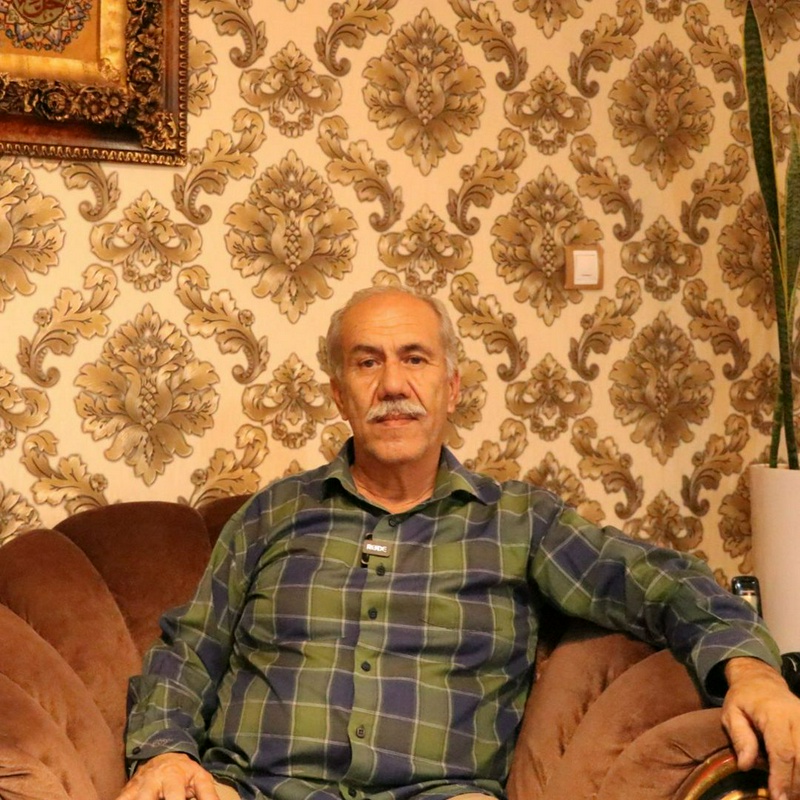
Master Karim Hedavand
خلاصه
In the twenty-fifth episode of Radio Chahar Nal, Master Karim Hadawand, one of the renowned figures in horse riding in Iran, discusses the oral history of this sport and his personal experiences. He mentions the holding of the election assembly for the presidency of the Equestrian Federation on March 14 and invites listeners to share their opinions through the Radio's Telegram channel. Master Hadawand refers to learning from great coaches such as the late Rezaei and Mr. Vajdani and their impact on his progress in horse riding. He also talks about his challenges with older riders and his successes in youth competitions, especially winning the Crown Prince Cup for two consecutive years. In this interview, changes in the riding horse system after the revolution and issues such as favoritism and poor choices in determining winners are also addressed, which have added to the allure and bitter realities of this sport.
نکات کلیدی
- استاد کریم هداوند از بزرگان جامعه اسبسواری ایران است.
- علاقه به اسبسواری از سنین پایین و تحت نظر مربیانی مانند خانم گیلرز آغاز شده است.
- کار با مربیهای خارجی و استفاده از تجربیات آنها اهمیت دارد.
- مدیریت موفق کامبیز آتابای در سیستم سواری قابل توجه است.
- جام ولیعهد مهمترین عنوانی بود که سوارکار در رده جوانان کسب کرد.
سرفصلها
- آغاز علاقه به اسبسواری — شروع علاقه به اسبسواری و اولین مواجهه با اسب در اصطبل فرحآباد.
- تجربیات با مربیان خارجی — کار با مربیهای خارجی و بهرهگیری از تجربیات آنها در پیشرفت سواری.
- نقش کامبیز آتابای — بررسی مدیریت موفق کامبیز آتابای در سیستم سواری.
- مسابقات و مقامها — کسب مقامهای اول در مسابقات جوانان و بزرگسالان و اهمیت جام ولیعهد.
پرسشهای متداول
شما متولد چه سالی هستید؟
متولد ۱۳۴۰ هستم.
اولین مواجههتان با اسب به چه صورت بوده؟
اولین مواجههام با اسب در اصطبل فرحآباد بود که گیلرز دعوت کرد برای سواری.
چند سال است که ازدواج کردهاید و چند تا فرزند دارید؟
الان ۲۷ سال است که ازدواج کردهام و دو تا فرزند دارم.
با کدام مربیهای خارجی کار کردید؟
غیر از خانم گیروز، با مربیانی که به سلطنتی میآمدند کار میکردم و از اطلاعاتشان استفاده میکردم.
در مسابقه چه مقامهایی کسب کردید؟
در جوانان مقامهای اول را گرفتم و در بزرگسال هم مقام اول را کسب کردم.
متن کامل گفتگو
Hello and greetings to all you dear listeners. I am from Radio Heydari and I am here with the twenty-fifth episode of Radio Chahar Naal.
In this episode, we have returned to the oral history of horseback riding in Iran, and our guest for this episode of Radio Chahar Naal is Master Karim Hedavand, one of the greats and masters of the Iranian equestrian community. Another point is that, as you all know, the presidential election assembly of the Equestrian Federation is scheduled to be held on the 24th of Esfand. Although no candidate names have been announced so far and we practically do not know who the candidates are, we hope that this election will be held on the scheduled date.
And the Iranian equestrian community will get out of this state of uncertainty as soon as possible. Another point is that wherever you are in Iran and wherever you live, if you want to be heard and convey your issues and problems, you can send your issues in the form of an audio file to Radio Chahar Naal via the Telegram channel support, so that I can broadcast them for you between episodes. We hope that by doing this, we can help solve your problems or at least make your voice heard by the officials of this sport. Let's listen to the twenty-fifth episode with Master Karim Hedavand. In the name of the Creator of beauty, today I had the chance to be at the service of one of the great masters of the equestrian community, and I have the honor to sit in front of him and talk to him. It is an honor for Radio Chaman that they gave us this time. Master Karim Hedavand is one of the great riders and veterans of the equestrian community. Before I start, I wanted to ask you, Master, if you allow me, to call you Uncle Karim during the interview so that the interview system is not formal and it is more of a chat. If you have no objection, well, we are at your service. I greet you, dear friends, and respected listeners.
Thank you, sir, for accepting me into your home and giving me the honor to be at your service. What year were you born? Born in 1340. Can you also tell me the day and month, please? 1/1/1340. You were born on a good date, excellent. Where are you originally from? I was born in Qasr-e Firouzeh but grew up in Abad Qasr-e Firouzeh, you mean east of Tehran? Tehran, yes, you are a Tehran kid, very good.
What year did you get married? You have been married for 27 years now, calculate, and how many children do you have? Two children. May God protect them. Well, Uncle Karim, do you remember how your first encounter with a horse was? I mean, do you remember the first time you saw or touched a horse, does your memory help you see when it was? My memory of horseback riding and starting to ride was from the Farahabad stable when Gil-Roz invited me to ride, and I was able to start horseback riding. How old were you then? I started around 12-13. How did you enter the system? We started riding because of our interest in horses, next to our house, next to Farahabad, next to the same Farahabad, known as the eight workshop devices that were inside Farahabad. What was the workshop? It was a carpentry workshop and these were next to our house. Right, I used to see these horses every day as they were riding and on the routes they went, we also saw them. Anyway, because of my interest, I went to watch, and Gil-Roz, as they say, the lady of the day, the royal riding coach, yes, invited you to ride. She asked me if I knew how to ride? We used to ride sticks and show with our friends. I said I knew, and she called for a horse to be brought for me to ride. She called my brother and asked whose son I was. I said my brother is a rider, Gholam Reza Vand, the late Gholam. They brought a horse from the carriage horses there for the work they did, named the horse and Tabrizian, and put me on the horse in the lunge. A bare horse, without a saddle, without a saddle pad. I might say that for three-quarters of an hour they lunged this horse, and I didn't fall off the horse, and that day was my start for riding when Gil-Roz invited me to definitely start riding classes. Very good. So, in a way, you entered the system because of your late brother. Now, since unfortunately, we have no records or anything about your late brother, and only a few photos, I would love for you to explain so that the listener knows how the late Gholam Reza Vand, your older brother, entered that system until we return to you. Anyway, they were part of the royal account cadre for the riding they did, the horseback riding they had, whether jumping or carriage, the work they did, and he was one of the well-known riders at that time and had a reputation for himself. Then how did Gholam Reza Khan enter the court system? Were you like, for example, the Vojdani family, the Bahrami family, the Jelodar, meaning the elder as Jelodar? Yes, your father? No, Mr. Gholam Reza Khan, God bless him, entered that system without any intermediary. Entered that system, meaning my father was also one of the gardeners in that area. Right, the late father. Very good riding. Then how many years apart were you? What year was it? 33. Then let me tell you, what year did he start riding? You are not aware? Not exactly. Then were you just two brothers in your house? No, there were eight brothers. Gholam Reza was the eldest, I am the sixth. Right. Anyway, in addition to a sister I have. May God protect you. Then how many brothers from you 9? One of them also worked in the same system named Hossein. Mr. Hossein? I haven't heard his name until now, it's good you mentioned it. You and Gholam Reza Khan and Mr. Hossein in the riding system. Now, since the first time I heard Mr. Hossein's name, what year did Gholam Reza Khan pass away? I mean, when did he pass away, in fact? About 14 years ago. Was it due to an accident? No, it wasn't a heart condition. I know myself, but for the radio listener, they are interested to know what conditions they had. Well, let's go back to you. You said that you entered the world of horses through Mrs. Gil-Roz. After that day when you were lunged and didn't fall, how did the process go? I had two hours of class with her every day. Every day, every day. Within 2 months, I participated in competitions. So you were very talented, right? Well, it was the coach's opinion. Right. Did you work specifically under Mrs. Gil-Roz? Yes. After two months, you entered the competition? Why? What level and height? It started at a level for me. Competition competition. Were Mr. Kazem Vojdani jumping next to you? Yes. Ramin Shaki in the competition? Yes. They were there. There were others, anyway, kids I don't remember now, but they were very capable riders. Then in front of you, besides your brother, were there other greats like, for example, Ezzat Khan Vojdani, Ali Agha Rezaei, the late?
How did it feel for you to start riding alongside them? Anyway, starting to ride alongside them is an honor for us to be able to take inspiration from them. The things we did, the things we learned, if you learn a word from each of them, you learn an action to progress in riding. Which of them were more popular for you at that time and had a special place? They were all popular. You started in your teenage years. Well, you had many elders. The late Mr. Rezaei was an inspiration for me.
There was Mr. Vojdani, Ezzatollah Vojdani, Mr. Bahrami, Davood Bahrami. They were role models for these people. My brother was a role model. After that competition, how did you start? Did you become an official employee of the royal accounting system? I did not become an official employee, but they gave me programs in their schedules. What hours, what times. Anyway, I had a two-hour program with them every day and worked as part of it. Working under their supervision is correct. Besides Mrs. Girouz, which other foreign coach did you work with? I must mention.
May God bless Neshati, he was also there. In these matters, I saw their classes and riding alongside them, and in addition, I took whatever information they could provide. The foreign coaches I had, at that time, any coach who came to the royal system, we also joined that system with them. That is, we worked with them. We were in the programs. Yes, and what about Gholamreza Khan? Was he also an official employee there? Yes, that's correct. Then in the division of horses.
How was it? For example, when you were a teenager, who decided for you, who gave the program? Did Mrs. Gilas herself give the program or did you divide it yourself? The coach approved it, determined it for horse riding, and later when he left yesterday, another coach came. I was under my brother's supervision, entirely under Gholamreza's supervision. Then did you have experience working with masters in your background? Yes.
For several years, they came here to the upper or lower club as an educational class for the children. We were also in their class. Now, the children of the courtiers, the upper children who were in the royal voice, for example, who were in the class? All of them, the children I mentioned, all of them were there. Yes, they were all there. In addition to this work, there were others alongside them. Mr. Alaei, Mr. Qasem's brother, oh well, Jamshid Haji Kandi, yes.
Davood Karimi, fascinated by Davood Karimi, he was also one of the good riders. Yes, yes, Master, do you have anything in your mind about Kambiz in your connection? Did you have a direct encounter with him personally or not? Yes, how was your encounter? Even in the classes we held, he would come as part of the educational classes under the coach's supervision. Riding alongside you, riding alongside us. Did you have a personal encounter with him yourself? I don't know about this topic, any discussion or opinion.
No, just in the sense of expressing an opinion, but he had a very distinguished respect for all the people who were there. In terms of behavior, very excellent. Then how was his behavior, for example, with you as a rider in that system? Was it not military behavior? No, it was very normal behavior. Then what was it about Kambiz Atabay that, for example, was a role model for you at that time or what lesson did you take from his personality? Anyway, it was a very successful planning. In their planning, both horses and people, everything was.
He, as they say, organized the tasks that might be needed in the field, tasks that might be divided, and he would give opinions on the allocation of horses. My question is, how did you see Kambiz Atabay's role in that system and conditions? You who had seen it up close and witnessed this system, he was a very successful manager. In the nervous system, in the main system, a very successful manager, very excellent, everything was in order. Then besides, who else from those who had a military background rode alongside you? Timsar Khosro Dad rode.
Nader Jahanbani occasionally rode. In the same system under the same coaches with the same kids who were working in that collection. What year did you start participating in racing competitions? From what age did you participate in nervous competitions after the revolution?
The nervous company was still in order. The riders who were mostly foreign were there. Now a number of Turkmen were also working alongside them. I saw that in this situation they were jumping and humiliating the horse and hitting it on the head. I had to go into the racing system. When I went, it was very interesting for them that a jumping rider had come into racing. Riding title with a very short duration, maybe I should say 24 hours, I watched their work, their techniques, their films up close.
I started riding and was successful in my work. What did it teach you? First, I asked my brother for permission. He allowed me to go, yes, to go and ride. Well, there in the initial race, the small initial race, Mr. Nasrallah was there, Pakistani, Pakistani course indicator and came to give me permission to ride. They said to test him. They brought me two horses, one by one, I said what to do because I was successful in the field and my work. Getting permission that.
They allowed me to ride, to be able to ride and participate in the competition. New Zealand, Australia, and Turkmen kids were there. Who do you remember from the Turks? Majid Eiri was there, Aqcheli was there, that year. Yes, Ashghali Palang was there, may he rest in peace, and the Pakistani also rode alongside them. Arharani Yasmin, was it Yasmin Khanum? No.
Named Yasmin Khadem Hossein. These were the names of the Pakistani riders who rode alongside these foreign riders and they gradually withdrew after the revolution. After the revolution, the first person we participated with, how far was it? The distance was a thousand meters, a thousand meters. Yes, were you riding a horse named Sejwal Torbat? No, it was a Turkmen horse. The first thing I rode was Asr Turkey. Then I came and rode Turo. That is, I was riding Torbada in the competition. No.
The late Mr. Rezaei, Reza Rezaei, the elder brother of Ali Agha. The riders who were there in that TRC, I was also among those riders divided among these coaches, and my quota fell with Mr. Rezaei. Mr. Reza Rezaei, Reza Rezaei. Each club, each stable had two riders. One foreign rider, one Iranian rider. Under Mr. Rezaei's supervision, which foreign rider was alongside the rider? Where was he from? Do you remember his name? That rider was Halim Faiz, he was Pakistani, Pakistani.
He was more experienced than you, well, they were old, they rode but they were race riders, but they didn't have much courage, so to speak. There was a bit of fear in them. We foreigners, all of them, when I started there, I was riding in this situation with sincerity, with love, with that passion I had, I would go into the heart of all of them. Physically, I was also stronger than them and easily did my work.
The riders I mentioned, some of them I didn't know. The old ones, of course, were not famous, they were from the Turkmen children. That's right, how did you rank? I came first, we went to the first race, I came first in the first race. Well done! I have many photos of you at the TRC field. Yes, very good. Then how many years did you stay in the race?
Did you start racing after the revolution? Yes, I started racing after the revolution. Because the system of show jumping horses, everyone else had no enthusiasm. They looked at the horse as something else, meaning the show jumping horse had come to a very low level. Meaning even the Farabad horses were sold and disappeared in the same way. Who sold them? Those who came to the head of the work. Then who bought the horses? People from the provinces came, bought them, and took them away.
Let's go back to the jumping competitions and the system. You mentioned that you started the first competition after riding under the supervision of a lady. Then how was the process of the competitions? Meaning there was a competition every week, every week.
They gave us a horse as a ride. Later, after a while, when they chose the horses and gave them to me, my brother had a horse, an evening horse known as Qezelbash. Yes, this horse, in any case, gave me a good ride. It was Turkmen, Turkmen was eliminated, it was Turkmen, and in the rides, whatever that horse was ridden, they were in the competitions for prizes, and the names that were again Kamal, these were the ones we came to work with in riding.
It was with my brother, I helped him. With the same foals, we came and won prizes, meaning in the competitions and the foreign horses they occasionally gave us, we came with them in the competitions. Foreigners gave show jumping competition horses. It was at that time. As for me, as a youth, they participated in other competitions. Because of this brother of ours, meaning you as a rider did not lack in that system. I didn't pull the main, it was luck, I was lucky, they gave me a good horse and.
My competition was with very capable horses. They weren't bad horses, I always got prizes. What was the most attractive and important title you got? The Crown Prince's Cup. I won the cup two years in a row in the youth category. Youth, yes youth. Two years, in 1976 and 1977, I won this prize. Meaning two cups one after the other, two years in a row I came first. Who jumped alongside you as youths? Youths, the same riders I mentioned.
No, peers, my own age categories. They were Alghanian kids, from the Moghadam club. From your side, because Shahrokh Khan was practically older than you. Shahrokh Khan didn't jump with me, but their youths had capable riders. Now I don't remember their names exactly, but they jumped. The Imperial Club also had a series of riders, they came and jumped. Names that I don't remember now, I don't have the presence of mind to say exactly which ones even.
Mr. Kazem Vojdani was there, Mohammadreza Sarbazi was there. From the kids who were in the same class as us who came for jumping. Kazem said everyone knows Homayoun. Homayoun, yes Homayoun Hashemi is my close friend. The discussion is about being in the same period as you. Yes, they were Alghanian kids. Esfandiar Houshmand was there. Let me say these were students of Master Rezaei, they came to the competitions. Even foreign riders participated in these competitions. They came from all over the world.
France, England, youths. Yes, two years in a row. Then did you compete with adults in the adult category? Or did you have competition with adults too? Even in the competitions.
Chinese adults, it was the Aryamehr Cup held in the 12,000-seat hall. I was also among the three adults, one youth alongside them formed the team. What team were you? I was team B that came with the same Qezelbash horse. That horse scored well for that team and made it a champion, made it first. Who was with you in the competition? I mean, your teammates in fact. The teammates, Mashallah, were all capable riders. Now these whose names I should say.
All of them were good teams. Even Mr. Rezaei himself had a team. Team B was royal. Do you remember that they were team A and royal? Its A was Kambiz Ataei, Ezzatollah Khosrowdad was there. Who was their youth? Wasn't it Davood Khan? Davood Khan Bahrami? No, was their youth or Mohsen Alipour? No, probably Kazem Vojdani was the same Vojdani. They were A. They were A. Who were you in your team? I was, Mr. Karimi Majles was, my brother was.
Abdullah Ghadimi, Abdullah Ghadimi came first, with the score you got. You mean when they simultaneously performed without error. Do you remember? I don't remember the same year now. What was the height of the competition? The height was also 1.20 to 1.30 meters. 1.30 the same year that competition.
Yes, yes, Golnar Bakhtiar all of them were there. Ms. Bakhtiar in that competition was a member of which team? Do you remember? I don't remember, I don't remember. What about foreign riders? Did they have a team too? Did they have an individual team? Yes, they had a team. It was a team competition. Individually we youths couldn't participate as adults. Then did you get an individual rank that day besides the team rank or not? Was there a Gaj competition? Then they went team? No, it was team.
There wasn't another barrage. What was the rank you got that day? Calculation that we were part of the team. I have a few cups that I see in your house now and now I will take pictures of them to later put on the Instagram page for the audience. Can you explain about these cups? Because now that we talked together, you said that you did very well in a few competitions. Now which one is the most attractive for you in terms of the competition title?
The most attractive is these two cups that I got one after the other, two years in a row that I got. This one is the most attractive. Another one is the cup God bless Alireza Soudabeh. I also got this cup in their own club complex. Their own club Dasht Behesht. Dasht Behesht Karaj. How did you rank there? I also came first there. I was riding the horse Roshan that I was able to get that cup. The same Roshan that Davood Khan rode. That's right. Then what was the height there? There too it was 120 adults. Not youths. Here too it was youths.
This was also the youth. Ramin Shahid Ramin Shaki took the adult, and I took the youth. Since I know someone was from the open category competitions, meaning both young and adult were jumping together. Do you have a title that you might have taken in the adult category besides the first places you took in the youth? I have some trophies from the adult category, one or two of them are here now. I got bigger. You became first in the adult category. What event was it from? Was it a competition or not? I don't remember their events much, but well.
The trophies they held, the memorials that were there, I participated. Before the revolution, I participated in the adult category, but I was the national champion in 1978, and I was riding the horse Roshan, which was an expensive horse. The competition required us to jump two rounds. I jumped the first round without error, they didn't let me jump the second round. Why? Don't censor it, they didn't let me jump. They said in the afternoon they objected, saying your horse's hand hurts. What exactly didn't they let, they said don't jump well who to me.
They told my older brother not to jump, Karim didn't jump, no matter how much I begged them to let me, this horse has no problem, this horse has just gotten better, I said it doesn't want to jump, I didn't jump that round, meaning I jumped the first round, I didn't jump the second round, who became first, Homayoun became first, so I should ask Homayoun, although I haven't succeeded in talking to him yet, he's a bit aloof, I hope he admits it, well, that prize was won with errors, of course, with four errors, Homayoun jumped with glue, your memory with Alborz, Alborz, yeah, a very A-level horse was there.
Roshan that I jumped when the competition ended, Homayoun became first, Mohammadreza Sarbazi became second, and I was chosen third, meaning they said let's give this third prize to him because we didn't have you jump, otherwise, you should have been first, which finally remains in our history, and now it's just a memory, but my question is why didn't they let you jump, was it an order from someone or really an idea, no it was an order that I shouldn't jump, let others go for that prize.
To ask more clearly, do you have someone specific in mind, or do you not want to say what it was now, those who told me knew who they wanted to choose for this task to win a championship and go, but it was somehow favoritism, it was favoritism that they didn't let me jump, let me say first, I was definitely one because this happened in a competition for Davood Khan Bahrami too, I think it was either the same horse Roshan or I don't remember exactly the name, he also came to the competition, meaning he could have become first.
The program was very upset about this issue, and I want to see if the person who gave this order was Kambiz Atabay or someone else, no that poor guy didn't say anything to me, my brother told me not to jump, now I don't know, I didn't ask him in the end why, but I guessed they wanted to put someone else there, they gave me the third place just like that, meaning even though you were practically expelled from the competition, you weren't expelled, they didn't let you jump, but they gave me the third place, what an interesting rule.
Well, very excellent, then what about the next year, the next year was 1978, aha this was the last year, the last Nowruzabad was held, Nowruzabad was one round.
I am infinitely grateful for being with Radio Chahar Naal in this section as well, please, I ask everyone not to be passive, send us comments, criticism, suggestions, and any opinions you have so that we can produce better programs for you dear ones in the future, I hope your days and times are good.
Take care of your horses.