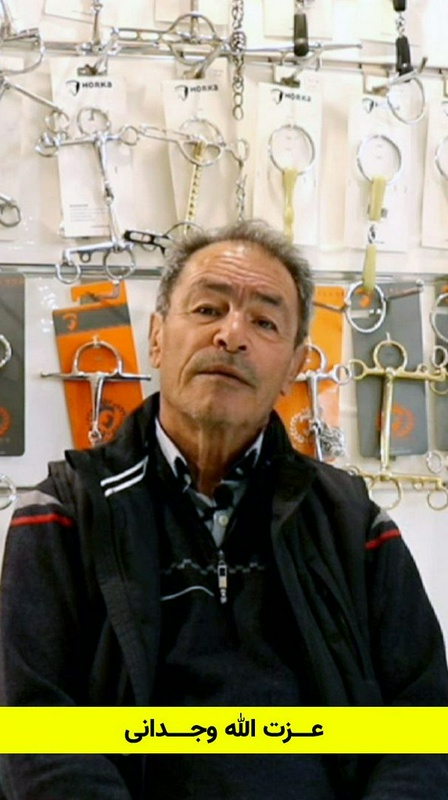
Master Ezzatollah Vojdani
خلاصه
In the twenty-third episode of Radio Chahar Nal, Mohsen Pourheidari discusses with Professor Ezzatollah Vajdani the challenges of the equestrian system in Iran, especially in terms of education and facilities. Professor Vajdani points to the key role of Kambeiz Atabai in the country's equestrianism and expresses his criticisms regarding the lack of access for trainers and riders to appropriate educational facilities. He also emphasizes issues such as the excessive import of horses and neglect of domestic production, stressing the necessity of utilizing the expertise of trainers to enhance the quality of Iranian horses. Furthermore, the negative impacts after the revolution on the quality and breed of horses and the challenges of producing show jumping horses are mentioned. Professor Vajdani also compares the past and present conditions of equestrianism and emphasizes the importance of continuous training for young riders, urging them to participate more diligently in training sessions to be more successful in competitions.
نکات کلیدی
- کامبیز آتابای نقش کلیدی در آموزش و برنامهریزی مسابقات اسبسواری داشت.
- سیستم آموزشی او بیشتر به سوارکاران خاصی اختصاص داشت.
- ایراداتی مانند کمبود امکانات در برخی باشگاهها به کار او وارد است.
- واردات بیرویه اسبها مانع از تولید داخلی شد.
- تمرکز بر کیفیت تولید اسب به جای کمیت ضروری است.
سرفصلها
- نقش کامبیز آتابای در اسبسواری ایران — بررسی نقش و تاثیرات کامبیز آتابای در آموزش و برنامهریزی مسابقات اسبسواری.
- سیستم آموزشی و نقدهای وارده — تحلیل سیستم آموزشی کامبیز آتابای و نقدهای مطرح شده به آن.
- واردات اسب و تولید داخلی — بررسی نقدهای وارد بر واردات اسب و اهمیت تولید داخلی.
پرسشهای متداول
کامبیز آتابای چه نقشی در سیستم اسب ایران داشت؟
کامبیز آتابای نقش مهمی در برنامهریزی مسابقات و آموزش مربیها داشت و به سوارکاران اهمیت یادگیری را میآموخت.
آیا سیستم آموزشی کامبیز آتابای برای همه سوارکاران یکسان بود؟
خیر، سیستم آموزشی او بیشتر به سوارکاران خاصی که در دربار بودند، اختصاص داشت و بسیاری از سوارکاران دیگر از آن بهرهمند نشدند.
چه ایراداتی به کار کامبیز آتابای وارد است؟
ایراداتی مانند کمبود نور در برخی باشگاهها و عدم برنامهریزی برای باشگاههای دیگر مطرح شده است.
نقد اصلی به واردات اسبها چه بود؟
نقد اصلی به واردات بیرویه و غافل ماندن از تولید اسب اشاره دارد.
چگونه میتوان کیفیت تولید اسب را افزایش داد؟
با استفاده از متخصصان و تمرکز بر کیفیت به جای کمیت، میتوان کیفیت تولید را افزایش داد.
متن کامل گفتگو
Hello and good day, I am Mohsen Pourheidari and you are listening to episode twenty-three of the first season of Radio Chahar Naal. In this section, Master Ezzatollah Vejdani is a guest on Radio Chahar Naal. If you haven't listened to episode twenty-one, which is the first part of Master Ezzatollah Vejdani's talks, I suggest you listen to that episode first and then this one, as the events are completely related in terms of history and time. The next point is that Radio Chahar Naal will extensively discuss the topic of education with great figures and masters in the coming days. If you have a person in mind who can help us discuss this topic in detail, I would be happy if you message the Telegram channel support and suggest your person so that Radio Chahar Naal can also talk extensively with those dear ones in that field. And a special thank you for being with Radio Chahar Naal so far and you are my pride. I hope I can pursue better topics and ultimately help make the future brighter. Let's listen to episode twenty-three, the conversation with Master Ezzatollah Vejdani.
The sponsor of this episode of Radio Chahar Naal is the Keivan Equestrian Equipment Store. The Keivan brand started its activities in the field of concentrate feed and specialized horse supplements in 2011 and officially entered the field of professional equestrian equipment and specialized edible supplements in 2016. In recent years, the Keivan store, with great efforts to supply equestrian equipment and horse edible supplements, which includes importing and sometimes producing these items domestically, has been able to meet the needs of the equestrian community to a large extent and put the minds of owners and riders at ease. In many competitions, the Keivan brand has been a supporter and sponsor of good Iranian riders. For a visit or in-person purchase from the Keivan store, you can visit the Rezaei Equestrian Club or Bam. Or wherever you are in Iran, you can order the products you need from the Keivan store through the Instagram page to be delivered to your home or club. I will leave the Instagram page address and contact number of the Keivan store in the description of this episode for you. With the Keivan brand, you no longer have to worry about providing the necessary equipment for your horse.
What I have heard from you, from my father, and many veterans, is the role that Kambiz Atabay had in the Iranian horse system, especially the Royal Horse Association. After all, you lived alongside him and were more familiar with his character and decisions. What kind of person was he and what system did he lay the foundation for that year? In your opinion, as you mentioned, the foundations he laid at that time are still almost the same and the planning for competitions and the work of the trainers they had, and their opinion was always that the trainer means the riders. At that time, when we were still much younger, we considered ourselves trainers. We really needed to still learn, and this really provided that for us, and he liked to say that your learning should always be good. That is, use the trainers who come. The trainers who came really worked hard.
Now, because I myself do some coaching, I am realizing how much effort they really put in for us. Maybe as I mentioned at the beginning of my talk, we were younger and our understanding was not high. We thought that if he was nagging at me or shouting, he didn't like me or disliked me. And now I think that no, they showed in this way that they liked us. That is, they liked their training because it was also beneficial for them that our riding was good so that they would be invited to come again next time, and this was an honor for them to come to another country to teach and see the result of their teaching. And Mr. Atabay really worked hard for the planning of horse work and competitions and the employees we were, the equestrian. But well, one or two now either call it negligence or call it a mistake. One is that in things like Farabad and light and things that needed obstacles, he did. For Nowruzabad, for example, there was no light. There was no light until a few years ago when they predicted and installed the light for it. Or, for example, the indoor that we really needed at that time because it was necessary to cancel in winter because of snow and rain.
Yes, it remains this way. Then such now we do not say what happens, let's call it negligence or he didn't know or anything else. I find these criticisms very minor. It's not a major criticism. A very big criticism that I have heard at least from your contemporaries is that the system was very exclusive. That is, the court was an exclusive system. A number of good riders like you, like Davood Khan in Arabic, like Hossein Agha Majzoub in that system, like now Gholamrezavand in that system practically benefited from those full facilities. Foreign trainers, good horses, good facilities, good conditions. But many were also outside that system and had to start privately, work, and from that now if we want to consider the most important discussion of education, they did not benefit from that education in the way that you and the children who were in the court did. One of the very big criticisms that is made of Kambiz Atabay is now you say that now my next question is whatever it was, it was only in the Shah's stable itself, not any planning for outside other clubs. Why see other clubs didn't need it. Why like Mr. Ilghaniyan, Mr. Soudavar, they brought their own trainers.
For example, suppose two clubs that were very active at that time, one was the Moghaddam club and one was Mr. Shaki's club. Yes, these two were practically good for them, the trainer did not go or they did not want, I do not know. At that time, I was not very much into things like Mr. Moghaddam, Mr. Shahrokh's father, Mr. Jalal, God bless him. Yes, if he wanted one hundred percent from Mr. he would definitely give it to him or if Mr. Shaki wanted. They themselves were masters in any case. Yes, they did not need anything for them. After these, there was no such club that we could say yes. If we give such a ratio to Mr. this is that those things were very few. Like now, Mashallah, in this very province of Tehran, maybe there are 200 clubs. Yes, today yes if such a thing happens today, yes we really need ten foreign trainers to come, not just one to reach everyone because.
Father, who is now in the federation, should have done this equally for everyone, not just for the Farabad stable today or for the Nowruzabad stable or other clubs. After all, this situation allows us to give credit to the friends who have now complained. But I say that there weren't that many clubs, really, I'm saying, there were five or six clubs, two in Tehran, four in Tehran, one was Farabad, one was Nowruzabad, one club as we mentioned Mr. Moghadam and one was Shaki.
It was in Karaj, yes. One of these clubs, which is now Kalak, was not very active and had just started. Mr. Soudabeh, Mr. Ilghaniyan, and Mr. Jahanbani and another gentleman were also in the race, Mr. Vahab Vahabzadeh Rasoul who were in the race. It is true that they all brought coaches. Mr. Jahanbani brought himself, Ilghaniyan brought, Mr. Soudabeh brought. Who were the Iranian kids working for them?
With Mr. Soudabeh, Mr. Rezaei was a king for a while, then he retired or resigned and came out and went to Mr. Soudabeh and rode there. There was another club there, belonging to Mr. Saber Ranginaks, he had a daughter named Marion, Marion too.
He had his own coach and was close to these two or three clubs. They had a kind of exchange of coaches or worked together and these two clubs Mr. Shaki and Mr. Moghadam, now again Mr. Shaki, themselves Mr. Colonel, yes, he was a very present master. However, I think they didn't need it or if they did, they didn't want it, I don't know, I can't say, but in my opinion, they didn't need it and one of Mr. Moghadam's clubs was.
Now, whether they wanted it or not, they might have been deprived of a good coach. That's right, another criticism that was made of.
Kambiz Atabay that year was the issue of excessive imports, meaning not excessive now, but a lot and expensive imports and neglecting horse production. That is, one example might be the TRC company. The TRC company when it signed the contract, it was a 25-year contract that you know better than me now. If I say it because the radio channel audience knows that it took seven years to build those parts, the horses, the race, whatever the place was, the hotel. They all went, the opinion that.
Colonel Shaki's conversation for 7 years instead of putting your hands together here, you would have produced the same mare here and we practically had racehorse production here and also about jumping horse imports. That is, with my little knowledge, I know a jumping stallion came under the title of a stallion for production to say that they were going to do breeding improvement which was also the stallion Fanyum. This criticism is also very relevant. You who were in that state and saw that time, what is your opinion, was this really a criticism or was his work correct? See, I want to confirm his work was correct if this criticism.
Is or was. It's true we had a lot of production, meaning Farabad stable maybe had over 30 mares and mares that were mostly produced in riding and that is Dakhon and Turbo. Yes, and we never went after foreign jumping horses and such a thing never happened. Maybe if it didn't happen, it was because they thought that their work was not production. I say it needs production.
It wants a person, it wants a person who is a producer. Just like now in our country, now it has gotten a little better that horses have gained a little value. Previously, a child, a gentleman, a lady would say I want to breed my mare from this horse. Now this horse whatever it wanted to be, it was. He liked it, but the science of production must be correct. I must know now what this production that is being done is. Now an example I say that now in the middle of it, as they say, your father's statement Mr. Pourheidari we don't want to make a spreading factory.
We must have a horse. Production means having a good horse. If we take it, Europe is producing. I myself went to Australia for this race course, I stayed there for a while. We got acquainted with the kids, I asked questions and these talks. They told me that at one time we produced 36,000 foals and sold them. Then gradually our production decreased, meaning its buyer decreased. We sat down and thought and saw that our production had a problem. The foals that are being produced are no longer suitable for sale. We came and used a few specialists.
We brought it and halved it, suddenly made it 18,000. We increased the quality, reduced the quantity, and our money and profit became much more and more demand for our bad ones also no longer had many customers. Production itself is really a part of the horse work. I like to breed with this, he likes it. This is not production, this is entertainment. When it wants to be like a place that now like for example Varamin was good for the army, it didn't want such a jumping horse, it wanted a series of army horses that now for parade work and for other works and this answered it.
There was no one to come and say that sir this doesn't work, but for jumping production work it really needed time, it needed effort. Maybe Mr. Atabay that day didn't come to his mind or his thing, he said well when we can go and bring 10 to 20 to 30 for example jumping from there to work, why should we spend our time to return to producing our own foal again, sit on it for a certain time because at that time the conditions but today yes with these conditions someone wants to produce it is very beneficial for him.
Because and fortunately now in this little time that now in recent years that production is being done in Iran here and there or now something is happening, I still haven't seen such a foal in them that still comes to take the place of those foreigners. That is, somewhere our work in our production has a problem. That is, then we don't want to use the expertise and specialist of this work to say sir now I got this foal it has these problems. Yes, let's come with a gentleman now whoever it is that these even if someone wants to produce put a cost a.
Specialist this becomes a production that is suitable for our country otherwise producing and increasing foals that replacing something doesn't say that sometimes I from friends who now have a little Turkmen bias say sir our Turkmen horse can jump one and what. I say sir it can't, it can't jump. How can we say forcefully now you are putting in a 1.10 competition from 20 Turkmen it comes and jumps two of them go without error a ten and fifteen.
So everywhere every work wants its own horse there to produce that work. The stallion we brought from there is its mare the same? Do we have that space and those conditions to keep that foal?
None of it is. At that time, maybe Mr. Atabay's reasoning was that we still cannot produce foreign jumping horses. But the course and why even now some of the foals that are now in the field and have results are taken from the descendants of Afron, for example, Shahin Soughan was a few that fortunately were brought from Ireland during Mr. Faraji's time and some of their foals responded very well.
When we say production, production is really an effort. Just as a jumping horse lifts the rider up, production is exactly the same. You must know what to produce in the production section, how to maintain it, and what cost should be for its foalhood. I think there is a university field that is exactly this, which has more generality. Now you mentioned Turkmen, I ask this as your personal opinion, now apart from that historical part.
Basic levels, for example, up to children, teenagers, or even beginner riders are not effective there. Why? For the part you mentioned, our children up to horses and riders are very good, but not for higher levels. But well, something is very interesting to me, and several times even from Turkmen children, I occasionally go to Gonbad or the Turkmen Sahara region to ask about these things. For example, in the old days, now I don't know if this sentence is also maybe...
Before the revolution, after the revolution, Turkmens were very tall and large. How has it happened that now the heights have become so small? See, it's the same production I'm talking about. Yes, the production that was happening at that time. Our own Turkmen in the same Faraabad stable, we had several Turkmens, one of which I rode myself named Karkas, its height was 171 and 172. Turkmen yes, we let it go one day, it wasn't light. The place here was iron railings, only that place.
It was made for the Shah, it was in the middle. There was empty space on both sides. The same Karkas went into the manege, played, galloped, came towards the railing. We were all standing, we said well it will come and stop in front of the railing. The height of the railing was 1.50. It came around, rose, and came down from the other side. They said it flew 11 and a half meters from where it rose to where it landed. It was something, it was a new thing for all of us. Really, that a horse has so much power, it was amazing. 11 I say.
Their productions were good. The horses were large, the horses had shape. I mean when I rode Karkas, they also rode Shabrang, I saw that in terms of height, Shabrang was three centimeters taller. Its height was 168 or 169, this was 172 which Mr. Karimi rode. Shatab was also tall. I remember we had another Turkmen gentleman that Mr. Master Rezaei rode.
We had a Turkmen, it was Popak, Mr. Davood Bahrami rode it. That one was also bright that was ridden. Yes, Homayoun was young for a while, the file, I mean Mrs. Rez was, some competitions were ridden. I say our Turkmen jumped well. What happened Uncle Reza, why did it become like that? I'm talking about the same production. Didn't the Royal Association have supervision over this issue at that time? Yes, it did. I remember exactly that the Royal Association had an agent.
They would come to your house, to my house where we had a horse, to see if this horse had a pedigree file, a genealogy or something. If it was good, it would stay Silmieh. If not, they would deal with the agent right there, they would leave. Do you know why we reached here despite this supervision? After the revolution, after the revolution, the main atmosphere got a bit disrupted. Just like maybe many other things were a bit uncertain, the people and the horses became like this too.
In the same conditions, everyone did whatever they wanted. Suddenly I heard that even some Silmies were released into some places that were not at all for that breed, it became a free-for-all. Well, one example is that they gave the Turkmen passport to Taraj, for example, because the Tars were one hundred percent. Who was responsible for doing this?
God bless, I want to tell you that the mistakes people made, I'm not saying the system did, we are the people who sometimes misuse opportunities. People come into the system and make mistakes, and these events and their damages affect us who are left now. Our dear friend came and crossed the Turkmen horse with a pony, with little horses. Well, what is it going to become now?
Now I want to buy this horse, what should I buy it as? Should I buy it as a pony, as a Turkmen, as an uncertain horse? You know, I mean, if we are also concerned about the horse, we still don't know how to maintain it, we don't know how to continue it properly. What is the real golden point? Concern alone is not enough. It is really more necessary. Bravo, I say production is something, it is the hardest horse work. If someone wants to achieve results in the production line, they must know how to produce.
We don't have a production space either. Turkmen Sahara, now I don't care, they produce, but their horses' body resistance and many of their things are different. Or even in Europe where I saw it up close, Faraabad did the same thing. You saw how many paddocks they made. When the foals were born, a few days later they would come into the paddock.
There were several paddocks, they would graze in this paddock for a week, then go into that one, go into that one until they wanted to reach the fifth or sixth, the first grass had grown again, its grass had come up. Again, they were always in a state of walking and touring. Yes, production must have these paddocks, these so-called mother activities must walk and exercise. Yes, this is why I say production is not just a stable box, what is it? The box remains, not the exercise answer yes.
One thing that I personally am curious to know, before the revolution, what were your competitions like? Now we had weekly competitions, monthly under the title I don't know.
Were the competitions local or were they all Federation cups? What model were the competitions? How was your activity in that system to prepare for the competition? At that time, from the 15th, 16th of Esfand, Farvardin, the competitions would start. There was a competition every week, every week yes. We didn't have many competitions in the form of cups or something like that at that time. Most competitions had their own name. It was a Federation or riding board competition. Levels...
We also had high levels where we had B and A levels every week. Every week now for me at the beginning now it settled a bit. Every week the horses that were there, then in two levels. I mean, I had two horses myself. Mr. Davood Bahrami, Mr. Davood Karimi, Mr. Haddad that you mentioned, and other friends who were in other clubs, Soudavar and I don't know now Jahanbani and all friends 140, 150.
We used to ride, and I never saw a day or a competition where they would say, for example, that a horse didn't come because it was under pressure or had a sore hand. Let me say that back then, some friends might get upset, but we really rode horses for eight hours a day. Before the revolution, during Mr. Yataba's time and the trainers who were above us. Meaning at five in the morning, our first horse had to be mounted in the arena. We had to be in the arena before the trainer arrived.
It wasn't like the trainer was there, and we would come in. You know how? Exactly at 5. Not a day went by that the trainer would come and say they overslept or had a headache. They were there earlier than all of us in the morning, and my second horse at 6, my worker would be at the door, and I would get off one and onto the other. We really worked. The horses had become like athletes. They didn't understand what fatigue meant. Well, and this category V and blue and blue every week, but now, for example.
This week, category A or B is held. They say, sir, in a month or a month and a half, what's going on? Do you want to ruin the horses? That's why I say, I mentioned it back then, I wanted to answer it there, but now I say that the horses were athletic, not business-oriented. Yes, now a horse comes here, you take it to the doctor to see what's wrong. I didn't know what the word "cheap" meant. Yes, I didn't understand what "I'm tired" meant because it was part of the job.
I used to ride 8 horses. By God, maybe now the things I hear are very interesting, very good. It's not that it's bad. I have three riders, one saddles, one lunges, one goes to the competition, one comes. I don't know, now I ride four, I don't jump two, I go to the competition. Well, of course, that horse doesn't have the ability to be pressured or become lame. We need our kids to work well with passion and interest, which is very good. I said at the beginning of my talk.
I am truly happy to be in a position in this sport as someone who has been involved with horses annually, that the kids' riding has improved greatly, but there is also a bit of laziness in them that puts pressure on their horses. A problem I often see in high-level competitions is that many kids, for example, in the last four or five arenas, the riders themselves really don't have the breath and stamina. Well, because that continuous riding isn't there anymore. They do everything at a very low level, they just ride and jump a few.
I get off, they warm up the next horse again, work it, and the friends just ride again. Well, of course, the rider's own stamina goes down. They don't have that thing, especially the kids, at six and seven, they run out of breath. That's why I, as someone a bit older than the friends, ask them to really ride themselves.
Be more up-to-date. We should have all the effort and breath, and when someone comes to watch the competition, they enjoy your riding, they enjoy everything. The kids really work hard, they are trying, and I truly say, God is my witness, with these horses that I sometimes see, and they come in these high categories of one and forty-five. The day before yesterday, I heard the announcer say up to one and fifty-one, even fifty-two. Well, this is really the kids' skill.
It's truly the kids' skill, otherwise, they aren't one and fifty, which you know yourself that one and fifty is much more expensive. The kids' effort covers those tasks, compensates for the shortcomings, and this itself deserves both thanks and appreciation from our riders. And sir, the number of participants, for example, in the competitions where you say you routinely jump, usually how many, for example, how many lower categories did you jump, we had a lot of lower categories, every competition 30 to 40.
There were fewer clubs, our population wasn't that many clubs and horses together, it was very good.
This was the twenty-third episode of the second part of the conversation with Master Ezzatollah Vojdani. I would be very happy if you leave a comment for the radio.
And remember, when an episode is posted on the Telegram channel, there is a section under the same episode called Comment for Radio. Leave a comment on the channel so we can make the discussions more technical and interesting. I am infinitely grateful to all of you for being with Radio Charl. Until the next episode, I entrust all of you to the great God. Take care of your horses.