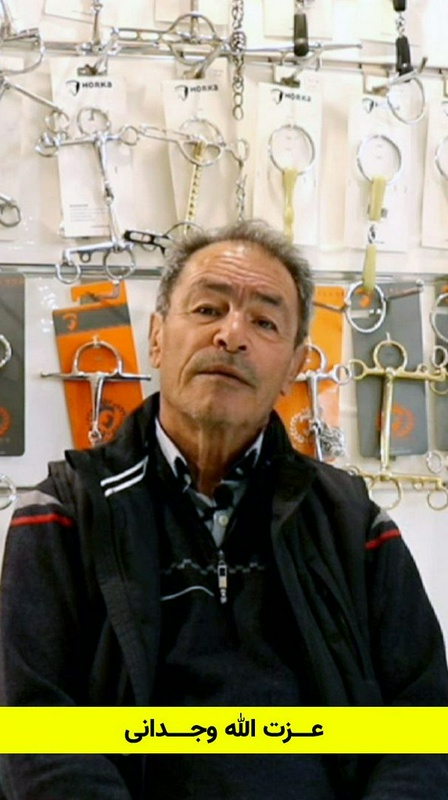
Ostad Ezzatollah Vojdani
خلاصه
In the twenty-first episode of the conversation with استاد عزتالله وجدانی, a prominent horse rider from Iran, the status of horseback riding in the past and present is examined. In this interview, محسن پورحیدری recalls استاد وجدانی's memories and experiences in the world of equestrianism and competitions, and mentions the achievements of علی مهاجر, an international show jumping rider. استاد وجدانی discusses the challenges of horseback riding and the importance of collaboration with his coaches and friends in his successes, and also refers to a memorable competition in مراکش where he successfully achieved first place. Additionally, a critique of آقای مجید شریفی's performance and the issues of measuring obstacles in competitions is raised, emphasizing the importance of accuracy in recording results and respecting the efforts of riders. Furthermore, the introduction of the episode's sponsor, هورس وید, which produces quality care and treatment products for horses, is another important point of this conversation.
نکات کلیدی
- استاد عزتالله وجدانی متولد ۱۳۳۰ و اهل تبریز است.
- عشق به اسب از سنین پایین در او شکل گرفته است.
- مربیان خارجی نقش مهمی در پیشبرد سوارکاری داشتند.
- اهمیت ثبت دقیق رکوردها در مسابقات اسبسواری.
- تجربه موفقیت در مسابقات جهانی سوارکاری.
سرفصلها
- مقدمهای بر زندگی استاد وجدانی — بررسی زندگی و شروع علاقه به اسبسواری از سنین پایین.
- نقش مربیان در پیشرفت سوارکاری — تاثیر مربیان داخلی و خارجی بر پیشرفت سوارکاری در ایران.
- تجربههای بینالمللی و موفقیتها — موفقیتهای استاد وجدانی در مسابقات جهانی و تجربههای بینالمللی.
پرسشهای متداول
اولین مواجههتان با اسب چگونه بود؟
من از سه سالگی که توانستم راه بروم، به باشگاه سوارکاری نزدیک خانهام میرفتم و همیشه اسبها را دوست داشتم.
اولین مربیتان کی بود؟
اولین مربی من پدرم بود که آموزشهای اولیه را به من داد.
چگونه توانستید در مسابقات جهانی سوارکاری موفق شوید؟
با تمرین و شجاعت، و همچنین کمک مربی و دوستانم توانستم در مسابقات جهانی موفق شوم.
چرا اسبها در آن زمان به ایران میآمدند؟
اسبها در آن زمان واقعاً مخصوص پرش و ورزش بودند و برای تجارت نمیآمدند.
تجربه شما از مسابقه در مراکش چه بود؟
در مراکش با سوارکاران اروپایی رقابت کردم و توانستم اول شوم، که تجربه بسیار خوبی بود.
متن کامل گفتگو
The sponsor of this episode of Radio Chahar Naal is Horse Weed. Horse Weed, utilizing the latest global knowledge and relentless effort, has been able to produce very high-quality care and therapeutic products. We all know that obtaining raw materials to produce a quality product is a very difficult and costly task.
With relentless effort and perseverance, they have been able to produce quality products such as various tendon casts, various therapeutic gels, hoof oil, and many other practical products for all horses that are active in sports and are at risk of injury, which reassures horse owners and riders because they are no longer worried about obtaining foreign brands since they have been able to easily produce the same quality.
I will leave the address of Horse Weed's website and Instagram page in the description of this episode. With Horse Weed, horses sleep more comfortably.
In the name of the unique One, greetings, I am Mohsen Pourheidari, and you are listening to the twenty-first episode of the first season of Radio Chahar Naal.
In this episode of Radio Chahar Naal, we host one of the beloved and esteemed figures of the equestrian community. Master Ezzatollah Vojdani honored us by being a guest on Radio Chahar Naal to hear the story of his fruitful life. We are going to hear many good memories. A special congratulations to dear Ali Mohajer for being the only Iranian to be promoted to the highest international level of show jumping stewards, which is level four.
This is a great honor for our country. I wish him health and success. Also, I would like to thank Pardis Equestrian Equipment Store at Master Rezaei's club for providing the best conditions for recording this episode for Radio Chahar Naal. Let's go to episode twenty-one.
Let's listen to Master Ezzatollah Vojdani. In the name of the Creator of beauty, today I had the chance to be in the presence of one of the greatest, most beloved, and as we riders say, the most skilled riders in Iran.
Someone whose memories, if we wanted to record them, we would need to compile at least 10 volumes of 300-page books, and that person is none other than Ezzatollah Khan Vojdani. If you allow me, I will call you Uncle Ezzat during the interview so that we don't have the formal interview atmosphere and can have a chat. I mean, I am taking advantage of my relationship with you. I am at your service. In the name of God, Ezzatollah Vojdani, what year were you born? I was born in 1951. So if I wanted to congratulate you, know that your birthday is on March 15, 1951. I think with Mr. Agha Mehdi Jamshid.
Then, where are you originally from? My father was originally from Tabriz, but my mother is Fars, and I was born in the Farahabad club, which is now called Martyrs, because my father was a rider and we lived in the organizational house they gave us there. I was born there, a child of that place, but from my father's side, we are originally Turkish. How did you get married? I got married in 1982.
That is, I got married at the age of 31. At that time, in my 30s and 31s, I was in love with work and didn't think much about marriage. I think the result of your marriage is two sons. Yes, Kambiz and Mr. Kambiz and Mr. Kamyar, may God protect them. Do you remember how your first encounter with a horse was? I mean, how was the first memory you had of an encounter? Now it's all memories, but when I was three years old and could walk, I would walk.
Our house was very close to the former Farahabad equestrian club, which is now also called Farahabad and Martyrs. From the morning when my father went to work, I would get up and go to my father, and from that time, I loved seeing the horses very much, and I always played dumb and had difficulties, and they would make me understand to ride me, and he would ride and make me ride, and he would turn me with his hand. After a while, when he turned me with his hand, I would cry to let me go myself, and from there, this love for horses began in.
My mind and memory remain that even now, as I am talking to you, that same love from when I was three years old still remains and never leaves my mind. May God protect you. Who was your first coach? My first coach was my father. Through my father, I entered because my father would ride me there. Then he taught me the basics, sitting, and these things. Correct. Do you remember your first competition? Yes, I do.
Jumping under the supervision of the late Master Ali Rezaei and then Master Neshati, may their memory be cherished, may God rest their souls, and they taught me jumping, and I think at the age of 11, if I'm not mistaken, I jumped my first competition in Farahabad with a horse I jumped with, it was a mare, a bay mare named Mara Bebos, a very beautiful and very large mare, and I did my first jump with it, and then I continued with it until gradually other horses and as we grew older and the conditions improved at that time, this Mara Bebos was not the horse of Mr. Gol Naraqi that ran in Jaleh, it might have been because I heard a memory from Shaki that he had a horse, Hossein Gol Naraqi, the singer of the song Mara Bebos, and you have a memory with him that your first coach was the late Master Ali Rezaei for jumping, yes for jumping.
Before that, for starting riding, what about with my father, and my first competition that you mentioned was at 11 years old because at that time, let me give a small explanation, it wasn't like now that, for example, saplings jump separately, teenagers separately, at that time, adults and children all jumped together, there wasn't this kind of age categorization like now where youth and teenagers jump separately, and there was a competition where all ages were in it, and we had to jump among the adults, yes, you have a history.
Yes, the horses that Master Rezaei prepared, we helped him prepare, and sometimes when we lacked riders, we would ride them in the course and continue. Who was your friend that Mr. Hossein Karimi Majzoub, may he be remembered well, now lives in Germany, yes, we didn't have the honor to say our interview with Hossein Karimi Majzoub, now I hope we can at least meet him in person.
Have this memory play with him. In those years when you practically rode in the royal court, and in my opinion, you were among the lucky ones who came in that system and with those facilities, tell us a little about the atmosphere.
That collection, I mean, what you remember now, because if I'm not mistaken, the Farahabad club officially became a club in 1968, now I might be wrong, you correct me, you rode in that royal atmosphere, I want you to tell us a little about the environment you had in those days and let us know what happened in those years, how was the riding that now this thing that we have reached here, well, at that time, there were a lot of activities for equestrianism, especially in jumping, because those who were responsible were very interested in the work and jumping, and they brought the best coaches for the riders and the best horses. I always in my talks with friends or in interviews that I had, although it might offend some, I said that at that time, when the horses came, they didn't come for trade. The jumping horses really came. Because now, I mean, in these new times, they bring them more for trade to sell and make a profit.
They do the work and jump too, not just bring them and jump and buy and sell too. But at that time, these horses were really specifically for jumping and sports and didn't come for another purpose. Here, horses came that could be planned on, and well, at that time, there was no need for the officials to buy and sell to make a profit from these horses or suffer a loss. Just participating in competitions and wanting to get results was enough.
In my opinion, they had a better position and had this chance. As you mentioned, there were a few of us. One of them was Mr. Davood Bahrami, another was Mr. Karimi Majzoub. I should say that these, even Homayoun, even Homayoun was like this. We benefited from this with really good coaches and good horses and results. Now, if our efforts were made, today we are useful for this community. The result of those efforts is that we are happy that now we can.
In this position and at this time, be useful for this equestrian community. God willing, it will be useful. Certainly, you have been and are, and God willing, your shadow will always be over all of us and the equestrian community. Your health, you mentioned that in that court system, they weren't thinking about trade and income generation. Well, practically, I think that the court, with that amount of money and wealth and now the things it had, didn't really need to come and, for example, make money from importing and buying and selling horses.
We still have this problem. I mean, because we have no security margin as a club rider, we are forced to start that trade. Now, many of us may have gone the wrong way, chosen the wrong horse, and not gotten the necessary result. But you at that time, this need wasn't in the court and royal system to come and generate income. I even heard that the Royal Association gave subsidies to the Chani's. Now, for the sake of boarding, donating the original from different herds so that they can keep this sport.
In your time, you mentioned that many foreign coaches came. Those coaches who came, which ones did you work with, or if there is a name now, please mention it. Look, it wasn't just the court that brought good horses and didn't trade. Several other clubs that were active at that time, I should say, like Mr. Nader Jahanbani, Mr. Soudavar, Mr. Eghlaniyan. I should say to you and a few more friends. Now, maybe I don't have a presence of mind right now. These also brought.
Good horses for the advancement of the sport. Mr. Mansour, yes, 40-50 years have passed since this date, or a little presence of mind is needed to remember these. And these all brought good horses for the sport here and the use of friends who now we were riding alongside. Even other friends would take them. Some worked with Mr. Soudavar, some worked with Mr. Nader Jahanbani, some worked with Eghlaniyan, and these were all horses that were selected.
They jumped in Europe, and they went and bought them. I remember Mr. Jahanbani bought a horse and brought it for jumping. The horse had become the world champion of Irish youth with one of its famous riders. Not Eddie Macken, not a rider. Now again, I say I don't have a presence of mind for it. And the point is that the horses that came there jumped in high ranks.
And as you mentioned now, friends sometimes in their talks thought that we, for example, jumped one meter and twenty and thought we were jumping one and fifty. No, we were smart enough to know where one and fifty is, where one.
Twenty is and in these competitions, as we held a competition every year called the Aryamehr Cup.
They invited the best riders from Europe, they came to Iran, and they jumped, and they didn't jump one and twenty to say we jump one and fifty, and they really jumped one.
Fifty, and I should say that in one of these competitions, they put us four people, I was there, Mrs. Golnar Bakhtiar, may she be remembered well.
And two of the foreign riders that we jumped two meters and ten centimeters and how could we jump one and twenty and then suddenly jump two meters and ten centimeters. We also had our training and our best coaches, one was Mr. Eddie Macken who came as a coach, one was Mr. Poir from Switzerland, another was a gentleman.
From France, a lady Rose from Canada. She was employed, I think yes, she was a coach in Iran for a few years. Of course, I heard that she stayed for a while after the revolution, before the revolution she left. Even a few years ago, one of the friends Mr. Hajbar invited her, she came to Iran, was a guest here for a few days, then left. A very excellent lady. Then the point is that we used both good coaches and good horses.
Today, I am very grateful to the club owners, the gentlemen who have clubs, personally, for bringing coaches. Really, now they came for a short time because, as you mentioned, the costs are so high that keeping a foreign coach for a longer time is very costly, and they came to make a small adjustment or fix small issues that were necessary and left. This has caused today in our national championship that is held, in one meter and forty-five.
Our riders really with these horses that I personally know these horses are not one fifty, this is the art of our riders who are jumping these horses in one and fifty and in any case are getting results. This is the joy of the community, and I am more pleased that our children's riding growth has become so good that they can succeed with these horses at these heights. You mentioned in your talks about the height that if I'm not mistaken, the competition was held in the 12,000-seat hall.
Exactly the height that you and Mrs. Golnar Bakhtiar jumped, and if now the names of those two foreign riders are there, that would be great. I think one of them was Alfonso Segovia, and one of them was a German rider. Yes, these four were us, and the loudspeaker announced that day two meters and ten centimeters. Yes, and we didn't go down to measure it. The same mistake that happened a few years ago.
Regarding Mr. Majid Sharifi, and I told the kids that day too, today I say again in this forum. Mr. Majid Sharifi made his effort. Not even one percent of Mr. Majid Sharifi had a problem. I personally have no problem with him, now he is one of my good friends. They announced him two meters and ten centimeters, and this poor guy went and jumped and well, he passed safely, crossed this obstacle. Why did they come back and measure it again?
If it was announced as two meters and ten centimeters, why should they measure it again and then Mr. Kazemian as the secretary of the federation announce that no, it is two meters and two centimeters? Well, this is very bad both for Mr. Kazemian as the chief referee of that competition and as the secretary of the federation. You know, if it was an ordinary person, I would say okay. He was both the chief referee of this competition and the secretary of the federation. How can he make a mistake and then repeat it and say in the morning.
They came and measured it again and say it became two meters and seven centimeters. I am surprised by this and say see the rooster's tail or the oath of Abbas. Yes, many objected to me.
They objected that so and so. I said I am defending my right. I have nothing to do with Mr. Majid Sharifi, God is my witness, I say now because he made his effort. If it was two meters and ten centimeters, why did we make it yes. Now the thing that made me very curious is that you and Mrs. Golnar Bakhtiar jumped two meters and five centimeters, and the basis of Iran's record was two meters and five centimeters, and that you during the course of the competition apparently dropped a triple but jumped the five-wall, meaning practically recorded.
It was captured but then turned and went and jumped the wall. Look, that day the loudspeaker announced to me, not me, that it was two meters and ten centimeters. After the revolution, Mr. Kazemian one day there was a competition at Mr. Ghavami's club, they put a competition.
That suddenly Mr. Kazemian announced that the highest obstacle was jumped by Mr. Davood Bahrami 1.
80 I went to Mr. Kazemian that Mr. Kazemian then what happens to my two meters and ten centimeters that how did it become two meters and ten centimeters 1.
80 he said you are right, I wasn't paying attention. I said sir, you are the secretary of the federation, how could you not remember? How can a person be the secretary of the federation and the conditions now yes it happened that way and he finally said no, you were registered two meters and five centimeters. I said God bless you two meters and five centimeters.
Why are some things forgotten or you are not good with me you want me not to be my name or you really forgot that I can't believe a president of the federation's secretary doesn't know the conditions of the competition the conditions of its people that where is who what did he do I mean you have all our files in your hands.
There was a competition after I saw a photo of you on the wall yes that now it can't really be measured but there when after that competition as a judging plaque something from that era remains to prove this issue I don't know at that time Mr. Atabar was the president of the federation and we were also his employees and we could never go and tell him.
Or anything else, I mean, there was a condition, a regulation that we had to follow, and we couldn't make this request from them, and because if we asked this request, we didn't believe our judges, so it's true, I say this from this point of view, I mean, well, anyway, now at the end of each competition, even a beginner rider gets a judging plaque at that time, well, 50 years ago, it certainly wasn't at that time, it wasn't much in things that only annually they gave us a plaque.
The most scored rider, whoever during the year, our year was not like now that now thank God we have indoor until the end of the year, it wasn't held in the fall like now that the national championship was over, other competitions were canceled and closed until again the night of Eid and during this time that we jumped in these six or seven months, they gave us plaques that had written above it that certificate something like that, the most scored rider of the year, for example, 1400, for example, Vojdani or Mr. Rezaei, Mr. other friends.
Only this was distributed to us year by year in the competitions, but other than this, there was nothing else like now every competition, even as you said, for a beginner horse, they give a plaque to the rider or to the beginner horse to have this to know itself whether its ranks were filled or not. That's right, because unfortunately in these years, we have no media and registered history of many of the greats and even the generation before you, unfortunately, like the late Neshati, the late Khalvati, the late Mobasheri.
It was the nature of that time, now there were not so many recording tools