The story of the production and creation of Chaharnal Radio
خلاصه
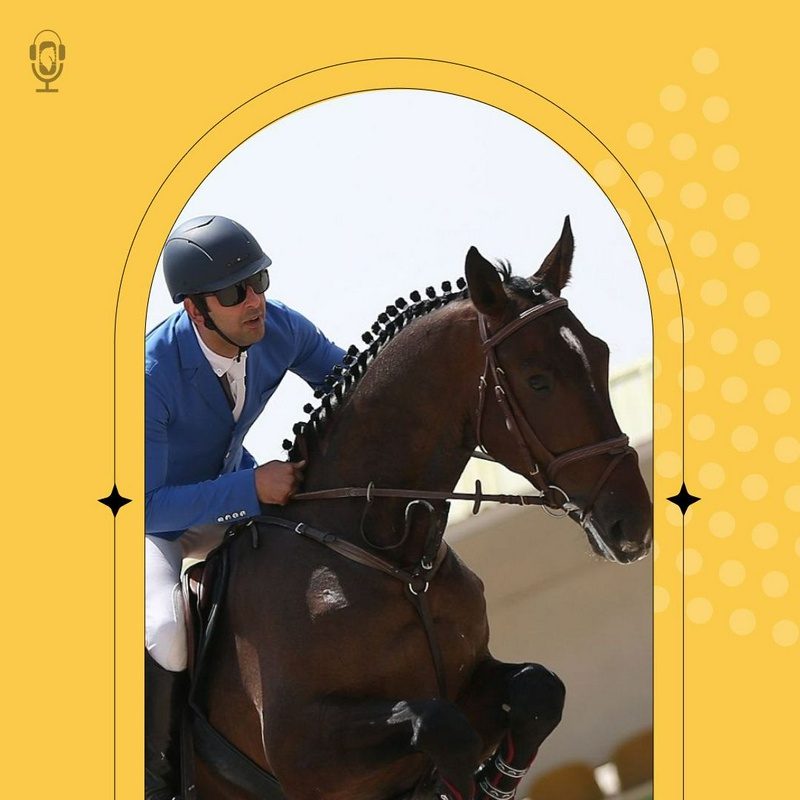
In the fifty-ninth episode of رادیوچهارنعل, Mohsen Pourheidari talks about the production and creation of the podcast "رادیو چهار نعل," which is dedicated to the oral history of equestrianism and the relationship with horses in Iran. He aims to change the community's perception of equestrianism as a public and accessible sport by narrating the stories of the veterans of this sport. Pourheidari emphasizes the importance of deeper learning and the reconstruction of equestrian culture, and through simulating a journey on horseback from Tehran to Shiraz by Captain Mohsen Amiri, he expresses the value and significance of the horse as a companion and family member. He estimates the costs of horse maintenance to be between 8 to 15 million تومان per month and relates his experiences in the podcast to personal growth and connection with others. He also emphasizes the necessity of producing quality content and the lack of need for expensive equipment to start working, and he appreciates his colleagues.
نکات کلیدی
- رادیو چهار نعل به تاریخ شفاهی اسب و سوارکاری در ایران میپردازد.
- تولید پادکست به دلیل عدم وجود صدای افراد بزرگ در ورزش سوارکاری آغاز شد.
- پادکست از برج ۱ سال ۱۴۰۲ شروع شده است.
- دعوت از پیشکسوتان و سوارکاران حرفهای برای گفتگو.
- کمالطلبی میتواند مانع از شروع کار شود.
سرفصلها
- تاریخچه رادیوچهارنعل — بررسی دلایل و انگیزههای شروع به تولید پادکست.
- موضوعات مورد بحث — پرداختن به تاریخ شفاهی و نقد سوارکاری در ایران.
- مهمانان ویژه — دعوت از پیشکسوتان و سوارکاران حرفهای برای اشتراک تجربیات.
پرسشهای متداول
رادیو چهار نعل چه موضوعی را پوشش میدهد؟
رادیو چهار نعل روایتگر تاریخ شفاهی اسب و سوارکاری در ایران است.
چرا به تولید پادکست پرداختهاید؟
به این فکر افتادم که چرا هیچکدام از افراد بزرگ در این ورزش صدایی ندارند و تصمیم به تولید محتوا گرفتم.
پادکست شما از چه زمانی شروع شد؟
من تقریباً برج ۱ سال ۱۴۰۲ شروع کردم.
چه کسانی را به پادکست خود دعوت میکنید؟
پیشکسوتان سوارکاری و سوارکاران حرفهای را به برنامه دعوت میکنم.
هدف شما از ایجاد این پادکست چیست؟
هدف من بازسازی فرهنگ سوارکاری و ترغیب افراد به فکر کردن در این زمینه است.
چگونه میتوان پادکست تولید کرد؟
محتوای خوب تولید کنند، سناریو داشته باشند و حتی با میکروفون موبایلشان هم ضبط کنند.
متن کامل گفتگو
Greetings to all dear listeners of the radio. I am happy to be with you with another episode.
I thank God that you always support me and Radio Chahar Naal, and with your expressions of love and kindness, you increase my motivation to produce better content. Let me introduce episode 59 of Radio Chahar Naal, which is about myself and Radio Chahar Naal. This program is on the Radio Javan network and in the Young Podcasters Club program, produced by Ms. Shohreh Ahmadvand and hosted by Ms. Razieh Hashemi, with sound engineering by dear Engineer Memari. I hope you enjoy listening to these talks and continue to support Radio Chahar Naal. As I have always said, I have placed a financial support link in the description of this episode. If you are interested in helping Radio Chahar Naal continue more powerfully, I would be grateful for any amount you wish to contribute. Even if you don't support, I still kiss each of your hands and continue with the same strength. My colleagues in this episode are dear Farshid Jahanbazi, the poster and Instagram cover designer, and Negar Goodarzi and Erfan Moghadam, the composers of the opening and closing credits. Let's listen to the episode together.
In the podcast, I receive the opinion that it's great to have an economic podcast and we have continued the process in this way. Our goal has been to create a podcast in the field of music and its combination with education after completing the recording of the podcast series. Every podcast has a story. The fascinating story of podcasts in the World Base Podcast Club in the name of God, the most generous. Ladies and gentlemen, girls and boys, hello and welcome to the Radio Javan Podcasters Club. I am Razieh Sadat Hashemi, and along with my colleagues, Ms. Shohreh Ahmadvand, the program producer, and Mr. Engineer Memari, our good sound engineer, we are going to be with you for about 30 minutes and talk and listen about the world of podcasts. Our address in the virtual space is YPC_underline ir. But this program deals with the Radio Chahar Naal podcast.
Greetings and respect to all dear listeners of Radio Chahar Naal. I am Mohsen Pourheidari, and you are listening to the twenty-eighth episode of the first season of Radio Chahar Naal. This episode was recorded with Master Babak Shaki and is a narrative of horse racing competitions in the years 1327 to 1329, which are memories that the late Colonel Masoud Shaki narrated to Mr. Babak Khan and these memories have been passed down to us. They are very fascinating memories, and I suggest you definitely listen to the end of this episode. Mr. Babak Khan Shaki is a very skilled narrator, and I personally enjoyed his narration. I hope you enjoy it too. Mr. Mohsen Pourheidari, hello and welcome. Greetings from me. I am pleased to be in your presence.
Hello to all the good listeners of the Radio Javan program and thank you for inviting me and considering me worthy. You're welcome, you are definitely worthy. We did our job and fulfilled our duty. As you introduced, Radio Chahar Naal is the narrator of the oral history of horses and equestrianism in Iran. If you want to tell us the oral history of horses and equestrianism in Iran in three sentences, what would you say? Let us not forget that all the wars in history have been carried on the shoulders of horses.
Since the arrival of machinery, they have been eliminated. The entire history of this land started with horses, and the people of Iran were among the first to domesticate horses and produce equestrian equipment. This is a major part of the history of horses and equestrianism in Iran, and many of the world's classical schools borrowed many things from Iranian equestrianism and later turned them into science, and we ourselves are unaware of it. My effort is to narrate this through the veterans who, thank God, are still alive, both their oral history and that.
Since when did equestrian sports, which we have owned for millennia, have positions and techniques, get lost in history, and when it became an equestrian sport, where did we start, and where are we going to reach? Where we are going to reach, God knows. My entire effort is to change the horse culture in Iran and for ordinary people, who always think that it is a luxury sport or that horse riding is in the realm of the sea and forest, to come to this direction that no, the horse does not have such a background. That's right, it's very interesting, it's very contradictory.
Dear Mr. Pourheidari, on one hand, we consider equestrian sports to be an expensive sport, and on the other hand, we make this lovely and loyal animal so accessible that we take it for a walk on the beach for fun, as you say. I mean, in my opinion, these two are contradictory. With a very low price. But let's get to your podcast, Radio Chahar Naal. When did you start this and what made you turn to podcasts?
I had a strong interest in podcasts, and when I was going to Qom for training, I used to listen to a historical podcast on the way. Then it occurred to me that we have so many great people in this sport, why is there no interview or voice from them, and we only have a few photos from the old times. I thought of starting to produce content. My main job is equestrian coaching, and I had no information about content production, microphones, editing, and cameras. It was just an idea that I consulted with one of my friends, Mohammad Tajik, who is a documentary filmmaker and war and crisis photographer. He said that these things don't matter, just go and start. I started writing scripts and questions I wanted to ask. I also thank Mr. Hossein Dehbashi, who helped a lot in the method of oral history interviews. We started without any information, and from the time I did the first recording to the first broadcast...
It took six months because I had no money to pay someone to edit and produce my podcast, and I didn't know how to do it myself, so I had to self-learn and see how the software works, how the microphone works. For example, I always thought that it should be exactly like the environment you have, an acoustic environment, but the reality is that Mohammad Tajik took perfectionism away from me and said just go produce, and during this production, I became more skilled. So much so that now, for example, I have to learn and use Premiere editing software for my videos. The most important element I had during this production process was.
I learned a lot, meaning in different fields. When did you start the podcast? I started around the first month of 1402, but you were on the verge of 40 years old, you were 38 years old, 37-38 years old, but you were so eager that it didn't affect your learning. Not at all, as Nassim Nicholas has a golden sentence that says the greatest virtue of man is learning. Bravo, the reality is that.
I just realized at forty that I need to learn things more seriously, meaning that instead of superficial learning, like just reading a few words, we need to study a bit more. As my professor says, we don't have time to waste, and I've reached the point where I can't be idle anymore; I need to be in a process of continuous learning. You mentioned in your talk that not much work has been done in the field of equestrian sports, and maybe that's a criticism of me and my colleagues in the national media, where some sports have been neglected. Many sports could be included, perhaps equestrian sports, although I'm not very informed in this area, might be one of those fields where we need to make more effort. I can say this is the cleverness or astuteness of an active person in this field who said, "Well, not much work has been done, so I'll become my own media," and you started a podcast.
You decided to start your podcast. I understood that your podcast is conversation-based. Who do you invite to your episodes or different parts of your podcast? The first item that started on Radio Charl was the discussion of oral history with veterans. Those who have been involved in equestrian sports since the early years, like the 1920s and 1930s, and thankfully are still alive today. That was one part, and then we realized that, as you said, the media should be a bit more active, so I tried to enter the fields of critique and review, bringing in people who are more expert, professional riders, or those who have a hand in the fire and are considered experts, to interview them in different areas. Ultimately, the reality is that I want to engage my audience in thinking because in equestrian sports, we have strayed far from the principles of professionalism, and it was necessary for some more knowledgeable people to come and talk about the old days, to rebuild lessons and cultures from their conversations, and for the audience to think about where they stand in this story, to reconsider if they have chosen the right club, or if they even have the conditions for this work.
I push them to think again. Let's listen to a part of your podcast together if you agree. It became an honor for Nirkou Asb Torbat Gharan in the twentieth century, I think in the 1940s. This was from that line, not produced here, brought by Mr. Manshour, yes, Mr. Manshour brought it to you, running in the field.
It didn't show anything in its appearance, but it had strong genetics that it later passed on. What I remember is that they say to Araz Gholi, "Give it gas, put pressure on it, let its hand move," this Turkmen Sahara stallion does the same thing, putting a lot of pressure, and it fails from its hand.
Later, they send it to Turkmen Sahara as a stallion, and it doesn't make a story, and it gets angry again, then Haj Hosseini takes it, pulls it by hand, and it starts moving. Interestingly, Mr. Mohsen Pour Heidari is with us on Radio 4 Nel, a sport we might really want to pursue, but when we think about it being an expensive sport, we postpone it or even completely give up. What is your opinion? I disagree with your opinion; this has a social root. Unfortunately, in the conditions that have been in this land for the last few hundred years, the most important being the conflicts of disease, war, and famines, we have unconsciously become animal-averse. Many times, we tell our children, whether when we were children or now to our children, if you touch a cat or a horse or any animal, "Go wash your hands, you'll get sick." This is not the reality, and we should say in our society, "Don't be animal-averse," especially regarding horses.
Equestrian training, compared to many sports, is less expensive in my opinion. Compared to which sports? This field requires a specialized language, hiring a private tutor, paying for a session, and that session is only for talking with you, and when equestrian sports are heavy for me, I don't go for a private language tutor, I sit in a public class like others and learn, and still, the cost is high. So you don't agree that classes are expensive? Look, this is not our topic now, but my point is.
The cost of maintaining a horse, because a horse has a place to be kept, food, maintenance, is expensive. Just as inflation affects bread and cars, it also affects horse feed, and naturally, this increases its value. I saw in one of your episode introductions that it was introduced as episode 49 about pure Iranian horses, yes, what does that mean? We have several pure breeds that, unfortunately.
We are neglecting, and it's interesting to tell you that many countries are looking to come and take our horse genetics and go towards production. One is the Iranian Kurd horse, one is the Turkmen horse, which I am telling you about, one is the Turkmen horse, one is the Darreh Shouri horse, even the Arabian horse. If you look at the philosophy of the Arabian horse, 200 years ago, if I'm not mistaken, it left Iran by ship, meaning the Arabian horse originally belonged to us, yes, it belonged to us, but because the Arabs sold it to the English, they gave it to them, otherwise, the original Arab, the original Arab is from Khuzestan, which is a pure Iranian horse. We had Arabs, yes, but I say the world is heading in that direction, and you can now find the roots of the world's Arab horses in Khuzestan, bravo, and they value it, unfortunately, a little.
This sport, considering the costs it has, if it doesn't have a proper market, no, if its market gets going, I mean, our biggest concern is that I hope one of my life's wishes is that we can export our horses from Iran due to quarantine issues. If these doors open, we have a lot to say in many parts of the world, even our riders. Do you think your podcast has been able to attract and inform people, whether they are riders or not, who are involved with horses?
Radio Chahar Nal is truly a very specialized media in the field of horseback riding. Due to its specialization, it has attracted fewer general audiences, but those who are active in this field, whether students or horse owners, are somehow dependent on horses and listen to my programs. My goal is to rebuild this culture and encourage people to think about it again. The reality is that my colleagues and I benefit from our livelihood thanks to horses.
We owe a lot to horses, and I could have chosen any name for the radio, but I saw that something very related to horses and has a beautiful sound is Chahar Nal. I want people to think about what this creature is. Maybe on World Post Day in our country, the post office should appreciate those who breed horses because we once had couriers who did exactly this job. One of the episodes has addressed this topic.
I simulated exactly this, and Captain Mohsen Amiri, may God protect him, was responsible for this simulation. Interestingly, he traveled the distance from Tehran to Shiraz in 47 and a half hours on horseback.
To stay awake, they injected themselves every few kilometers. They changed the rider every 20 kilometers and the horse as well. In the past, when traveling by horse, caravanserais provided services to horses. Now, they no longer exist to offer horse services. Exactly, in that story, they didn't change every 20 kilometers, but the rider was constant. We were the inventors of the postal system and the same Chapar worldwide. Yes, and I say I wanted people to know the true value of a horse. We shouldn't see the horse as a commodity. A horse is a companion. For many of us Iranians, you might not believe it, it's part of the family. If someone is interested and wants to have a horse for themselves, what is the minimum cost they should incur? This is very variable. From different cities and provinces, give an average. I think the minimum monthly average is between 8 to 15 million tomans.
They should spend 8 to 15 million tomans to have a good horse. Compared to other pets that have become so numerous, it's not that much. No, as I said, it has a bad reputation. You see, it goes back to our culture of being animal-averse. We are afraid. Now, the horse does have dangers, it's a reality that cannot be denied. But because many of us are afraid of falling and getting hurt, they don't fear it much. Otherwise, everyone, I mean, imagine I give a simple example. In an empty field, there's nothing. When it gallops there, that field gains spirit. That field comes to life. In my opinion, the sound of a horse's hooves is a calming sound. I mean, whenever you hear the sound of hooves, your head unconsciously turns, and in my opinion, this is the property of this animal that gives spirit to its environment and its people. Despite all the dangers it has, it's really lovable. The letters that had to reach the king from Tehran to see how much progress had been made since the king came to power and how history had changed. They took letters from the parliament. Now, those who, like the old Chapars, delivered letters to cities and towns. Let me add something for the radio audience. During the Achaemenid era, the largest postal system started there, and the Iranians had the largest mail transfer system that almost reached near China.
They implemented the same Chapar system. Yes, you were saying they assigned us a mission to practice the route in three stages. There was Major General Hossein Zamani, Colonel Soratpour, Soratpour yes, and I was there. We went to the Senate opposite the Military Academy. We took the letter there. It was a letter, and they gave me the letter. From whom did you take the letter? From Prime Minister Sharif Emami. Then from Tehran to Persepolis itself.
Every 12 kilometers, they had placed two riders so that every 12 kilometers, the horse and rider would change. Give this letter to that one, give that letter to that one, give that letter to that one, and so on until where? Persepolis. Thank you very much for your company. Let me remind you once again that the communication bridge between us and you is our page in the virtual space at the address YPC_.
IR and regarding the podcast club program for Radio Javan, share any comments you have with us there. Mr. Mohsen Pourheidari is our guest. He has the Radio Chahar Naal podcast, and with all the interest he has in horses, I noticed this a lot in your words, dear Mr. Pourheidari, how much you are passionate about what you are doing. This is very good, a very big blessing that perhaps not everyone has, meaning they don't enjoy their work that much.
But as someone who was so interested that you went into the podcast field and wanted to introduce your efforts and all those who have worked in this field, tell me what the result of your efforts has been? What is the output of your work? What do you want people to conclude or learn after listening to your podcast? The first output that Radio Chahar Naal had for me was when it started with the elders in this sport whom I had the honor of being a student alongside for a lifetime and had the honor of seeing them. I mean, those interviews. I learned a lot from them, from their character, from the effort they put in.
And this association and companionship made me much bigger, at least in my own eyes. Then, for example, now I will tell a very short memory. In one of the parts of Yazd province, in a desert where I never thought anyone would have access to the internet, a gentleman came, he was a horse owner, interested in horses. I got out of the car. He said yes, he said God bless you, we enjoy this Radio Chahar Naal. I said you listen? I really like my certain episode. There, I really had a very good feeling. In the middle of this desert, I never thought anyone would have internet to listen to Radio Chahar Naal because he lived there. That's right.
And well, these feedbacks and responses that people really give push me forward and are very enjoyable for me. But its most important feature was that I grew up for myself. I mean, I turned my personal curiosity into a podcast, and that's it. I say radio when I'm no longer in this world, I believe in this, and this is my heartfelt truth, and this has been its most important output for me. Up to this point, which part has really touched your heart? In general, in my conversations with Master Babak Shaki, who is one of the masters and veterans, it has been very instructive for me, but episode 28 of Radio Chahar Naal, which is about the memories of the Khuzestan race, related to the year.
The nationalization of the oil industry in 1329 was very much to my liking. I mean, there I both cried and laughed a lot as a host, and when I was editing it, I really enjoyed it immensely. Personally, I said I wish you all were behind this microphone and saw those scenes and the sweetness of the words. So if we want to listen to an episode as a test from the Radio Chahar Naal podcast, let's go to episode 28. Very well. Do you have any final words for our audience? Let me say one thing for starting a podcast. There are many people who want to do this, and since I had no idea and no knowledge and just started, I hammered out my idea to bring it to fruition. I took perfectionism away from myself. I mean, I went towards not caring what everyone says. Everyone who started a podcast says we are looking for... I have this flaw myself. I mean, it's not just for you. When I started my own podcast, because I was looking to present something very good, I kept braking, kept delaying... then I came to the conclusion and said, come on, just start. Until when? I tell the kids who want to produce a podcast not to go for expensive equipment at all.
Produce good content, have a script, and even record with their mobile microphone. Now science has advanced so much that you can remove the noise and, as you say, refine it radio-style and broadcast it. Put perfectionism aside and produce good content. Let me thank Mohammad Tajik, Pouya Yeganeh, and Hossein Dehbashi who helped me a lot. Thank you very much for your presence, thank you very much for inviting me, and it was an honor. I wish health for you and all your colleagues and especially your dear listeners. I am with Mr. Mohsen Pourheidari dear.
And my good colleagues Shohreh Ahmadvand and Mr. Mohandes Memari say goodbye to you. Have a good day and night. Goodbye. I hope you enjoyed listening to these words. I know there wasn't a guest, maybe you didn't like it, but anyway, because maybe it was interesting for some how it came forward, I uploaded this episode. I leave you all to God and take care of yourselves until the next episode.