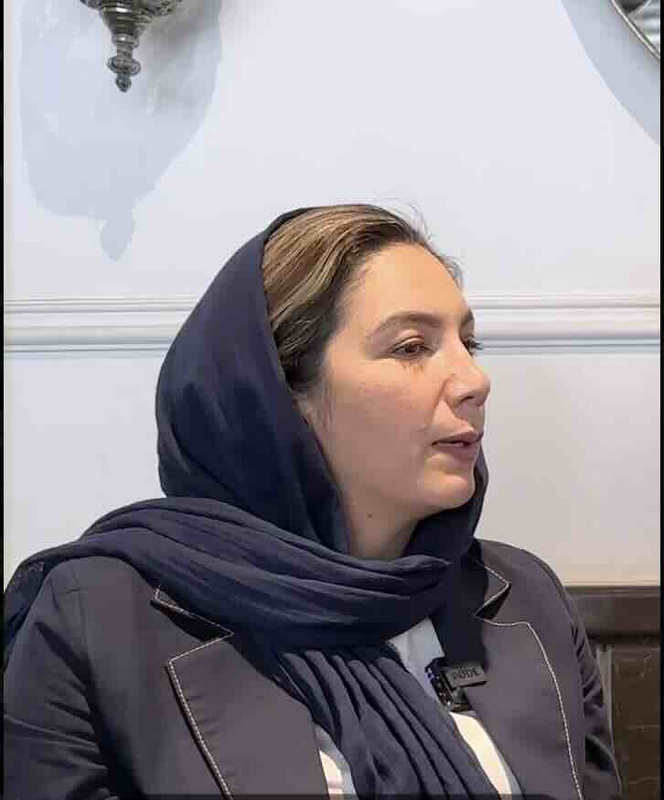
Bahareh Kashani, founder of Pony Club Exir in Khorasan Razavi
خلاصه
In the sixty-second episode of Radio Chahar Nal, Ms. Bahareh Kashani, founder of Pony Club Exir in Mashhad, spoke about her challenges and experiences in horseback riding and establishing this club. She emphasized the importance of collaboration and support in the equestrian community and highlighted the key role of horseback riding education in boosting children's self-confidence and social skills. Over the past five years, Exir Club has successfully trained 15 riders, although organizing competitions for children in areas far from the capital faces challenges. Ms. Kashani also addressed the challenges of caring for ponies and their high costs, stressing the need for better planning to develop this sport. She pointed to the importance of calmness and mental readiness in competitions and criticized the weaknesses of the educational programs of the Equestrian Federation, calling for improvements in educational systems and the use of more experienced coaches. This conversation can inspire listeners to take action for the future of the younger generation.
نکات کلیدی
- خانم کاشانی از کودکی به اسبسواری علاقه داشتند و با تحصیلات در رشته پرورش اسب به حرفهای شدن در این زمینه پرداختند.
- پونی کلاب اکسیر در سال ۱۳۹۹ تأسیس شد و به تدریج با اضافه کردن پونیهای دیگر گسترش یافت.
- اهمیت به روزرسانی برنامههای آموزشی در اسبسواری.
- نقش اعتماد به نفس و مهارتهای اجتماعی در موفقیت بچهها.
- چالشهای آموزش پونی، ارزشمندی پونیهای ایرانی و اهمیت کاهش استرس بچهها در مسابقات.
سرفصلها
- ورود به دنیای اسبسواری — خانم کاشانی از کودکی با اسبها آشنا شدند و در دانشگاه به تحصیل در رشته پرورش اسب پرداختند.
- تأسیس پونی کلاب اکسیر — پونی کلاب اکسیر در سال ۱۳۹۹ تأسیس شد و به مرور زمان توسعه یافت.
- چالشها و اهداف پونی کلاب — برگزاری مسابقات و مخالفتها، تقویت مهارتهای اجتماعی و اعتماد به نفس در بچهها از اهداف کلاب است.
پرسشهای متداول
چگونه خانم کاشانی وارد دنیای اسب شدند؟
از کودکی با اسبهای پدرش تفریحی سواری میکردند و سپس به رشته پرورش اسب در دانشگاه رفتند.
پونی کلاب اکسیر چه زمانی تأسیس شد؟
پونی کلاب اکسیر در سال ۱۳۹۹ تأسیس شد.
چگونه خانم کاشانی مهارتهای لازم برای کار با بچهها را کسب کردند؟
از طریق شرکت در کارگاههای آموزشی و دریافت اطلاعات از مربیان و حامیان خود.
چالشهای اصلی شما در برگزاری مسابقات چه بوده است؟
چالش اصلی ما برگزار نکردن مسابقه بود و مشکلاتی در مخالفت با برگزاری مسابقات برای بچهها وجود داشت.
چرا بچهها را روی اسب کوچک میگذارند؟
چون بچهها در حال رشد هستند و اسب کوچک آسیبهای کمتری دارد و ارتباط بهتری با آن برقرار میکنند.
متن کامل گفتگو
Hello. I hope all of you are doing well and have taken a break from the hustle and bustle of daily life. I'm happy to be your guest again with episode sixty-two of Radio Chahar Naal.
In this episode, I sat down with Ms. Bahareh Kashani, the founder of Pony Club Exir in Khorasan Razavi province and the city of Mashhad. She shared her challenges and issues with us and where she plans to go in the future. She has traveled a difficult path, and I hope that by listening to these talks, you will reflect and strive in your city, province, and club to build a better future for our younger generation. This can only be achieved through mutual support, consultation, and cooperation. We have many Caspian horse breeders across the country, which are the best option for children. We just need to put in some effort and stand firm so that these dear ones can offer their products to more children in the field of horse riding in the future.
Another point is that given the time we were all without the internet and dealing with this issue, we are certainly facing some setbacks. I suggest we support each other, share each other's posts, and help everyone get back on track. There is no advantage between any pages; we are all working in the same direction, and this progress requires us to interact and help keep things moving in times when we are not feeling well.
Let's remember that we have roots in this land and have dedicated our lives to this sport, and we must look out for each other. So, I introduce my colleagues in this episode again, as always, dear Farshid Jahanbazi, the cover poster designer for this episode and the Instagram post. Also, the composers of Radio Chahar Naal, as always, dear Negin Goodarzi with her amazing voice and the lovely Erfan Moghaddameh, are the composers of the opening and closing credits of the radio. As always, I will leave a financial support link in the description of this episode. If you wish and find it worthwhile, support Radio Chahar Naal. I invite you to listen to episode sixty-two of the conversation with Bahareh Kashani. Ms. Kashani, I greet you and thank you for the honor of being a guest on today's radio program about your work process at Exir Riding School or, in fact, Pony Club Exir.
I greet the dear viewers and enthusiasts and am at your service, friends, and all dear ones. If you have any questions, be well. This program is at the Fiani Café Restaurant in the city of Mashhad, and I thank you very much for allowing us to record the program in such an attractive and beautiful environment. Well, Ms. Kashani, I would like you to briefly explain how you entered the world of horses until you thought of establishing Pony Club Exir.
Well, since childhood, my father had prepared one or two horses for us in the garden, and we rode them for fun. He saw our interest and established a very small stable next to the garden, where I started more professional riding with the trainers who worked with me at the time, Mr. Hamid Sadeghnia and Mr. Jalalian. Well, because I was very interested in horses and riding and wanted to have more information, I chose the field of horse breeding and began my studies at Shahid Hasheminejad University. In this field, and after that, with my father's help, we established a much larger stable with modern standards for horses, with 30 to 34 boxes and a competition arena and paddock. In 2006, I received my coaching card through the federation. I worked with adults and was very interested in coaching in equestrian. Alongside that, I also had competition and riding programs.
Up to this point, quite by chance, I started working with children and ponies and programs like Pony Club. You are among the women who have a history of activity in Khorasan province, especially in the city of Mashhad. This period, if I'm not mistaken, should be with the sisters. Yes, exactly. In those years, Ms. Halenikoui and I. Well, I was jumping higher at that time. I had just started. Ms. Hani and Haleh and.
Ms. Gorjestani were there, Ms. Movaqqi were there. They were our contemporaries in those years when women and men were separate. Yes, men rode, competed, and Saturdays were women's days. Exactly Saturdays. God bless you. Well, Ms. Kashani, how did you decide to start a program for children?
It was very coincidental. I already told you the story. If you could tell it briefly. I did a lot of adult work and didn't work with children. By chance, one or two child students came, and I saw the need to provide a pony for them. Why? Because a large horse had its own dangers. By chance, I came across a pony named Pashmak, who is very lovable and still in our club, the first pony. Yes.
All the children love it; it's very kind and has a history. We started our club with a storm from a pony. We saw it had the capacity. The children were interested. We acquired a few more ponies, and it became Pony Club. We established Pony Club Exir in 2020, located at Soran Club. Exir was exclusively named after the club we worked at, like Exir Soran. Exir.
Exir itself means youth and freshness, which we liked very much because of its meaning, and another reason was that we had a sponsor at the beginning. It was Exir Youth Clinic. Since it was alongside this and had a good meaning, we added the sponsor, and it became Exir. Very much Mashhad Club Mashhad. Well, you started in 2020 with Pashmak.
You have a 5-year history. Well, considering you said you worked with adults and not with children, how did the process progress? With what knowledge, with what expertise did you do this? I didn't have much information. Through one of the children in Tehran, we attended workshops they held. The first workshop I attended was at Dasht Behesht Club with Ms. Ghaffari, the federation secretary. Yes, the current federation.
They provided me with very good information in these workshops, which helped me move the work forward more easily. In the meantime, I would also like to thank Mr. Masoud Sohrabi, who was the best and my supporter in this sport, in this field for children, who was truly the only person who supported me. He has worked very hard in the field of children. Yes, I am still grateful and thankful to him for the rest of my life. I never forget someone who helps me. Always, please.
Maybe it's our nature that we don't forget a good deed and we also don't forget a bad deed someone does to us. Whether it's good or bad, I don't know. Anyway, let's move on to the next part, which is with Masoud. That means the trips to Tehran started and the workshop, and after that, I must say that my husband helped me a lot in this path. Mr. Reza Nassaj, whose field of study is management, was able to manage things well.
We became very interested in this program to go to the Pony Club and update it, to see what is being done in the world and how far behind we are. We saw that we are very far behind the world's Pony Clubs. The translations we did showed how advanced they are and how far behind we are. No one has started, we can't move this forward as a professional and standard principle. But unfortunately, in Iran, we are constantly inventing new wheels that we can't see ahead and get stuck. Then I continued with Reza, and now there is a good program in the federation, maybe with Mr. Sohrabi and Mrs. Jalalinia, who was the head of the Pony Committee at that time and had a lot of knowledge, Pony Club.
I translated the Pony Club program of Germany Day and they provided it to us, which had ten badges. From badge one to seven, there were stable programs and basic riding principles that were supposed to be implemented by children who wanted to work technically. That is, up to badge 7, a child who cannot sit comfortably in the saddle is not allowed to enter the competition. Well, this story was very interesting to me that now the program.
Regular and documented routine for all the children who are working with ponies. Because now in those workshops we participated in, there were also people from other cities. Well, all this uniformity and one model of riding and one model of training.
The connections we had with Mrs. Jalalinia and now the programs that we had found a routine ourselves, we were able to move the work forward and in 1401 we became the national runner-up with a hundredth of a second with 6 participants. Now I remember the national champion last year 1403 that I had in Azar Club, you brought five or six riders in different categories. Yes, I wanted to tell you that in the first year how many participants we had. In the first year 1401 we.
We had 6 participants from the Exir team. In 1402 now before these various cups, but we had our children participate, but well our most important competitions are the national championship which is usually held with the efforts of Mr. Sohrabi. In 1402 we were able to win the national championship with 10 participants, 9 participants in 1403 with 11 participants and we were able to get a runner-up in the dressage discipline with ten participants from our own children and a fifth place.
In jumping, I think Azad was first. Jumping was first in the second year. Your championship on the first day was certainly with one horse and one or two additional fifths. How many people, as they say, are members of the Pony Club and how has this process continued until now, yes.
The first year, as you said, I was very alone in this work in terms of children who are professional and sit on the horse. Because you know ponies are very stubborn and want their own rider. Yes, we really had a lot of challenges. It was such that sometimes I would ride for my own practice. It was very hard for me and also funny for others who saw it. Now it had a bit of a fun aspect when I was riding and the kids were now laughing and joking. When we were riding, how bad it is in my opinion that now.
A person feels mocked. Unfortunately, we reached a point where now we could control these ponies as far as they could themselves. Now two or three of the students reached this stage that they became my helping hand that when the pony was annoying, I would put them up, do a little adjustment and give them back to the weaker children. It's true we reached a stage where now we could train five or six students and reach a stage with a style that we had in mind in this school.
Champagne Club Exir has many goals. Its goal is not just for the kids to go to competitions. One goal is to increase the kids' self-confidence. Because when they fall, now almost the kids are only children and all are idealists. When they fall in front of others, they feel very bad. It's very bad if a kid falls and doesn't get back on. Well, in their life they can't handle a failure they face, they might even leave life altogether. This program of the top club is that if they fall, they should get up right there and continue the path.
One of our goals is for the kids to be able to increase their self-confidence. The school of social skills development is also alongside it. Another part of ours is raising social skills that you mentioned, social connections. Because some kids come and really can't even have that initial connection of greeting and have trouble.
But in the few years that the kids have come, we have seen this very clearly in their relationships with me that they couldn't even say a proper hello to their coach when they came in. But now they come forward nicely, greet very neatly and politely. Now polite as they are, they come with much better confidence. That connection with the kids exactly as you say, we have created a package that in addition to physical activity and sports, they can also do their routine social tasks here. Discipline and order.
That is a problem we have with kids who are new, they have no discipline and sense of responsibility for the riding and horse they are riding. We see their equipment, all the parents are collecting this equipment. Unfortunately, we all have it. Yes, exactly, I myself have someone bring water, someone bring boots, someone bring the horse so that he can, for example, hold his foot. But unfortunately, this has not yet become a culture. But how good it is that you have set up this system so that these kids get used to managing their work from childhood at least in their own club environment. That is, not to have ten servants following them. Exactly in our programs now.
Families don't let them help the kids much. Just to raise their skills so that they can do their personal tasks themselves and also learn discipline and order. Unfortunately, this discipline and order is getting a little away from our kids. Now I don't know if tablets and the internet and these things have made the kids a bit lazy and also other families are small. The apartment space is small, there is no place to play. All these unfortunately.
It has had an impact, but how good it is that you are advancing this system. Currently, how many riders do you have in the system? I mean, think about how many people have been your output over these years? Our team consists of 15 people, 15 permanent members of the Pony Club team. Kids who come for educational and recreational purposes, now that it's school time, obviously, in all clubs, the number of students, kids, and comings and goings decreases. Now that we are approaching the holidays, well, they are registering. If we consider our monthly routine, there are about 20 to 30 people who come and go.
In these five years, Pony Club Exir has trained 15 riders, which I think is among the very good statistics. You win 10 championship prizes, and I really congratulate you, well done. Now you are in another city, unfortunately, I don't like it.
You are in another city, and considering the distance from the capital and the issues that I definitely know and in the meeting you have, what challenges have you faced at the beginning and even now? At first, our main challenge was not holding competitions. I don't know what system it was that there were very strong objections to holding competitions for the kids. There came a time when I left Mashhad aside and took the kids a thousand kilometers to Tehran to compete with a lot of expenses.
In this path, I want to say that the families themselves were very supportive of Pony Club Exir and accompanied us. The enthusiasm they had, the kids, now because my own son was in this field, the joy that the parents feel when the child is competing or making progress is indescribable. I don't know, it's very different. I participated in many competitions myself, but when Sepehr competed, it had a completely different atmosphere. Now I say, all the kids in the club are really like my own children. Because Sepehr was the first one to participate in the competitions, well, I have the feeling of those days. I say they didn't hold competitions for ponies and the challenges that were there, they said to come and participate in the same encouraging category for kids. I didn't understand what it was a few times. I understood some things, now if I open it up in many places, a lot of the past is past. We used to come and participate in the encouraging category. Then when the kids went to Tehran with big horses, well, they were all kids, much more fun and without stress. Now I don't say without stress, they competed much more comfortably there. The big horses had an excitement, they weren't themselves in the competitions, but well, sometimes we had to come in those categories. For example, Sepehr and I used to bring him to the competitions so much because of the advertising of this work, he would come and compete with our famous Pashmak, which I used to tell the families because I had a lot of challenges in this story.
In various clubs where I worked, I would put the kid on a small horse, for example, another coach was working with the kid on a big horse. Then they would come to me and say when will he go to work on a big horse. Big car, big horse, big. I did this for three or four years and always brought Sepehr to the competitions to see if the pony also has the ability to participate in the competitions, now in the kids' category.
Now why do they put kids on small horses everywhere in the world? This itself has philosophy and stories. One story is that kids are growing, and when they ride big horses, well, their legs spread more, and it affects their hip form. Another story is that when they fall, the height of the pony is much shorter, and the injuries are less. Another discussion is that kids can connect better with small horses, they can pet them more easily, they can lead them more easily.
These are all programs that now everywhere in the world, the kid with the small horse is exactly this story. Which one should I say? Now those that you feel are worth mentioning and that maybe those who might listen to the podcast will go and think about what we should do to improve our conditions? Now again, I should mention Majid Hosseinnezhad. You have taken on a big commitment that I know has a lot of troubles. You have to answer to the parents and me. I don't know the problems of finding a horse, training it, its competitions. I cook all these and really, personally, as someone who is a member of this sport, personally.
I appreciate your efforts. But let's say the problems are not just to complain, but to find solutions. Now we have these challenges, well, we don't name anyone, we don't reprimand anyone. Sir, if tomorrow someone wants to have such an idea in another city or province, we help them make fewer mistakes. I ask this because you feel it has been more prominent and you like to say it. I think the federation should plan for this.
They should set a chart, set a program. Someone like me who wants to come into the Pony Club program should not be confused about where to start, where is the starting point? We went ahead and because we became interested, we did our research on where to start, where we should reach, and what programs we can still have and how much room there is. In my opinion, the further you go with ponies, the infinite programs you can implement in it. One of the things I think we are neglecting.
The market that kids have, I mean the financial market. These, after all, families like, are interested, but well, many of them don't know, they don't know what it is or unfortunately, the feeling that from 300-400 years ago, now disease and famine and conflicts of this kind, all of it now of course it's better now but in the past I remember that.
The market has changed a lot and certainly if the conditions are safer, families will welcome it. It's very important. Let's go back to another challenge. Now it came to my mind that one very big challenge is that the pony has become trendy and we don't have it to provide for the kids. I mean, the ones I work with, for example, are limited.
Many people come to us, for example, they call or message that a pony is for sale, for example, in this story, at this level, good for kids. I have this limitation myself. If there is a place, well, we have many producers because thank God, yes, I really am. Mr. Bahrami is there, my friend Mousa is there. They are really working hard. I don't have the effort, poor them, I mean they are just producing, not making money. Exactly, I was talking to one of the kids who was a producer a while ago.
She was really crying, saying I have a lot of ponies left on my hands, and their costs remain. If tomorrow, like you or other kids, they are working, they should get something ready-made, they have to get paid anyway. Exactly one of the challenges is this untrained pony. Otherwise, the price of a raw pony is lower, but a pony that is now a little trained, they say the price is a little higher, but it's really not a number for the effort that goes from production to work. It's really not a number in Iran.
Now I was talking to one of my friends who said that because our ponies are very valuable, in other countries they said if their export is allowed and they can have a program for it, they are easily bought and sold for 12 to 13 thousand dollars. Because the size of the pony in Iran is favored worldwide, whereas in Europe most breeds are Fell and Shetland and very short, about 125 centimeters. I saw up close that their children jump, but we have the main Caspian size for children which I think is suitable up to seven or eight years old.
In terms of size, it's very good, of course, you know better, but unfortunately, we have it and just don't know that we have it. Yes, it doesn't come to my mind now, but my challenge is that you at least look from the outside that you didn't have a personal space, meaning you were nomadic and every time you moved, the first four or five names were there, and every club we went to, a suffix was added. It's exactly one of the big challenges. Thank you for bringing my mind to this big challenge. We just don't have a suitable place for a pony club. Why? Because I have different programs from the goals of the club managers. Many club managers have a business discussion that business really comes into existence if it is routine and regular. But as we said in our previous talks, business must also be instant and want efficiency. Unfortunately, it's a supermarket system and we believe that equestrianism in every part of it is at least a five-year investment.
In my opinion, it can't be less than 5 years. Yes, in 1400, when the new board came, they made me the head of the pony committee of Khorasan province. My spouse and I designed a short-term and long-term program and went very happily and told the board secretary that we have these programs. We asked what kind of reception we would get. They said go put a pony in Mellat Park and see what money comes in. Then we saw how different our mindset is from this story.
As we moved forward, thank God for the grace of God and the support of many of our good friends, we were able to achieve our goals in the program we had designed, reaching our short-term goal two years later. Now we continued until we reached our long-term goals. We still have many programs now. As you mentioned, some rearrangement delays our programs. We now plan every year for cross-border programs.
Their family themselves are willing, and we keep falling behind in work. This relocation disrupts the focus of work, and by the time we want to reach that program, we lose our summer. I hope you have a space for yourself sooner and the system really has different conditions for pony ownership compared to big horse clubs. The size of the box, the dimensions of the obstacle, and the safety standardization, which is certainly very different for children. I hope to see that day sooner.
In your explanations, you said that I went to a sports psychologist to see what we should do, and it was very interesting for me. Can you give a brief explanation here about why you went and what the outcome was for you? That's right, the programs we have with the kids, we don't want the kids to get stressed at all. The things we researched and so on, the program that should be for the kids should be a fun program so that they can do their work regularly and continuously and reach the goals we have. What we experienced was that during competitions, their stress was so high that it was out of our control to calm them down. We were not aware of this issue, so we went to talk to sports psychologists to see what we should do so that these kids go to any program they have for sports competitions with more peace. Well, this helped us a lot.
We were able to control the kids a little. Now the psychologist was in contact with us and we haven't yet implemented it to be directly in contact with the kids themselves because the groundwork hasn't been laid yet for this story we want to do. What I myself experienced over the years is the calmness of the kids before the competition. Because they themselves are in their stress, the natural stress of the competition. We still have the competition with us, let alone the kids who now need a little more support and a lot more calmness to focus and be able to.
Perform and in the various competitions where we gave this calmness to the kids, we saw how much better the result was than now giving them that hustle and bustle that you must win a place and go on the podium. If you don't go, this will happen, if you don't go, I won't work with you anymore. I always told the kids who worked with me to go to the competition and perform a clean ride, hit the obstacle well. Whatever happens, those are natural and routine things in the competition because.
Sometimes something happens, everything is okay, but it doesn't work out. Well, it's a horse after all. The interesting point is how much you thought that I, I mean, sorry, reached my ignorance that I don't know how to talk to this kid, go to an expert to see how to talk to the kids and that system that unfortunately all of us grew up with due to the system that was there, now hit, twist, you did wrong. So these words you came out. I really should congratulate you on this.
Let me tell a small memory for the kids that was very interesting for me and had a very good result. One of the kids was in their first competition, the height was very short, from a very short encouragement to four poles. That was the competition route. They came to go to the competition, now the atmosphere of the spectators and so on had taken over, they said I won't go to the competition field. I won't go. I told them that now this came to my mind at that moment how to get them into the field to go and perform their show.
I told them that you can go and hit from the side of the obstacles but finish the route and come out. I saw we became a little calmer. Our rider went on the route and went and without error and then well gained a lot of confidence. Because when kids can now finish the route without error because in their mind that prize and cup and those stories are very exciting for them. Now it's the same for adults too.
He went flawlessly and came out very happy, and it was an experience for me as well, showing how much calmness and pre-competition talks can be influential. Another memory, which I am now taking up the children's time with, was last year's championship when Sepehr, my son, went two flawless rounds and reached the barrage. Overall, because the competition and competitive spirit are very high, I saw him behind the competition door, and he was getting nervous.
They told him, "Sepehr, one of the podiums belongs to you. Go calmly and do your job." There were three people in the barrage. He took a deep breath, and I felt relieved. You spoke so well. He went beautifully and cleanly. He competed and managed to reach first place. I also gain a lot of good experiences from the children. Yes, every competition I participate in, I gain experience.
When I say the federation should have a program, in my opinion, its educational programs for the provinces are very weak. I have always criticized them and said that everything is focused on the capital and Tehran city.
At least announce it so we can come, and don't hold it just for yourselves. I don't know if you want a program now and want to follow up. Currently, the head is Kazemian. The name is not important; the most important part is that I accept that I need education. We ourselves do not accept it. In the province, for example, Mr. So-and-so in his class says he doesn't know.
So you don't want to spend any cost in terms of time and energy, regardless of its financial aspects, and you expect us to have a savior angel who must come and perform a miracle and wave a magic wand. This expectation, in my opinion, is unreasonable. I am sure if the province wants, it is not difficult for them. Mr. Federation, write a letter and follow up. They cannot not do it. They should fulfill that duty. However, this negligence is on the part of the boards themselves. They don't want to. Sir, your teacher, who is from a metropolitan area...
There is a history. Before the revolution, you had equestrianism. I don't know if you had a riding system. You had experts and veterans. Now if they want, I don't know the secretary. Your own children, sir, we can't for the federation's pony education. Sir, we will go ourselves and bring the person. What is wrong with that? This should be self-aware. We have always been sitting outside, and as they say, waiting for someone to do something so we can move forward.
Towards moving out of this valley where we have spoken and, as we say, made a fuss, let's move out. Let it go. Let's look behind and ahead. Where is Pony Club Exir supposed to go and in which direction? I don't know if it has a finish line. Yes, where is your path? We started with one pony. In the first year, we went to national competitions with six riders. In the third year, we went with 11 riders. Our effort is that...
Now I am adding another branch to Suwash. I am not adding it. We are bringing our own system to culture this. We want to go much stronger with its lessons, which is the foundation of equestrian sports, and the jumping children must be able to do this correctly to achieve results in jumping. Now in Iran, it is always the opposite. First, they go to jumping, then if they become interested, they go or if they don't become interested. Yes, unfortunately.
In our future vision, we aim to definitely participate in international competitions. We are very much pursuing it with horses or if we can have a borrowed horse, because taking a horse, as we know, is a very difficult process. One of the programs I really want to implement is this program. It's not a program to categorize. I mean, I shouldn't be the only coach of this collection. Much more educational dimensions, yes.
The end coach, a coach at a level like what they are doing in France. Now we have a lot of connections with Mrs. Vaezi. I forgot. Yes, I am there. I talk to them a lot there and get information from them.
I have different levels of coaches based on experience and work history. You do specialization in your system, but in my opinion, this is a very difficult task. It is hard to bring another coach. Well, it has its own format.
I don't think they would come, for example, in the format of Pony Club programs. I mean, maybe their class is not there. Maybe it's not in their goal or program at all, but they really want the kids who are now coming from ponies to big horses to have a good professional coach at a higher specialization so they can go more professionally. I mean, Exir Club should not be just for pony kids. Also, coach in it.
No, you didn't understand what I meant. I mean, the kids who come, the young ones, teenagers, adults, should have coaches at their level. They should be satisfied but with a higher-level coach. How good, bravo, how good. My goal is that in the future, if it can be implemented, I think one of the things you should establish in your system is at least this delegation. This is that the kids around you, now as they get older, help you take them because, for example, now...
I almost do it, but well, I haven't found a high-level coach yet that I really want to use from the kids of Mashhad, but well, I don't have the time. Maybe they don't want to be in our system. I have corresponded with them several times. The one I know is at the level of our program, meaning their technique is high. Now I hope that the kids of Mashhad will help you take a commitment to themselves towards the progress and growth of four kids because I really...
Personally, I am worried about the future generation of this sport. I don't think we will have a trainer in ten years. Even now, well, we have very few people who really have the capability for this work. In every field, we unfortunately have few expert and skilled people. Everyone knows the generality. Now they may criticize and say we have a lot. I am ready to put it to the test, as they say. Anyway, I hope that the kids of Mashhad also take this commitment for themselves that sir, we leave a legacy of ourselves in...
We moved forward. Well, again, thank you for taking the time. Thank you very much. I would like to thank Ms. Shadi Yaghootkar for helping us as a colleague and doing our filming, and I wish you health, and hopefully, our next interview will be after you return from abroad with your team with the cup and trophy and such. Very excellent. On the radio too, any type, I am at your service without reservation. Thank you. Be healthy. Thank you. Goodbye. Goodbye.
Well, I hope Bahareh Kashani's words have been inspiring for you dear ones and maybe light a spark in your hearts to take action and take a step for the future of the youth and children of this land. Wherever you are, may God be with you, and until the next episode, take care of yourselves and your horses.