Ata Ghafari on the issues and controversies of the Equestrian Federation
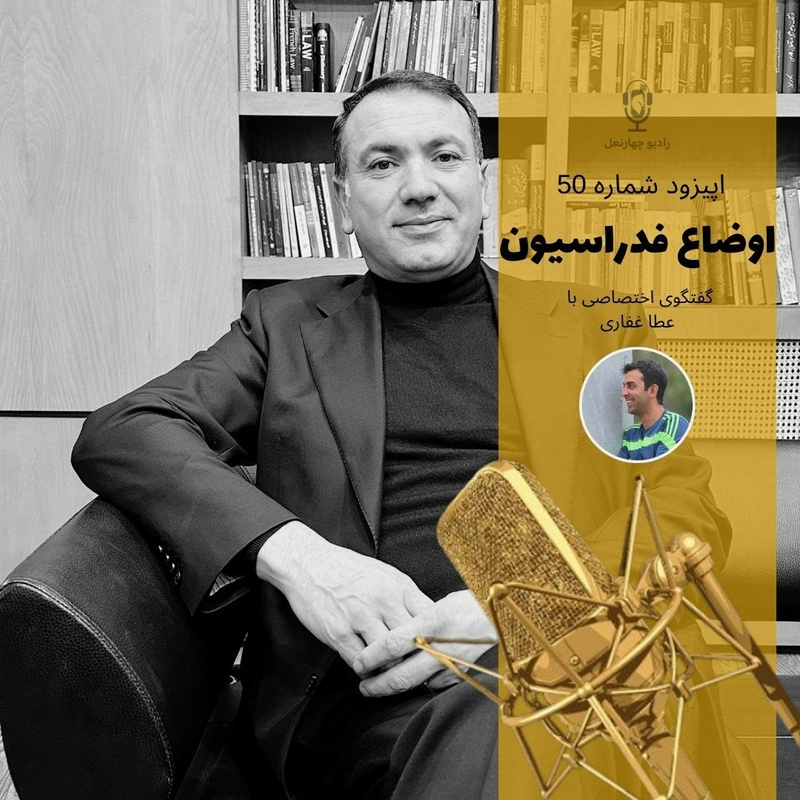
خلاصه
In the fiftieth episode of رادیوچهارنعل, Ata Ghafari, a lawyer, examines the recent issues and challenges of the equestrian federation. This interview emphasizes the importance of patience and planning in equestrianism and states that achieving professional levels requires at least six years. Additionally, criticisms regarding the state of education and public culture of equestrianism in Iran and the necessity of adhering to quality standards and avoiding unprincipled methods are raised. The characteristics of Ramin Shakira as an outstanding rider, the challenges of coaching, and the importance of the emotional relationship between coach and student are also discussed in this conversation. Ghafari emphasizes the need to pay attention to horse health and the training of professional riders and points out the need to change the work culture in riding clubs and create motivation for workers. Finally, the importance of continuous learning and ethics in equestrian education is highlighted.
نکات کلیدی
- این اپیزود حول مبحث آموزش و یادگیری در سوارکاری میچرخد.
- تولید محتوا در این سبک به حمایت مخاطبان وابسته است.
- وضعیت سوارکاری در شهرستانها و تهران به دلیل عدم برنامهریزی و ارزیابی کیفیت ناامیدکننده است.
- سوارکاری راه میانبر ندارد و باید به صورت اصولی و با صبر پیش رفت.
- اوج پختگی در سوارکاری ممکن است بعد از چهل سالگی باشد.
سرفصلها
- مهمانان برنامه — معرفی مهمانان برنامه، مازیار جمشیدخانی و محمود پورحیدری.
- چالشهای سوارکاری در ایران — بررسی مشکلات و چالشهای موجود در سیستم سوارکاری ایران.
- اهمیت آموزش و یادگیری — نقش آموزش و یادگیری در بهبود مهارتهای سوارکاری و تربیت رایدرهای حرفهای.
- نقش مربیان در سوارکاری — تأثیر اخلاق و رفتار مربیان بر شاگردان و اهمیت انتخاب مربی مناسب.
پرسشهای متداول
موضوع اصلی این اپیزود چیست؟
موضوع اصلی این اپیزود فرهنگ آموزش و یادگیری در سوارکاری است.
چرا تولید محتوا در این سبک هزینهبر است؟
تولید محتوا در این سبک هزینهبر است زیرا من جنسی را نمیفروشم و به حمایت مخاطبان نیاز دارم.
چرا وضعیت سوارکاری در شهرستانها و تهران ناامیدکننده است؟
به دلیل عدم برنامهریزی و ارزیابی کیفیت در تربیت مربیان و سوارکاران.
آیا سوارکاری راه میانبر دارد؟
خیر، سوارکاری راه میانبر ندارد و باید به صورت اصولی و با صبر پیش رفت.
چگونه میتوان به عنوان یک مالک یا علاقمند به اسبسواری، شروع کرد؟
باید به دنبال مربی مناسب بگردید و از تجربیات دیگران استفاده کنید.
متن کامل گفتگو
Greetings to all you dear and lovely listeners of Radio Charner. I hope wherever you are, you are healthy and happy. Before anything else, I owe you an apology for the break in podcast production, and the reason is that I moved towards television and radio programs and produced two live broadcast programs on Radio 4 TV, which was on the Aparat platform, and once again, your support was with me, and you received it very well. If you are interested, you can find the link to the Aparat and YouTube channels of Radio Charner from the bio of the Instagram page and access the videos. This episode is episode 51 of Radio 4 Nel, which is actually the podcast of the first roundtable program on the radio.
This program was conducted with the presence of Maziar Jamshidkhani and Mahmoud Pourheidari and revolved around the topic of the culture of education and learning in equestrianism, which again you dear ones were kind enough to welcome this video very well. This video is also available on the YouTube and Aparat channels of the radio, and you can watch it visually. But I preferred to broadcast it as a podcast so that all dear ones can benefit from these valuable talks. As you all know, producing content in this style and considering that I am not selling a product, is very costly.
It can be said that almost everywhere in the world, all media move forward with the support of their audience, and their survival depends on the support of their audience. I am infinitely grateful to you for supporting me again, whether as a sponsor in the programs or as gifts from the link I will leave for you in the description of this episode, and I wish you all health. The poster designer for this episode is, as always, dear Farshid Jahanbazi. The financial sponsor of this episode is the Safavi brand, which produces various excellent saddles and equestrian equipment like the safe jacket or protective vest, which I recommend for everyone to use, and I will provide their Instagram link in the description of this episode. I am infinitely grateful to you for supporting me again, following Radio Charner, and sending it to your friends, and I won't bother you any longer and invite you to listen to episode 51, the first specialized roundtable.
In the name of the one who gave existence its name, the sky found motion and the earth found peace from Him. Hello, I am happy to be at your service with the first visual roundtable on Radio Charner. This program is held and recorded in the studio of Meysam Safavi and the Safavi saddle brand, and in the continuation of the work...
I will introduce my colleagues to you. We have two very valuable and good guests, almost from a generation of Iranian equestrianism, two exemplary and notable riders. My guests in this episode and in this program, if you allow me not to use the term master, we reserve the term master for our veterans. I am in the service of Maziar Jamshidkhani, one of the good, very technical, very lovable riders, and also my brother Mahmoud Pourheidari, who has been one of the good riders and my own master, whom I invited to be guests on this Radio Charner program.
We are going to talk about the topic of education and learning with these dear ones in this program. As a matter of courtesy and age, I will start the conversation with Maziar Jamshidkhani. Welcome, Maziar, thank you for giving me and the radio this time. I am very happy that we were able to reach the conclusion together to prepare a space, thanks to Meysam Safavi, where we can sit together, talk, and ultimately create thought and challenge among the audience, the equestrian community, and the horse industry so that we can make better decisions. Thank you for coming.
Thank you very much, thank you for inviting me. I hope you are in good health. Mahmoud, I thank you for taking the time again and giving the honor to sit here and discuss the topics. If you want to say hello, then we can start the discussions. First, hello, thank you. Well, to not digress too much and to get to the main point, the story is that you also hold the position of chairman of the coaches' committee. Over the past 10 years, with Masoud Makani-Nejad, Hossein Fekri, Shahrokh Khan Moghaddam, and...
You were the core. In these past few years, that is, in the last 10 years, which my memory serves better, we have tried hard to produce coaches. But previously, when we talked about it, we couldn't make a good judgment about the level of knowledge of the coaches, and unfortunately, my question is what should we do to go back 20 years.
That is, to have coaches like Maziar Jamshidkhani, Mahmoud Pourheidari, Abolfazl Mohammadzadeh, Masoud Makani-Nejad, and many others who are at your level and age. Well, it's a somewhat broad question and can be examined from many aspects. But the main issue is what has happened in the past 20 years? Hasn't everything become more commercial, faster, more accessible? Riding has also progressed in the same way with people's perspective.
And because I'm sorry to say this, it hasn't had very strong foundations, unfortunately, riding has also changed its direction and gone wrong. Instead of spending time, being patient, producing students, we tried to provide a horse for anyone who came in, jump them faster, and get them to the destination to win prizes and reach competitions in whatever field we are in.
And then this disaster, which is slowly becoming apparent, happens. Let me point out that I am the president of the federation, the chairman of the federation's coach committee, although I always say if a person can do their job a little better, they are progressing for the period they are in. Let me say that I have recently become the chairman of the coaches' committee.
And as I mentioned in previous interviews we had together, the plans we proposed at that time were not accepted at all, and riding went the way it is now, and we have so many level 3 coaches, and so on. I mean to say that the gentleman who currently holds this position is essentially protesting, not protesting against Masoud Makani, who was the previous committee chairman, nor against Faramarz, who is one of the best educational people in the country. I know myself how much effort we put into it, how much we endured.
But the reality is that the path was the wrong one, and people need to understand that with just five sessions, one test, four training sessions, and a couple of physiology classes, first aid, and so on, you can't give someone a riding coaching card. This is the sport of kings and the king of sports. It is a sport where two generations must pass for the second generation to just arrive.
You have to wait a long time to reach a suitable sitting for riding. They say it takes at least 6 years to reach the maximum sitting you need, and we bring our rider to the competition after a while. After a while, we give them a chance. It's okay, I'm not saying we should wait 6 years, but the way is not to train coaches without planning and quality assessment. Just take a look at the federation's situation now to see.
Now, after 10 to 12 years of implementing this system, being so strict, trying not to give unnecessary cards, and really trying to promote the culture of this work, insisting on riding without stirrups and exercises. Has it given the right output? No, in the provinces, I don't see a glimmer of hope, and not much in Tehran either, because we are playing from the wide end of this funnel. You two are a good example yourselves, you came from a main family.
You can understand my point. A generation has passed. Hassan Pouraidari rode at the Recreational Riders Club. It's true he was a professional, but he had another job. But he became so passionate about this work that he spent the rest of his life on it. We always saw Uncle Hassan. When children grow up in that environment, one of them becomes a star, like Mahmoud.
But you don't play the funnel from this side, all its liquids spill. You don't blow the trumpet from this side, it doesn't make a sound. We can't bring rich kids and buy good horses for them. I was really talking to my private student. I don't care about the federation, I was talking about the culture of education. I had a student who, after 20 days of coming to me, reprimanded me for not working with him more than three sessions. And I had a student who, after three months, said he didn't see any progress in himself and felt that you.
He was complaining about being gentle and soft. Something that didn't exist in the 12 years of classes in Jam Sang without even asking a question. The reason I invited you two is because of the common features between you. Both of you were students of Neshati, now you because of your age more and also Mahmoud. Both of you had the experience of bringing the principle from zero to the height of a national champion and many other items. Sorry, I wanted to add something in the middle of the conversation.
Anyway, I want to say that my father's path has a beautiful saying that says riding has no shortcut. If someone comes and says I will get you there faster, know that something is wrong. The result is truly what is happening now. About 10 years ago, in the technical committee or the same jumping committee where Dr. Khalili and Mr. Maleki were brought in as members, I protested as a representative of Maleki and Mr. Maleki got upset. Mr. Maleklu mistakenly said.
My point was that this is a technical committee and a bunch of technical people should decide about a bunch of non-technical people. Therefore, there is no place for a non-technical person in this committee. If you are non-technical and a representative of the owners, then your place is not here. If you are a veteran and technical, come and join. I am a representative of the owner, then they create a show. After all, we have traveled the world and we have seen what is happening in other places. We know where it came from, it's not like that.
As soon as you open your mouth to talk about overseas, they turn around and say, don't other places have it? Yes, they do, but again we are blowing the trumpet from the wide end. There, because there are farmers who keep expensive horses and they work hard day and night and sometimes like to raise one or two of these foals themselves. There are amateur races that you can see in some cases in Europe, where they come with muddy rubber boots and very much.
Normal faces, you understand that this person was just sitting behind a tractor, not that they hold overseas races here. I don't know what diamond is hanging from this rider, the diamond is here, I don't know what it is, but he can't sit one day. Whose share do you think this inability is? In my opinion, this is the market's share, meaning the market has limited the economy of this sport. See, when you can't enter the right way.
To make money, I think that when you see that you tell people that sir, he is going to be a champion here for two years, then goes to that one and then that one's bread is in oil, you also become a short-term worker. I, who am now making these objections myself, with respect to all overseas, have students and I come and spend time there.
But I tell them, guys, this parkour, these obstacles are not yours. This is a transitional place for you to enter the professional world of equestrianism. Because the result of these competitions has become a bunch of non-standard obstacles, I don't mean non-standard parkour. Equestrian sport and equestrian technique start from 135, below 135 is Chambourti, it's a branch game, the horse can solve it. Therefore, you put a low-quality obstacle in the middle.
Above that, he wins the prize to be pleased to support your family's economy. See, when society goes the wrong way, the objector himself comes and does the same thing. But at least I am telling all the kids that I won't keep you in this category, I won't let you stay here. This is a step to pass through. But the reality is that at the end of education in this country, did Shahrukh Moghadam, Ezzat Vojdani, Mehdi Jamshidkhani.
Ramin Shaki, Babak Shaki, did they come out with a foundation and substance or did they discredit each other so much and hit each other so much that nothing remained? In confirmation of the talk, unfortunately, one of the items of inflation is short-term results, and unfortunately, especially we equestrians who do not have that security margin, meaning the simplest of which is social security insurance to the shelter of life issues.
We become short-term oriented following society, as you mentioned, and unfortunately, this is something that I hope at least in the future, with these programs and talks and your help, the understanding of this sport will improve, at least among the owners who enter with financial means. Well, Mahmoud, besides starting riding with your father and moving forward, you spent some time at the Shaki club, especially under the supervision of Ramin Shaki. I want to ask.
What are the characteristics of Ramin Shaki as someone who can be said to stand at the peak of equestrianism even in Asia, and you have had close encounters with him, meaning you have been at the club from early morning and continued this process until sunset, that have distinguished Ramin? Look, firstly, if you want to add anything to Maziar's words, there's no problem. I said that to complete the comprehensive remarks of dear Maziar, who spoke very well, I should say they have very interesting and lovely talks. I always listen to their talks, and they have strong oratory skills.
Besides equestrianism, they can speak very well, in addition to their good riding, thank God. To complete the remarks of dear Maziar, I want to say that what they say is very important, and we have a term in the whole world of equestrianism called patience. This term is very important, meaning we should proceed with patience because equestrianism is very different from other sports. In other sports, you start quickly from the basics, and the athlete must reach their peak by a certain age and then retire, but in equestrianism.
The peak of maturity, in my opinion, can be after the age of forty. Meaning you can still learn some things there, and experience speaks the main word there. Because I remember dear Maziar, God rest his soul, had an attendance list that at the end of each year, he would post the list with his own handwriting on the wall of this house.
They wrote who had the highest price and who had the most attendance. Dear Maziar always had a good name in their club and Mr. Good Name's club. Dear Maziar was the first on the list at Mr. Hisarak's place because they never missed, in any weather condition, winter, summer, in any situation.
Dear Maziar was present, and their class time was very long, and thanks to friends and the help that was there, I became the first because we loved it from the bottom of our hearts and believed we had to go this path. Now, people like me and Maziar and our peers and those a bit older than us, we were, in my opinion, lucky people because dear Maziar had their honorable father, had another coach from whom they could learn, they also had interest, came from a completely equestrian background, were an equestrian family, and grew very well. Now, whether I due to circumstances that arose and we came to Tehran from Kordan and my choice was suggested.
The enthusiasm that I remember when I participated in the classes, I didn't know Mr. Ramin very well, and one day he came and brought a book with him and said, kids, this is the book of world coaches, which contains the names of good coaches in the world, and it is an honor for us that Mr. Ramin's name is also in this book. It was the first time I realized that I knew the Shaki family completely through their father but was not familiar, and I didn't even know how many children they had or where they were, and that day in the club's restaurant, they gave us complete explanations that from there.
I woke up a bit and said, well, as long as Colonel is here, and if one day he doesn't come to Kordan for any reason, because of the distance, I must go and see him up close. Then I pursued a lot to go and see Ramin Khan up close, but I heard that they don't accept just anyone, the club is closed, and it's a private place. One early morning, I got up and went to Shakib Club. At the door, they let me in with difficulty. I went inside, there was a top by the pool, which is very nostalgic. I sat for hours and asked a lady there that I wanted to go to the club. She said yes, but I’m not coming down right now.
I sat and sat. Then he came down, I saw him up close, greeted him, and he went towards his riding and work. He wasn't very responsive, didn't take it seriously. Then I introduced myself, said I am Mr. Pourheidari's son, and since my father knew Ramin Khan from the time of the course and before the revolution, and they had worked together, he recognized me. Then he said, okay, let's see what happens. In short, for about a month, I was just going to see what would happen, I was allowed to sit by the edge, I wasn't even allowed to attach a halter to a horse. They were very strict with me. I wasn't coming for riding, I was a rider, but if a very neat and clean military system like Colonel Sang Neshat had come, I remember Maziar knows all this. We had to wear white shirts in the summer, all of us without exception had to tuck them into our pants. My older brother, Mehdi, once in the so-called manege wasn't paying attention, his shirt was over his pants. He said go out, tuck your shirt in, and come back in.
And before entering the manege, we would receive orders, and until Colonel Sang saw us and gave permission, we weren't allowed to enter. We couldn't enter. We would stay with our hands up, we would stop with the horse, he would say come in, we would lower our hand and enter slowly with the horse. Now I went from this system to a place where no one would even return my greeting. I felt like I had really left Tehran or Iran, gone to a strange place. No one should talk, no one should greet you. It was as if my language was a different language and all the people were very, very dry and proud and strange, and I didn't know anyone.
I had a company, but because of our financial situation, I wasn't much in those competitions. In short, after a long time, I was allowed to just go to the stables by Ramin Khan.
The horse pads and bandages, because all their horses mostly had rest pads and bandages, and I was allowed to open the pads and bandages, take them out, shake them, roll them, and that's it. This was my first stage of work, for example, after several years of continuous and uninterrupted presence in Colonel Sang's classes. I want to say the slope and difficulty of the work, which Maziar certainly went through harder. I'm sure after a few months, when we were just pedaling, we were allowed to put the halters on the horses, endure with George, take the electric launch, and return on time. That is.
Step by step and if that interest and that belief, that belief was very important. Well, for example, when he talked to us and said that I am a perfect person and we don't have anyone in Iran who, in terms of technical knowledge and riding experience and work in Europe and America, it was clear to us that we should only pay attention to Ramin Khan and we believed in this matter. That's why we persevered with difficulty. I clearly remember, Ramin Khan used to go a lot in the winter and was very interested.
Then, to force me to be at the club early in the morning, well, at that time there was no indoor hall, the arena was completely closed in winter and almost after the national championship competitions, the competitions were almost suspended.
I want to go skiing early in the morning, I don't set an alarm, you knock on my room and wake me up. That is, I had to take three to four taxi rides from Seyed Khandan to Evin Darakeh to wake up. Then what was my job? Go to the house next to Mr. Sakhi and just soap the equipment, that is, just clean the head of the training saddle's front breastplate and do this work. Now we swept the stable, washed the water trough, and finally cleaned it. These are normal.
And with this difficulty, we moved forward and came forward with the same words of dear Maziar in motion to learn everything with interest. And unfortunately, because there is a lot of money circulating in this field and it is a matter of so-called trade and business, and dear Maziar, if I want to delay a rider or owner too much and go very methodically, they go to another colleague and get results much faster, they become happy and their expectations, whatever they are, are fulfilled, but my principles may not be implemented. But I only say we must be patient, come up from zero from zero and whoever stays.
Dear Maziar, if he doesn't stay, at least our responsibility is lighter, meaning we won't be ashamed of anyone in the future. Now some young people around 18, 19 to 22 years old come and say, sir, we want to come to you not to ride, just to intern, meaning we don't want a salary.
We have no expectations, but we want to be with you, come and do whatever work there is, but they are all interested in just being on the horse in the arena. That is, for example, they go from Snap to the arena towards the kids, sometimes you really hit the guy's head, they can't tell left from right, they are zero to this extent. These are the ones who are either occasionally jumping with another coach or are about to buy a horse, meaning to this extent.
Their work situation is weak. My suggestion is that I always tell all the kids, now my smallest talk is that I don't want to teach anyone anything. I still really say this about myself, I don't consider myself a coach and I am learning and I am proud to stand in the competition arena, watch Maziar's barrage jump before me. I honestly say it's a lot of work for dear Maziar and many other kids like Abolfazl Sharagin and other kids that I stand and watch to use their technique in the upper park line and it's not that I say, for example, I don't accept anyone other than Ramin Khan, it's not like that at all. From all the kids at a high level.
Taking note of how they warm up, how they start in parkour, the barrages they go through, the trajectory they choose, the motor circle they create in their horses, and many points we can learn from. May their spirit be happy, they always said this is the only field in world sports where no one can claim to have reached the end of this field and stood on the peak of styles because every day a new science, a new technique, and a new tool are invented in this field, and we should only think about learning. Unfortunately, as Maziar Jan says, the situation here is a bit messed up. If we can go from Iran to there, update ourselves with new bridles, new techniques, new riding, new saddles, everything new, and as much as possible, now use the available resources and study, kids. I mean, during this time, I won't say I had a lot of study, but whatever they want, they introduce a book to me.
At that time, Ms. Sanandaji was translating, or Mr. Jamshidkhani's books, we were all without exception forced to read. I mean, he would clearly say we have to read, and we were so interested, we believed in him so much, we said, sir, this book is definitely correct because he approves it, and this study is very important alongside practical work and the time you spend, the interest you put in, the time you spend, also study, and thank God, now in the equestrian store, I saw very good books in the field of lunge.
From equestrian to parkour, books that, no matter how old, ultimately take us one step forward, and it is better that our culture is to study, even if it is searching something on Google, even if it is asking a question, studying helps us a lot. I talked too much, in summary, let me say two things from your talks, no, please, the story is that from Mahmoud's words, some points can be separated that show how much time was spent on the horse at that time.
The horse itself, how much I ride, and that I have been going for a year now, I just want to be given 5 horses, this and that, is not the case. That you could stand next to the manège and watch a great person riding was a blessing. A blessing of education, that you could go to this person's professional stable, open the bandage, bring it out, shake it, was a blessing. Then this taught you how much our sport is from the horse that you reach everywhere in riding.
The right path that is now going wrong, we are using the horse as a tool to reach our goal, whereas the rider community reaches everywhere from the horse. So if you spent time, if you slept under the horse's device, if you hit from under the horse's device, if you oiled the leather, you hit from your future because I stood under the hand for a lifetime.
The result is like this. Let me tell you a bad memory in this regard, first of all, we didn't have a club from the beginning, I rode in all the clubs in Iran.
And then we came and took over the club. In the years when the club had just started working, my father had argued with the workers, kicked them out, and left for home. I stayed and had 20 horses. I was working under them, thinking to myself about someone who started with me, who is now a famous person in riding, but now no longer rides. He started with me and now jumps 135, 40. This guy left us with work, saying stand here and work under the horse. What good is this working under the horse for me after all these years?
Now I give my child the same advice again. In my opinion, working under the horse is much more valuable than doing low-quality riding or spending time with a horse or rushing to spend money to buy a horse. One thing I want to add to both of your talks, very briefly, is that two items built you and your generation: a passion that you had within yourselves and that generation had, and two, the strictness that happened to you due to the lack of facilities and everything that we practically cannot implement that strictness due to this short-term nature.
I mean, for example, I tell my poet, sir, get off and go wash your mouth because we don't touch a glass at our father's house, and now washing their mouth is very hard for them. And your father always says a very beautiful thing, it starts in the stable, and in my opinion, this is a golden word. In completing Maziar's talks, because we had a memory exactly like Maziar, maybe you yourself remember when we were in Kordan, you had a club. Now I wanted to say exactly this, we had 60 boxes, our inventory, and all the boxes were full, now Arabian horses.
They were tribal and went on strike, saying Mr. Puri, if our wages do not increase, we will not work, and they wanted something beyond their rights. We reached the club, that day Mehdi was with us, it was summer, and we could stay overnight. We mostly stayed. Then they came and said, sir, if it is not like this, meaning if our wages do not increase, we will not work. It was really hard. Sir, close your work and come to the office.
I came and paid each of them. The bank took the money. At that time, the system was such that they took cash. He paid the children's wages, and exactly every ten horses we had a worker, and we also had a night guard. We had 7 workers, and they were all relatives and friends, and he fired him. Mehdi, my father, and I were three people, and it was decided that as long as my father stayed, the club would stay.
Our food was barley, bran, and hay. Now we said, sir, we divided it. We said let's go. Now Mehdi was stronger than all of us. We said let's start. Do more of the groundwork, I'll help you with the groundwork. Then the food was with me and my father. At nights, Mehdi and I would stay at the club. That is, for seven days, dear Maziar, we did this work. Three days yes, three days we were late, we did groundwork 3 times, ate three meals. But in Maziar's statements, it is correct. So-and-so was jumping 135, 40. Why am I here? But I myself say this work has its own pleasure. I mean, even now.
I love all 12 months of the year. I give my own dinner. It has nothing. I say, sir, this division gives me pleasure apart from bran. I mean, I come to my room, change, and then go to the pool with Snap clothes. I want to say that apart from our duty that must be done, it is enjoyable and something we had planned while talking with dear Maziar. I said, sir, you have several categories of riders, including rider, owner.
Coach and amateur student, we know that when they enter the complex, they don't go straight to the edge of the arena, take out their mobile, and say Mr. So-and-so, Mr. Mahter, Mr. Groom, bring it.
When they enter the complex, they go straight to the stable. Well, now give them a little diagnosis. Open the box. This getting straw and dirty boots or now shoes that they endure, take a tour around their horse in the stable. I mean, see all the dimensions of the body not as a duty but as an interest. Press the water trough. These algae now make a little lunch hay, for example, take out the stone by hand. Then they come, Mr. Mahmoud, Mr. Maziar, where are you? We might ride today, or for example, I say, how many owners do you know who come 6 days a week?
To the club, well, at least two days with fruit. Not for the horse, but for the interest in the moment of giving fruit. A topic that all of us who work in the horse system may be dealing with is the labor issue. A topic that I really wanted to talk about. Both the labor issue, the rider or assistant rider issue, and something that is practically solvable in Europe. All those who compete.
They do their own horse work, they groom themselves, they clean themselves. What do you think about creating a culture where these people go towards thinking that, sir, let's make the system like this? Well, now it can be said that most of the workers in the club are foreign nationals, they are our guests. After all, they have their own lives or they are kids who are Turkmen. They give a time off. They want to go home after a while and have their own issues or they are taken. If we go towards this, like Europe, I mean now as a rider I want to come and work in the style and see, well sir, let's remove this term altogether.
With higher wages, with more facilities, and I think if we can go forward with such a method, I mean you start instead of having a worker, a mahter, a rider, have a group of riders so that now all the horses that are finally in the stable are expensive given the country's economic conditions, and the person responsible, a mistake, a distraction, a serious and irreparable damage. You can't do a job that is complicated and fast, for example, even if you work for another hundred years, you can't compensate the money. But if we train professional people.
Maybe this European method, meaning having a groom rider, giving them more salary so that the riders are not dissatisfied with their low income, and at the same time, over time, we produce professional people. I have an issue with this. I am one of those who have tried this. It does not align with our culture. It's as if I don't know, it's a story of master and servant. I don't know when you live in Sweden and want to wallpaper your house, you go to the store and buy glue and wallpaper.
The fact that someone comes and hires a worker here and then cleans up, then I don't know, this doesn't exist. 90% of people do their personal tasks themselves like this. This is a culture that also extends from this side to the horse and farm life. The life that our grandfathers lived until two or three generations ago was only interrupted by the arrival of machines and modernity, and the problem is that it was interrupted. Meaning, if those elders had passed it on to the next generations, they had that knowledge and.
Iran certainly had much more knowledge about horses. But now let's return to the topic, I should say that for years I tried to do this work and it didn't happen because most of the people who come to become riders come with the dream of becoming champions, and they don't have the exact interest and passion that is needed to spend time with the horse.
They get very upset if you tell them once why did you do it that way here, it should be done quickly. Now, if it's a person who has money, they spend it and buy you like this with their money. If a rider or someone who comes there to work for you, they don't give you that passion and interest at all. Therefore, I was at least forced to go towards separating these two words. The story is that everywhere in the world, groom is one word, sir, and they call us rider too.
Someone who rides a horse and participates in a competition. Now the discussion of the coach and these come after this. Meaning, it might just be a good rider, not a good coach. So therefore, all of these have classifications. We lost, we lost. Now we came and added a category. Meaning we have a groom category, a rider category, whose job is to come during the days, take the horse from the rider, take it for a walk or bring it there to work.
It's funny because I say I'm not crippled to do these things myself. The issue is that unfortunately, the culture is moving in this direction and then a huge part of these kids are working, they are interested, they are working hard. I'm not addressing all of them. I'm talking about the general culture. From among these, usually very good riders emerge. It's supposed that if one day a spark ignites in the Iranian system and a rider emerges, it will be from among these riders.
I spend a lot of time on horseback. Pay attention to the word "horseback riding" in English. A person should spend a lot of time on horseback. It's not right for people to use horses as a luxury item. Some like to do this, but for that person to become a champion in a specific field, I...
I hope they watch this program. A lady in Isfahan came and did horseback riding. She placed the saddle somewhere that I took a picture, meaning it was so obvious where she placed it. It's almost like this is a master. For example, I was shocked. At first, I thought it was a joke and they were pulling our leg.
Hidden camera, yes. I stand in coaching until they say all their words. Maybe that last sentence gave a hint for me to say bravo, this person will become something. But there I told the lady, ma'am, enough, you go out. I lowered it because she knew. Then her condition didn't allow it. Then a...
A group was standing outside and protesting, and then a major problem arose because this lady was an endurance champion. When did you find the time to ride? How? Which horse? When did you become a champion? Then when you were going towards that horse with which you were becoming a champion, the matter is different. This place is precisely for that reason, to see, I say okay, many people can come and use the horse as a luxury item. Many people can come and use the horse as a consumable item. Many people can come and do such and such.
But what remains for the riding community? What is supposed to teach our children? That instructor to whom I am supposed to send my son and say, please help us, I have fallen short in this matter, what is it? One of our current problems, Maziar, is that you now enter an equestrian center as a novice, meaning without any knowledge. Your child is interested, has seen it on TV or on the street, you cannot distinguish any difference. You go to the club. Even I have not seen until now that, for example, in the club's office, sir, this is the list of instructors.
This is their background, these are their ranks, these are their certificates. Now you choose. For example, sir, this gentleman does not work with a zero-kilometer. Choose from these. What happens is an introduction. That is, you come to a club, I have come to register. Yes, please go to such and such place with Mr. So-and-so. Mr. So-and-so, this is your student from today until, for example, 10 sessions. And unfortunately, it has happened that we have provided the cheapest resources, including horses and instructors for riders, which I personally, considering the experience that now I am your student and much younger, feel that this has caused us a lot of harm.
My feeling is, that is, my mindset is that for the amateur rider and for the amateur horse, the most expensive and best resources should be used. The prosperity of the 90s is gone, and we are in a period of horse scarcity, and they are forced to procure horses that are a bit lower in quality. If you remember 5 years ago, the quality was very high.
We say the discussion of training is now about the part of the old rider and the old horse, the young rider. Other than this, it is completely wrong. Anyone who does something when you want to put a novice rider on a horse must be with a mature horse, and when you want a mature rider when you want the horse vice versa novice, this is a very important point that is very rarely implemented in Iran. Again, because we do not have resources, a couple of their cultures.
Many of the horses that now, before so many foreign horses entered Iran and imports opened up in this way, you were all hanging around Turkmen Sahara. Practically, you were searching in this data. Sir, let's go, our horse has been hit from the course, now it had two black spots, it had a tendon, you would fix it and, as they say, you would bring your limping donkey to its destination. Now those same horses are there, but no one has the time to go and bring them, sir, train them, educate them. The matter has changed, see the paradigm has shifted. You cannot give someone a period.
And drive on the track, then suddenly take him and bring him with a tractor and tell him to maneuver here for me now. At that time, because we had to go to the house because the foreigners who had entered before the revolution were finished, we had to go back to the house. That's why the level of competitions dropped significantly. Remember, the national champion of 1992 was held at 120, and here I want to mention dear Rakhshan Radpour, who I believe Iranian riding owes a lot to.
The level of Iranian riding in that period in the 1990s rose significantly with the good courses he set and the high demands he had from the riders, and it was there that this need was felt again when Rakhshan set the national champion at 145, this need was felt in the community that these horses were no longer sufficient. The new horse topic is the Turkmen Thoroughbred with foreign horses.
With a Turkmen Thoroughbred, you can learn to ride, meaning you can be a good passenger on an animal because they are very intelligent, they decide before you, they are much more skilled than you, all of these, but from a foreign horse, it's something that goes to the classic channel, time goes, you can teach a student on a gallop, you can say you Turkmen when riding, I don't want to hit the Turkmen, I have a lot of pride and awards with the Turkmen, I was a student of Mrs. Firooz for years.
I spent in this story, but I want to separate these two, I want to say you can't become an Asian champion with a Turkmen, you can't with an Arab, yes, on the condition that we accept that like Turkmenistan, our riding level has nothing to do with the rest of the world, the rest of the world has nothing to do with us, from now on we want to fly Arab, bring them down again, start from scratch, and then the techniques will change, I say because the Turkmen you have in mind now is one fast and.
Imagine and at the time of 14 it should be like this, what can you do, a student, that's why the paradigm has completely changed, we can no longer go back there unless I return the riding level, add to the first issue which was completely correct, and the main issue goes back to the training system of our children because I and people like Maziar and our peers definitely grew up in special conditions and with a very traditional and old upbringing which I completely accept and love like him, now in families, children who want to come to me and Mr. Maziar and other colleagues and the village are definitely in the range of 18 to 25 years old, each of them is an idol in their families and they are very loved and cared for, well then imagine that the parents who are not the main ones anymore, I want to go to Maziar Jamshidkhani's stable to work and always be proud that if one day Maziar comes out, I was Mr. Maziar's student.
You are a famous champion, but if Mr. Maziar orders that I'm not here this week, I want to go to Sweden for a month, for example, and you have to stay at the club, feed, groom, and be here.
Clean under the feet of Mr. So-and-so's horse, no need, there's no need for him to come to us at all, go outside, go to the coach lady. I also recommend, there's someone who says, sir, you come to me. There are many people here, for example, I say outside, for example, after the meal service, we also have extras, for example, snacks, for example, suppose we give Nescafe tea. Come here, there are people, but this doesn't become a culture because people like me and him and others like us, who are older, do this work with love, meaning it was our wish, for example, my own pride was this.
I wanted a first-class Astek horse, which was the first series of my horse imports to Iran. A strange, large, and beautiful horse. I said today under the sun, let me see to what extent it was an honor for me, and I wanted to do this work, regardless of who owns it and who rides it. The feeling of connection that I could get close to Astek was the point I wanted to mention in the so-called additions to Maziar's talks. The next topic is about the issue he mentioned.
Riding starts from behind the horse. I always say this sentence and always remember it again. Shaki repeatedly told this to all the kids. He said the kids quoted the riding sentence from their father and they themselves believed in it. It starts with a step. You have to sit on the horse for a long time, as he said. He said a long time of walking, whether in the outdoor space outside the club or walking correctly and for a long time inside the club, and preferably if you have the conditions, without stirrups.
It helps maintain balance, adhesion, and moving away from body contractions of the pelvis, thighs, and back. You come out of contraction and find your place in the saddle after a long time, and this completes Maziar's talks and the next topic about the so-called imports and the Turkmen and foreign horse discussion that Maziar said Mr. Radpour really put a lot of effort into this field. Now the criterion for buying a horse in Europe, whether for the owner or the coach, especially for the owners, is just one word.
Let's buy a horse that will bring us championship. Seriously, our criterion has become the national champion. I have a national champion horse in the 40-45 class, now if its final was also 4 to 150. We don't lack horses. This is one point and an interesting point to say about the difficulty of riding that Maziar again mentioned about the Turkmen and.
The so-called European jumping is very different, and I have this experience. Now, I haven't ridden a Turkish horse as much as Maziar, but the first experience was very difficult and also very funny. It was Ramin Khan's torch, meaning, for example, I know all of Ramin Khan's horses and very large-bodied horses like After, like Kim Kat, like Sakharin, like Astek Maziar, all of them, and their height is very tall and heavy. Now we were allowed to walk and finally cool down after walking. Now, lately, he allowed us, and one day, to bother us a little, he said, bring the torch to ride. We said, well, until now, this torch is very small and compact compared to these.
We brought it in winter to the small arena, we were riding, the big arena was closed by Shaki, I sat a lot, we took Nescafe, we came into the arena, and from the beginning, it started joking with us, it's winter after all.
I repeated it again, then he laughed. I said, so how do I want this rain. I was watching with my own eyes, swearing on my life, I was doing a passage. I want to take it from him, even in a short time, meaning he performed the effects of his lessons with him perfectly. Then we couldn't, to this extent, the Turkmens are tough and constantly testing. If you know how to ride, if you are proficient, they give you a delightful good service.
A little destruction is officially a joke, but from the Europeans, it doesn't have this fatigue and it copes with your weaknesses and helps you. From the Turkmen breed, which was two-blooded, but well, with a height of 150 cm, if I'm not mistaken, they told me it's 150 cm. Now let's not break the deal that Ramin Shaki was able to become the national champion with it, well, let's cut it, it was really 140, it was 40-45, yes.
National champion Radpour, maybe we want to mention an example from before the revolution, Alireza Soudavar after the revolution.
Not very big, started before the revolution, changed the model, meaning he went and saw the European system, brought foreign horses, but well, Rakhshan with knowledge, meaning each of them was a child of their own time, practically a reality, well, one of the issues that for some time on the radio they tell me, an owner came, meaning he messaged me to talk about this issue and started saying that we.
We got a horse, our child is also very interested, unfortunately, in some cost discussions and learning discussions, now I don't want to go into details, they had problems, the end of his words was that I wish I had seen these things sooner, meaning I had more knowledge, now from you two dear ones, my question is, and friends, your talks complement each other, this is that now as an owner or even an enthusiast, I have been sitting in the riding club for a month looking for a coach, I am in love, where should I start so that I don't fall behind in the middle, meaning they don't throw me into a pitfall.
My money doesn't go to waste, my time, which is the most important, doesn't go to waste, my youth doesn't go to waste, and ultimately my physical safety is also ensured, what should we do? It's really a difficult question in my opinion, but I can say the best advice I can give is to check and see which coach focuses more on the basics, which coach has more patience with animals, is kinder, start with that, be patient until their knowledge gradually increases, and then make a better decision, meaning finally people can leave coaches, one coach.
Elementary level, one from a higher-level coach, I work at the elementary level, no, but it should be this way, the rule is that it should be this way, we have a very big flaw in the riding community, it's not related to now, it's come up now, the point is that coaches feel that students are their slaves and they count a lot on their loyalty, the point is that it should be established that each student can be a former coach, learn something.
Pay the coach's dues and then go elsewhere, the story here is completely different, for example, when a student owner wants to go from one to another, there is a possibility of murder and such, he kidnapped him, he kidnapped this one, no, it's not like that, people should be able to change completely due to their progress, Maziar Jan said correctly, firstly, the question is very difficult and its answer can also be very difficult, censor a few points, he speaks very beautifully, his words are logical and beautifully resonate.
See, one point is that first of all, in my opinion, because we ourselves were like this, we must first and foremost believe in our coach and love them. I mean, personally, aside from riding, I loved my coach's personality, appearance, and dressing style from the bottom of my heart. I was a kid, like 19 years old.
I enjoyed seeing my coach in casual clothes, for example, when he wanted to go shopping, I would watch him to see how he dressed. This showed my interest in him. Dear Maziar also mentioned how kind the coach is to the horses and how much time he spends and progresses fundamentally. These are not things you can see in the competition ring. For example, if I, Mahmoud, pass the barrage without error, you can't say that's it. It doesn't relate, but it has a very important and subtle point that I have lived with and experienced, and God helped me a lot to come out of this issue successfully.
Many young people, ladies, and gentlemen who come to horseback riding truly love their coach from the bottom of their hearts. The boys really imitate everything their coach does, regardless of the riding discussion. Now, my point is that we must be very careful. As dear Maziar says, the person is not our servant. I've seen kids being unkind, for example, sending them for personal shopping.
Regardless of the club and horseback riding, this is not beautiful and destroys the character of that young person. This is one point, but there is another point that I, Mahmoud Pourheidari, say. I might be a good rider in the eyes of my student and rider, and they might try to imitate me, but here is a very important point that my student, rider, and owner must pay attention to. I, Mahmoud Poudri, have one correct item, but, with all due respect, I have 5 to 7 bad negative items that are outside the club and in my personal life, and the rider, owner, and student should not take them as a model at all. That is, Mr. Mahmoud Poudri, just because I am a good rider, no one should misunderstand. I sit well on the horse, but when I get off the horse and leave the club, for example, I drive badly.
Unfortunately, this unconsciously causes a young rider to come to us, take us as a model, and say this is my direction, and whatever he does is right. This makes our duty heavy. If we have four ethical problems or issues, we must be careful to fulfill our human, ethical, and cultural duty as much as we can. For example, if I smoke in private, I should try not to let my rider see this so that my student thinks in their mind that this is a good athlete, not to tell our rider to go get me a pack of cigarettes. They do this because they love you and want to serve you. So in their solitude, they say if it was bad, Mahmoud wouldn't smoke.
If I want to become a champion, reach a great position like dear Maziar, I must be careful. In the story of role modeling, this is hard work. Someone who has reached there has a bank support that they have filled over the years.
This is a difficult question to see how fundamentally children work, and alongside horseback riding and professional riding discussions, I say this from the bottom of my heart. Because I have also achieved championship in other sports to some extent and have done and do a lot of sports, we must consider sports, ethical, and human traits very important. For example, someone who rides well and their student is satisfied with them, but is a very ill-mannered person, we should not choose them. Because this behavior is contagious and may be transferred to them as well. We must have both the technical and ethical aspects of horseback riding together to first and foremost train a good athlete and then a professional rider.
In my opinion, a subset of the discussion that I often tell the children around me is that the discussion of riding, whether teaching or learning, is a skill that is established through practice and repetition. Its main structure is the discussion of knowledge. In humanities, it is called a school, meaning those ethics and principles. It is very important that we do not only focus on the lower heel position and flexibility in our clubs. In my opinion, this is very important, as unfortunately, we see around us now and cannot deny that this lack of ethics unfortunately now affects many and drives many away from this sport. As I even talked in an interview with Mr. Kazemi.
From the factory in the afternoon to the club, they have that enthusiasm, but now they say I will go back to the factory again. Meaning if they can cut their emotional attachment to the horse, they will separate from it. We, as those who are older and many people look up to us, must be more careful to provide this education. Everything is not at the top, it is at the bottom as well. We, meaning you, dear Maziar, may certainly confirm this.
For example, when I was riding, now we were in his class and helping, now working in any position. He would go to America for a few months each year and do the work there and would not come. Now he was not in Iran for about 30 to 60 days. Anyway, when he was not there, I would do the tasks that were my responsibility and try to spend the rest of my time with Babak Khan. I said to be by his side and learn a few points from him. A point that I have always said behind his back, now I don't care, anyway, every rider and every coach has strengths and weaknesses.
But what he always told you and you are in an interview with him, what I hope I can imitate from him, is that I have never heard a bad word from him. Not in his phone conversations with someone, not in the arena, not with a student, not with an owner. He had a very formal, heavy, and clean language. Even in the toughest conditions when they were working, now whether it was their son Karen himself or their old horse owner, Mr. Athlete. For example, they would work and he would reach the boiling point.
This is a very important point that he always maintained etiquette. As someone who is an athlete, apart from horseback riding, I am very attached to this point. For example, if I want to bring a coach from abroad to teach us in the national team, certainly the coach's etiquette attracts me and you a lot.
His lifestyle, in my opinion, is instructive. Now, in our conversational jokes, we all use certain words anyway, but I really say until today that if anyone has heard, come and say that I heard. I have never heard a bad word from him. I mean, sometimes he would get angry and speak loudly, but the language would not change, and I hope I can always adhere to this myself. Well, one of the issues that many people in society complain about is the coach's behavior. I have personally seen this in many places. For example, a rider makes a small mistake or doesn't listen, but.
They face a character assassination, and practically their confidence and self-esteem are crushed by an ignorant coach. I have seen you shout, even say bad words, but well, your level and the person working with you certainly have the spirit to say, "Sir, I have come now to be, as they say, squeezed." But unfortunately, many people do not have the spirit, and unfortunately, in many of the kids who stand as coaches, there is a feeling in them that "Sir, I am now the god of this arena, and I allow myself to say anything, speak in any way without.
Consoling or ultimately learning happening. What should we do? I mean, I want your talk to be directed to those who are learning equestrianism, that is, the students. What suggestions do you have as those who have learned and teach any style yourself? First of all, let me explain that this sport has its roots in war. Why doesn't this sport move forward, and today it is not very spoiled?
Like Firooz Karimi, who I said, why did you shout at that player, he replied, "I can't say, 'Sir, please kindly send a long cross to our striker's head, Mohammad, kick the ball this way.'" Every sport has its own terms, and because it has to be said at the moment. Equestrianism has very large dimensions. Usually, the wind blows, a little riding is one of the fastest sports in the world. The parkour you do is a minute, a minute and a bit.
From the moment you go out of the arena until you come in, it becomes 2 minutes. That is, if you count everything, it becomes two minutes. When there is no time, the rider must say at that moment, "Move forward" or say a point higher. It must be said loudly, clearly, decisively. One point is that due to the nature and essence of this sport, because it will be accompanied by fear naturally, and because we do not strengthen the foundation in riding training, we launch riders prematurely.
When this comes towards an obstacle or is doing something, the coach can say the point he wants to teach in many different ways, and no one can tell him why you are teaching this. Because we have a partner who does not have this language. All the blame can be placed on the horse. Always remember, as they say, when knowledge goes out the door, violence comes in through the side door. I might shout, but I try not to break.
The subject is about that particular technique because it is accompanied by fear, the coach's spirit must overcome the student's fear. Therefore, they must speak firmly, speak strongly, and loudly ask the student exactly what they want, which is mistaken for shouting and saying nonsense and insulting and I don't know what else. Everyone has the right to make mistakes. If the student didn't exist and didn't make mistakes, they wouldn't be there, they would be standing down there, and I would be the rider.
We must accept all of this, but we cannot set aside the nature and essence of this sport. When someone from the outside, who has a very gentle spirit and thinks that everything should be done with requests and pleas, looks at a class like mine or Masoud Makari's, or looks at Mahmoud's class, they might say, "Wow, this person is tearing the other apart." Whereas every rider, every athlete, let me say every athlete remains at a certain level until the coach pushes them, so to speak, to pass that limit and that boundary.
And this is not solved without a bit of pressure and force, otherwise, the student will want to jump this much forever and jump with low speed. All my faults are correct, whereas it is the coach who enters the game with their knowledge and demands from the student to do this correctly for them so that they can raise the student's adrenaline to overcome the student's fear. At that moment, the coach's work cannot be finished. Can't you understand what I'm saying? There, they must fear you so much and have so much trust in your knowledge and expertise.
They must have faith and know that you are well-versed in everything and say, "Now, do this easily." That story you see where riding coaches are all shouting, one reason is this open space. Something that Mahmoud has told you and even you, Maziar, many times, and for example, they say to me, "Sir, your brother is ill-tempered," they say, "Sir, Maziar, you shout and curse," I replace it. I come, sir, ill-temper is a human trait that we develop over time.
It happens. They choose the wrong word for strictness. How is it that you, meaning you, are forced to express this strictness with shouting? Even I, myself, when I was a student, you shouted at my wrist, my shoulders many times, cursed, said bad words, but well, I had that enthusiasm. Now, you, the new generation, have less enthusiasm, and there's always someone sitting on the side saying, "Man, this person is always shouting, killing my character."
What should we do so that the student understands that this shouting is not ill-temper, doesn't label you as rude, and at the same time accepts that you are teaching them and they are learning? Look, there are a few points here that I will continue with Maziar's words. Equestrian sports have been transferred from war and the military sector to the general public, and the first thing that, contrary to what cannot be said, demands more than other sports and which I greatly respect, as you know better in personal life, is discipline.
I inherently had it in Colonel's class, it increased much more. I had seen many times, at least regarding my own brother, that if the gaiters on his boots weren't clean, he wasn't allowed to enter the arena, and I had seen that the Colonel would expel him. Maziar has definitely seen this.
At first, I really respect order, technical and educational discipline, meaning there should be very good discipline and strictness in this area. The second point is that I admit sometimes, because I am a bit too idealistic and organized, I want the horse and the student to give me everything ideally. It's a bit hard for me to settle for average, and that's my weakness.
And people, in my opinion, mature. I am not the same person I was a few years ago and I come to terms with many weaknesses and mistakes. Maziar, my dear, has certainly been in situations where, for example, when working with his children, his teaching method is definitely different.
The choice of words is very different from, for example, a female artist. You know what I mean? For instance, when I worked with you, my younger brother, we played football together, went to the pool, and had a lot of physical jokes. When we travel together, our lifestyle feels different. Many people, when working with their spouse or brother or sister, have a teaching style that is very different from everyone else, but unfortunately, it is judged the same from the outside. For example, if a few years ago Mahmoud said something light to Mohsen in a test, that became the standard for comparing Mahmoudian. If, for instance, Maziar, my dear, pressured his child during home practice or used a word, that pertains to family relations. If you gather and evaluate Maziar working with all his owners and students, you wouldn't hear one of those sentences because family relationships are completely different in teaching with strangers. This is one point, and the next point is that I always pay a lot of attention to this subject myself.
I highly recommend, and God forbid, I do not intend to teach anyone. I always have a distance, a curtain, and a framework between myself and my student. Now that student can be an owner, a rider, or an amateur student for about 10 sessions, but I never get close enough to want to engage in jokes or closer relationships. Let me put it this way, and I always try to behave in the arena the way I always liked and saw my coach behave. For example, when we got into the subject, we felt it much more and stood in the middle of the arena.
There was another Colonel who, between class times, when we went to the restaurant with him and had tea, the situation changed a lot. That is, he joked more and showed more affection to the person he was very strict with. But the Colonel was always very special to me. I never allowed myself to give a fake smile, and I always tried to behave in a way that made the Colonel a statue for me, and he was also a very serious and strict person in the arena. But when I came out of the arena, when the class was over, the situation changed. I try to maintain my serious demeanor in the arena, but never, never, because I get very upset about this issue and unfortunately, I had seen in the past in the teachings of various individuals that I avoid, God forbid, destroying someone because of their inability or ignorance, and I am very careful because I believe in the issue of breaking a person's heart in teaching and I am very afraid.
But dear Maziar, since it is a sport where you have a teammate named a horse that weighs at least 400-500 kilos, and again this sentence that your teammate makes the final decision, meaning you have everything correct and well-arranged, yet the final decision is with the horse, and this stress and fear condition always exists. But the discussion of training and the matter of respect is also correct, as Maziar dear said, but I myself say I do not mean to offend anyone, we do not have destruction. That is, for example, suppose I go to learn tennis. Well, certainly in the first sessions, I may never be able to play tennis well.
I have fun, I am not supposed to go to the Tehran Tennis Championship. If in the second or third session, God forbid, I am humiliated or destroyed, I will definitely quit tennis forever and will not even watch it on TV to avoid remembering those days. That's why I pay a lot of attention to this issue so that, God forbid, no one is destroyed or changed. If he cannot, sometimes I say sorry or it is my weakness that I cannot teach you or it is something else. Let's forget about it tonight and another very important topic that I can give an example of myself.
People who always ride very well and have top-notch riding and are great world champions, it does not mean they are good coaches, because the issue of transfer power and student psychology is a very complex thing that not everyone has and it requires an innate talent. Besides teaching, his skill is correct. Now let me say something in confirmation of the dear ones' words on your behalf.
The one who has more talent, meaning the coach recognizes that this person has a special talent, certainly, the method is more pressure and certainly more shouting at him, and you who are supposed to learn should have this spirit that this arena framework is just for learning. That person is neither my blood enemy nor has a vendetta and does not want to destroy me. I just wanted to make a point after Maziar dear's talk that you should define a boundary between the sport you do for fun or when you are a beginner.
And when we become professional and want to establish a boundary for distinguishing when you want to become a champion or when you just want to ride for fun. The rider who merely wants to have fun should be provided with conditions, given a calm horse, etc. But the one who wants to become a champion always bears the hardships. In all the movies you see, the champion is the winner in the end. From the first minute to the 120th minute, he suffers until he lifts the cup.
Therefore, the person who wants to progress, precisely in confirmation of your statement, is the one who must be hammered. My point is that I think this subject exists with all coaches that when you see a series of positive points from your rider, at whatever level he is and you work with him, that he performs very easily. That is, for example, you ask him to do something and he executes it very correctly and professionally with his horse. Not once, but many times on different horses, he has the ability and talent and a good feeling and executes it.
You feel really good about this. Then the same rider, on some days, cannot perform on a series of horses what they have repeatedly proven to you as excellent, and I think the reason for all our frustration is the day we are surprised and say this rider has raised my expectations. I have built something very big in my mind. Why is it like this today? On that day, you might lose your temper, the rider who has come, as Maziar Jan says, to learn that one does not kill oneself and does not shout at them.
Data comes out, the boiling point shows itself when you have repeatedly seen your rider's ability, but one day they do not have that ability. Now, what has happened to them or what is on their mind, we do not know, but that's where the boiling point shows itself. Well, since we are now nearing the end of the discussion, your suggestion, especially now that you are the head of the coaches' committee, is that the encouraging and training levels in interactions that are not well tested at work should come there to practice.
If we want to put a filter here, meaning we say first go here and test, then jump around this 50-60 centimeters, and then go for the beginner's jump of one meter and 90 centimeters, what do you suggest? If we do not have a law now, at least spontaneously, for example, I as a coach have this rule that this test, for example, go for ground work and make a circle there, do it here, and make a transition there. You know, we have had various periods in the history of riding, once in '67, 1723, once many, once my father.
They came and set an entry test for dressage for the entry of horses and riders, meaning for the beginner horse and beginner rider, an entry test X that we brought there and tested the horses. It was a very principled and good work, but since we Iranians are not very interested in method and principles, we quickly disrupted the game and quickly threw it onto this story that five here without error is close to progress.
Look, I myself am a jumper and love jumping. In my youth, when they told me to walk the horse, I was looking for a wooden combination on the ground to jump over. I love jumping to this extent. I come here and say wait a little, let’s jump later, it's clear that the rider's adrenaline goes up and they enjoy it. Saeed, you are the one who is the foundation of this sport, you are the one who should tell them this is dangerous.
This flying story where pilots have to complete flight hours, this is similar to that. This kilometer must fall. You must have been settled in this saddle for hours, you must have thought, played under your feet, fallen, run after the horse in the forest, been embarrassed, people laughed at you. You must have lived in confrontation with the horse. Now this comes, if you want to jump there, it becomes a year and a half, two years. If you want to jump the championship of Iran, it becomes 20 years.
If you delete it. I always use Maziar Jan as an example for all students and friends because you know we have a mutual pilot friend, and I get the exact information from there that says you need to fill a certain number of hours to get a flight license. For example, if you want to, let's say, sit behind the cockpit from Tehran to Isfahan, then have a thousand hours of flight experience to be given a short route.
It's exactly what Maziar Jan says, meaning you need to have spent a certain number of hours in the saddle. My discussion is more about that prerequisite, that before entering the official competition gate. I mean, I'm at home now, so let me say this practically: I want to teach coaches, those who are working with kids and training students, when to bring them to competitions, what test to design for your rider. If you don't know, eventually, a veteran is one.
There is an obstacle in it, it's present. Will anyone accept such a thing? Yes, I want to quickly go into the competition. The pleasure of the Education Committee and the Jumping Committee should jointly have a brainstorming session that has now happened in our riding, and it has become a directionless thing, now that the situation is like this.
For now, let's proceed to see how we can avoid losing our very wealthy and powerful sponsors. No, we generally, in the riding community, often step on our principles. I mean, personally, as you know better, I pay a lot of attention to the physical readiness and weight of the rider. Outside of riding, if you are going to do this sport, it has some principles. Please first get to the right weight, give yourself a little hardship, follow a bit of a diet, get the weight right so we can address that topic.
First, find control and mastery over the horse, be able to go in a straight line in a regular canter, then move towards the obstacle. I clearly remember in the classes of the national team coach in the indoor arena at Bam, he would stand at the end of the hall in the middle of the manege, well, he would stand in the middle of the manege, there was no pole or obstacle involved. He would say, gentlemen friends, all of you with your horses first come in a straight line to the 70 meters, then from the middle of the manege, go straight towards Mr. and.
It was difficult because the horse was tough, he would stand in front of you, look at you, and say don't stray too far from me. Now, I'm not saying to that extent, but to the extent of mastery and control, we can become proficient with the horse, and as Maziar Jan says, that test which now has a step, a calmness, and an order and system, should be established in it. Unfortunately, throughout Iran, we are faced with the issue of rushing.
We are facing the rushing of riders, meaning everyone has a sponsor, someone they ride with, who wants to quickly, as Maziar Jan says, bring them to that excitement to either buy a horse sooner or take them to a competition to say Mr. Coach Mr. X Mrs. Y I am, and we don't wait for this tree.
Slowly, I present the unripe fruit to the market with a lot of patience. What policy does the federation have, or does the overall system start with everyone themselves, raising the stick over our heads that we must understand ourselves? We are a bit strict with the young seedlings. Well, I have a set of principles myself, for example, if a rider comes to me who is 15 to 20 kilos overweight and insists on reaching the Tehran provincial championship this year, well.
Your weight should be correct to become a champion. In which equestrian discipline do you know a champion, whether in Iran or in any sport, who becomes a champion with weight gain or, for example, with a series of unfavorable conditions? It's very difficult. Well, thank you both very much for taking the time. It's Saturday, and you came here. I know both of you are sleepy people, you rest a lot. Now on Saturday, you have the right, thank you, and if you have any advice, recommendations, or suggestions as a closing remark.
To the audience of your own Radio Doorbin, thank you very much for watching this program and taking the time. But I want to say that if an organization or system is not working properly or does not have good training or the current conditions are not good, anyone can think a little and find a better way. What I want to emphasize a lot is to insist on the basics, ride as much as you can, and spend as much time as you can with your horse.
First, I thank Mohsen, who is very concerned about these issues and follows the problems and challenges of equestrianism, and I really enjoy his work. The second thanks go to Meysam Jan Safavi, who has prepared such an energetic and very chic and tidy place for this work, and it really touched my heart. And finally, I want you to read that famous sentence that I never forget. In the 80s, he told me at Ferdowsi Hotel in Mashhad, and I have not forgotten this sentence to this day, and I tell everyone. He says love the horse as much as you can and do everything you can for its happiness and health because nothing is more delightful than this. Well, thank you very much, and thank you to all of you who were with us in the video and.
I hope that in future sessions, with the help of others, we can prepare more interesting topics for you and talk more about the culture and learning and the overall horse industry in Iran. I should thank Vahid Norouzi, dear, as someone who helped us have good filming today, Soroush Omoumi, dear, who is one of the musicians and teachers in the field of music and took the trouble of sound recording, Meysam Safavi as practically the producer and someone who helped us really move forward with these conditions, and Ms. Hajizadeh who really took the trouble of logistics issues.
Thank you for being with me so far. I entrust everyone to the great God. As always, take care of your horses. I am infinitely grateful that you were with me and Radio Charl until the end of this episode, and I hope you learned from these talks and share this podcast with your friends, because I am sure there are many who will see their path more correctly and their way clearer by hearing these words. Again, I remind you if you want to support the radio, the financial support link will be provided in the description of this episode.
And I pray for you, and with your support, you keep me stronger and more motivated. Until the next episode, I entrust everyone to the great God, and as always, take care of your horses.