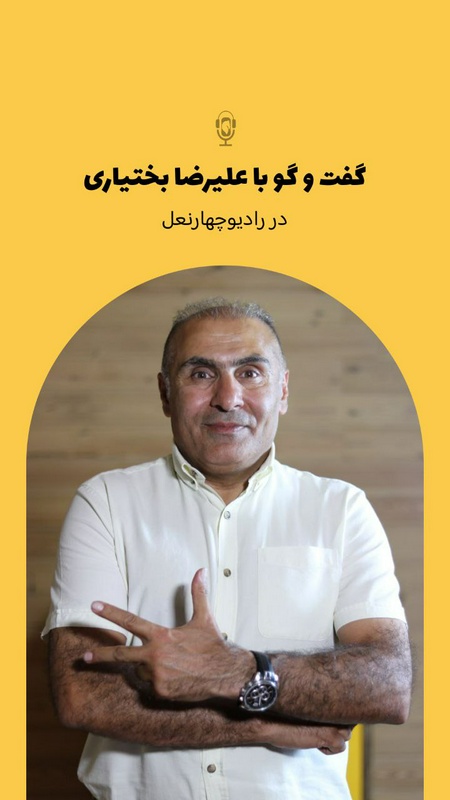
Master Alireza Bakhtiari on the Pyramid of Equestrian Principles
خلاصه
In the sixty-sixth episode of Radio Chahar Nal, Master Alireza Bakhtiari examines the pyramid of equestrian principles and analyzes topics such as rhythm and relaxation. This discussion emphasizes the importance of continuous education for riders and the necessity of coordination between science and skill in training horses. Bakhtiari points to cultural issues in Iran and speaks about the need for the older generations of riders to stay updated in order to transfer knowledge to the youth. He also emphasizes the importance of maintaining rhythm and appropriate speed in horse movements, stating that sudden changes can lead to performance issues. Additionally, Bakhtiari explores the specific abilities of each horse and the impact of its age on performance in competitions, calling for the design of suitable competitions to prevent unnecessary pressure on young riders. Finally, there is hope for improvement in conditions and decisions by the federation to enhance the level of equestrianism in Iran.
نکات کلیدی
- هرم سوارکاری به تمایز رشتهها کمک میکند.
- یادگیری مهارتها زمانبر است و بستگی به فرد دارد.
- اسبهای آماده ارزش افزودهای دارند که اسبهای جوان ندارند.
- ترکیب علم و مهارت برای حفظ کیفیت اسب ضروری است.
- آموزشپذیری باید ادامه داشته باشد تا از توقف در یادگیری جلوگیری شود.
سرفصلها
- اهمیت هرم سوارکاری — بررسی نقش هرم سوارکاری در تمایز رشتههای مختلف و اهمیت آموزش آن.
- فرآیند یادگیری در سوارکاری — زمان و تلاش لازم برای یادگیری مهارتهای سوارکاری و عوامل مؤثر بر آن.
- مقایسه اسب آماده و اسب جوان — تفاوتهای اسب آماده و اسب جوان و ارزش افزودهای که اسب آماده دارد.
- حفظ کیفیت و آموزشپذیری — نقش علم و مهارت در حفظ کیفیت اسب و اهمیت ادامه آموزشپذیری.
پرسشهای متداول
چرا هرم سوارکاری باید آموزش داده شود؟
این هرم بسیار مهم است و به ما کمک میکند تا تمایزی بین رشتههای مختلف سوارکاری قائل شویم.
زمان لازم برای یادگیری مهارتهای سوارکاری چقدر است؟
بستگی به تمرین و درک دارد؛ ممکن است یک نفر در ده سال به نتیجه برسد و دیگری در سی سال.
تفاوت اسب آماده و اسب جوان چیست؟
اسب آماده مراحل طولانی را گذرانده و ارزش افزودهای دارد که اسب جوان هنوز به آن نرسیده است.
چگونه میتوان کیفیت اسب را حفظ کرد؟
برای حفظ کیفیت اسب، باید علم و مهارت را در کنار هم داشت و تمرینات مناسب را انجام داد.
چرا برخی سوارکاران در آموزشپذیری متوقف میشوند؟
برخی سوارکاران به دلیل کسب مقام و تجربه، دسترسی به منابع و علم روز را قطع کرده و متوقف میشوند.
متن کامل گفتگو
Greetings to all dear listeners of Radio Heidari. I'm once again your guest with the sixth episode of Radio Chahar Na'al.
Episode sixty-six is definitely a very informative episode, as I had the honor of being with Master Alireza Bakhtiari to discuss the equestrian pyramid, which I will now share as a PDF file and on Instagram stories and the Telegram channel. However, because the discussions were lengthy and technical, I had to broadcast this section for you over several episodes.
For now, in this episode, you will hear about the first two parts of the pyramid, which are the topics of rhythm and relaxation, and I definitely recommend sending it to your friends, to those who are interested in learning, so they too can benefit from these invaluable and unique discussions. My entire effort in Radio Chahar Na'al is to raise the level of awareness and equestrian knowledge in Iran. I hope you enjoy listening to these discussions and pray for me as well. As always, I will leave a financial support link in the description of this episode for you.
If you see fit and would like to, make a financial contribution to Radio Chahar Na'al for better content production. My colleagues in this episode, as always, are the dear Farshid Jahanbazi, the cover poster designer of this episode, the dear Negar Goudarzi with her heavenly voice, and the lovable Erfan Moghadam, the composers of Radio Chahar Na'al. Let's listen to episode sixty-six of Radio Chahar Na'al together in the name of God.
Bakhtiari, I am very grateful that you gave me this time and honored me by being a guest on the program. From the first day, you were aware of the production and process, and I tried very hard to invite you, but you always tried to stay in the shadows and avoid the camera. Finally, I had the good fortune to invite you. I am truly grateful that you took the time and became a guest. If you have any greetings, please go ahead so we can get to the main topics. I also greet you and the listeners of the radio. Greetings to you, dear.
We agreed to talk with you about the technical issues of equestrianism. Well, this will definitely become a podcast and its full video will be posted on YouTube. Because I will post this interview and the videos on YouTube as well. We agreed, according to the conversation we had with you, to discuss the equestrian pyramid, which is very practical, in detail. Now I will put it in the picture so others can see it. In Radio Chahar Na'al, what was the reason you accepted to talk about these issues? I mean, why did you accept that we should teach this pyramid?
In my opinion, this pyramid is very important. Although with jumping, we can make some distinction because in jumping we do flatwork. This pyramid was created by the Germans and is very good and complete, but we should proceed with it to a certain extent. From a certain point, it reaches collection, if the pronunciation is correct, cadence or kidance, which when it reaches there, it is completely professional.
I think we should put what we do as flat and groundwork. Of course, in this pyramid that has been formed, we are exactly on this path and complete it, but we should not get immersed in it because we should make a distinction between us and dressage, as jumping and dressage are two completely different disciplines. We cannot come and do exactly all the things they do. Firstly, it is not in our specialty to go to that stage. The second issue is that it is not in our favor, meaning that even the quality of their canter for jumping may not be in our favor.
Right, the point is that many people now in Europe, like Patricia, do not use the word flatwork and it is the same dressage that depending on your needs, its levels go higher. For example, for jumping, the basics are at the level of groundwork and softening the body. But she said not to use the word flatwork because she believed that sanctity...
In my opinion, it is the opposite. I mean, if we say we work in dressage, it might be an insult because they go to passage and piaffe and many other things. We do not do those things. Our goal is something else. They are two separate disciplines and we should not use their words. In my opinion, maybe I am wrong, but in my opinion, we do flatwork and our work is completely different. We take the base and background from them, but our path completely separates at some point and becomes two separate branches and two separate disciplines. Right, the point is...
Be sincere. The point is that someone who wants to go through these three stages of straightness, changing the center of gravity, and finding balance under their body, as you say, how much time does it take and what base should they go through to reach this understanding? If you mean how much time the horse needs or how much the rider needs, how much time does the rider need to learn the skills and feel them, it depends on practice and understanding. One person may reach it in ten years and another in thirty years. Because this is a long path, even if you know what to do, you have to work with the horse for years to reach there. I wanted to get to this point exactly. Well, they go and buy a ready horse. I mean, the difference between a ready horse and a horse that is not ready and is young is exactly in this. I mean, they do not accept the cost of these stages and buy ready because these stages take years and if someone wants to go...
Years later, go and as you say, spend and invest time to reach that stage, well, they come and buy a ready horse at the beginning. That is easier. Someone else has already taught them and that is the money they pay for this added value. Exactly this one piece. Right, now this added value that you say, well, we are now ready to buy and ready to use. This discussion, as the English say, how much skill does its maintenance require? I mean, again, we should not as riders...
Let's see what response we should give. It can't really be predicted, but I know that learning takes time and understanding it takes a lot of time. It takes years to understand these technical subjects. Look, we have an expertise, a skill, and a science. You may acquire the skill through a lot of practice and effort, but if you don't have that science, you don't know what the right practice is, and these things happen to you. Even if a fully trained horse comes to you or someone else, you may not be able to maintain it.
Because you don't have the science. But when both science and skill are present, these two together, if they give you a young horse, meaning high-level, if they give you a worked horse, you keep it at the same quality because you know its exercises and you know in what state and direction the horse should be and in what direction you should improve its quality day by day.
Some things you also have to practice constantly to maintain them. Suppose I want to reach that point now. We couldn't set a time because it directly depends on the talent and effort of individuals. In what conditions I am and what needs I have and what elements I need to reach this knowledge and bring up that sprout and keep it up there, meaning in a forward-moving graph, not a sinusoidal movement. What does this require? Knowledge. All students must constantly research, constantly learn and study. It is very important that everyone constantly learns and doesn't think about stopping being a student. It should be like this, everyone at every level. It doesn't matter. You now think, for example, does Markus Ning in Germany, when he is a member of the German national team, not have a coach? They definitely have their national team coach. Why? Because the one who is riding and the one who is on the ground may see things. Of course, at that level, when they see a subject, they completely consult with each other. My view is this because I have lived a lot in the atmosphere.
Almost the consultative state seems like this to me. He says, well, now let's do this or that. Then he realizes. But you can't ignore the opinion of that coach and the one who teaches. They consult, do it again. Again, many times the one who is on the ground says more correctly than the one who is above. Whoever it wants to be. That's right. Unfortunately, in our system, we suffer from a cognitive error that if now because we get a position or rise in a ranking, what happens is that we stop learning.
Meaning access to references and resources and current science is cut off and they become trapped in the experience trap. For example, 50 competitions with this long system, I got a prize or now someone comes and says Mr. Rasoul, you shorten it. Well, this is very difficult for him. This is one of the problems we unfortunately have in Iran that as the rank and abundance increase, now we also get a result, we stop. How should we prevent the stopping of education? Is this personal or should the federation push or culture? I don't understand, we get stuck in it, Ali.
In my opinion, most problems are cultural. Meaning when those who are pursuing research have newer things to say, do newer work, they themselves are encouraged for others to go and learn. When the words become repetitive, meaning you constantly hear people saying the same thing or similar things and there is no new word, almost here it can be said that it can be understood that everyone has gone forward to a point and they don't want to go further. Maybe because they don't see the need anymore.
Yes, they don't go further because they don't see the need. But when you have new words or new work, those who are more advanced and then have new words, others are now forced and need to go research and or know how much they have fallen behind and go update themselves. In the adult system, we see kids who are really in their 30s to 40s, they are getting good results fairly. Meaning if I want to name now, Davood Pour, Ramin Shahabi, Mohammad Hosseinnejad, Gim Habibi.
Bahram is good, all from the 60s from Ramin and Ramin Shahabi is from the 70s. You see that they fill that gap, meaning the experience gap with being up-to-date. In many places, competitions pass that. Meaning that winning prizes and ranking from above unconsciously keeps getting younger. As in the previous competition, a young person whom I had never seen win a prize in any category came and took the biggest prize of the year and won. I forgot his name, I think it was Saberi, Amirhossein Saberi if I'm not mistaken. And we are seeing this in the new generation.
But unfortunately, I feel that generations that have aged a bit stop somewhere in learnability. Because I know how you have lived. Wherever you have earned money, meaning you have gone to Europe and worked, you have worked hard, you have endured hardships. This is not personally in you, no, it's not about me personally at all. Firstly, if it is supposed that young people never come and always with old and big names always be at the level, well then nothing. Completely close it and say that only equestrian and the position of 12 people is not. Meaning young people should be very pleasing, it is very good that they come. One topic that is very much in equestrian is that motivation. For example, if I name someone now, maybe Mr. Davood Bahrami has jumped competitions many times, became second, I don't know what happened, well his motivation decreases. Another 10 times, for example, I jumped in the 140, 150 competition, I became second, first, third, now what should I do again the eleventh time? This motivation decreases but that young person has the motivation and he comes. Well, naturally now it is his share, his right. He comes and takes it. The next generation and then the next generation Mr. Davood Bahrami's work, to whom I have a lot of respect, I have respect.
Top was a very incredible rider and now in the time of the Shah, many people had a lot of opinions about him, a lot of opinions and the information I say is not just for nothing. I really know that maybe many very high-level people exactly had opinions about him to take him to the Olympics and so on, he was so talented. Well, in my opinion, now it's his apprenticeship. He should come and put all his effort, I don't know if he is doing it or not, he is very limited.
This old generation should be brought into education. They should come and be placed alongside motivated young people, and this cycle continues. This is what is happening worldwide and in all fields. Now, a question with respect to all veterans: do you think our veterans are so up-to-date, meaning they are receptive to updating, that they can transfer this up-to-date knowledge? You see, when you ask them and they either take a class or start giving training.
Interviewer: So, without telling them anything, the reason behind it is very important. We move forward for progress, but now the new generation really cannot learn without reason. This generation, unlike the old ones, when they want to teach, they do not find motivation for learning and teaching. They are forced to go another way, or this motivation does not arise for them. The motivation for teaching is first to acquire knowledge and then to disseminate it. When you have the motivation to teach, you must acquire knowledge to be able to disseminate it. Well, let's move on to the pyramid, which I will say I will put its picture in the videos for you to see. The base of this pyramid, meaning the foundation of the pyramid, is the word rhythm. What is rhythm?
This is mentioned in all books, all trainers have referred to it. We should try more to go towards things that are less heard. This is my opinion, but I try to be brief. Well, everyone knows that when they listen to the step, there are four beats: 1 2 3 4. In trot, it is two beats: 1 2. This means that because of those beats, it takes steps or is in threes. Correct. The point is that these should be done completely and correctly. These four, these two, and these three should be done completely correctly and at the right time. Meaning when the rhythm goes step 1 2 3 4 1 2 3 4, it should be like this. It should not be that a pause occurs and suddenly becomes three-fourths. This 1 2 3 4 should be the rhythm. Meaning consistently going 1 2 1 2. Meaning it should always be this, not suddenly fast in one place, slow in another, and place the order of hands and feet completely correctly. The same step without suspension and...
Four sciences with a suspension that it has, and I must have this little gold of them. And then we reach speed, meaning the same tempo you mentioned. That too should be in its own measure. For example, consider a pony horse with a big horse. Both are moving correctly. Well, if you look, the speed of the pony's hands and feet is much more. Yes, this one is much slower as it goes. Which one is correct? Both. Both. This one is going with its own state and nature. This one is going with its own nature. If I want to summarize your word, each...
Conformation 15 horse 170 wants this tempo of its own. Meaning you cannot make these the same. For example, if you want to take a 150 horse next to a 170 horse, if it cannot go stretched, its hands and feet will become faster.
It increases the speed of hands and feet, and this is not good. Meaning it should be in its own state. Yes, well, we have this so far. Of course, now we have stretched rhythm, we have collected. That speed should not be up and down. Meaning when we tell someone to go stretched, it does not mean to take their hands and feet faster. Stretch its step. It comes to rhythm if it stretches completely or collects the step, but if it increases the speed, it means it no longer has it. And now this happens in the step, it happens in the gallop. Now a question arises, it may be very questionable for them that...
How do we know our rhythm is correct? Is it hitting the tune correctly and is the initial step at the right time? The problem is from somewhere because it has this in its nature. Correct. Usually, where does 90 percent go wrong? If you look at this rhythm, the base is the first stage. It means to intervene as far as the rhythm does not fall apart. Meaning it is nature that how the step goes, how we want things not to happen. Now what happens? I mean to say more clearly.
For example, if you want the step to go very collected or be very in the horse's mouth, the horse's step rhythm becomes very collected and no longer has that rhythm. Meaning suddenly you see that like the state it goes, if you bring a film of a camel that is stepping or running, you see that it becomes another state. Meaning I cannot explain it completely. Maybe it can be said with a film. Now or, for example, in trot when they want to collect a lot or open too much.
That the horse's speed, meaning the speed of hands and feet goes up instead of the rhythm being stretched, the speed of the device goes up. We in Hamedan call it having its own yarghe. Or, for example, in gallop, it falls to the point where it no longer has suspension, it becomes like a step. Meaning it has but without short suspension. Very besides its shortness, it does not have that method. You can slow down, meaning that state means it does not have rhythm. But that natural rhythm is the same thing that you have when the foal comes into the world, it goes step. Correct.
What we do, whatever we are going to do, we should not take it from it. Because of this, this first base, this first base, this rhythm base, this pyramid you are talking about. For this reason, we should not pour this nature when we want to do those upper works. Now in jumping, where is this rhythm very important and where does it fall apart? Now besides that, they may tighten or collect a lot, and rhythm in our nature creates the same problem elsewhere. In jumping, when we come, rhythm means how to open, how to collect.
That it is suitable for our jump, suitable for our parcours. When we want to open, if, for example, we are with a 3.5-meter step, we want to open our horse so that our rhythm does not fall apart and then becomes 3.5, the next step 3.6, the next step 3.
70, the next step 3.
80, the next step. But those who are some people, come with a 350 step, want to open, it becomes three eighty, then three seventy, then three sixty, then 3 and 70. Did you notice again? Yeah, meaning it does not have rhythm. So when we want to open, we do not open suddenly. There exactly the same thing happens that...
We have the rhythm suitable for jumping. Now I am talking about jumping. We come or want to collect. If we are collecting with a 4-meter step, it becomes three ninety, three eighty, three seventy, three sixty-five. We do not suddenly come to become from the fourth 70, it should become three eighty, three eighty, then we go. This hierarchy is very important for maintaining rhythm. Important for what? Because if you have five opens, you come down, you cannot open the first step so much that the next four steps are after it. You pull, correct? Many people this happens to them...
The range comes down, it's seen correctly, it's completely correct, the feeling is correct, it wants to open, but it doesn't have rhythm training. When it opens, it suddenly opens too much and then has to go back. Whereas it can, for example, divide that one meter into six, for example, 15 cm. Now if it opens six times 15 cm, it should be like this. Or it wants to go back, it suddenly goes back, which forces it to go again, and this is a mistake. It means it should return with a rhythm, open with a rhythm. This is something that hasn't been worked on at home.
And this is one of those things you mentioned in the discussion. When you get a trained horse, you bring it, it knows these things. Then if you give it wrong training, you take these away from it. You can no longer take the intervals of those things that the horse has from it. You must know all these in ground work so that even the horse that knows can be kept at the same level. What a hard task it is. Now, in my opinion, it's not that hard.
Considering that they have their own experience, knowledge, and science, how should we maintain its stability? Well, let's go to the top of the pyramid, the upper level, the second level of the pyramid. In fact, I translate the topic of relaxation into Persian, but it is the same softness and calmness. What is this?
Softness and lack of tension. Well, this is a very important topic. Yes, you see the ability of a rider to communicate with their horse in such a way that there is no feeling of stiffness, hardness, and tension. Well, now these have signs. It means you can easily circle, and it doesn't matter. For example, the horse chews the bit, meaning it shows that it is comfortable and not mentally engaged with it. Of course, not firmly and those tensions themselves, meaning if.
It is severe, that itself is tension. Meaning if the bit is held very gently up, it is calm. But if it holds its tail up and constantly shakes it, it is still a sign of tension. Or its breathing is soft, it has soft breathing. Now if we went too far, it's another topic, but in this state where we do normal ground work, it has soft breathing. Another sign is that when we release the bit, it follows the bit down and its head doesn't come up. This itself shows that.
Right here it is soft. Because you know this softness is of three types: lateral softness, as I said, meaning you go in a circle and your horse takes a curve. If the circle becomes smaller, it is forced to take more curve, and if its muscles are not ready, it suddenly resists. Especially in young horses, circles should be large because they are not yet ready for small circles. Well, this becomes lateral, meaning by lateral we mean both sides, because when we turn to the right, that side is stretched.
When we turn to the left, it is stretched from the right side of our horse. Well, this shows that your horse has good softness in this, in lateral movements and in circles or not. We also need longitudinal softness, which becomes, for example, when you go on a lunge, that topline from tail to ear. When you go on a lunge, this is a longitudinal line, and here it should not have softness, it should have its own softness, and then joint softness.
Meaning you should not feel stiffness. Now if it has a disease, lameness, arthritis, I have nothing to do with them. That is veterinary work. We are talking about a healthy horse. By joint, of course, we don't mean the joint itself, but the ligaments and things around the joint, which if soft, you feel a special softness, and if not, you can train it to become soft. Meaning you must definitely teach that longitudinal with the same lunge and these so that the back of the hand becomes soft and also work on the lateral ones in circles and also in transitional movements those joints and ligaments.
And it really has an impact. And now let me tell you that the step of reverse transitional movements or transitional movements in general is good for anything and anywhere you look. In our work, in jumping, wherever you look, I think the main impact of most of the work is this one piece. Now I say transitional very major, certainly all of it, but it has a very significant impact, and then circles and courses and with these you can do these works.
Take the softness and softness and reduce this tension from the horse. Of course, we also have a mental tension that is also related to the mind, which is usually the rider's fault or that they have not been well trained. For example, on the first day someone rode the horse without the horse being familiar with the saddle yet and those initial stages of familiarity being completed, they suddenly rode it, and I don't know now this way.
They may frighten the horse for a long time or for the rest of its life and be in tension with it. I always forget. I heard a quote from the late Ramin Shaki who says in riding everything is the rider. How much do you believe in this saying? You see, horses are strange animals. They cooperate with us a lot. It means it itself really wants to do everything. You know, the perception of many riders and many people who work with horses.
Is wrong, thinking that the horse here has made itself, for example, dumb or ignorant. Here the horse is resisting. The horse is, I don't know, no, this has a reason, but the reason is us, the reason is not the horse. So you to this word the horse wants to cooperate with us, does everything for us. Well, it is clear, how does a horse that has not yet come under its feet want to jump 134050? There it sees it is not in its ability, it correctly diagnoses and stands, refuses or may this.
We have taken its trust from our rider. We have done something to it, for example, now we have done some things, a wrong step and many other things. Or we have brought it to the obstacle, for example, a hand has been hit for any reason and this trust has been lost. Well, it is not its fault, it is our fault, and it is very interesting that many of these horses you bring again and do a regular work and you see they come back. Memory is recoverable again, but it wants to cooperate. It exactly comes towards that now time also gives us that now we have another opportunity, meaning it always wants to cooperate. We confuse it.
The horse is a simple creature, very simple. We are the ones who are complicated. It is very simple. The horse goes into the pool, what does it think about? It doesn't think about the Olympics, it doesn't think about such and such a prize. It thinks about unity, about hay and hay and paddock and other horses and it is in this and then it waits for us to come and take it out and say well now what is the program today? I, for example, work interest, meaning it stays like a very very good child. We are the ones who have strange and weird expectations from horses and then it doesn't do it.
I don't know about the label of trickster, yes, we give it such things, although it really isn't. The reality is that it is cooperating with us, in every way. This also seems like art to you, meaning I feel like I'm giving a lesson. It's our art to understand how much potential this gentleman has for sports, and for what type of sport. It's like you are good for weightlifting or wrestling with this height. If I were there, I would have gone from wrestling to being in my body, I would definitely be a good wrestler. I'm giving an example, I can't, for instance.
Be a good weightlifter. My physical potential is this. Maybe, for example, I'm good at swimming until a certain height and for the same reason, it becomes 150. In this physique, it's not 150, it's biomechanics. This is the science of biomechanics. That is, based on that science of biomechanics, we come and say what our expectations from horses are. That too is a guess, we can estimate how far it goes forward. Well, naturally, there is a point here. Now maybe the expectations were higher, but now it has been discussed upstairs, it's better to say it.
Look, horses have a center of gravity. Their center of gravity is somewhere in the middle of their body, meaning neither right nor left and above the chest, where it is narrow, where the rider's heel is. Let's say something that the rider's heel is almost there. Now if there is a horse, it can be precisely determined as a better point. Well.
Where is my center of gravity? Around my navel, a little lower. If I want to jump over an obstacle that is, for example, 90 cm, my center of gravity is, for example, one and ten. If I want to jump one meter, I don't need to jump at all, just lift my foot and put it down. The center of gravity for some people is about one and twenty or thirty. Usually, a horse that is in the field just needs to lift its hands and feet and pass. We have seen many horses that they say jump with the chest, meaning you see that it hits the obstacle with its belly, neither its hand nor its foot has hit.
It has lifted its foot and hit the obstacle with its belly, meaning exactly with its belly. This is called jumping with the chest. Well, why? Because it hasn't jumped at all. The reality is that up to a height of 1230, it doesn't jump at all, it just gathers its hands and feet so as not to hit. For this reason, many riders should not raise their heads and many horses cannot or do not want to do this because there is no jump up to that point. Up to that point, we are just teaching it to gather its hands and feet. In the systems and course design classes up to 130, they call it a training course, meaning you should set a path for it to find itself and its body. They don't count it as part of the competition. For this reason, many of our riders cannot train a horse above 130 because the story is different there. You have to teach the jump to pass this point, meaning it comes and says well, we are supposed to go to the other side. We can't say I did this.
You must have a horse that goes above 130. That is, in my opinion, 130 is a boundary. Below 130 or above 130. Below 130, if it doesn't jump, it just gathers its hands and feet and goes to the other side. We don't care. Above 130, here is the start of the jump. Now that the training must definitely be different and more advanced and your awareness and knowledge should be more, for this reason too.
Many can and many should buy a ready horse. They should not buy a horse that cannot go beyond 130 or many horses cannot go at all. That is, there are many reasons and for this reason too when you want a horse if its hands and feet don't suit us instead of going to jump at forty, it's better to keep it at 120 or 130 until it receives complete training from behind on how to gather its hands and feet. That is, if the horse at 115, 120, 125 better understands to gather its hands and feet to go to a higher height, this is better training.
I myself usually never jump my horses at 135. It happens very rarely. I keep it at 130. In competitions, I keep it at 125 to 130 until I am sure that yes, it gathers its hands and feet well. Now I am also teaching it that height. Suddenly I go to 145 in the middle, I don't go anymore. It is usually like this. That is, I go fundamentally. I usually go to the extent that its experience and flexibility and body reach and its mind reaches. It has the potential to know how to jump. Now we use it. Now one interesting thing is that for this reason, in the Olympics, for example, the law says you are not allowed to jump in the Olympics under 10 years old. That is, the entry age of 9 years old, I think, 9 years old, there is no disagreement among scholars. But the point is that the horse must reach that maturity. That is, with the law they have set, they have practically controlled the wear and tear of horses and the so-called early retirement. That is, we ourselves also have an eight-year-old champion and in the Olympics, it is 9 years old and anyway up to one hundred and thirty, this is a boundary. That is, we must know that up to 130, I often say for youth competitions.
I always say in the federation for many other levels that we should bring it down for them. I have a reason for it. Because you first see its effects too. When we have a lot of young people, when we reach the youth, suddenly the number decreases. One of the reasons is that we don't have enough horses to jump above 135, above 130, and when you put 135 in competitions, you are automatically eliminating a series of young people with your own hands. Talented young people whose problem is not if they jump 135, the problem is elsewhere.
And for this reason too, it is better that we have an order in competitions to bring this young child to the youth and then transfer them to adults so that they do not cross this 130 boundary. They should come at 125, 130, at most 130 for the youth. They should not go to 135, 137, 8. We have seen that we had a parkour and this causes the youth to drop out. It causes a severe drop and anyway they go and do not return. In riding, the problem is very much.
We have limited good resources. It's a reality. That is, I come, our biggest problem in the Iranian equestrian system is limited resources. Whether it's a club, a coach, a trainer, I don't know, a breeding center. Yours, for example, you have built a breeding center here. That is, your club setup is based on a breeding center. Now, besides that, the professional system of the arena and these are for breeding foals, they are screened. Two-year-olds are together, we don't have three-year-olds. Really, then we can't expect to plant with these limited resources. That is, our structure has a flaw.
This shows itself beautifully at higher levels. That's exactly what happens. For example, teenagers have 70 champions, 25. Well, how much do families want to pay? There's a reason for it. We place an obstacle above the horse's center of gravity. The reason is that we should place it below. Let's put this for the owners and for the youth. Our discussion is when we place it lower so that all these many people go into adults and there they go 150, 60. It's not a problem, but here let's not eliminate these. They are young and might.
Many talents might get discouraged. There are many strong talents among them. Why should they be eliminated here for nothing, for 5 seconds, 10 seconds? Everyone says I've discussed it many times, I sat and discussed it in the federation, they said why is it so important for 5 centimeters? Here is a line. You want to take 5 centimeters above the center of gravity, here it must jump. I don't reach the edge. Exactly because you need another organization, you need a good horse, you need good training, you need a good trainer, you need a good coach. That's why a lot of things.
It requires a lot of tools to go above 130. Well, when you can easily go up to 130 and bring everyone, well, just like the same teenagers 10, 15, it's not a problem. Why should we bring this here and then we don't have the tools, then all of them, I mean one or two of the same thing that the foreign coach, what was his name, you interviewed, Sabros, yes, who said that I rode, you were the same 2 years ago, now he was saying for 20 years that you have 10, 15 jumping.
It was very interesting that in the four or five times he had come to Iran, he clearly understood what we are doing here. Well, yes, if one day I see him, I'll tell him, I'll say where's the problem? The problem is exactly that we don't have the necessary tools in the youth category and we place an obstacle above the horse's center of gravity, and then it causes the kids to get discouraged. Many of them leave because there really aren't the tools, whereas we can bring it 5 centimeters below the center.
The topics are very different. I hope this decision by the federation is a good one. As I promised, I will broadcast the next episodes, which are the next parts of the equestrian pyramid, with Professor Alireza Bakhtiari in the coming weeks. I hope you enjoyed it. May God be with you and, as always, take care.