Controlling a runaway horse begins with building trust.
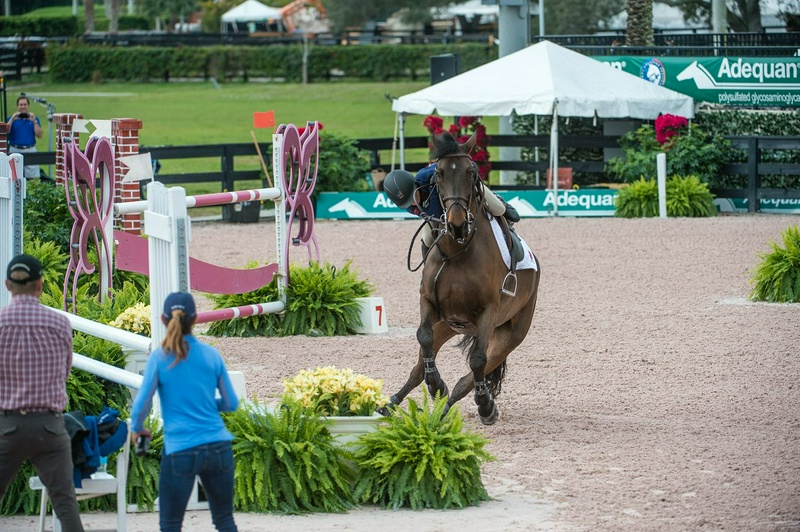
Crossing the moment when a horse is scared and jumps can be a frightening experience, and if it happens in the competition arena, it can result in lost points for the rider.
However, when your horse experiences a sudden fear, this situation can be an ideal opportunity to strengthen the bond between you and it.
Tik Maynard, an eventing rider and a supporter of natural horsemanship, said it is important to understand and accept that horses are inherently prone to such reactions.
Maynard explained, "Horses are animals that survive by fleeing from danger, and in nature, this trait helps them survive.
Most of the time, they react first and think later; and in the wild, this can help them escape from predators like mountain lions.
" He said in his experience, sometimes people mistakenly think that when a horse is scared of something and reacts, it is misbehaving or being naughty.
Although the term "naughty" or "disobedient" seems to be commonly used among riders to describe a horse's behavior, Maynard said he does not use such terminology.
He said, "The behavior of horses simply shows us what is going on in their minds.
They also react fearfully to unfamiliar things in nature; this is neither good nor bad.
It just means a horse is a horse.
In my opinion, it is more useful to view the issue in terms of desirable and undesirable behaviors.
You should do everything you can to reinforce desirable behaviors in your horse while ignoring or sometimes reducing undesirable behaviors.
" Managing a horse that is quick to scare can be challenging and requires the rider to act sensitively, precisely, and intuitively; however, there are also specific actions that can be taken to increase the confidence of a nervous horse when faced with potential stimuli.
Maynard here shares his views on the reactivity of horses, warning signs before a fearful reaction, and exercises that can be done at home to help the horse get used to new sights and sounds it may encounter in competitions.
He also explains what to do and what to avoid during a horse's sudden fear; and the role emotional readiness plays for both the horse and the rider when facing anxiety-induced behaviors.
What is behind this fearful reaction?
Maynard said that while all horses may react with sudden fear under the right conditions, they also have the ability to behave more thoughtfully.
He said, "If we want our horses to progress better in our human world, we need to strengthen that part of their being that is more thoughtful and acts less on instinctive reactions.
" According to Maynard, genetics can play a role in the reactivity of horses.
He explained that with specialized breeding, horses can be bred to be naturally less or more reactive.
He added that people typically do not specifically plan to breed a horse that is quick to scare, but they may, for example, be looking for a horse with more spirit for eventing, or want to obtain a horse with better jumping or movement for show jumping or dressage.
Minard said: "Some horses are generally calm, reliable, and stable, but they may react fearfully to certain sounds or seeing new things.
For these horses, the same characteristic should be addressed directly and worked on in the same situation.
" Some other horses may chronically suffer from anxiety and often seem nervous about almost everything.
These horses may pace back and forth by the fence or show repetitive behaviors like air sniffing and swaying in their box.
Minard recommends that the overall anxiety of this group of horses be managed with a more comprehensive approach.
He advised: "You should ensure that the horse is turned out appropriately in an open space and pay attention to the amount of grain it receives, whether it is stabled next to companion horses or not, and whether it has any other physical issues like ulcers that may exacerbate its overall anxiety.
" Recognize signs of imminent bolting Sometimes everything happens so quickly that the horse may not show any signs of bolting beforehand.
For example, Minard said if a dog suddenly jumps out from the bushes, you won't have much warning.
But in many cases, horses show clear signs of it before bolting.
He said: "You might feel your horse's heart rate has increased or its movement rhythm has suddenly changed; it either speeds up or slows down.
" He added: "Before bolting, horses often raise their heads and stiffen their necks, or they turn their heads to get a better look at whatever is worrying them.
" Before bolting, you may feel your horse's heart rate has increased or its movement rhythm has changed.
It may also raise its head, stiffen its neck, or turn its head to get a better look at whatever is worrying it.
Minard said if you do not recognize these warning signs, or worse, if you try to push the horse beyond its comfort zone in a situation that it perceives as scary and potentially dangerous, the likelihood of it reacting strongly increases; reactions like sudden turning, kicking, rearing, or bolting away.
Also, if it is near an obstacle on the verge of bolting, it may suddenly stop.
Overcome fear together as a team Minard said when your horse is nervous or scared, this is a situation you can overcome together; and every time you and your horse solve a problem as two partners, your relationship becomes stronger in the end.
He explained: "If your horse is afraid of something, that’s not a bad thing.
It’s just something you’ve learned about its temperament, and your job is to give it as much time as it needs to emotionally cope with whatever it is anxious about.
" He added: "Especially at the beginning of your relationship with a new horse, you can use all these little moments to strengthen your bond.
" If your horse is reactive to new sights and sounds, you can work on desensitizing it at home.
Minard said: "One simple way to do this is to practice following an object while it moves away from you.
Most of our modern horses do not encounter predators like bobcats or mountain lions, but they do face things that evoke the characteristics of predators.
You can increase your horse's confidence by introducing it to new objects that do not have predator-like characteristics — things that move away from you slowly and rhythmically, like a golf cart.
Minard explained that anything approaching the horse with irregular movements or from behind, anything that appears unusually large or has an unconventional appearance, anything that seems to mimic its movements, or loud noises can all be perceived by the horse as signs of a predator.
This is why horses may not recognize a sleeping dog or coyote as a predator, but if a plastic bag flies towards them with the wind, it completely has the characteristics of something they should flee from.
Minard recommended starting by familiarizing the horse with new objects that do not have these predator-like features; things that move away from you slowly and rhythmically.
For example, follow someone who is walking with a dog or holding an umbrella, or even someone driving a golf cart, while they move away from you and your horse.
You may need to enlist the help of a friend for this.
Minard said, "It may seem simple, but this can be one of the best exercises for building confidence in young or timid horses.
Over several sessions, gradually decrease your distance from the object you are following until your horse is confident enough to even touch or sniff it.
After you have worked with your horse on objects that move away from it, you can introduce it to potentially scary but stationary things, like some obstacles.
Since you cannot follow an obstacle that is moving away — at least not without complicated logistics — Minard suggests using the approach and retreat method.
After working with the horse on objects that move away from it, you can familiarize it with potentially scary but fixed things, like some obstacles, by playing the approach and retreat game.
He recommended approaching the obstacle and calmly moving away before your horse's heart rate increases and it becomes nervous, then doing something else for a short while.
Minard said, "Then you can continue the approach and retreat game until your horse gains enough confidence to touch or sniff the obstacle — or any fixed object it is worried about.
You can even give it a treat when it approaches or touches the object as another way to positively reinforce its reaction.
Prepare your horse for success. Horses are generally afraid of new things.
Minard suggests that whenever possible, expose your horse to only one new experience or change at a time.
For example, if you are going to take a young or anxious horse to a competition for the first time and it has never traveled from its boarding riding club, going straight to the Rolex Stadium at Kentucky Horse Park is probably not the best choice.
Instead, a small training competition or an event with a calmer atmosphere would be more suitable for its first experience at a competition and would help build its confidence.
Minard said, "This way, you can gradually increase the pressure and excitement to help its confidence without overwhelming it.
Every situation is different from another, but overall you should create conditions as much as possible for your horse to have a chance of success.
The more you align with your horse's level of anxiety, the more strategically you can act to prevent it.
He says if it is helpful for you, make a list of all the various variables you might encounter in a competition and see how you can implement small changes one by one each time.
Maynard has said he has often heard riders say things like, "This spooking came out of nowhere" or "It happened for no reason."
However, according to him, spooking rarely happens without reason.
He explained: "It may be complicated to understand that reason, or this reaction may have occurred for several different causes, but there is always something behind the horse's reaction."
When your horse spooks, you have the opportunity to get through that situation together.
And every time you and your horse overcome a problem as a team, your relationship ultimately becomes stronger.
Maynard often thinks of one of his favorite quotes when training and working with anxious horses: "Not being able to predict something does not mean it was unpredictable."
He said: "If I don't understand what scared my horse, I note it down, I seriously blame myself for it, and I focus on being more present and aware to ensure I am truly reading my horses and what they are experiencing at any moment.
The closer the relationship you build with your horse, the more you will gradually recognize patterns, and eventually, you will be able to predict this behavior."
Maynard said if your horse spooks during a jumping round or in a dressage test, your reaction to that situation depends on several variables; how long you have had a relationship with that horse, how scary that situation is for him, how long you think it will take for him to calm down, how much experience you have, and what other actions you have taken to create conditions for your horse's success.
Maynard said: "This situation is somewhat similar to helping a 5-year-old child who is scared of bullying at school.
Many factors can play a role in how you respond.
What is that child's level of confidence?
What is his relationship with his teacher?
How many students are in the class?
Is he eating enough or has he experienced trauma in the past?
All these variables determine how you can provide the best help.
It is the same in many ways with horses."
When your horse is scared, what not to do Maynard has found that many riders, unfortunately, react incorrectly at the wrong time when their horse is scared.
In contrast, doing the right thing at the right time can be helpful.
He said: "When a horse is scared of something and reacts, it is actually telling you it is afraid of something.
So the most important thing to avoid is any action that might increase its fear."
Maynard explained that although most riders do not intend to exacerbate their horse's anxiety, our emotions often get in the way.
He said when you are under a lot of pressure in a competition, if your horse gets scared, it is very easy for you to become anxious, frustrated, scared, or even angry yourself.
However, in such situations, riders often unintentionally or subconsciously transfer their fear, disappointment, and the weight of their expectations onto the horse.
Many riders make the mistake of reacting incorrectly at the wrong time when their horse is scared.
To help a nervous horse in that moment, avoid anything that could increase its fear.
Maynard said, "If your horse's fear causes you to lose your balance on its back even for a moment, the horse feels that you have tensed your body and are pressing your legs against it to regain your balance.
Losing balance on your part is not an emotional reaction, but in that moment, it can scare the horse even more.
" For this reason, Maynard believes that in such situations, you should put yourself in a position for success regarding balance, coordination, mental resilience, and emotional readiness so that you never exacerbate the horse's fear.
He noted, "Now that I am the father of two young children, I compare this situation to helping a 2 or 3-year-old child who is scared of something.
You need to remain emotionally balanced and show your child that you want to understand what they are going through.
That is why you should always prioritize your relationship with the horse and its confidence over the outcome of the competition so that it learns to trust your judgment.
" Maynard emphasizes that sometimes you, your horse, or both of you may lose your emotional readiness.
He calls this situation "emotional hijacking."
Whether this happens during a training session or in the middle of a dressage test or jumping round with the horse, Maynard immediately asks himself what his horse needs at that moment.
He emphasized, "If you can help your horse, it will also do its best to help you.
Focusing solely on yourself and the blue ribbon will ultimately benefit neither of you.
" He added, "It is also important to ask yourself every few seconds what it needs, as this need can change in an instant.
" Whether you are training or in an important competition, if you feel that you and your horse are losing your emotional readiness, it may be wise to stop and get feedback from your coach.
Maynard said that if you are experiencing "emotional hijacking" and cannot regain your focus, often the wisest decision is to stop what you are doing and then get feedback from your coach or mentor.
He noted, "Especially when you and your horse have lost your emotional balance, pushing through the rest of the test at all costs and finishing with a score of 60 percent or less will likely not help you achieve a better result next time.
" He added, "If it has any effect, it may worsen your result next time.
" Prioritizing the horse You have probably heard this phrase often used by many in the equestrian sports community: prioritize the horse.
Maynard said that of course, people do not mean it literally in all situations.
If your only choice is to either run over a baby carriage or cause your horse to spook, it is obvious that you prioritize the child over the horse.
Minard said: “From a true horsemanship perspective, prioritizing the horse means placing the relationship you have with your horse above its performance; whether it’s going to execute a dressage test, jump a course, pull a cart, or serve as a police horse.
Spending time with your horse outside of the usual daily routines can help strengthen the bond between you.
Here, Tick Minard is doing groundwork exercises with a retired Thoroughbred from the Remarkable 54.
He added: “Patience, perseverance, and prioritizing my horses also improve their performance.
When we talk today about ethical horse training, equestrian sport shines its best when riders and trainers have a genuine partnership with their horses.
” He continued: “This partnership with your horse has many aspects.
Trust is one of the most important of them and increases your chances of success.
This can be seen when a horse is afraid of something and the rider takes the time to calm their horse instead of continuing the training, making it easier for the horse to feel comfortable with that scary corner of the indoor arena or whatever else is causing its concern.
” Read more: For Tick Minard's tips on using groundwork techniques to create a stronger bond with your horse, click here.
About Tick Minard Tick Minard.
Tick Minard, an eventing rider and supporter of natural horsemanship, was on the Canadian national team for six years in modern pentathlon; a discipline that includes riding, pistol shooting, fencing, swimming, and running.
He competed in the 2007 Pan American Games, three World Championships, and eleven World Cups in this discipline before shifting his competitive focus to eventing.
Tick was on the initial list for the Canadian eventing team for the London 2012 Olympics.
He worked as an intern student with eventing riders David and Karen O'Connor, Ingrid Klimke, an eventing and dressage rider, Johann Hinnemann, a German dressage coach, and Bruce Logan, a natural horseman and cutting coach.
He also worked as an assistant coach alongside Ann Kursinski, a show jumping rider.
Tick, who is married to Sinead Halpin, an eventing rider, conducts eventing and natural horsemanship clinics across the United States, Canada, and the UK.
He spoke last December at the annual meeting of the United States Eventing Association on the topic of “How Horses Learn.”
For more information click here.
Source: Practical Horseman – Training