Preparing the appearance of the horse and rider on the day of the competition
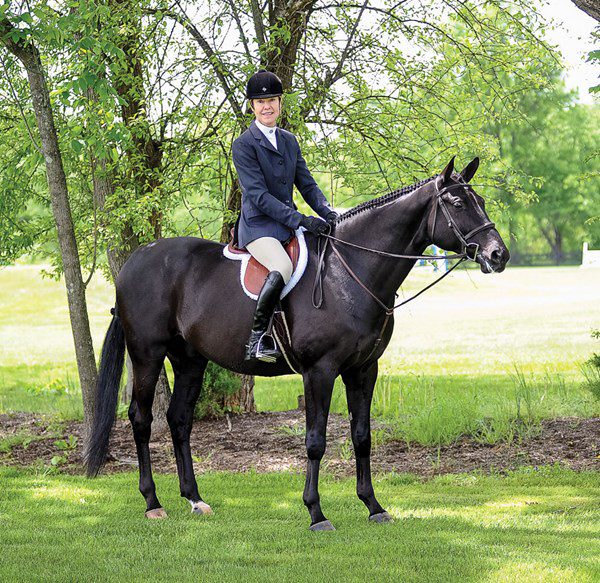
Your horse is ready, your lessons have progressed completely purposefully, and you are confidently cantering into the competition arena.
But have you forgotten something?
Could it be that dust has settled on your boots?
Is your saddle pad not as clean as it should be?
And what about that dirt on the horse's bridle?
Appearance — meaning how you and your horse look — may be the last thing you think about, but neglecting it is a mistake.
Carol "Haffy" Hoffman says, "Grooming is what can give you the edge needed to win.
It all comes down to attention to detail."
She is an official judge for the United States Equestrian Federation in the hunter and equitation hunter seat disciplines and is also a successful competitor in hunter.
She says, "When I judge, from the very beginning, I get a first impression from the way the horse and rider are groomed and how much attention they pay to detail.
"I take note of this, and it can even be decisive in breaking a tie.
The issue is the overall picture; a winner should look like a winner."
She adds that proper grooming reflects "respect for the sport, respect for the horse, respect for yourself, and respect for the judge," and reminds that both the horse and rider are athletes.
Haffy is the manager of the Market Street facility in Frenchtown, New Jersey, where she is a partner and co-founder with that Korsinski, an Olympic medalist in show jumping.
She has judged at many of the country's most important competitions, including the National Horse Show and Devon Horse Show.
Haffy has previously collaborated with Patty Hooper and Jane Cunningham — both members of the National Show Hunter Hall of Fame — and is respected for her meticulous management of Market Street.
She says, "I think when people are well-groomed, they ride better because they feel better about themselves.
After all, riding is a sport where the mental aspect is very pronounced."
Beautiful and safe grooming has many aspects: the running martingale is correctly adjusted, and the strap that goes between the horse's legs is not dangerously looped.
The saddle is positioned behind the withers to avoid pain in that area and not restrict the range of motion of the shoulders.
The reins have been passed over the horse's head so that Haffy can hold their entire length, and the stirrups have been pulled up so they don't get caught.
Haffy also believes that when a horse is well-groomed, it performs better.
According to her, Michael Matz always said the same thing.
Of course, while appearance matters, proper grooming is not limited to just that.
Haffy explains step-by-step what to do to ensure that the riding equipment is the right size and properly adjusted; a topic that guarantees the safety of you and your horse.
She also advises how to present an overall pleasing and correct image for hunters and jumpers, whether in competition or in a clinic.
And of course, above all, always make sure your equipment is sound, the leather is soft and free of cracks, and the stitching remains intact.
Before we delve into the details of grooming in various disciplines, there are a few points that apply to the grooming of every horse and rider, regardless of whether you are competing in hunter, equitation, or jumper: your horse's coat should be shiny; something that results from proper nutrition and plenty of daily care and grooming.
The horse must be trimmed; including the coronary bands, muzzle, and ears, so that no stray hairs remain.
If its coat is long, it should be clipped.
The equipment must be clean and well-finished, your bit and spurs should be shiny and polished, and the rider's attire should also be clean, well-tailored, and fit properly.
Ask an expert to measure the saddle correctly and when saddling the horse, make sure to place it in the right position.
In 9 out of 10 cases, the saddle is placed too far forward; an occurrence that causes pain in the shoulder area and limits the horse's shoulder movement.
The saddle should be placed just behind the shoulder.
A braided and neat mane shows off its neck better and makes its appearance more stylish.
The noseband is positioned just below its large cheekbone.
The keeper rings are tightened to prevent the cheek pieces of the bridle from becoming loose.
Haffi recommends that to keep the braided tail neat, you should band it so the horse does not ruin the braids between classes.
Mistake: The browband is crooked, the noseband is positioned too low, the bit is too high, and the keeper rings are not laid down; as a result, a loose and distracting end remains.
The martingale strap is dangerously loose, and the stirrups may get caught somewhere.
Before preparing the horse for a jumping class, set aside the equipment from the saddle and belly guard to the ear bonnet, boots, and saddle pad, neatly and ready.
Moto is a show jumping horse and does not need to be braided like hunter horses, but its mane is well-kept and pulled back, and Haffi is just as neatly and appropriately dressed as when riding in the hunter sections.
Rectangular saddle pads are acceptable in the jumping arena.
This one is adjusted so that the saddle sits high enough above the center of the pad and the back of the saddle does not rest on the seam; an issue that can cause pain in the horse's back.
Hunters and hunter equitation judging in hunter and equitation classes is subjective; therefore, when riding in these classes, you should make a good impression from the very beginning.
Keep your horse's mane and tail clean and neatly braided.
Braiding the mane and tail comes from the tradition of hunting equestrianism; a method used to prevent the horse's mane and tail from getting caught in bushes and thorns.
In the competition arena, this gives the horse a neat appearance and shows off its body shape better.
For the mane, ensure that the number of braids is such that the horse's neck looks elongated and well-shaped.
If you do not know how to braid, seek help from a professional braider and also learn the correct method yourself.
Untidy braiding looks unattractive and is distracting.
To prevent the horse from ruining the braids by rubbing its tail between classes, keep the braided tail neat with a bandage.
Make sure the cheek pieces of the bridle are properly fixed so that the keeper rings do not move.
Press their ends between your thumb and index finger to keep them in place.
If these pieces shift, the cheek strap may start to move; something that is a distraction for you, the horse, and the judge.
Adjust the throat latch so that you can fit four fingers between the leather and the horse's throat.
This strap should not be too tight to be uncomfortable for the horse, nor should it be so loose and low that it attracts the judge's attention.
Adjust the noseband so that it sits just below the upper jaw; the same large bone on the horse's cheek.
With the help of your trainer, properly adjust the fixed martingale; a device that has one strap passing under the horse's jaw and connecting to the noseband.
The correct placement for it varies for each horse.
If you can lift it with your hand and it reaches the horse's throat, it means the martingale is too long.
In this case, it may move while jumping and cause distraction.
Properly adjust the two retaining rings at the end of the martingale strap or breastplate that passes between the horse's legs.
The first ring on this strap should be positioned forward, close to the buckle, and the second ring should be placed backward, next to the girth.
Make sure this strap lies flat on the horse's skin and does not twist, as the horse's shoe may get caught on it during a jump.
In the worst case, the horse may not be able to fully extend its legs and could fall.
Use a well-shaped white wool saddle pad suitable for hunter and equitation classes that only frames the edge of the saddle; so that only about 2 inches of it is visible.
After placing the saddle on the pad, pull the pad up towards the front of the saddle to keep it away from the withers and not press against the horse's back.
Whenever you are leading your saddled horse or standing next to it, pass the reins over the horse's head so you can hold the entire length in your hand and have more control.
Do not throw the reins around its neck as you would when sitting in the saddle.
Also, keep the stirrups up until you are ready to mount, not down.
If the horse pulls its head back to swat away flies, the bit may get caught on them if the stirrups are down.
When fastening the jumping boots, first place them higher on the cannon bone and then lower them until they comfortably sit on the horse's fetlock joint.
Incorrect: If you pass the lead chain through the bit for guiding a horse with a running martingale and reconnect it to the lower ring of the chain,
.
.
.
.
.
.
a space is created where the horse can put its foot inside.
This can also happen if you pass the lead chain through both sides of the bit and connect it to the lower ring (small image).
For safety, only attach the lead to one side of the bit.
Jumping with a horse and equitation, Hafi says that although judging in show jumping is done objectively, not subjectively, neatness in this discipline is just as important.
According to him, proper neatness "raises the level of work.
Look at top riders; they present their horses and themselves flawlessly."
Whether you are striving to reach the Nations Cup team or an international team, or just competing in a local event, a horse and rider who appear neat and professional attract attention and admiration from others.
Hafi points out that team selectors and "influential people see attention to detail and doing things right; it doesn't matter if the subject is the correct size and placement of equipment or the neatness of the horse.
This says a lot about you."
If the horse's mane is not braided, do not let it fall to the sides, as it creates a messy appearance.
To train the mane, get special bands from the equestrian supply store and braid it to the right while it is wet, leaving it in that state for only two days.
More than two days may cause the hair to break from the roots.
To maintain the manes of the horses on Market Street, they are brushed daily with damp rice-bristle brushes.
Make sure the mane is short and tidy.
If the mane is too long, it may get caught in the reins.
Like in the hunter section, ensure that the regular noseband is positioned below the upper jawbone; this is especially important when using a flash noseband.
If the regular noseband is fastened too low, the flash will also sit low and obstruct the horse's breathing.
The running martingale used in jumping has less restriction than the standing martingale and features two straps with rings at the ends through which the reins pass.
Its length depends on personal preference, but to achieve an acceptable length, hold the straps up when they are not attached to the reins to see if they reach the withers.
Of course, you can make it shorter, but be careful not to overdo it.
When using a running martingale while standing next to the horse, make sure the reins are positioned over the horse's head; this is the opposite of how you would operate the reins when using a standing martingale or when you don't have a martingale.
Attach a lead chain with a shiny chain, not dull or rusty.
The rein stoppers that prevent the rings of the running martingale from rising to the horse's mouth and potentially getting caught on the bit should be adjusted to be 4 to 6 inches away from the bit; the exact amount depends on personal preference.
If the rubber reins are worn or have become sticky, replace their covers.
These reins provide better grip when the rubber is fresh, and if they are sticky, you won't be able to hold them properly as they stick to your gloves.
If you are using a rectangular saddle pad, which is acceptable in the jumping arena and may have a logo and number, make sure its middle seam is positioned directly under the front of the saddle and that the saddle itself is high enough above the pad so that the back of the saddle does not rest on the seam and cause pain to the horse's back.
Make sure your stirrups are shiny, not dull or rusty.
More importantly, they should be large enough that if you fall off the horse, your foot can easily slip out of them so you can distance yourself from the horse and avoid the risk of being dragged on the ground.
Buy hoof bells in the appropriate size; so that when the horse is standing still, they are only slightly above the ground.
Do not buy bells with edges that are too loose or too tall.
Some prefer this model because they are easier to cover, but in this case, there is a risk of the horse stepping on them.
If covering them is a bit of a hassle, they properly protect the heel of the hoof and prevent the horse from pulling off its shoe.
One-piece bells that are stretched and covered have a better chance of staying in place compared to models that are fastened with Velcro.
Before putting the hoof bells on the horse, make sure they are in good condition.
If they look like a piece has come off, they will have an untidy and inappropriate appearance.
The tendon guards, if they are the right size, should come down enough to cover the entire tendon and reach down to the fetlock joint.
However, often they are tied too low and interfere with the bending of the fetlock.
First, place them higher on the cannon bone, then gently lower them before tying to ensure they sit comfortably and correctly on the fetlock.
The ear bonnet should sit flat between the horse's eyes, and the ears should be neat and of appropriate size.
The ear bonnet should not bunch under the browband, and the ears should not be so large that the horse looks like a donkey or that their tips touch.
Only attach the lead rope to one side of the bit to avoid creating a loop.
If you pass it through both sides and then attach it to the lower ring of the chain, an open space is created that could catch the horse's foot if it lowers its head to rub its nose against the cannon bone.
Before entering the ring, ask someone to clean the saliva from your horse's mouth and dust off your boots, including their soles.
By paying attention to these small details, you will impress the judge with your riding skills from the very beginning.
Tips for riders: boots that are not tall enough can look untidy.
When leather drops and creases in the ankle area, the boot should only cover the outer bone of the knee.
Conversely, boots that are too tall may crumple and appear messy.
Nowadays, you do not necessarily need custom boots to look good, as there are many quality ready-made boots that match various foot shapes, sizes, and heights.
If the spur strap is too long, shorten it.
After passing the strap through the buckle, no more than about 1 inch should remain.
Tucking the spur strap under the buckle to make it look shorter does not create a good appearance.
The length of the jacket can be about mid-hip or, when standing, reach down to the bottom of the hip.
This depends on your preference, but the jacket should not be so long that it gets caught on the saddle's cantle.
Make sure the jacket is roomy enough and does not open between the buttons to reveal your shirt.
If you are participating in an informal program or clinic, wear a neat polo shirt or another collared shirt and tuck it into your riding pants.
If you cannot tuck your shirt into your pants, ensure it is short enough not to get caught on the saddle's cantle.
Ladies should not wear low-cut tops that reveal the upper body.
Avoid wearing a hooded sweatshirt; if the hood is down, it will constantly move, and if it is up, it will limit your peripheral vision.
Before entering the ring for a clinic, your horse should be clean, and your equipment should be tidy and properly fitted.
It is also better to have a formal and conservative outfit and tuck your collared shirt into your riding pants.
Have someone accompany you to help: check that the keeper rings of the straps are still securely in place.
Clean around the horse's mouth.
Remove dust and dirt from the boots, including their soles.
By paying attention to these details, you show the judge that you are a serious competitor, care for your horse, and are fully prepared to showcase your riding skills in the ring.
This article was first published in the February 2016 issue of Practical Horseman magazine.
Source: Practical Horseman – Training