3 principles for better horseback riding in any discipline
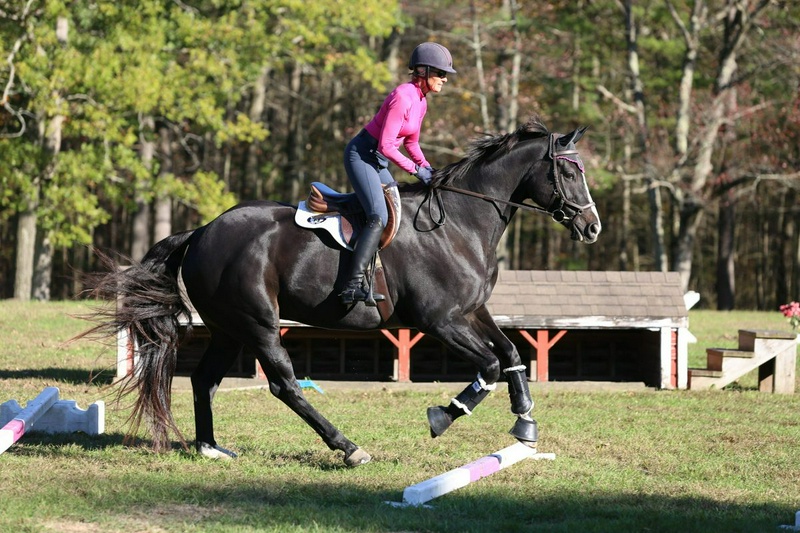
Whether you are going for a ride on the trail, preparing for a hunter class, practicing your dressage test, or training in cross-country, the fundamental principles of good riding are always the same.
From the perspective of Marcia Kulak, an experienced eventing, hunter/jumper, and dressage coach, these principles can be summarized in three words: rhythm, line, and balance.
She says, "It's like getting into a car. The car doesn't go anywhere until you do something. When you throw your leg over the saddle onto the horse, you have to take responsibility — and these three basic principles are your responsibility every time you ride."
Kulak has turned this perspective into an educational system that works across disciplines and levels throughout her professional journey, which has taken her to five-star competitions in Kentucky and England, as well as prestigious dressage and hunter/jumper events.
She emphasizes that this method is not complicated, but it is based on consistency; and it is this consistency that gives horses and riders the confidence to succeed.
Starting with rhythm According to Kulak, the first responsibility of a rider is rhythm. This may seem simple, but without a steady tempo, everything starts to fall apart from the very beginning.
Kulak explains, "Rhythm is the quality of the step in which you move, appropriate to what you want to do. Is the walk active and forward when you set off from the mounting block? Is the trot consistent along the centerline? It is your duty as a rider to create that."
She often begins her lessons and training sessions with transitions. According to her, repeatedly executing the change between walk–trot–walk mentally focuses the horse and encourages it to move forward in response to the rider's aids.
However, she emphasizes that the correct response must always be rewarded with a clear and distinct release of pressure, and then the same question should be calmly re-asked, so that ultimately a quiet aid from the rider elicits a good response from the horse.
She adds that as long as the horse is not moving forward and maintaining a steady rhythm, it is pointless to tackle more difficult tasks.
Marcia Kulak says, "I see people getting anxious about finding the distance. They start to push with their legs, pull, lean forward; all things they wouldn't do when working on the flat. But if you have rhythm, line, and balance, the distance will take care of itself."
Finding the line Once the rhythm is established, the next duty is to ride on the correct line. Kulak says, "Think of your horse like a train car; long and narrow. It is your responsibility to keep that car on the tracks."
Even the most basic ride requires precision: straight lines that do not deviate, circles that are truly round, and corners that are navigated with purpose. She encourages riders to challenge themselves by riding a few feet away from the wall, targeting markers across the arena, or riding on precise spirals.
She says, "It doesn't matter where you are going; whether along the long side of the arena or out of the arena for a ride, your horse must stay on the same line you have chosen. That is what keeps the partnership between horse and rider clear."
Maintaining balance The third component is balance; a balance that is achieved through the rider's "positioning."
He explains: “For almost every request you have from your horse, there is a correct position statement.
It is in the horse's DNA to learn through body language, so using the correct position statement is a very important part of effective and harmonious riding.
” He compares riding to yoga or Pilates and says: “If your body is crooked, the exercise won’t work.
But if you are aligned correctly — ears, shoulders, hips, heels — you can be effective with minimal effort.
” From here on, balance relates to awareness: knowing how your sitting and rising in the trot relates to the horse's hind legs, or which leg the horse is countering with.
He says it is these small details that make the difference between merely “going along” and having a real impact on the horse.
When the rider is balanced, the horse can also remain balanced.
When the rider leans forward in the saddle, tightens their body, or slouches, the horse loses both clarity and confidence.
The importance of clarity is a thread that runs through all of Koulat's teachings.
He reminds that horses are prey animals and have a very high sensitivity to pressure and release.
He says: “If they can feel a fly sitting on their skin, then they feel the slightest change in the rider's pressure or seat.
But if the aids are uncoordinated, some horses will no longer pay attention to it, while others will get hot and overreact.
In both cases, the partnership suffers.
” His advice is simple: ask politely, reward immediately, and repeat enough times until the horse understands.
He says: “This is how you build trust.
Progress is achieved in the same way.
” Taking the basics to the jumps When it comes to jumping, Koulat believes many riders let anxiety take over and then abandon the basics.
Koulat says: “I see many people panic when trying to find the distance.
They start pushing, pulling, bending; the same things they would never do on the ground.
But if you have rhythm, line, and balance, the distance will take care of itself.
” He likens this to baking a cake: if the right ingredients are provided in the right amounts and at the right temperature, the result is reliable.
But with poor preparation, no last-minute panic can fix the situation.
He reminds riders to focus on the responsibilities they already know when approaching jumps: maintain tempo, stay on line, and keep their body position.
From there, the jump is a natural continuation of flatwork, not a separate puzzle.
“What is Koulat's favorite way to apply all these points?
Cavaletti.
He says: “Perhaps one of the most underrated tools in horse training and riding is the creative use of cavaletti.
This tool can help riders at any level improve their skills while also contributing to the success and longevity of a horse's athletic career.
These exercises are not a substitute for jumping courses and competition preparation; rather, they help reinforce the training process and develop skills without increasing physical fatigue and the associated mental pressure.
” He laughs and says: “I am the queen of cavaletti.
I use it every day, with every horse.
Cavaletti is like Pilates; it strengthens the horse's body, improves rhythm and balance, and makes footwork more precise; all without the wear and pressure caused by jumping over high obstacles.
Marcia Kulak explains, "The beauty of cavaletti is that you can increase the level of difficulty without raising the height."
She emphasizes the importance of proper equipment and explains that lightweight wooden or PVC poles can potentially be dangerous.
If the horse makes a mistake, these poles may roll and cause the horse's leg to get caught and fall.
Instead, she recommends using heavy wooden poles made from 4x4 lumber, with beveled edges, placed on stabilizing blocks; blocks that she makes herself from 2x4 lumber.
She says, "If the poles are sturdy and heavy, horses engage their bodies better and become more precise in their footwork.
I want these poles to stay in place and not easily move from their position."
She reminds that cavaletti should be placed in a straight line with a distance of 4 feet 6 inches to 4 feet 9 inches apart.
Cavaletti set up at a distance of 9 feet can be practiced at the walk, trot, or canter.
The variety of these exercises is endless.
She emphasizes that to ensure accuracy, distances should be regularly measured with a meter.
Kulak says you can learn your own stride length by walking the length of a 12-foot pole; a skill that is very helpful when setting up exercises and when a meter is not available, or when walking a course and needing to quickly assess the distance between obstacles.
She explains, "The beauty of cavaletti is that you can increase the challenge without raising the height.
This builds confidence, precision, and strength in both the horse and rider.
Working with poles and cavaletti is essential for the mental and physical development of both the horse and rider.
Building confidence in footwork starts with proper spacing until confidence and riding ability are well established.
Anxiety usually reduces performance quality in both horses and riders; therefore, minimize this risk with safe and appropriate measurements so that both are prepared to face more challenging questions."
Marcia Kulak demonstrates the method of working on poles.
She adds that depending on the size, level of training, and experience of your horse, it may be necessary to adjust the distances, and it is important to consult a qualified instructor to ensure you are doing it correctly.
She also likes to combine a small jump with cavaletti on either side and keep the horses adaptable and ready by changing the fillers.
According to her, moving the poles to different spots in the arena prevents horses from becoming too accustomed to one position.
She said, "Even experienced horses will look at something again when it is placed in a new spot.
This is beneficial for them."
For Kulak, building daily habits has a clear message: ride with purpose every day.
She said, "These responsibilities—rhythm, course, and balance—are not just for clinics or competitions."
These must be observed in every riding, even if you are only practicing at home for 40 minutes.
If you practice them every day, they will become a habit.
And when they become a habit, you can rely on them under pressure.
"This is what gives stability to the horses and keeps the partnership between the rider and the horse strong.
He said that in all these exercises, if a mistake happens, it usually isn't supposed to be something big and dramatic.
Koulak continued: "No matter how much I emphasize it, it is still not enough that you should change the exercises creatively and move them around so that both your horse's confidence and your own confidence increase.
When you take these materials to different places and use different materials and components, the goal is for the horse to get used to these conditions and gain confidence.
When the horse understands what you want from it and you, as a rider, do your job correctly, the whole picture comes together.
That’s where the magic happens."
About Marcia Koulak Marcia Koulak.
Source: Practical Horseman – Training