Средний возраст не должен мешать вашим целям в верховой езде.
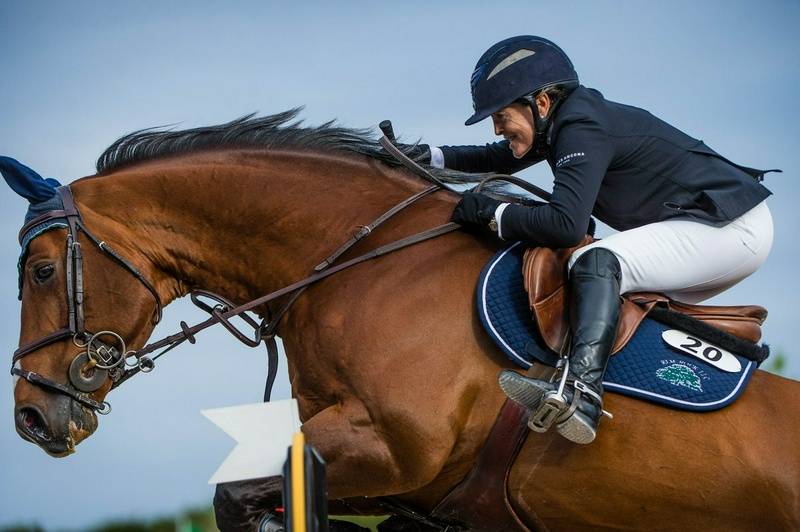
For women, accepting the reality that our bodies change in ways that are almost completely out of our control during middle age can be distressing and even frustrating.
This is especially true for riders who want to pursue their equestrian goals throughout the entire pre-menopausal period and long after menopause.
However, one of the valuable aspects of equestrianism is that as we age, we can continue to participate in this sport and make progress.
It is not an exaggeration to say that riders among today’s athletes have the highest level of performance continuity over the years.
Mary Hanna, the Australian dressage rider, was the oldest Olympic athlete present at the Tokyo 2021 Summer Olympics at the age of 66.
Hiroshi Hoketsu, a prominent figure in Japanese dressage, who was 80 years old at the time, could have become the oldest Olympic athlete in history if his horse had qualified for Tokyo that year.
Additionally, Laura Kraut, 60, and Margie Engle, 68, two Olympic show jumping riders, continue to compete at the highest level of equestrianism.
Engle said, “If you stay physically fit enough and avoid too many injuries, you can continue in our sport for as long as possible.
Horses do a lot of the work, but riders also need to be in very good physical shape to ride correctly.
For this reason, we definitely have to train physically much more than in our youth.
” Although the physical changes women experience in middle age are inevitable, equestrian goals can still be pursued by adjusting fitness programs to meet changing needs.
We spoke with five top riders from various English disciplines to review their practical advice and key fitness tips for coping with the changes of middle age while maintaining peak performance in riding.
Coping with hormonal fluctuations, hot flashes, night sweats, sleep problems, mood changes, loss of bone and muscle mass, weight gain, brain fog, dizziness, and joint stiffness are just some of the unpleasant and distressing symptoms that women experience during the pre-menopausal and menopausal periods.
Some women have mild symptoms, but for others, these effects can be so debilitating that they disrupt their daily quality of life and even derail their equestrian goals.
For women competing at the FEI level, standard hormone replacement therapy during menopause remains a viable option.
Estrogen and progesterone, which are among the most common hormones prescribed for menopausal symptoms, are not on the World Anti-Doping Agency's list of prohibited substances and are allowed both in and out of competition.
Testosterone treatment has a different status: testosterone falls under the category of anabolic agents by the World Anti-Doping Agency and is always prohibited, regardless of whether it has been prescribed for a legitimate medical reason.
A rider who requires testosterone treatment must apply for a therapeutic use exemption through the United States Anti-Doping Agency prior to competition under FEI rules.
However, for most riders going through menopause, more common forms of hormone replacement therapy do not require any special exemptions or administrative procedures.
Engel was fortunate in that she did not experience severe symptoms during perimenopause and menopause that would affect her professional career in show jumping, but she takes supplements for her bone health.
She said, "As women age, the risk of bone mass loss increases for us, which is why I take various supplements for bone density and strength.
When you ride, you definitely want your bones to be as strong as possible as you get older."
For Tammy Smith, an eventing rider, the experience was different.
Smith, who is now 52, became the first woman to win the Kentucky Three-Day Event CCI5 since 2011 with her victory in 2023.
She said, "I don't like to say that being a woman in this sport gives me an unfair advantage because I really don't feel that way.
Equestrian sport is the only Olympic discipline where men and women compete equally, and that shows that our sport requires a high level of skill and experience rather than just strength."
Although equestrian sports are among the few Olympic disciplines where women and men compete head-to-head, 52-year-old Tammy Smith, a five-star eventing rider, emphasizes that she has to train harder than her male counterparts in the gym.
Above: Smith and Leilah 3 navigate the cross-country course at the CCI4-S during the 2026 Kentucky Three-Day Event.
Smith noted that as she ages, she has to do more physical training than her male counterparts in the sport, including her longtime friend and fellow eventing rider, Philip Dutton, who is 62 and still competes at the highest level of the sport.
She said, "No matter how much we women train, we have to accept the reality that men are naturally stronger than us.
And if you're galloping through a five-star cross-country course and your horse isn't a thoroughbred, physical strength matters."
Setting a fitness regimen to maintain the best level of riding while Lauren Chamley, a Grand Prix dressage rider, spends a large portion of her waking hours in the saddle, this 42-year-old rider also goes to the gym three to four times a week depending on her competition schedule.
She said, "Don't get me wrong, I also don't like getting up early in the morning and dragging my sleepy self to the gym.
But I get up anyway and do it.
I go to the gym and train with a coach.
He really pushes me, but I love it."
Chamley said this program helps her maintain her flexibility, endurance, and range of motion as a rider.
She said, "If the only sport you do is riding, gradually some muscle groups become overdeveloped; that's why I think it's important to do other things physically.
I'm in my early 40s and have had a few injuries — none of them very severe — but my body is really in good shape."
She added, "With the exercises I now do outside of the time I'm in the saddle, I can ride well into the evening without getting overly tired."
Chameli added that she has been lucky to not experience much pain even after her injuries and believes this is a result of regular training.
She said, "When I started with my current group of horses, they were all very young, and I had to work in the arena all day at a light trot.
Now they are all at the FEI level, so we have to do high-level sitting trots, and that really requires a lot of work.
But these exercises have really helped me.
" Especially for riders, stretching the hip flexor muscles and all the muscles in the hip, glute, and back area is very important.
This common stretching movement in the shape of a cross or "number four" used in yoga and Pilates can help open tight hips.
Resistance bands are also useful for strength training and stretching.
Margie Engle always carries these bands with her while traveling so she can do her exercises when on the way to a competition.
Engle's fitness program includes a diverse set of exercises to help maintain her endurance, muscle strength, and flexibility — and keep her away from pain.
Like many top riders, Engle has suffered multiple injuries during her more than six decades in the saddle, including fractures in her collarbone, neck, and back.
Throughout all her rehabilitation periods after each injury, she has diligently adhered to the exercises prescribed by her physiotherapists and still performs them almost every day.
Engle said, "They gave me exercises to do at home and also while traveling for competitions.
This makes it easy to stick to a regular program because I don't have to go to a specific gym.
I can do them almost anywhere.
" She added, "I also do a lot of weight training and bring free weights and resistance bands with me when I travel.
These bands help with strength training, but I also use them for stretching.
" She has also incorporated a lot of walking into her daily routine and uses a stationary bike and other exercise machines when at home.
She noted, "I definitely train much more now than when I was younger.
" Engle said swimming is a very good form of exercise for riders because it puts less stress on their joints.
She recalled, "Many of my doctors prescribed swimming exercises for me to recover from injuries.
Swimming takes the weight off any injured joint or soft tissue, improves circulation, and keeps you moving without worsening the condition.
" To maintain the fitness necessary for riding, 52-year-old Alison Springer, a five-star eventing rider, has incorporated more strength training into her workout routine and also rides her Peloton bike, does stretching exercises, and practices yoga.
In this image, Springer and No Me Moan are seen competing in the cross-country phase of the Caskin Lexington CCI4*-S during the 2025 Kentucky three-day event.
Alison Springer, a five-star eventing rider, is 52 years old and said that as she ages, she has had to do more strength training to maintain muscle mass and stay fit for this demanding sport.
She said, "Overall, I am a very active person and I perform well in regular riding with my Peloton bike.
I have always been into stretching exercises and do yoga.
However, as I age, incorporating strength training has become more important than ever.
When I felt tired after daily riding on a number of my high-level horses, it was more about my physical strength than my cardiovascular fitness.
To maintain focus, you need to be both prepared and strong.
If you can't concentrate, doing your job for your horse becomes almost impossible.
Rebecca Hart, a Paralympian who has participated in the Paralympic Games five times, won three gold medals with Floratina at the Paris 2024 Games and also achieved team gold at the FEI Para Dressage World Championship this summer.
She suffers from familial spastic paraplegia, a progressive condition that causes gradual weakness and severe stiffness in the leg muscles.
Hart said, "This means that if I let myself go physically, rebuilding any muscle I have lost becomes harder for me.
So, the simplest way is to maintain my physical fitness.
But like anyone else, this was much easier in my 20s than at 41.
I enjoy swimming as a way to keep fit away from the horses, but I am also lucky to be in a position where I can ride several horses every day, which is a big part of my fitness.
" The 41-year-old Rebecca Hart, a Paralympian, enjoys swimming to maintain her fitness and continuously works on her physical condition, as her specific condition makes building and maintaining muscle mass more challenging.
Here, Hart and El Corona Texel compete in Grade 3 Para Dressage at the 2018 World Equestrian Games.
Embracing a healthier lifestyle and coping with change, she explained that as she ages, she pays more attention to what she eats and strives to drink more water and get enough sleep.
Her husband, Steve Engel, is a horse veterinarian and specializes in chiropractic work.
Engel said that due to the physical demands of his job, he is very disciplined about his diet and exercise.
He said, "This has made me more mindful of my health and to some extent follow the same routine she does.
We even work with a physiotherapist together.
" Engel suffers from a rare and chronic condition called chronic active Epstein-Barr virus, which flares up from time to time.
He said when this happens, he experiences severe fatigue and is no longer able to ride.
He explained that these flare-ups are triggered by stress, lack of sleep, and when his immune system is weakened.
Engel said, "When it hits me, it really knocks me out.
That's why I have to be very careful about my stress and make sure I get as much sleep as possible.
" If you have a desk job or sit for hours every day, this directly counteracts your ability to maintain proper posture in riding.
To combat this, try to stay active throughout the day as much as possible.
Grooming, saddling, and stable work help keep riders active.
In this image, Rebecca Hart is cleaning boxes.
She pointed out that the lifestyle of riders generally contributes to physical and mental health.
Working with horses requires a lot of low-intensity physical activity; from grooming and saddling to feeding the horses and doing stable work; therefore, riders are usually continuously active.
Engel said: "As we age, staying as mobile as possible is key.
If you remain still for too long, as you get older, everything dries out and stiffens much more quickly.
I have the Aura ring, and if I’ve been sitting for too long and need to get up and stretch my body, it alerts me.
" He added: "This is very similar to what we do with our older horses.
We try to keep them moving as much as we can because it’s beneficial for their joints, circulation, muscles, and actually everything, keeping them more prepared.
" Engel has also incorporated recovery treatments post-exercise and post-riding into his overall health program; including PEMF pulses to help with muscle pain and magnetic wave therapy to improve circulation.
He also says soaking the body in a hot water bath with Epsom salt and arnica herb is helpful for reducing muscle pain and creating relaxation.
He said: "Steve and I sometimes use ultrasound therapy with our physiotherapist, and I have another therapeutic belt that provides heat and vibration, which helps my back.
Even when we are younger, the constant impacts and repetitive strain from riding are hard on the back.
" Margie Engel says that, as it applies to horses, being more mobile is a key factor in staying in the saddle as we age.
All five top riders featured in this article, aged between 41 and 68, agreed that strength training plays a vital role in maintaining fitness for riding.
Aviva Nbesky, a dressage coach and one of the hosts of the podcast "Dressage Today," is 68 years old and said part of aging in the sport of riding is learning to still enjoy horses even when riding goals change in later years of life.
She said: "I just keep doing my work and have accepted that as I age, some things become harder; and I’ve also accepted that I no longer have that same drive to achieve the things I once wanted.
I didn’t push through midlife with pressure and force.
I’m no longer at my peak fitness, and I have no problem with that.
" 4 tips for coping with midlife 1.
Make movement the foundation of your day: If you have a desk job or spend hours sitting in a car every day, this directly undermines your ability to maintain proper posture in riding.
Shannon Peters, a Grand Prix dressage rider, said prolonged sitting causes tightness in the hip flexor, hamstring, and quadriceps muscles.
She said: "These are exactly the muscles that need to stay flexible and supple in the saddle.
When these muscles are contracted for too long, the glute muscles weaken, hip range of motion is limited, and unnecessary pressure is placed on the lower back.
" If possible, try to incorporate "exercise snacks" into your day; a term coined by Howard Hartley, a cardiologist and associate professor at Harvard Medical School.
At least once every hour, stand up from your desk and walk for 30 seconds to 5 minutes.
Any extra walking you can do throughout the day is beneficial; in the store, in the barn, while tidying up the house, and so on.
2.
Take time for stretching: As we age, our flexibility often decreases.
However, for effective riding, you need to have softness in your body on the saddle.
Biz Magariti, the longtime coach of Boyd Martin, a five-star eventing rider, explained that whenever you engage in an activity that requires staying in a fixed position for a long time or repeating a movement continuously, like riding, your body experiences more tension.
Stretching exercises play a key role in creating balance among the muscles that you use excessively or insufficiently on the saddle.
Yoga and Pilates can also help reduce the stiffness or tension that long-term riding creates.
She said, "Specifically in riding, your pelvis is always in a flexed position, and this leads to stiffness.
Therefore, it is important to find a movement method like yoga that can somewhat neutralize this tension and help the deep muscles of the pelvis and lower back to open and relax so that you can ride in the most effective way.
" Yoga, Pilates, and stretching exercises can all help balance the muscles that you use excessively or insufficiently on the saddle.
3.
Combat chronic stress: In middle age, many of us are simultaneously managing high-pressure jobs, balancing our family and social lives, and trying to spend as much time as possible in the saddle.
To minimize the negative effects of chronic stress, it is very important to set aside time each week for relaxation and rest.
Jade Teta, a doctor of integrative medicine, personal trainer, and founder of the health and fitness program "Metabolic Renewal," which addresses women's hormonal balance during aging, stated that walking slowly and at a gentle pace is a very effective tool for reducing stress levels, and if you can walk in nature, its effect increases even more.
In Japan, this practice is called Shinrin-yoku, which means "forest bathing."
Teta added that walking helps reduce the stress hormone, cortisol, and has a synergistic effect alongside your other exercises.
Walking slowly and at a gentle pace is a very effective tool for reducing stress levels, and if you can walk in nature, its effect increases even more.
In Japan, this practice is called Shinrin-yoku, which means "forest bathing."
Hot baths or saunas — warm enough to make you sweat but still relaxing — are other suitable tools for managing chronic stress.
Additional tips for relaxation: Prioritize sleep.
Spend time with friends and family.
Get a massage or use self-massage techniques like foam rolling.
Practice meditation or Tai Chi; a method that combines mindfulness with slow and rhythmic movements.
Teta recommended incorporating these times for rest, recovery, and relaxation into your daily routine as much as possible.
4.
Make changes whenever necessary: Although Magariti strongly advocates for having regular schedules and routines, she also advised that when a program is no longer effective for you, change it; and emphasized that this is especially important for women.
She said, "When we experience significant hormonal changes as we age, this affects how our musculoskeletal system functions.
So, stick to your routine as long as it is effective for you.
But when it no longer works, reassess and make any necessary changes.
You may notice that it is necessary to make changes every couple of years.
» You can access the fitness videos for riders through our special members' platform, "Practical Horseman Plus."
Source: Practical Horseman – Health