What do recent studies say about horse welfare?
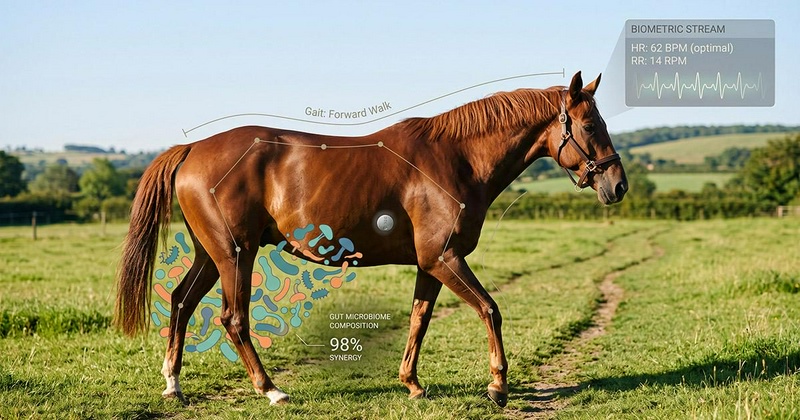
From recent findings about the horse gut microbiome to advancements in gait analysis and wearable monitoring, contemporary research provides more avenues for horse owners and veterinary professionals to better understand subtle changes in health status and make informed decisions sooner.
So what do the latest studies say about horse wellness?
The emerging picture is clear: individualized, evidence-based, and preventive approaches are becoming increasingly important in horse health management.
What are the most important trends in horse wellness research?
Current research in the field of horses is increasingly focused on these areas: understanding the gut microbiome and its connection to overall health, more objective measurement of movement and biomechanics, combining conventional veterinary practices with complementary approaches where evidence supports their use, utilizing wearable technologies and data to monitor horses outside of the veterinary clinic, earlier identification of health changes, and transitioning from reactive treatment to preventive and individualized care. These areas are not separate.
In many cases, they overlap with each other, resulting in a more comprehensive picture of horse health and welfare.
1.
The horse gut microbiome has attracted more attention. The gut microbiome has become one of the most active research areas in horse nutrition.
The horse's digestive system hosts a complex community of microorganisms that aid in fiber fermentation and play roles in digestive and metabolic functions.
A study published in 2025 describes the horse gut microbiome as a dynamic ecosystem influenced by factors including diet, genetics, and environmental conditions.
Researchers are now more interested not only in which microorganisms are present but also in what these microorganisms do and how the microbial community changes in response to management practices.
For horse owners, these findings once again highlight the importance of paying attention to digestive health as part of overall horse wellness.
Diet changes, pasture shifts, stress, medications, and other management factors can affect the microbial environment.
New research is also investigating specific microbial metabolites and their potential links to horse performance and health.
What does this mean for horse owners?
It does not mean that every horse needs probiotics or microbiome testing.
Rather, research emphasizes the importance of adhering to basic principles: make dietary changes gradually.
Prioritize appropriate forage.
Avoid unnecessary disruptions to the diet.
Monitor manure, appetite, body condition, and behavior.
When nutritional needs are complex, collaborate with an equine nutritionist.
The microbiome is an important part of this puzzle, but it is only one component of horse health.
2.
Biomechanics makes movement assessment more measurable. Traditionally, assessing how a horse moves has largely relied on the trained eye of a veterinarian, trainer, or rider.
This expertise remains essential, but biomechanics and movement science also provide more objective information.
Researchers are examining gait symmetry, stride characteristics, acceleration, force distribution, and other movement variables to gain a better understanding of movement health and performance.
Inertial measurement units, video analysis, and machine learning systems can collect motion data that may help identify subtle asymmetries or changes over time.
A research review in 2023 about inertial sensor technology stated that these systems can provide objective information about horse movement and have practical advantages compared to laboratory-based methods.
More recent research is still investigating how wearable sensors and artificial intelligence can assist in detecting lameness.
This does not mean that a wearable tool can detect every problem.
Rather, these technologies can provide an additional layer of information that veterinarians and rehabilitation specialists can consider alongside physical examinations and other diagnostic tools.
For horse owners, the important practical point is: movement changes may be measurable before they are visibly apparent.
This could make longitudinal monitoring — that is, comparing a horse's movement over time — a more valuable part of physical preparation, rehabilitation, and preventive care.
3.
Integrative veterinary medicine is increasingly focused on scientific evidence. Integrative veterinary medicine combines conventional veterinary care with complementary approaches when appropriate.
Interest in methods such as acupuncture, rehabilitation, therapeutic exercise, and regenerative medicine continues to grow, but the state of research varies significantly from one treatment to another.
Recent studies show why an evidence-based approach is important.
For example, a randomized study in 2026 examined acupuncture in Thoroughbred racehorses and measured its effects on stride, speed, and heart rate variability.
Other recent research in the equine field has also explored acupuncture and laser-based approaches for musculoskeletal pain.
At the same time, not every complementary treatment has strong scientific backing for every condition.
Therefore, the overall trend is not simply "more alternative treatments."
Rather, it is a broader scientific examination of therapies that can complement conventional veterinary medicine.
This distinction is important.
An integrative approach may involve collaboration among a veterinarian, nutritionist, farrier, rehabilitation specialist, and other qualified professionals, focusing on the needs of that particular horse.
The goal is not to replace veterinary diagnosis or emergency treatment.
The aim is to consider all appropriate tools within a coordinated care plan.
4.
Wearable technology is bringing more data into everyday horse care. One of the most tangible developments in horse health and welfare is the expansion of wearable technologies.
Modern sensors can potentially monitor variables such as: heart rate movement stride characteristics distance speed recovery activity patterns Some recent research and reviews are examining how wearable and non-contact technologies can be utilized to monitor horse health and welfare in real-world conditions.
This technology is also becoming more accessible outside specialized research environments.
For example, wearable systems are being developed to collect biometric and motion data during training and other daily activities.
Research presented in 2026 also examined the use of biometric sensors to identify potential injury risks in horses.
However, more data does not automatically mean better decision-making.
Wearable technologies can produce valuable measurements, but owners still need to understand what these numbers mean, how reliable the device is, and whether a change is truly significant for that specific horse.
Technology should serve to observe and evaluate veterinary care, not replace it.
5.
Preventive care is moving towards earlier intervention; perhaps the most important trend is the increasing emphasis on prevention.
Instead of waiting for a horse to show obvious lameness, gastrointestinal disease, metabolic issues, or another significant problem, researchers are increasingly looking for ways to identify risk factors and subtle changes earlier.
This may include monitoring the following: body condition, nutrition, movement, exercise and recovery, digestive patterns, stress and behavior, environmental conditions, preventive veterinary care, disease exposure, and biosecurity. Research on infectious diseases in horses also shows how valuable it is to look beyond a single intervention.
For example, a study in 2025 that modeled the transmission of equine influenza in Ontario examined vaccination alongside contact patterns and horse movement, demonstrating the importance of adopting a broader, population-based health approach to prevention.
Preventive care does not mean trying to eliminate every potential risk to health.
Rather, it means identifying manageable risks and addressing them before they turn into larger problems.
6.
Personalized care for horses is gaining more importance; one theme in recent equine research is repeatedly emphasized: horses are individuals with unique characteristics.
A single diet, training program, or management style can have different effects on two horses.
Differences in metabolism, age, workload, environment, genetics, previous injuries, and gut microbiomes can all impact health outcomes.
This is one of the reasons why general recommendations about wellness have their limitations.
Instead of asking, "What is the best diet for horses?" or "What supplement should every horse receive?", a more practical question is: What does this specific horse need, considering its health status, lifestyle, environment, and risk factors?
This shift towards individualized care, especially in nutrition, training, rehabilitation, and preventive medicine, is significant.
What do the latest equine research findings mean for horse owners?
These studies do not suggest that horse owners should adopt every new technology or supplement.
Rather, they emphasize a more thoughtful and measured approach to daily horse care.
Start with the basics: quality forage, proper nutrition, clean water, regular exercise, appropriate housing, attention to social needs, hoof care, dental care, and preventive veterinary care are still the main pillars.
Be aware of changes: When you know what your horse's normal condition is, it becomes easier to recognize any changes.
Pay attention to appetite, manure, mood, movement, recovery, body condition, and performance.
Use technology as a tool. Wearable devices, video analysis, and other technologies can provide objective and useful information, especially when the goal is to track changes over time.
Look at the horse as a whole. The health of the digestive system, movement, nutrition, stress, environment, and preventive medicine are all interconnected.
Collaborate with qualified specialists. Research-based care often yields the best results when it is a team effort among the owner and appropriate specialists in veterinary medicine, nutrition, farriery, rehabilitation, and training.
The future of horse wellness is interconnected. Perhaps the most interesting development in research related to horse wellness is not a single discovery.
Rather, it is the increasing ability to link different pieces of information.
A horse's diet affects the gut.
The gut can influence metabolic and physiological processes.
Movement provides information about the health of the musculoskeletal system.
Wearable devices can help quantify changes.
Veterinary examinations provide the necessary clinical foundation.
Preventive care also helps identify and manage risks before they turn into major problems.
Together, this data can provide a more complete picture of each horse as an individual.
Therefore, the future of horse welfare is likely to rely less on finding a "magic" solution and more on using better information for earlier, more individualized, and evidence-based decision-making.
Research continues to advance, and many promising technologies and treatment methods still require further validation.
However, the overall trajectory is promising: increased attention to prevention, measurable health indicators, care of the horse as a whole, and the individual needs of each horse.
For horse owners, staying up to date does not mean following every new trend.
Rather, it means understanding what the evidence truly says and applying that information alongside experience-based observation and professional veterinary guidance.
What are the latest research areas regarding horse welfare?
Some of the fastest-developing areas include the horse gut microbiome, biomechanics, wearable health monitoring, artificial intelligence, regenerative medicine, rehabilitation, and preventive health strategies.
Why is the horse gut microbiome important?
The gut microbiome helps support fiber fermentation and digestive function.
Researchers are increasingly examining how diet, management practices, environment, and other factors affect microbial communities and how these changes may relate to horse health.
Can wearable technologies detect horse health problems?
Wearable technologies can measure variables such as movement, heart rate, and activity level, and research is investigating the capacity of these tools to identify health and performance-related changes.
However, wearable devices should be seen as monitoring tools, not a replacement for veterinary diagnosis.
Is integrative veterinary medicine evidence-based?
Some complementary and integrative treatments have been studied in horses, while for others, the evidence remains limited or contradictory.
An evidence-based integrative approach considers the horse individually and utilizes appropriate complementary therapies alongside conventional and essential veterinary care, not as a replacement for them.
Is preventive care for horses becoming more important?
Yes.
Recent research on horse health increasingly emphasizes the early identification of risk factors, regular monitoring, preventive veterinary care, proper nutrition, mobility, biosecurity, and individualized management.
The research summary on horse welfare is moving toward a more cohesive and integrated understanding of health.
The gut microbiome, biomechanics, technology, integrative medicine, and preventive care may seem like separate topics at first glance, but together they reflect a broader shift toward understanding the horse as a complete system.
For owners, this means the future of horse care may not be limited to treating problems after they arise but may also involve closer attention to small changes; changes that can provide clues about the horse's health long before a serious issue develops.
Science in this area is still evolving, but the message is becoming clearer every day: better information, earlier observation, and personalized care can help us make better decisions for the horses we care for.
Source: Equine Wellness