.
.
Pour poursuivre cette histoire, mon ami et collègue Thomas Hartwig, qui a été responsable de presse de la Fédération équestre allemande pendant 14 ans et est aujourd'hui reconnu comme un expert de l'histoire équestre allemande, nous rejoint : le phénomène du Dr Gustav Rau – sans structures, tout est rien. Tout pays qui souhaite réussir dans le sport équestre a besoin d'éleveurs clairvoyants et enthousiastes pour élever un grand nombre de chevaux appropriés, d'entraîneurs expérimentés et de cavaliers talentueux.
Mais ce que nous oublions souvent, c'est que pour un succès durable, il faut plus.
Il faut des structures et des organisations capables de combiner les compétences et les efforts des éleveurs, entraîneurs et cavaliers de la manière la plus efficace et efficiente possible.
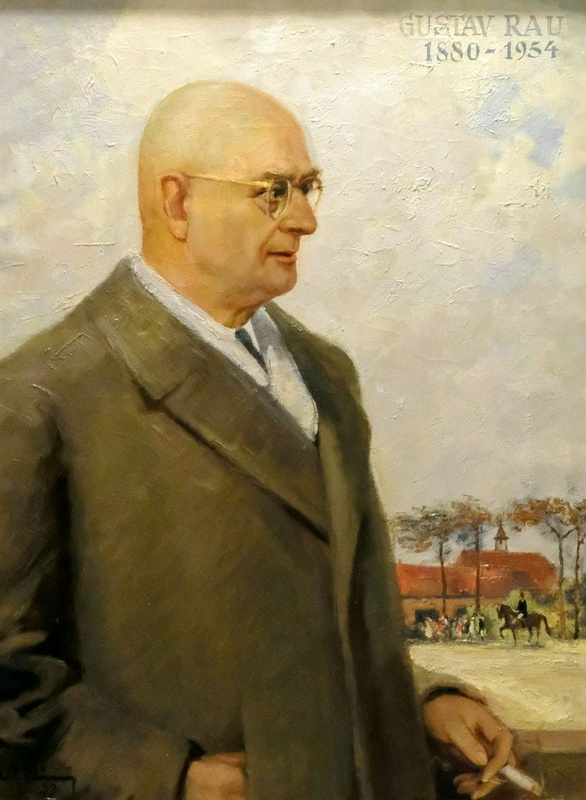
La personne qui possédait le plus grand talent organisationnel dans le sport et l'élevage de chevaux au XXe siècle était le Dr Gustav Rau.
Rau, en tant qu'agent et fonctionnaire, a influencé le sport et l'élevage de chevaux en Allemagne pendant plus de 40 ans.
Il n'est pas exagéré de l'appeler le père du sport équestre organisé en Allemagne.
Gustav Rau est né le 28 février 1880 dans la capitale française, Paris.
Son père était un ancien officier de l'armée du Wurtemberg, un petit royaume du sud-ouest de l'Allemagne qui a existé jusqu'en 1918.
Il travaillait à Paris comme représentant d'une entreprise artistique de photographie.
Les ancêtres de Gustav Rau étaient agriculteurs et gardes forestiers dans la région de « Schwäbische Alb », une région élevée et accidentée du sud-ouest de l'Allemagne.
Lorsque Gustav Rau avait douze ans, son père est décédé et sa mère est d'abord allée en Suisse, puis à Stuttgart, la capitale du Bade-Wurtemberg.
Après avoir obtenu son diplôme de l'école secondaire, il a commencé sa formation commerciale dans un magasin de céréales.
Ensuite, il a travaillé pendant deux ans dans une ferme.
À l'âge de 21 ans, Rau a commencé à travailler comme rédacteur en chef du journal « Sport-Welt », le magazine le plus célèbre pour les différents sports équestres et l'élevage, à Berlin.
À cette époque, le sport des courses était beaucoup plus important que les premières compétitions de dressage ou de saut d'obstacles qui étaient encore en développement en Allemagne.
Rau a assisté à des conférences à l'université vétérinaire et agricole de Berlin.
Il a d'abord écrit des articles sur l'élevage des chevaux Warmblood, puis sur l'élevage des Thoroughbreds et des Trotteurs, ainsi que sur les expositions de chevaux.
Ses articles étaient principalement critiques, mais très analytiques.
En peu de temps, Rau a été accepté comme un observateur et commentateur complet dans tous les domaines du sport équestre et de l'élevage.
Gustav Rau à droite avec un manteau clair lors de l'approbation d'un étalon à la fin des années 20 ou au début des années 30 du XXe siècle.
Même aujourd'hui, le mystère demeure quant à la manière dont le jeune Rau a acquis une connaissance approfondie des chevaux et de leur élevage.
À cette époque, l'élevage de chevaux en Allemagne n'avait pas une bonne image et certains éleveurs allemands falsifiaient les documents de leurs chevaux pour présenter les chevaux allemands comme des chevaux étrangers, car les chevaux étrangers étaient beaucoup plus populaires en Allemagne.
Rau a écrit des livres sur l'élevage de chevaux et a voyagé dans divers pays comme la Grande-Bretagne, l'Autriche, la Russie, la Hongrie, la France, l'Italie, les Pays-Bas et la Belgique pour étudier l'élevage de chevaux.
Plus tard, il est devenu membre de la commission d'État prussienne pour l'élevage de chevaux.
Au début de l'année 1913, Rau a été nommé secrétaire général du Comité olympique allemand pour les sports équestres (DOKR), qui devait organiser les épreuves équestres des Jeux olympiques de 1916 à Berlin, mais qui n'ont jamais eu lieu en raison de la guerre.
Pendant la Première Guerre mondiale, Rau a servi comme lieutenant dans un régiment de cavalerie et a été blessé trois fois.
Après la Première Guerre mondiale, c'était une période très difficile pour l'élevage de chevaux en Allemagne.
L'armée, qui était le principal acheteur de chevaux Warmblood, a été réduite à 100 000 soldats, et la demande de chevaux a donc diminué d'environ 90 %.
De plus, malgré les développements économiques significatifs en Allemagne à cette époque, les premiers tracteurs et camions ont été mis en service.
Pour comprendre l'importance de l'élevage de chevaux au début du XXe siècle, en 1900, en Allemagne, en moyenne, sept chevaux travaillaient sur chaque 100 hectares de terres agricoles.
En Prusse orientale, qui faisait alors partie de l'Allemagne, cette moyenne était de onze chevaux.
La vision inspirante de Rau était de créer un nouvel emploi pour les chevaux.
Il a encouragé les gens, en particulier dans les zones rurales d'Allemagne, à élever des chevaux Warmblood non seulement pour l'agriculture et le transport, mais aussi pour l'équitation et le sport.
Gustav Rau et Tora.
La jument Tora, avec son cavalier Kurt Hasse, a remporté deux médailles d'or aux Jeux olympiques de 1936.
Elle a passé sa retraite à l'ancienne école de cavalerie et au futur siège du DOKR à Warendorf, où elle était autorisée à se déplacer librement.
Elle est décédée à l'âge de 30 ans, la même année que Gustav Rau.
À cette fin, il a promu la création de clubs d'équitation publics.
Son slogan était que chaque village dans les zones rurales d'Allemagne devrait avoir son propre club d'équitation pour que les enfants des agriculteurs et des éleveurs puissent apprendre à monter et à travailler avec les chevaux.
En particulier dans les régions de l'ouest et du nord de l'Allemagne - des régions traditionnelles d'élevage de chevaux - cette initiative a rencontré un grand succès.
Des centaines de clubs ont été fondés dans les années 1920, et c'est à cette époque que de nombreux spectacles de chevaux et d'élevage ont vu le jour.
C'était aussi la période où de nouvelles personnes, en dehors de l'armée ou des classes supérieures, ont trouvé leur chemin dans le sport équestre.
C'est une vieille légende que tous les agriculteurs étaient de bons cavaliers à cette époque, mais la plupart d'entre eux avaient une bonne expérience de la gestion des chevaux.
Aujourd'hui, il y a environ 10 000 clubs qui couvrent des enfants intéressés aux compétiteurs sérieux.
Même les cavaliers d'élite les plus célèbres doivent être membres de leur club local.
De nombreux cavaliers gardent leurs chevaux dans le club et apprécient la vie sociale ainsi que le confort de l'entretien au club.
Gustav Rau et le Dr Willy Boesing, qui ont remporté des médailles de bronze et d'argent dans les événements de concours complet aux Jeux olympiques de 1952 à Helsinki.
Aux Jeux olympiques de 1928, les cavaliers de dressage et de concours complet allemands ont remporté leurs premières médailles depuis 1912.
Seuls les cavaliers de saut d'obstacles n'ont pas réussi à remporter de médaille olympique.
La réaction de Rau a été la création d'écuries spéciales à l'école de cavalerie de Hanovre.
En peu de temps, l'école de cavalerie de Hanovre a formé un grand nombre de cavaliers et d'entraîneurs de haut niveau.
De nombreux entraîneurs et cavaliers à succès ont commencé leur carrière à l'école de cavalerie de Hanovre après la Seconde Guerre mondiale.
En 1933, Rau a été nommé chef du département de l'élevage équin de Prusse, devenant ainsi le plus haut fonctionnaire de toutes les écuries d'État d'Allemagne.
Un an seulement après, à la suite d'un désaccord, il a perdu ce poste, mais peu de temps après, il a été nommé pour organiser les éléments équestres des Jeux olympiques de 1936.
Dans ce rôle, il a accompli son travail de manière exemplaire.
Le lieutenant Heinz Pollay avec Kronos, qui a remporté la médaille d'or individuelle et par équipe en dressage aux Jeux olympiques de 1936 à Berlin.
Rau écrit dans son livre : « Mouvement de trot étendu en diagonale.
Un haut degré d'énergie.
Équilibre parfait du cheval.
Coordination parfaite entre le cavalier et le cheval.
» Les Jeux olympiques équestres de 1936 ont été le sommet de la qualité dans l'histoire du sport équestre, et les cavaliers allemands ont remporté les six médailles d'or.
À propos de cet événement, Rau a écrit un livre intitulé « Die Reitkunst der Welt an den Olympische Spielen 1936 », qui est encore considéré comme un classique.
Mais Rau n'était pas seulement fier de ses cavaliers allemands, il a dit à propos du capitaine Isaac Kitts et d'American Lady : « Passage.
Mouvements beaux et presque majestueux du cheval.
La meilleure coordination entre le cavalier et le cheval.
Les postérieurs du cheval pourraient suivre un peu plus.
» La même année, il a écrit un autre livre intitulé « Beurteilung des Warmblutpferdes », qui est encore aujourd'hui l'un des meilleurs livres sur l'évaluation de l'apparence des chevaux de selle.
Après l'invasion de la Pologne par l'armée allemande en 1939, Rau a été chargé par l'armée allemande de réorganiser l'élevage de chevaux dans les régions occupées de la Pologne.
Il est nécessaire de mentionner son rôle pendant la période du Troisième Reich de 1933 à 1945.
Il a été prouvé que Rau était une personnalité totalement apolitique, ni nazi ni membre du parti nazi NSDAP.
Cependant, il faut admettre qu'il était manifestement opportuniste face au régime nazi.
S'il y avait des avantages à réaliser ses idées sur le développement du sport et de l'élevage de chevaux, il flattait le régime nazi et Adolf Hitler.
Rau soutenait l'idée du principe de leadership, car dans l'organisation de son sport et de son élevage de chevaux, il était aussi une sorte de dictateur.
Ainsi, dans le monde équestre allemand, il était une personnalité relativement controversée.
Rau n'a pas été impressionné par le cavalier autrichien, le major Alois Podhajsky, qui montait le cheval Nero, et a dit : « Piaffer.
Le cheval est trop court et ses pas sont trop précipités.
Il n'est pas assez souple dans la région lombaire.
» En tant que colonel Podhajsky, il a été directeur de l'école d'équitation espagnole de 1939 à 1965.
Il est intéressant de noter qu'après la fin de la Seconde Guerre mondiale, Rau a reçu des critiques très positives de la part des Polonais pour son travail de 1939 à 1945 en Pologne.
Il était un chef fort qui exigeait toujours un engagement à 100 % de ses employés, mais en même temps, il faisait lui-même plus de 100 % d'efforts.
Personnellement, il était indifférent à son propre confort.
Par exemple, si Rau devait faire des voyages d'affaires, il essayait de le faire la nuit pour avoir la journée pour travailler.
En 1943, l'université de Bonn lui a décerné un doctorat honorifique.
Hans Günter Winkler, après la Seconde Guerre mondiale, a reconstruit le DOKR à une époque où l'Allemagne était encore principalement en ruines.
Après plusieurs tentatives pour établir le siège de la DOKR dans d'autres villes, il est arrivé en 1950 dans la petite ville de Warendorf en Westphalie, où il a trouvé de bonnes conditions pour la formation de la DOKR dans une ancienne école de cavalerie.
En peu de temps, il a rassemblé à Warendorf un groupe de cavaliers - comme un jeune homme nommé Hans Günter Winkler, les fils de fermiers Alfons et August Lütke Westhues et l'élève Reiner Klimke qui, dans les années suivantes, sont devenus des cavaliers très réussis dans les trois disciplines olympiques de l'équitation.
Reiner Klimke En 1952, les Allemands ont été autorisés pour la première fois après la Seconde Guerre mondiale à participer aux Jeux olympiques d'Helsinki.
Malgré de nombreux problèmes et malchances, les cavaliers allemands ont réussi à remporter une médaille d'argent et trois médailles de bronze dans les disciplines du concours complet, du dressage et du saut d'obstacles.
.
.
En 1954, Rau a organisé un voyage très réussi pour Hans Günter Winkler qui avait remporté son premier titre de champion du monde de saut d'obstacles.
Accompagnés de quelques autres combinaisons de spectacles allemandes, ils ont voyagé aux États-Unis et au Canada.
C'était la première fois que des chevaux allemands étaient transportés par avion vers un autre continent.
Seulement quelques jours après son retour à Warendorf, il est décédé subitement à l'âge de 74 ans alors qu'il était assis à son bureau au siège de la DOKR.
Les funérailles à Warendorf pour Gustav Rau Les funérailles de Gustav Rau Pendant près d'un demi-siècle, Rau a été responsable de l'organisation des sports équestres et de l'élevage de chevaux en Allemagne.
Il a développé de nombreuses structures qui sont l'un des secrets du succès des Allemands dans le monde de l'équitation.
La ville de Warendorf lui doit également beaucoup, car il a jeté les bases de la renommée mondiale de cette ville en tant que ville des chevaux et des cavaliers.
Ce monument a été érigé en 1957 par la ville de Warendorf et a ensuite été placé sur le site de la DOKR et de la Fédération nationale allemande d'équitation (NF) au nord de Warendorf.
Merci à Thomas Dans son livre, Die Reitkunst der Welt an den Olympischen Spielen 1936, Rau a consacré un chapitre à des suggestions pour une formation équestre moderne basée sur la tradition classique allemande.
Il est incroyable que ses recommandations aient été écrites il y a 80 ans, comme si Rau écrivait sur la scène actuelle du dressage.
.
.
A-t-il averti contre la mode Rolkur lorsqu'il plaidait vigoureusement que l'avenir de l'équitation devait être basé sur le passé et le «travail constructif de nombreuses générations de cavaliers» et mettait en garde contre les «destructions spéculatives»?
Il a dit: «Les tremblements avec des destructions spéculatives dans la structure équestre allemande doivent être évités.
» Encore Kronos, et même à travers la brume des vieilles photos en noir et blanc, vous pouvez voir le calme dans le corps du cheval.
.
.
Rau commente dans son livre: «Mouvement en spirale.
Cercle au galop extérieur vers la droite.
Le meilleur type d'exécution, déterminé, avec des pas longs et réguliers.
.
.
» Rau a assuré à ses lecteurs que toute déviation du chemin des anciens Allemands ne serait que temporaire - comme la méthode Rolkur qui a finalement été discréditée et interdite - mais restait une menace: «La sortie temporaire se produit toujours après une exagération de ce qui a été hérité, car ils existent dans le maintien des chevaux avec une influence excessive de la main, la suppression des pas naturels, l'exagération de l'équilibre artificiel.
La réaction contre la tradition prend la forme d'une exagération dans la direction opposée.
» Caprilli – Équitation brillante, système imparfait.
.
.
Il a attaqué Caprilli et ses «inspirations de génie».
Il a dit : «Caprilli voulait garder le cheval dans son équilibre naturel en ajustant précisément le cavalier, qui s'équilibrait soigneusement avec le cheval.
La souplesse doit être obtenue par un galop et un saut abondants.
» Le système Caprilli n'a aucune base théorique-scientifique.
C'est un système basé sur la compétence personnelle et donc, au mieux, il n'est pas adapté à une utilisation généralisée.
La compétence personnelle nécessaire pour exécuter avec succès la méthode Caprilli n'est accordée qu'à un nombre limité de cavaliers.
Ce système nécessite une sensibilité élevée, une capacité supérieure à l'équilibre, et même une compétence extraordinaire pour pouvoir reconnaître et exécuter correctement tous les degrés de mécanisation.
.
.
Un système équestre ne peut rester durable à long terme que s'il répond à tous les besoins de l'utilisation du cheval à des fins diverses.
La méthode Caprilli, en raison de son caractère unilatéral, ne peut être comparée à un système équestre complet.
C'est Bertelan de Nemethy et son élève éminent George Morris qui ont combiné les principes allemands avec la position avancée de Caprilli pour créer – avec une légère influence française en cours de route – la doctrine du saut d'obstacles qui domine aujourd'hui le monde.
En lisant Rau, l'un des problèmes ici est que nous sommes habitués à utiliser les principes allemands, même si dans certains cas inconsciemment, qu'il est difficile d'imaginer que quelqu'un propose sérieusement une alternative.
Mais il y avait d'autres menaces pour le système allemand, Rau a également introduit James Fillis, né en Grande-Bretagne et formé en France : «La méthode Fillis était entièrement ajustée au type de personnalité équestre de son créateur Fillis.
Ce n'est pas un véritable système, mais plutôt l'expression constante de la compétence personnelle d'un cavalier exceptionnel.
Le système Fillis était unilatéral, car il ne s'intéressait qu'à la production de chevaux d'école.
Avec une collecte élevée, vous ne pouvez pas monter sur le terrain.
Fillis a laissé quelques élèves faibles derrière lui.
Son système a disparu avec l'extinction de son fondateur.
Dès que Fillis ne pouvait plus le démontrer et l'exécuter, il était voué à la mort.
» Fillis – une autre menace pour l'équitation civilisée.
.
.
Pour comprendre la différence du système Fillis, il faut jeter un œil à son livre Breaking and Riding.
La description du système complexe de flexibilité avant de monter à cheval occupe de nombreuses pages et pour la première monte, le cheval est équipé d'un mors double et est entraîné dans une marche d'école, un trot rassemblé lent et un contre-galop très stylisé – bien sûr, n'oubliez pas que Fillis était connu pour entraîner les chevaux à reculer en contre-galop.
Contrairement à Fillis avec sa forme rassemblée, Rau plaidait pour une méthode plus longue et plus naturelle dans les premières étapes de l'entraînement du cheval : «Du développement progressif du dressage, à l'augmentation des exercices physiques du cheval, en fonction des différents besoins pour lesquels le cheval doit être utilisé, c'est une structure logique, un système qui restera tant que les conditions des gens d'Allemagne monteront à cheval.
» Un système qui peut toujours répondre à tous les besoins et inclut la graine de la préparation du cheval pour tout type d'utilisation - pour entraîner le cheval à des fins spécifiques, comme l'équitation en plein air, le saut d'obstacles, et les tests de dressage à tous les niveaux.
Aucun système particulier n'est nécessaire pour satisfaire unilatéralement des besoins spécifiques, mais le système global dans ses différentes étapes fournit un degré de «développement» et de stabilisation pour les chevaux à toute fin.
Le système équestre traditionnel allemand, avec des exercices progressifs de gymnastique pour chevaux, établit les bases des compétences spécialisées futures.
Kronos et Pollay à nouveau, produit des exercices progressifs de gymnastique.
Rau a déclaré : la performance peut être qualifiée de Piaffe parfaite.
Kronos montre beaucoup de flexibilité.
Il trotte sur place.
Une merveille d'équilibre.
Il accomplit sa tâche avec l'aide invisible de son cavalier qui est bien assis.
Rau a souligné la fluidité de la forme : « La forme d'un cheval bien entraîné peut être plus étendue, le cou du cheval peut être plus long et plus libre, la direction par le cavalier plus légère et plus libre.
Un cheval d'école bien entraîné doit, dès que le cavalier le motive, revenir à son état naturel et ne doit pas être constamment raccourci.
Tout comme il ne doit pas toujours être courbé, mais doit toujours être parfaitement droit.
Même le niveau le plus élevé de dressage, comme le premier niveau, ne doit pas conduire à un raccourcissement permanent du cheval à l'avant du corps, en particulier au niveau du cou.
Cela dépend de la flexibilité accrue et de la possibilité pour les parties arrière du corps de descendre, car les articulations deviennent plus souples.
Un cheval ne doit jamais être forcé par une action brutale du cavalier.
La forme extérieure ne doit être obtenue que par l'absence totale de résistance du cheval et une flexibilité complète.
Tant qu'il y a des tensions dans le cheval, des résistances qui ne sont pas surmontées par la flexibilité, il n'est pas permis de progresser vers la collecte et de poursuivre un état que le cheval ne peut pas accepter confortablement de lui-même.
« L'erreur que certains cavaliers commettent, même au début du dressage, est de travailler le cheval dans une forme et une posture extérieures spécifiques qui nuisent au cheval et doivent créer des chevaux raides et retenus.
La réaction à cette méthode incorrecte doit venir avec une flexibilité complète, de sorte que le cheval accepte de lui-même la forme et la posture qui conviennent le mieux à sa physionomie et qui sont donc correctes.
Les systèmes de dressage qui voient l'atteinte de l'objectif dans une forme extérieure souhaitable, comme le port élevé ou trop profond, sont incorrects et tentent le cavalier de travailler par la contrainte dès le début, pour travailler sur une forme extérieure qui n'est pas naturelle.
Si l'art équestre, à tous les niveaux de formation, reste dans sa tâche d'effort et de complétion de la flexibilité du cheval, il accomplit sa tâche et ne créera aucune réaction ou tendance vers d'autres systèmes.
» Il a dit : « Quiconque essaie dès le début de forcer son cheval dans un état artificiel dans l'entraînement au dressage agit toujours à l'encontre de la sagesse d'une équitation raisonnable.
Celui qui veut forcer un cheval brut dès le début de l'entraînement au dressage à adopter une démarche d'école ne peut parvenir qu'à une démarche courte et cassée.
La démarche correcte de l'école ne peut être que le résultat d'une démarche complète dans un cheval fluide et flexible.
» Dans un article qu'il a écrit dans la dernière année de sa vie pour L’Année Hippique 1953/1954, Rau a rendu hommage à trois cavaliers - l'un d'eux était Fritz Thiedemann, vu ici remportant le Grand Prix 1953 d'Aix-la-Chapelle avec Aar.
Les deux autres étaient Helga Köhler et Hans Gunther Winkler.
Il a dit : « Il en va de même pour le trot et le galop : d'abord la flexibilité par des exercices raisonnables, puis la collecte et donc la posture et la forme souhaitables du cheval.
Tout cheval moyen doit atteindre un haut degré de flexibilité pour pouvoir être utilisé avantageusement dans les étapes inférieures de l'équitation.
Cependant, de nombreux chevaux ne peuvent pas atteindre le niveau le plus élevé pour être montés, car ils n'ont pas, comme la plupart des gens, le talent et les caractéristiques physiques nécessaires pour une grande performance physique.
Les cavaliers doivent reconnaître ces chevaux et leur incapacité à exceller en dressage et ne pas les confronter à des tâches qu'ils ne peuvent pas accomplir.
Sinon, cela conduit à la résistance du cheval et à des tortures inutiles par le cavalier.
Même si ces chevaux satisfont à la forme extérieure requise grâce à la technique et à la volonté du cavalier, il n'y a pas de véritable coordination ni d'expression suprême dans leurs performances.
» Helga Köhler et Armalva en compétition à Rotterdam en 1953 - une équitation douce et naturelle.
.
.
Dans une section intitulée Principes de formation, Rau a mentionné le cheval dans son état naturel : il a dit : « Le jeune cheval sans cavalier dans le pâturage se déplace facilement et est complètement flexible dans son équilibre naturel.
Il n'a aucun problème à changer rapidement la vitesse de ses mouvements.
Il peut le faire plus rapidement que n'importe quelle phase d'un cheval de dressage entraîné sous cavalier.
En jouant avec ses congénères dans le pâturage, le cheval montre toutes les caractéristiques naturellement et même plus magnifiquement que ce qu'il montre plus tard dans l'entraînement.
Il tourne, virevolte, comme nous l'appelons plus tard pirouette.
Dans un état d'excitation, il saute soudainement, comme dans le piaffer, ou se déplace de manière fluide dans de grandes foulées élevées, comme il le fera plus tard dans le passage sous cavalier.
» Il a dit : « Ses arrêts, ses sauts sur ses pattes arrière montrent sa flexibilité complète à travers les parties arrière.
Le cheval plie son cou à droite et à gauche, ce qui est souvent obstinément nié par le cavalier.
Il est capable de plier latéralement son cou et sa colonne vertébrale, bien que cette flexion pose plus de problèmes plus tard sous cavalier.
» Lorsque nous observons le cheval au pâturage, nous réalisons qu'il peut faire des choses qu'il refuse souvent de faire sous cavalier et qui ne peuvent être reproduites qu'après une lutte.
Dans de nombreux cas, sous cavalier, la flexibilité est perdue à jamais.
Le cheval ne cède pas et, malgré tous les efforts pour atteindre une coordination complète de ses parties du corps, il se raidit.
Il a dit : « Le cavalier doit chercher la flexibilité du cheval avec respect.
Seul un cavalier avec une assise flexible et une influence subtile peut retrouver la douceur naturelle du cheval et ensuite, avec une équitation précise et des aides précises, augmenter progressivement la flexibilité retrouvée du cheval sous le poids du cavalier.
Le programme complet d'équitation doit être conçu de manière à ne pas s'effondrer dans une lutte sans fin pour soumettre les parties du corps du cheval, mais doit dès le début s'efforcer de soumettre l'ensemble du cheval dans toutes les parties du corps, dans toutes les articulations et groupes musculaires.
L'adaptation absolue et continue du cavalier à l'équilibre naturel du cheval, demandée par ce qu'on appelle « l'équitation naturelle », n'est pas un moyen de maîtriser le cheval.
Cette adaptation à l'équilibre naturel du cheval n'est utile que dans le mouvement rapide vers l'avant, par exemple dans la course et dans l'équitation rapide sur les obstacles, mais elle ne crée pas l'équilibre entre le cavalier et le cheval dans tous les mouvements et toutes les positions et manque le besoin fondamental de tout le processus de formation à l'équitation.
Par conséquent, au cours de la première formation, un nouvel équilibre doit être établi entre le cavalier et le cheval.
L'adaptation constante du cavalier à l'équilibre du cheval donne l'initiative au cheval, donc ne crée pas d'obéissance.
En revanche, trouver le centre de gravité entre le cavalier et le cheval le met à la disposition du cavalier et garantit l'influence du cavalier sur le cheval.
Il a dit : « L'équitation est un changement constant du centre de gravité entre le cavalier et le cheval qui dépend de ce que le cavalier doit demander au cheval à des moments individuels.
Chaque fois que le cavalier doit avoir une influence décisive sur le cheval, le pousser en avant sur le terrain ou dans l'arène de dressage, sauter des obstacles, changer de direction, il doit s'adapter à l'équilibre naturel du cheval et faciliter le mouvement rapide vers l'avant.
Asseyez-vous sur la selle et allez plus profondément pour sécuriser le cheval, c'est-à-dire que vous pouvez prêter attention à sa flexibilité.
Ensuite, le haut du corps du cavalier s'approche ou atteint verticalement.
Il amène le cheval aux aides et peut garantir son obéissance.
Leader, fluide, équilibré et surtout, en tenant compte du niveau de développement physique du cheval, c'est un système qui est aussi pertinent aujourd'hui que lorsque Rau l'a formulé pour la première fois, une leçon à apprendre encore et encore…
Source : The Horse Magazine