Comment les chevaux entendent et les problèmes liés à l'audition
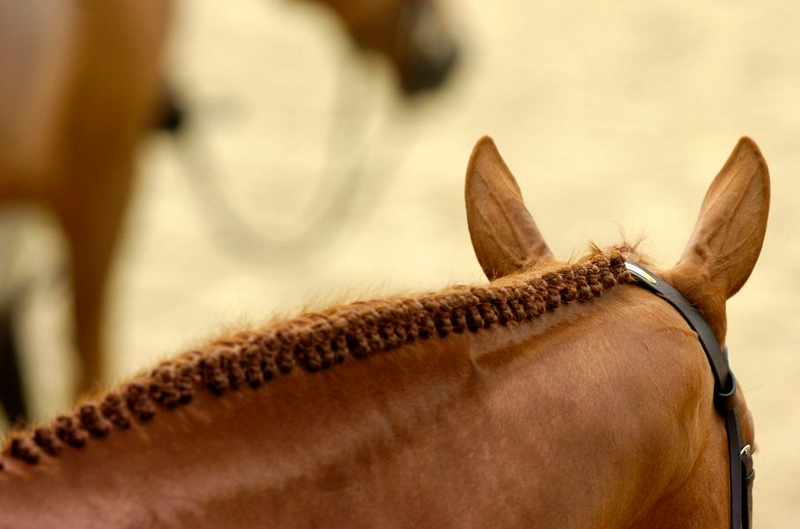
Votre cheval est tranquillement en train de mâcher du foin dans son pâturage.
Soudain, il s'arrête de mâcher, lève la tête, dresse les oreilles et fixe l'horizon avec attention.
Il a entendu un son lointain, un son que vos oreilles ne peuvent pas percevoir.
Être sensible à l'environnement fait partie de la nature de votre cheval, et une ouïe fine joue un grand rôle dans cela.
Dans cet article, deux experts expliquent comment l'ouïe aide les chevaux à comprendre leur environnement et comment gérer les problèmes liés à l'audition.
Allison J.
Stewart, BVSC, DACVIM, DACVECC, est professeur de médecine interne équine à l'université d'Auburn.
Bonnie Beaver, DVM, est professeur de comportement animal à l'université Texas A&M.
Être sensible à l'environnement fait partie de la nature de votre cheval, et une ouïe fine joue un grand rôle dans cela.
©Amy K.
Dragoo Les experts disent que l'ouïe des chevaux n'est pas très différente de la vôtre.
Vous pouvez détecter des sons avec une fréquence d'onde de 20 hertz (le son le plus bas) à 20 000 hertz (le son le plus élevé) ; pour les chevaux, cette plage va de 55 hertz à 33 500 hertz.
Beaver dit : « Ils ne peuvent pas entendre les sons bas aussi bien que nous et n'entendent que légèrement plus haut.
» De nombreux animaux, y compris les chiens, entendent des sons de fréquence plus élevée ; beaucoup peuvent entendre des sons plus bas.
Mais les chevaux sont habiles à capter des sons faibles que vous pourriez facilement manquer et à se concentrer sur la direction des sons.
Leurs oreilles ont les mêmes structures que les vôtres, mais des différences de conception renforcent ces capacités.
Quelles grandes oreilles vous avez ! Ces grandes oreilles font une grande différence.
Avec leur grande taille et leur forme en coupe, chaque oreille externe (pavillon) agit comme un radar, recueillant et concentrant les ondes sonores.
Vous devez tourner la tête pour vous concentrer sur la source du son, mais votre cheval a dix muscles qui peuvent faire pivoter chaque pavillon sur un arc de 180 degrés complet et il peut les bouger indépendamment, de sorte que l'un vise vers l'avant et l'autre vers l'arrière.
Le pavillon dirige les ondes sonores vers le conduit auditif, qui les amplifie de la même manière que parler dans un tube amplifie le son.
Dans l'oreille moyenne, les ondes sonores frappent le tympan (membrane tympanique) et le font vibrer.
Ces vibrations sont transmises à travers la membrane aux osselets, trois petits os de l'autre côté.
Ces os, nommés d'après leurs formes : marteau, enclume et étrier, forment une chaîne qui transmet les vibrations à une seconde membrane marquant le début de l'oreille interne.
Les chevaux ont de grandes oreilles pour une raison.
Avec leur grande taille et leur forme en coupe, les oreilles externes agissent comme un radar, recueillant et concentrant les ondes sonores.
©Amy K.
Dragoo L'oreille interne contient les organes sensoriels pour l'audition et l'équilibre.
La partie auditive de l'oreille interne, appelée la cochlée, a la forme d'une coquille d'escargot et est remplie de fluides qui bougent avec les vibrations de la membrane.
Ce mouvement stimule de minuscules cellules ciliées (cilia) qui envoient des signaux nerveux au cerveau.
Différentes cellules ciliées sont sensibles à différentes fréquences sonores.
Le fluide de l'oreille interne passe également par des canaux semi-circulaires qui aident le cheval à maintenir son équilibre.
Ces canaux sont recouverts de cellules ciliées sensorielles et sont orientés à différents angles, ce qui leur permet de détecter divers mouvements tels que les mouvements latéraux, verticaux et angulaires.
Fuis d'abord, pose des questions ensuite : une branche se casse et votre cheval s'élance comme une flèche tirée d'un arc.
Ses réactions rapides lors de la monte ou de son contrôle peuvent être stressantes, mais ces réactions se sont développées comme une défense contre les prédateurs.
Lorsque ses ancêtres étaient sauvages, les chevaux qui ne fuyaient pas lorsque la branche se cassait étaient probablement chassés par les lions.
Ceux qui fuyaient survivaient, et au fil des générations, cette réaction rapide est devenue une partie de leur nature.
Tous les chevaux ont cette réaction de base, mais la réaction aux bruits soudains varie d'un cheval à l'autre.
Quand un caillou frappe le mur de l'arène, un cheval peut sauter de 10 pieds sur le côté tandis qu'un autre change à peine de pas.
Beaver dit : « La génétique et l'expérience provoquent ces différences.
Certains chevaux sont naturellement plus peureux, et cela peut avoir une base génétique.
D'autres n'ont pas eu d'expériences qui les exposent à des environnements bruyants, donc ils peuvent réagir de manière excessive.
» Il dit : « Nous n'avons pas fait suffisamment de tests auditifs pour savoir s'il existe des différences de sensibilité au son.
Si elles existent, elles sont probablement mineures.
» Il a ajouté : « La meilleure façon de faire face à ces situations est de rester calme et d'éloigner le cheval du danger perçu.
Un cavalier calme et stable est le meilleur pour les chevaux qui ont tendance à réagir, afin qu'ils apprennent à faire confiance au cavalier.
» Punir un cheval pour avoir peur ne fait que renforcer sa peur.
L'utilisation de coton ou de bouchons d'oreilles pour chevaux peut atténuer les bruits lorsque les bruits soudains posent problème.
©Amy K.
Dragoo ajoute que l'exposition du cheval aux sons dans des conditions non effrayantes est la meilleure façon de lui apprendre à les accepter.
Les techniques de désensibilisation et de contre-conditionnement peuvent aider.
Dans la désensibilisation, le cheval est exposé au son dans un environnement sûr et familier.
(Rappelez-vous Black Beauty de Anna Sewell qui paissait près des voies ferrées pour s'habituer à voir et entendre le bruit effrayant des trains.
) Dans le contre-conditionnement, vous récompensez le cheval avec des friandises comme des morceaux de carottes ou des granulés alimentaires pendant qu'il est exposé au son effrayant, afin qu'il associe le son à quelque chose d'agréable.
Dans les deux techniques, il est important de commencer par des séances courtes et des niveaux sonores bas et d'augmenter l'intensité uniquement lorsqu'il tolère le son.
Il a dit : « Les chevaux réagissent généralement aux sons individuellement, » donc ne supposez pas que votre cheval appliquera ce qu'il a appris dans de nouvelles situations.
Il peut comprendre que le bruit du tracteur préparant le terrain n'est pas une menace, mais cela ne signifie pas qu'il acceptera le bruit de la remorque du tracteur qui s'approche de lui par derrière.
Les bouchons d'oreilles en coton ou spécialement conçus pour les chevaux peuvent atténuer les bruits lorsque les bruits soudains peuvent poser problème—par exemple, lorsque des travaux de construction ont lieu à proximité ou dans un manège couvert de neige où la glace peut glisser soudainement du toit.
(Bien sûr, avant d'utiliser des bouchons d'oreilles en compétition, vérifiez les règles de votre discipline.
) Même avec des bouchons d'oreilles, certains chevaux sont tellement effrayés par des bruits forts comme le tonnerre et les feux d'artifice qu'ils peuvent se blesser (ou vous blesser).
Lorsque les tempêtes approchent (ou que le 4 juillet arrive), ces chevaux sont plus en sécurité dans leurs écuries.
La perte auditive Stuart dit : Il est probable que de nombreux chevaux perdent une partie de leur audition en vieillissant, bien que cela n'ait pas été largement testé.
Des chercheurs en Australie ont récemment comparé la capacité auditive de deux groupes de chevaux, âgés de 5 à 8 ans et de 17 à 22 ans, et ont trouvé des diminutions légères à modérées dans le groupe plus âgé.
(Les chercheurs ont utilisé le test de réponse auditive évoquée du tronc cérébral ou BAER, où des électrodes attachées au cuir chevelu du cheval surveillent la réaction du cerveau aux sons de clic.
) Les humains entendent également moins bien en vieillissant—une vie d'exposition au bruit endommage les récepteurs sensoriels de l'oreille interne.
Beaver dit que les chevaux peuvent être moins sujets à la perte auditive que les humains.
Il dit : « Les chevaux ne vivent pas aussi longtemps que les humains ou ne vivent pas dans des environnements similaires [comme les concerts de rock et les iPods].
» Dans la vie quotidienne, vous ne remarquerez probablement pas une légère perte auditive chez votre cheval.
La surdité chez les chevaux est rare.
Elle peut être exclue par des tests électroniques ou simplement en vérifiant la réaction du cheval à un bruit soudain, comme des applaudissements ou le fait de faire tomber un seau.
Le son doit provoquer une réaction de peur—au minimum, un sursaut de l'oreille.
Si le cheval ne montre aucune réaction, il ne peut probablement pas l'entendre.
Stuart dit : Une forme congénitale de surdité se produit chez certains chevaux avec des motifs de robe « blanc éclaboussé ».
Un cheval blanc éclaboussé a une large bande blanche ou un visage « chauve », souvent avec des yeux bleus et des marques blanches variables sur les jambes et le corps.
Certains de ces chevaux naissent sourds.
Les chercheurs ont identifié trois mutations génétiques distinctes qui peuvent produire ce motif.
Deux ont été observées uniquement dans les races Paint et Quarter Horse, et la troisième est apparue dans ces races ainsi que dans les races Morgan, Trakehner et quelques autres.
Les chevaux Splashed white ont des visages blancs et des yeux bleus en raison de la suppression des cellules productrices de pigment appelées mélanocytes pendant le développement.
Stuart dit : Si le manque de pigment atteint l'oreille interne, il affecte les cellules ciliées sensibles au son et entraîne la surdité.
Tous les motifs blancs ne sont pas associés à un risque de surdité, et les chevaux peuvent être testés pour les mutations Splashed white.
(L'Université de Californie, Davis, propose un test.
) Stuart dit : L'audition devrait être testée dans le cadre de l'examen avant l'achat.
Mais il souligne que la surdité n'est pas un grand handicap pour un cheval.
Parce qu'un cheval sourd n'entend pas ce qui se passe autour de lui, il n'a clairement pas peur des sons, mais il peut avoir peur si quelque chose le touche soudainement ou apparaît dans son champ de vision sans avertissement.
Il a dit : « Ce n'est généralement pas un problème si vous ne vous approchez pas du cheval par derrière.
» Beaver est d'accord.
Il a dit : « L'audition est souvent un système d'alerte primaire ou secondaire pour les prédateurs potentiels, et ce n'est pas un facteur important pour la plupart des chevaux aujourd'hui.
» Il a ajouté : il peut être nécessaire de changer vos méthodes d'assistance — «il est évident que des choses comme 'whoa' ne fonctionnent pas» — mais la plupart des chevaux sourds s'adaptent bien.
Beaucoup d'entre eux ont réussi dans les compétitions de présentation.
Les problèmes de pinna Les problèmes d'oreille les plus courants chez les chevaux sont des problèmes de peau qui affectent le pinna.
Piqûres de mouches.
Les mouches noires et autres mouches piqueuses adorent les oreilles des chevaux, et les sites de piqûre peuvent devenir enflammés, squameux, démangeaisons et parfois infectés.
Utilisez une pommade antibiotique topique pour aider à contrôler l'infection pendant que les piqûres guérissent.
Utilisez des répulsifs, un masque anti-mouches avec couverture d'oreille pour la rotation et un bonnet d'oreille lors de la conduite pour éloigner les mouches.
Évitez de couper les poils des oreilles à moins que vous ne soyez obligé de traiter une infection — les poils aident à protéger la peau des piqûres.
Plaques orales.
Les plaques orales sont des croissances lisses, squameuses et blanches qui apparaissent sur la surface intérieure (concave) du pinna.
Elles sont causées par des virus papillomavirus souvent transmis par les mouches noires piqueuses.
Stuart dit : «Ignorez-les.
» Bien que les plaques ne soient pas esthétiques, elles ne nuisent pas au cheval.
Essayer de les enlever provoque généralement beaucoup d'inconfort, rendant le cheval sensible au toucher de ses oreilles.
Utilisez les étapes ci-dessus pour empêcher les mouches noires d'atteindre les oreilles.
Ces mouches sont les plus actives à l'aube et au crépuscule, alors gardez le cheval à l'intérieur à ces moments-là.
Sarcoïdes.
Stuart dit : les oreilles sont le principal site pour ces tumeurs cutanées courantes.
Les sarcoïdes ne sont pas malins mais peuvent croître de manière agressive.
Ils peuvent apparaître comme des zones sans poils et squameuses, des bosses dures sous la peau ou des croissances verruqueuses ou charnues.
Certains deviennent crus et irrités, et certains croissent en masses grandes et ressemblant à du chou-fleur.
On pense qu'une infection par le virus du papillome bovin, qui cause des verrues chez les bovins, peut stimuler leur croissance.
Stuart dit : «Les sarcoïdes ont un aspect désagréable, mais nous les laissons généralement tranquilles à moins qu'ils ne deviennent si gros qu'ils posent un problème pour le cheval.
» Il existe divers traitements — chirurgie, cryothérapie (congélation), chimiothérapie, radiothérapie, etc. — mais aucun n'est garanti et les tumeurs ont tendance à repousser.
Il a dit : «Le traitement réussit généralement à 70 %.
Vous pourriez avoir besoin de traiter plusieurs fois.
Le cheval peut être très mal à l'aise avec le toucher de ses oreilles et son oreille peut se déformer.
» Jusqu'à présent, personne n'a trouvé de moyen de prévenir les sarcoïdes.
Cependant, un bon contrôle des mouches peut aider, car les mouches peuvent transmettre le virus.
Le traitement avec le médicament de chimiothérapie cisplatine semble ralentir la repousse de ces tumeurs.
Ce médicament est libéré par injection ou par des perles implantées.
Problèmes profonds Si un cheval a un problème en profondeur dans l'oreille, il peut secouer la tête ou tenir l'oreille affectée à un angle étrange, penchée vers le bas, car elle est irritée.
Il peut aussi être mal à l'aise avec le toucher de son oreille, mais ce n'est pas un signe fiable.
Bewer dit : «Les oreilles sont sensibles et sont naturellement quelque chose qui doit être protégé.
Si un cheval a eu une expérience douloureuse ou a été mal traité, en particulier lors de la tonte, cela peut exacerber un comportement d'évitement.
» Demandez à votre vétérinaire d'examiner l'oreille.
Stuart dit qu'il est difficile de voir à l'intérieur du conduit auditif même avec un otoscope, un appareil utilisé chez de nombreux animaux et humains, car le conduit auditif du cheval a un coude à 90 degrés.
Le vétérinaire peut avoir une meilleure vue en utilisant un petit endoscope flexible.
L'examen peut révéler les éléments suivants : les tiques.
Les tiques peuvent attaquer le conduit auditif ainsi que le pavillon.
Une sorte de tique trouvée dans le sud-ouest, appelée tique de l'oreille spinose, est particulièrement connue pour cela ; une infestation par ces tiques peut causer de la douleur, de l'inflammation et parfois même des spasmes musculaires.
Pour trouver et retirer les tiques, le cheval doit être fortement sédaté.
Les acariens : ces petits parents des tiques peuvent également pénétrer dans le conduit auditif, bien qu'ils soient moins courants chez les chevaux que chez certains autres animaux.
Le traitement avec de l'ivermectine peut aider à les contrôler.
Infection : les infections du conduit auditif du type qui dérange les chiens et les chats sont très rares chez les chevaux.
Stuart dit : « Je n'en ai pas vu un seul au cours des 20 dernières années.
Dans un cabinet pour petits animaux, vous vous attendez à en voir un chaque jour.
» Cependant, les infections bactériennes peuvent être causées par une infestation de tiques.
Elles sont traitées avec des médicaments topiques et systémiques.
Les infections de l'oreille moyenne sont également très rares chez les chevaux, mais elles se produisent.
L'infection peut se propager par le système respiratoire via les trompes d'Eustache, qui relient l'oreille moyenne au pharynx, ou les poches gutturales qui s'ouvrent à partir des trompes d'Eustache.
Elle peut également atteindre l'oreille moyenne à partir du conduit auditif externe ou par le sang.
Ces infections sont traitées avec des antibiotiques systémiques.
Dialogue des oreilles Les chevaux utilisent le langage corporel pour communiquer entre eux.
La position de la tête et du corps, les expressions faciales et les mouvements de la queue transmettent tous de nombreux messages.
Mais pour comprendre rapidement ce que pense un cheval, il suffit de regarder ses oreilles.
Il a dit : « Qu'est-ce que c'est ?
» ©Amy K.
Dragoo Il a dit : « Je ne pense pas que j'aime ça.
» ©Amy K.
Dragoo Il a dit : « J'écoute !
Quel est le prochain programme ?
» ©Alana Harrison Les oreilles relâchées sur les côtés : Il a dit : « Je me repose juste.
» Il est calme.
Les oreilles pointées vers l'avant : Il a dit : « Quoi de neuf ?
» Si ce qu'il entend est vraiment intéressant (ou inquiétant), il se tournera vers le son et restera immobile.
Les oreilles en arrière : Il a dit : « Je n'aime pas ça.
» Il peut être inquiet, effrayé ou contrarié.
Les oreilles complètement collées en arrière : Il a dit : « Éloigne-toi de mon espace !
» Il est sérieux.
Les oreilles bougent d'avant en arrière : Il a dit : « Il se passe beaucoup de choses ici.
» Le mouvement constant est l'état par défaut des oreilles d'un cheval, ce qui l'aide à surveiller son environnement.
Un mouvement rapide peut indiquer de la nervosité ; vous voyez souvent cela lorsque le cheval est dans un nouvel environnement avec des sons inconnus.
Une oreille en arrière : Il a dit : « J'écoute.
» Il peut prêter attention à un cavalier ou à un autre cheval qui s'approche par derrière avec une oreille, mais surveille toujours son environnement avec l'autre oreille.
Les oreilles tombantes : Il a dit : « Je suis déconnecté de l'environnement.
» Les oreilles peuvent être tombantes lorsque le cheval est en train de somnoler, sous l'effet de médicaments ou malade.
Cela peut également être un signe de soumission.
Pour plus d'informations : apprenez comment renforcer votre programme de contrôle des mouches pour éviter que votre cheval (y compris ses oreilles) soit dérangé par les mouches en été ici.
Cet article a été publié dans le numéro de novembre 2014 du magazine Practical Horseman.
Source : Practical Horseman – Santé