L'impact de la fumée des feux de forêt sur votre cheval
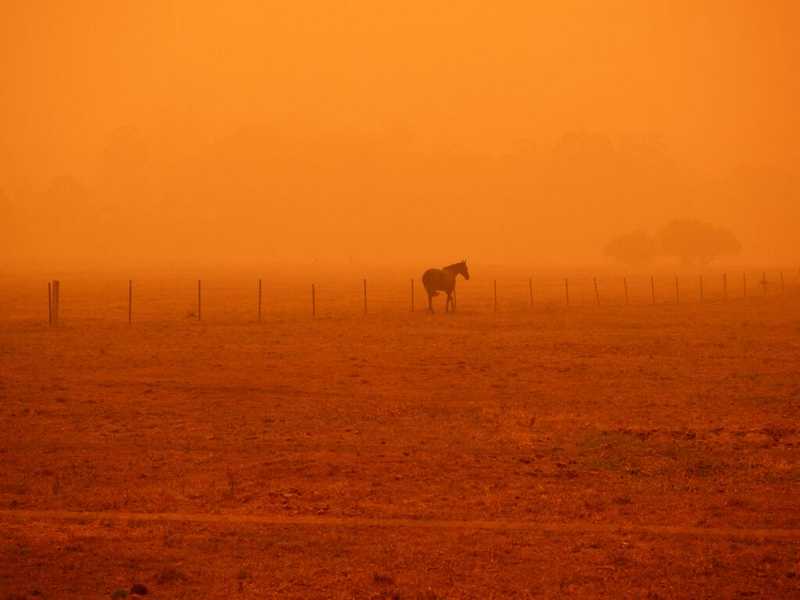
Avec les incendies de forêt étendus ces dernières années — y compris l'incendie dévastateur de L.A. en janvier dernier — tant les humains que les animaux ont été exposés à un air malsain contenant de la fumée d'incendie et des particules dangereuses.
Ces particules, d'un diamètre inférieur à un micron, sont très fines, ce qui leur permet d'atteindre les parties les plus profondes des voies respiratoires des poumons et de s'y déposer.
Étant donné que les poumons des chevaux sont beaucoup plus grands que ceux des autres mammifères, ces particules microscopiques peuvent constituer une préoccupation plus sérieuse pour la santé de nos athlètes équestres par rapport aux particules plus grossières de poussière de terrain ou de route.
Suite à l'augmentation du nombre et de l'intensité des incendies de forêt aux États-Unis, les spécialistes équins de l'University of California-Davis expliquent pourquoi la fumée est dangereuse pour les chevaux, comment évaluer et traiter l'inhalation de fumée, et quelles mesures vous pouvez prendre pour protéger votre cheval.
Qu'est-ce qui rend la fumée des incendies de forêt dangereuse La fumée est composée de dioxyde de carbone, de monoxyde de carbone, de particules en suspension (un mélange de particules solides et de gouttelettes liquides dans l'air), de suie, d'hydrocarbures et d'autres matières organiques, y compris des oxydes d'azote et des minéraux en faible quantité.
En général, les particules en suspension sont le principal polluant préoccupant dans la fumée des incendies de forêt.
La composition de la fumée dépend également des matériaux brûlés.
Différents types de bois, de végétation, de plastiques, de matériaux de construction et d'autres matériaux combustibles produisent des composés différents lorsqu'ils brûlent.
Le monoxyde de carbone — un gaz incolore et inodore — est produit en plus grande quantité lors des phases de fumage et de combustion lente du feu et peut être mortel à fortes doses.
Comment la fumée affecte-t-elle les chevaux Les chevaux exposés à la fumée d'incendie peuvent éprouver divers degrés de lésions respiratoires, allant d'une irritation légère à des dommages graves aux voies respiratoires ou aux poumons dus à l'inhalation de fumée.
Ces particules dangereuses peuvent provoquer une irritation des yeux, un écoulement nasal et des maladies telles que la bronchite.
Elles peuvent également aggraver des maladies cardiaques et pulmonaires telles que l'insuffisance cardiaque congestive, la maladie pulmonaire obstructive chronique, l'emphysème et l'asthme.
De plus, la fumée irrite les voies respiratoires, réduit la fonction pulmonaire et peut aggraver des conditions telles que les heaves (obstruction récurrente des voies respiratoires).
Des concentrations élevées de particules en suspension peuvent entraîner une toux persistante, une augmentation des sécrétions nasales, une respiration sifflante et un effort physique accru pour respirer.
Les particules en suspension peuvent également altérer le système immunitaire et réduire la capacité des poumons à éliminer les substances étrangères telles que le pollen et les bactéries.
Évaluation et traitement de l'inhalation de fumée chez les chevaux Savoir ce qui est normal pour la santé respiratoire de votre cheval et ce qui est préoccupant peut vous aider à déterminer si votre vétérinaire doit examiner votre cheval.
Le nombre de respirations d'un cheval au repos doit être compris entre 12 et 24 respirations par minute.
Comprendre ce qui est normal et quels signes sont préoccupants peut vous aider à décider si votre cheval doit être examiné par un vétérinaire.
©Amy K.
Si l'un des éléments suivants est observé, les chevaux doivent être examinés par un vétérinaire : le taux de respiration au repos dépasse constamment 30 respirations par minute, les narines sont visiblement dilatées, le cheval montre un effort accru pour respirer dans la région abdominale et thoracique, toux fréquente ou profonde, écoulement nasal anormal. Les chevaux doivent également être surveillés pour des lésions cutanées et tissulaires, en particulier dans les premiers jours suivant l'exposition aux conditions mentionnées.
Protégez votre cheval contre la pollution de l'air lorsque la fumée est visible, limitez l'exercice.
Les chevaux ne doivent pas participer à des activités qui augmentent le flux d'air dans et hors des poumons.
Cela peut provoquer un bronchospasme (rétrécissement des petites voies respiratoires dans les poumons).
Fournissez de l'eau fraîche et abondante près de l'endroit où le cheval se nourrit.
Les chevaux boivent la plupart de leur eau dans les deux heures suivant la consommation de foin, donc placer de l'eau près de la mangeoire aide à augmenter la consommation d'eau.
L'eau maintient les voies respiratoires humides pour que la trachée et les grandes et petites voies respiratoires puissent éliminer les particules inhalées dues à la fumée.
Lorsque les voies respiratoires sont sèches, ces particules restent dans les poumons et les voies respiratoires.
Limitez l'exposition à la poussière en utilisant du foin sans poussière ou en le trempant avant de le nourrir.
Cela réduit les moisissures, les champignons, le pollen et les bactéries présents dans la poussière ; des substances difficiles à éliminer pour les poumons.
Si votre cheval tousse ou a des difficultés à respirer, contactez votre vétérinaire.
Il peut distinguer la réaction des voies respiratoires à la fumée et à la poussière d'une infection bactérienne, d'une bronchite ou d'une pneumonie.
Si le cheval a des antécédents de heaves ou de problèmes récurrents des voies respiratoires, il est à risque de problèmes secondaires comme une pneumonie bactérienne.
Si votre cheval a des problèmes primaires ou secondaires dus à des lésions respiratoires causées par la fumée, contactez votre vétérinaire.
Il peut déterminer si le cheval a besoin de sérum intraveineux, de médicaments bronchodilatateurs ou de nébulisation pour aider à hydrater les voies respiratoires.
Votre vétérinaire peut également recommander des tests pour déterminer si votre cheval a une infection bactérienne secondaire qui pourrait aggraver son problème respiratoire actuel.
Conseils supplémentaires Avec l'augmentation du nombre et de l'intensité des incendies de forêt aux États-Unis, il est essentiel d'avoir un plan d'urgence pour évacuer votre cheval.
Ayez toujours un plan d'urgence pour évacuer vos chevaux, car les incendies de forêt peuvent se propager si rapidement qu'il reste souvent peu de temps pour se préparer.
Donnez à votre cheval suffisamment de temps pour récupérer complètement des lésions des voies respiratoires causées par la fumée.
Les lésions des voies respiratoires dues à la fumée des incendies de forêt peuvent prendre de quatre à six semaines pour guérir.
Idéalement, après que toute la fumée a disparu et que la qualité de l'air est revenue à la normale, accordez au moins autant de temps pour le repos de votre cheval.
Il est recommandé que les chevaux ne reprennent pas l'entraînement avant deux semaines après l'inhalation de fumée et après que l'atmosphère soit complètement dégagée de toute fumée.
Essayer de faire de l'exercice avant cela peut aggraver la situation, retarder le processus de guérison et affecter les performances de votre cheval pendant des semaines ou des mois.
Tout comme les humains et d'autres animaux, les chevaux sont également irrités par les particules de fumée, mais avec le temps, ils devraient se rétablir des effets.
L'indice de qualité de l'air (AQI) est utilisé pour évaluer les recommandations concernant la tenue d'événements sportifs pour les athlètes humains.
Ce critère peut également être pertinent pour les athlètes équestres.
La National Collegiate Athletic Association a publié ces recommandations sur son site Web : « En particulier, les écoles devraient envisager de retirer les athlètes sensibles des lieux d'entraînement ou de compétition en plein air lorsque l'AQI dépasse 100.
Lorsque l'AQI dépasse 150, les athlètes doivent être surveillés de près.
Tous les athlètes doivent être retirés des lieux d'entraînement ou de compétition en plein air lorsque l'AQI atteint 200 ou plus.
» À propos de Kent Pinkerton, PhD Kent Pinkerton, PhD, est professeur aux facultés de médecine et de médecine vétérinaire de l'University of California-Davis.
Ses recherches se concentrent sur les effets sanitaires des polluants environnementaux inhalés ; des polluants qui peuvent modifier la structure et la fonction respiratoires, cardiovasculaires et nerveuses.
Pour plus d'informations : Pour obtenir des recommandations sur la façon de préparer un plan d'évacuation d'urgence pour les chevaux, cliquez ici.
Pour des conseils sur la façon de protéger vos chevaux et votre écurie contre le feu, cliquez ici.
Source : Practical Horseman – Santé