«One Size Doesn’t Fit All»: La longévité des chevaux de sport commence par des soins intelligents et personnalisés.
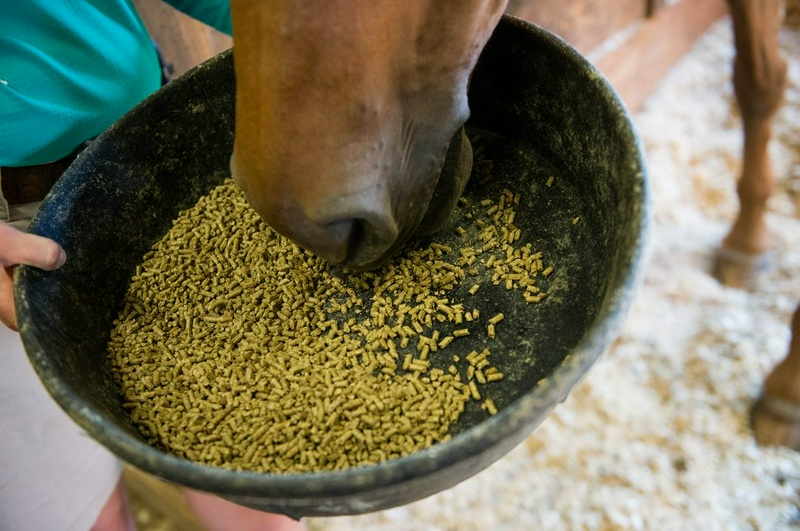
Pour Jennie Brannigan, cavalière cinq étoiles de concours complet, les chevaux ne sont pas des outils de travail ; ce sont ses partenaires de longue date.
Depuis 2010, elle a participé à 12 compétitions CCI5, a été membre de cinq équipes de la Coupe des Nations et a remporté le prix Best First Timer aux Defender Burghley Horse Trials 2023 avec FE Lifestyle.
Brannigan souligne dans son programme d'entraînement à Brannigan Equestrian à West Grove, en Pennsylvanie, l'importance de traiter chacun de ses chevaux spéciaux comme un individu indépendant et d'être attentif à leurs besoins différents.
Dans notre entretien questions-réponses avec Brannigan, cette cavalière de haut niveau parle de ses stratégies pour répondre aux besoins spécifiques de ses chevaux et explique comment elle les maintient heureux, en bonne santé et au sommet de leur performance tout au long de leur carrière.
PH : Comment encouragez-vous les chevaux difficiles à manger ?
JB : À mon avis, l'essentiel est de connaître vos chevaux de l'intérieur et de l'extérieur et de savoir ce qui fonctionne le mieux pour chacun.
Certains chevaux s'en sortent mieux avec des repas plus petits mais plus fréquents tout au long de la journée, surtout ceux qui peuvent avoir besoin de beaucoup de calories mais qui se lassent de la nourriture.
Certains chevaux peuvent ne pas aimer manger dans l'écurie, mais se sentir à l'aise pour manger au pâturage.
Mon pur-sang cinq étoiles Twilightslastgleam (« Comic ») était vraiment sensible au fait de pouvoir regarder dehors pendant qu'il mangeait et de voir ses compagnons de troupeau.
Il était très dépendant du troupeau et ne mangeait pas s'il ne pouvait pas voir ses amis.
Isabel Turner, notre formidable chef d'équipe, a suggéré de placer sa mangeoire devant son box, et cela a été très efficace.
Souvent, ce sont ces détails contextuels qui sont importants, et il faut vraiment prendre le temps de comprendre où chaque cheval mange le mieux.
J'ai également trouvé utile d'utiliser des suppléments combinés pour mes chevaux difficiles qui ont besoin de plusieurs types de soutien en même temps, afin de ne pas avoir à leur donner de nombreux suppléments séparés.
L'un de nos produits préférés est le SmartCombo Ultra de SmartPak, car il offre cinq produits différents pour soutenir les articulations, les tendons et les ligaments, la peau et le pelage, les sabots et le système digestif dans une seule formule.
Nous, les propriétaires de chevaux, aimons généralement toujours faire quelque chose, ce qui nous donne l'impression de mieux faire, mais avec les chevaux, souvent « moins, c'est plus » ; et les suppléments combinés aident à simplifier les besoins nutritionnels de nos chevaux.
Pour les chevaux qui sont difficiles avec l'eau ou qui ne boivent pas bien en été, nous utilisons un produit formidable appelé Gallagher’s Water.
C'est une poudre d'électrolyte au goût de luzerne que vous ajoutez à l'eau des chevaux pour les encourager à boire.
Il y a quelques années à Burghley, mon cheval cinq étoiles FE Lifestyle (« Foxy ») a eu des crampes musculaires et Steph Simpson, le chef d'équipe de Boyd Martin, a sorti un paquet de Gallagher’s Water pour lui, et il a immédiatement bu ; depuis, Isabel le garde toujours à portée de main.
PH : Comment gérez-vous les chevaux qui sont sujets au stress digestif ?
JB : Ce que nous demandons à nos chevaux aux niveaux élevés de l'eventing n'est pas simple ; ils passent une grande partie de leur temps sur la route et dans les écuries, et le pâturage est également limité pour eux.
En fait, nous essayons de garder tout aussi naturel que possible pour eux, mais lorsque vous êtes en voyage et en compétition, cela peut être difficile.
Je crois fermement qu'il faut donner autant de temps que possible à mes chevaux pour se promener dans le pâturage, car leur corps est fait pour un mouvement constant.
Plus ils peuvent vivre naturellement, en plein air et sur l'herbe, mieux c'est.
Lors des compétitions, je sors toujours mes chevaux de l'écurie pour qu'ils puissent brouter un peu.
Cependant, Foxy est sujet au tying up, donc nous devons vraiment limiter son accès à l'herbe.
Néanmoins, je veux qu'il ait du temps à l'extérieur, c'est pourquoi nous utilisons une muselière de pâturage, surtout lorsque l'herbe est riche en sucre.
Comme Foxy ne reçoit pas toute la vitamine E dont il a besoin de l'herbe, nous utilisons le Smart & Simple Vitamin E Liquid de SmartPak.
Le cheval de tête de Brannigan dans les compétitions cinq étoiles, FE Lifestyle, est sujet au tying up, donc il limite sa consommation d'herbe et complète son régime avec de la vitamine E liquide.
Ici, Brannigan et «Foxy» sont vus lors de leur parcours de cross-country à la compétition CCI5-L au Defender Kentucky Three-Day Event 2026.
©Amy K.
Dragoo l'estomac des chevaux est conçu pour recevoir continuellement une petite quantité de fourrage, donc lorsque mes chevaux ne sont pas sur l'herbe, nous nous assurons qu'ils ont toujours accès à du foin de haute qualité et en libre accès.
Quand je vivais en California, parce que nous n'avions pas accès au même type d'herbe qu'en Pennsylvania et que les chevaux étaient plus exposés au sable, nous avions beaucoup de problèmes de coliques.
Là-bas, nous utilisions également un produit pour évacuer le sable et généralement un complément de vitamine E et de sélénium, s'ils étaient déficients dans l'un ou l'autre.
Le SmartCombo Ultra, que la plupart de nos chevaux utilisent, contient des prébiotiques, des probiotiques et des enzymes pour la santé du gros intestin, des composés pour soutenir la santé de l'estomac et la réparation naturelle des tissus, et du psyllium pour aider à évacuer l'accumulation de sable dans le système digestif.
Ainsi, en termes de soutien de l'estomac et du système digestif, il couvre de nombreux aspects différents.
PH : Pouvez-vous donner des conseils sur la façon de gérer vos chevaux plus nerveux ou plus chauds ?
JB : Je crois fermement qu'il faut donner autant de temps que possible à mes chevaux pour se promener, car leur corps est fait pour un mouvement constant.
Et même lorsqu'ils sont dans l'écurie, nous nous assurons qu'ils peuvent voir d'autres chevaux.
Pour les chevaux qui ont tendance à être trop anxieux ou réactifs, nous utilisons le SmartCalm Ultra de SmartPak.
De nombreux suppléments calmants à base de plantes contiennent des ingrédients interdits par de nombreuses organisations de compétitions, mais ce produit n'est pas à base de plantes et contient à la place des composés ayant un effet calmant naturel comme le magnésium, la vitamine B1 et le tryptophane.
Nous avons également constaté que l'alimentation avec du foin est utile.
De nombreux cavaliers s'inquiètent que le foin rende les chevaux nerveux.
Mais pour certains de nos chevaux de haut niveau qui ont besoin de plus de calories, Isabel et moi avons trouvé que donner du foin au lieu de plus de céréales est très bénéfique.
PH : Le concours complet est bien sûr très exigeant pour les articulations des chevaux.
Pouvez-vous expliquer toute mesure préventive que vous prenez pour aider à la santé des articulations de vos chevaux ?
JB : Dans notre discipline, il est très important de maintenir la santé des articulations des chevaux, car le saut et le galop exercent une pression sur les articulations.
Une partie de ce soin revient au soutien nutritionnel.
SmartCombo Ultra pour mes chevaux contient des ingrédients éprouvés et efficaces pour la santé des articulations, y compris glucosamine, chondroïtine sulfate, acide hyaluronique, MSM et vitamine C.
Quand vous pensez aux compléments pour votre cheval, je vous recommande de vraiment lire les étiquettes nutritionnelles pour savoir exactement ce que contient le produit.
Si vous comparez les ingrédients utilisés par SmartPak avec certaines autres entreprises, vous verrez qu'ils ont vraiment pris en compte tous les aspects en ajoutant des substances soutenues par la recherche.
Donc ici, le dicton « on récolte ce que l'on sème » s'applique.
Il est souvent facile de penser : « Oh, ce complément est très populaire en ce moment, donc il doit être incroyable !
» Lisez les étiquettes et faites vos propres recherches.
Jennie Brannigan considère ce sujet comme crucial pour protéger les articulations de ses chevaux, car la discipline de l'eventing exerce intrinsèquement plus de pression sur elles.
Dans cette image, elle et Twilightslastgleam parcourent le parcours cinq étoiles du Maryland 5 Star at Fair Hill 2024.
©Amy K.
Dragoo Pour les chevaux qui en ont besoin, nous utilisons également des injections de Polyglycan.
Mais pour renforcer la santé à long terme des articulations de mes chevaux, je crois fermement à les garder en mouvement.
En plus de les laisser sortir au pâturage, nous utilisons également un marcheur automatique pour un mouvement à faible impact.
Il est également très important pour moi de donner à mes chevaux suffisamment de temps pour s'échauffer en marchant.
Il est facile de s'habituer à simplement monter et partir, mais au début de ma carrière, mes entraîneurs m'ont appris que les chevaux doivent toujours marcher pendant 15 minutes avant de trotter.
C'est une bonne façon de donner à votre cheval l'occasion de se détendre, surtout s'il a été enfermé dans une écurie pendant un certain temps.
Si vous passiez la plupart de votre temps au lit et qu'on vous demandait ensuite de faire un exercice intense, vous aimeriez probablement vous échauffer d'abord.
PH : Le dicton « pas de pied, pas de cheval » est une vérité incontestable dans la discipline de l'eventing.
Comment soutenez-vous la santé des sabots de vos chevaux ?
JB : Ces dernières années, j'ai beaucoup appris sur le soin des sabots.
Foxy a en fait été le premier cheval américain à remporter le titre de “Best Shod” à Burghley.
Avoir un bon maréchal-ferrant est en tête de ma liste de soins pour mes chevaux.
Ce n'est pas tant le type de fer qui compte ; c'est plutôt de trouver un maréchal-ferrant qui se spécialise dans le maintien de l'équilibre de la parure du sabot.
Pour Brannigan, avoir un maréchal-ferrant expérimenté est en tête de sa liste de soins pour ses chevaux.
Comic avait des sabots absolument désastreux et totalement inadaptés pour un Thoroughbred, donc c'est vraiment incroyable de voir à quel point on peut obtenir des résultats avec le bon programme et les bons soins.
Mais un bon travail de ferrage va de pair avec la nutrition.
Le complément combiné SmartPak pour mes chevaux comprend de la biotine, des acides aminés, du cuivre et du zinc pour m'assurer qu'ils reçoivent les nutriments clés nécessaires à la santé des sabots.
PH : Quels autres aspects de votre programme d'entraînement contribuent à la longévité de vos chevaux ?
JB : Je crois qu'il est important de donner à mes chevaux suffisamment de temps de repos entre les compétitions.
Le niveau de compétition est vraiment stupéfiant ; sauf en décembre, on peut participer à des concours d'eventing chaque mois.
Foxy a 16 ans et, comme on dit, n'a jamais eu d'autre blessure qu'une coupure dans le van.
Chaque fois que vous participez à un eventing, surtout à des niveaux élevés, de petites déchirures se produisent dans les tendons des chevaux.
Si vous faites travailler le cheval à nouveau quelques jours plus tard pour un galop ou une leçon de saut, vous augmentez considérablement le risque de blessure ; c'est pourquoi j'ai compris qu'il faut donner à ces micro-déchirures l'occasion de se réparer avant de retourner en compétition.
Mes chevaux ne sont pas des machines.
Ils sont mes partenaires et travaillent avec moi depuis des années.
Par conséquent, je ne les envoie pas à chaque concours qui figure au calendrier.
Je vise les compétitions importantes et je donne à mes chevaux un bon repos en hiver pour qu'ils se rétablissent complètement.
Ensuite, je les ramène progressivement à leur meilleur niveau de forme.
Les Britanniques sont un bon exemple de pourquoi ces périodes de repos sont si importantes.
Leur climat rend impossible la compétition toute l'année, mais voyez à quel point ils obtiennent de bons résultats.
J'utilise également un programme de surveillance de la fréquence cardiaque et je collabore avec le New Bolton Center de l'University of Pennsylvania dans une étude ; ainsi, au cours des cinq ou six dernières années, j'ai accumulé une grande quantité de données sur la fréquence cardiaque de Foxy et sur le niveau de Chaharnal qu'il a atteint.
Ces informations nous fournissent une excellente base pour évaluer sa condition physique et déterminer dans quel état il doit être pour participer à un grand événement comme le Kentucky.
Brannigan considère tous ses chevaux comme ses partenaires et, pour prolonger leur durée de vie, il choisit avec soin le nombre de compétitions auxquelles ils participent et leur accorde toujours suffisamment de repos et de temps pour récupérer entre les compétitions.
Plus vous connaissez votre cheval, plus il dure longtemps et moins vous devez travailler pour le préparer.
C'est un cercle vertueux : si vous leur donnez l'occasion de récupérer et de participer chaque année à seulement quelques événements sélectionnés, ils développent une meilleure base de préparation et peuvent accomplir leur travail mieux et plus longtemps.
Pour moi, cela signifie simplement être une bonne personne de cheval.
J'ai eu la plupart de mes chevaux depuis qu'ils avaient 4 ans.
Comic, comme beaucoup de mes chevaux, est un Thoroughbred et, en raison de son passé sur les pistes de course, il avait de nombreuses limitations physiques ; c'est pourquoi je suis très reconnaissant qu'il ait maintenant pris sa retraite de la compétition à 16 ans et qu'il soit heureux et en bonne santé au pâturage.
Mon objectif en tant qu'amoureux des chevaux est cela ; pas seulement de gagner plusieurs événements.
Pour plus d'informations : pour en savoir plus sur les compléments SmartPak que Brannigan donne à ses chevaux et pour découvrir tous les produits SmartPak, cliquez ici.
Vous pouvez trouver plus d'informations sur la nutrition des chevaux de sport ici.
Source : Practical Horseman – Health