Christoph Hess : le dressage est harmonie et équilibre
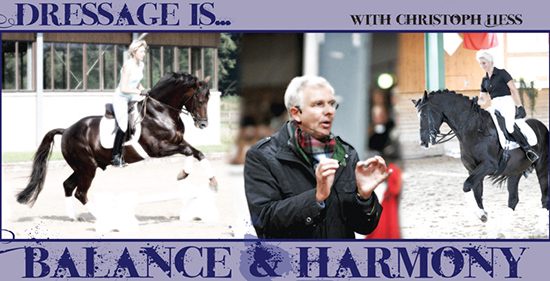
Rapport : Chris Hector & photos : Roz Neave Christoph Hess a pris sa retraite en 2016 de son poste de chef du département de formation au centre de formation et d'éducation de Warendorf en Allemagne.
Il continue à être actif à différents niveaux.
Partagez certaines de ses perspectives.
Dans le monde parfois sec et formel du dressage, Christoph Hess est comme une bouffée d'air frais, non, une tempête d'air frais.
Il est l'une des personnes les plus passionnées que je connaisse et heureusement pour les chevaux de dressage du monde, une grande partie de cette passion est consacrée à l'amélioration de leur condition, non seulement dans la manière de monter mais aussi dans la manière de les élever, de les développer et de les entretenir.
Et heureusement pour les chevaux, Christoph est une personne très influente.
À chaque occasion, il promeut un système éducatif respectueux des chevaux - un système de dressage qui contribue réellement à la santé mentale et physique du cheval.
Christoph a terminé une tournée passionnée en Australie, commençant à l'ouest, s'arrêtant en Australie-Méridionale et à Victoria, et se terminant en Nouvelle-Galles du Sud, avec partout le même message : le dressage doit être logique, le dressage doit promouvoir un cheval heureux : « C'est notre objectif le plus élevé, un cheval heureux, un athlète heureux.
.
.
» a-t-il dit au public lors de la clinique pour juges, entraîneurs et cavaliers de dressage au centre équestre de Werribee.
Christoph a d'abord tenu une session théorique, où sa photo a vraiment défini le sujet, une photo d'un cheval libre dans un champ.
« Dans le passé, c'était terrible, tous les chevaux étaient toujours dans les écuries.
Plus nous voyons les chevaux dehors, plus nous comprenons ce que nous devons faire lorsque nous les entraînons sous la selle.
» « Beaucoup de chevaux d'aujourd'hui n'ont aucun contact avec d'autres animaux.
Il est important de comprendre que le cheval n'est pas né pour l'écurie, le cheval veut courir dans les champs.
Si le cheval est seul, ce n'est pas bon, les chevaux ont besoin de contact avec d'autres chevaux.
Ce qui est idéal, c'est que le cheval puisse sortir en groupe de deux ou trois chevaux, comme lorsqu'il grandissait.
» Christoph souligne encore et encore qu'il faut travailler avec le cheval : « Le cheval essaie toujours de s'échapper, c'est une partie de sa nature.
Quand le cavalier utilise les rênes pour arrêter le cheval, c'est le premier faux mouvement du cavalier.
Nous devons toujours donner une porte ouverte au cheval.
Quand nous retenons le cheval avec nos mains, nous le déséquilibrons mentalement et physiquement, et c'est le début de la discorde entre le cheval et le cavalier.
» « Donnez au cheval un sentiment de liberté quand vous êtes assis dessus, toujours le sentiment qu'il peut avancer.
La plupart des cavaliers dans le monde entier utilisent leurs mains pour contrôler le cheval, le cou commence à se raccourcir et ensuite tout va mal.
» Une autre photo de Christoph, montrant un cavalier portant un autre cavalier sur ses épaules, a ouvert le deuxième sujet de sa clinique : la responsabilité du cavalier dans l'équitation correcte.
Il a dit : « Plus l'équilibre du cavalier dans la selle est bon, meilleure sera la connexion.
Il y a deux choses que le cavalier doit avoir - l'équilibre et la flexibilité.
Plus la position assise du cavalier est mauvaise, plus il ira au magasin de sellerie pour acheter une nouvelle selle et de nouveaux étriers.
Le cavalier doit trouver son équilibre dans la selle, pas être maintenu en position par une selle dans laquelle vous ne pouvez pas bouger.
» Christoph, en tant qu'étudiant passionné dans le domaine de l'élevage de chevaux de dressage, aligne sa philosophie avec l'émergence des chevaux de dressage modernes : «Plus le mouvement du cheval est bon, meilleur doit être le cavalier.
Si vous pensez qu'en achetant simplement un cheval avec de beaux mouvements en Europe, vous n'avez pas besoin d'apprendre à monter, vous vous trompez.
Les grandes foulées sont plus difficiles à monter, le piaffer est plus facile que le trot allongé.
» Il a dit : «Je vois des chevaux de premier plan qui, après quelques années, semaines ou même jours avec un cavalier qui n'a pas d'équilibre ou de flexibilité, déclinent.
Les cavaliers ne réalisent souvent pas qu'ils utilisent les rênes pour maintenir leur équilibre corporel.
» Il a ajouté : «Bill Roycroft d'Australie pouvait parcourir le parcours de saut à Rome d'une seule main.
Le meilleur exercice est de faire tous les mouvements d'une seule main, puis vous pouvez facilement juger si vous montez correctement ou non.
J'ai essayé d'introduire un mouvement à une main dans nos tests de dressage, je n'ai pas réussi, mais si vous sentez que le cavalier peut monter d'une seule main, c'est un bon cheval et un bon cavalier - excellent !
» Il a dit : «Le cavalier peut-il lâcher les deux rênes ?
Souvent, cela conduit à une catastrophe complète, le cheval s'enfuit simplement.
» Il a continué : «Le cavalier peut-il faire tous les mouvements avec des rênes longues, longues avec contact, puis aussi longues que possible ?
Il est possible de faire le piaffer avec des rênes longues lorsque le cavalier monte à 100% avec un corps équilibré et que le cheval est sous son contrôle.
» Il a dit : «Ce sont les principes de l'esprit de bonne équitation.
» Il a ajouté : «Le Grand Prix est la base, la base, la base.
Ce n'est pas de l'équitation de spectacle, mais un travail de base.
Les principes peuvent sembler faciles mais sont en réalité complexes - vous avez besoin de quelqu'un pour vous aider depuis le sol.
Quelqu'un qui dira, c'est trop rapide ou trop lent.
» Il a dit : «Le cheval cherche-t-il correctement le contact avec les rênes ?
Certains chevaux de classe supérieure sont légers dans le cou et la tête, mais toujours derrière les rênes.
Vous devez toujours avoir le sentiment que le cheval apprend à étirer son corps.
Pas seulement l'étirement du cou et de l'avant du corps, mais de tout le corps.
Le cheval a besoin de son cou pour équilibrer son corps - peu importe que le nez du cheval soit devant ou derrière la ligne verticale, tant que le cheval s'étire.
Si le cheval ne s'étire pas, il ne peut pas se plier.
D'abord l'étirement, puis le pliage.
» Il a dit : «Pourquoi, lorsque nous voulons que le cheval se porte bien, le faisons-nous marcher longuement ?
Parce que cette auto-portance est le résultat de l'étirement.
» C'est le mouvement que le cheval doit faire ; c'est le sentiment dont nous avons besoin lors de l'entraînement, nous devons sentir comment le cheval se déplace.
.
.
Il a dit : «L'une des premières choses en équitation est d'amener le cheval à accepter la jambe intérieure.
La jambe intérieure du cavalier guide le cheval, règle la vitesse et la direction du mouvement, mais cela n'est efficace qu'en combinaison avec l'utilisation correcte de la main extérieure et de la jambe extérieure du cavalier, qui doit être cinq à dix centimètres en arrière, plus près de cinq que de dix.
» Comme on pouvait s'y attendre de quelqu'un dans la position de Christoph, l'axe de son discours était l'échelle d'entraînement allemande et en particulier ses trois premiers éléments.
Il a dit : «Le rythme, c'est très important, le pas à quatre temps, le trot à deux temps, et le galop à trois temps.
Beaucoup de juges ne prêtent pas suffisamment attention au galop à trois temps.
Ils regardent le pas et s'il est à deux temps, ils donnent la note 1 et le perdent pour toujours, mais ils regardent le trot à quatre temps et disent ‘trot rassemblé magnifique’.
Le rythme doit inclure le ‘tempo’ – vous pouvez conduire très vite ou très lentement tout le temps.
Les foulées doivent être actives, mais pas précipitées, et doivent montrer suffisamment de balancement dans le dos, le dos étant le pont entre les jambes arrière et avant.
Plus le tempo est bon, plus le cheval montrera de la souplesse dans ses foulées.
Un bon cavalier a un sens incroyable du timing en selle.
L'objectif est de rendre un cheval paresseux plus actif et un cheval trop énergique plus calme.
» Il a dit : « Le calme est très important.
Dans le monde entier, nous voyons des cavaliers qui peuvent contrôler la tension et présenter un test spectaculaire, mais qui ne sont pas capables de montrer un cheval souple.
» Il a dit : « Le contact signifie une tension à travers tout le corps.
Le mouvement commence-t-il par l'arrière, passe-t-il par le dos et atteint-il la bouche du cheval ?
Le cavalier doit sentir les jambes arrière du cheval dans son petit doigt.
» Il a dit : « Les mains du cavalier écoutent la bouche du cheval.
Le cheval est-il heureux ?
Y a-t-il une tension ?
Est-il en face des aides ?
Accepte-t-il le mors ?
La partie la plus sensible du cheval est sa bouche, c'est une opportunité pour le cavalier de sentir ce qui se passe.
C'est là que nous parlons avec le cheval, notre contact sensible avec la bouche.
» Il a dit : « Certains pensent que plus le contact est lâche, mieux c'est, mais le cheval doit rechercher le contact.
Parfois, il vaut mieux avoir un contact plus fort que lâche.
Souvent, les chevaux naissent avec une tendance à un contact lâche – nous devons être très prudents dans le choix des étalons pour ne pas rechercher des chevaux magnifiques avec des encolures très longues et un contact très doux – ces chevaux sont ‘lâches’ mais principalement trop pliés et n'ont pas une tendance à avancer appropriée.
D'abord, nous voulons un contact constant, puis aussi doux que possible.
» Ne travaillez jamais sans un contact stable.
Il a dit : « Les gens disent que les chevaux d'aujourd'hui sont bien meilleurs mais que les cavaliers ne le sont pas.
Les chevaux d'aujourd'hui sont toujours dans le cadre, mais souvent ne recherchent pas correctement le contact.
» Il a ajouté : « C'est la souplesse.
Beaucoup de gens pensent qu'ils doivent amener la tête du cheval aussi loin que possible à gauche ou à droite, pour que le cheval dise bonjour.
Non – ce n'est pas ce que nous voulons, nous voulons juste voir un peu l'œil et le nez du cheval.
Ne déséquilibrez pas le cheval.
» Il a continué : « L'objectif du dressage est d'avoir un cheval harmonieux et en face de vous.
Cette connexion est incroyable, le cheval fait confiance au cavalier pour sauter – le cheval et le cavalier sont calmes, positifs et en avant.
Le dressage n'est pas de faire mouvement, mouvement, mouvement parce que c'est écrit dans le livre des règles, mais c'est de soumettre le cheval, de rendre le cheval souple, de mettre le cheval en face de vous.
Un athlète heureux.
» Ingrid Klimke montre.
.
.
Source : The Horse Magazine