Comment empêcher un cheval de se précipiter à l'obstacle ?
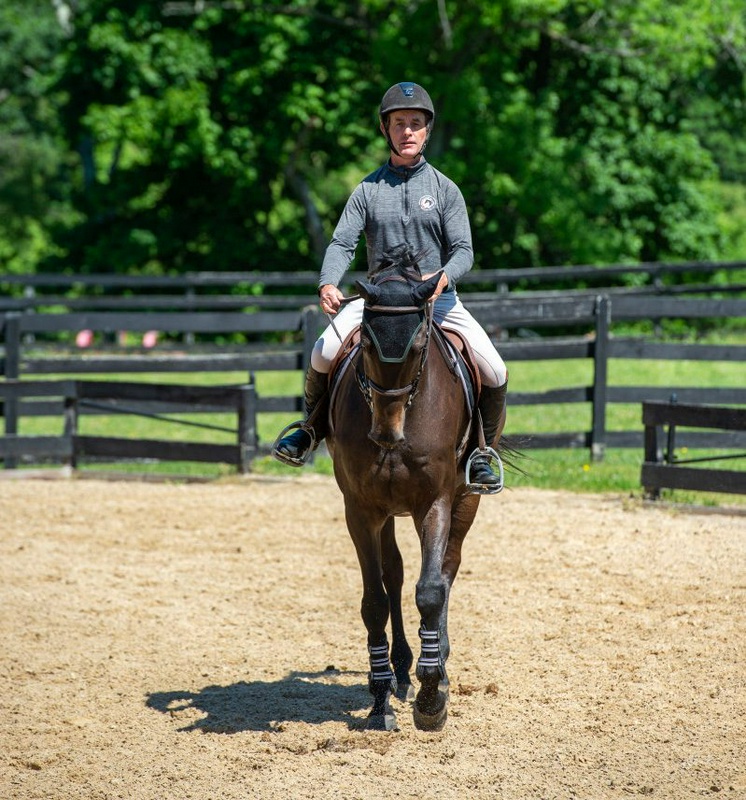
Vous vous dirigez vers l'obstacle et soudainement votre cheval accélère et se dirige vers l'obstacle.
Vous essayez de le ralentir en tirant sur les rênes et en vous asseyant profondément, mais il ignore vos commandes et continue d'accélérer.
Vous ne pouvez pas voir la distance et au moment du saut, votre cheval saute de loin vers l'obstacle et effectue un saut plat, ou ajoute un petit pas à la dernière minute et franchit l'obstacle avec difficulté.
Si cette situation est familière à votre cheval, vous montez un cheval qui se précipite.
Dans le meilleur des cas, vous ressentez du désordre et dans le pire des cas, vous n'avez aucun contrôle et parfois c'est même effrayant.
Vous perdez confiance en vous et vous vous inquiétez que la confiance de votre cheval soit également en danger.
La raison la plus courante pour laquelle un cheval se précipite est qu'il est tordu ou déséquilibré, ou les deux.
Quand un cheval est tordu ou déséquilibré, il n'a pas assez de puissance pour porter son poids de manière uniforme sur les deux postérieurs, ce qui signifie qu'il n'a pas la puissance nécessaire pour sauter l'obstacle en toute sécurité.
Au lieu de cela, il utilise la vitesse pour franchir l'obstacle.
D'autre part, un cheval se déplace droit sur deux lignes et chaque postérieur suit la trajectoire de l'antérieur correspondant, que ce soit sur une ligne droite ou sur une courbe.
Il accepte un contact égal avec les deux rênes et ne s'appuie pas sur une rêne ou n'y est pas raide.
Son poids est réparti uniformément sur ses quatre membres.
Cela lui permet, lors du saut, de pousser uniformément avec ses postérieurs et de produire un saut puissant et correct.
La clé pour empêcher un cheval de se précipiter est de changer son équilibre sans détruire sa motivation.
Cependant, de nombreux cavaliers pensent que la solution pour ralentir un cheval qui se précipite est d'utiliser une rêne plus forte ou de tirer sur les rênes près de l'obstacle.
Cela aggrave souvent le problème car la monte se transforme rapidement en une lutte—et c'est une situation que votre cheval gagnera toujours!
Je vais vous montrer ma méthode pour corriger un cheval qui se précipite—d'abord en s'assurant qu'il est droit et peut se déplacer sur deux lignes, puis en ajustant son équilibre sur le plat et ensuite sur un petit exercice de cavalletti.
Avant de commencer, c'est toujours une bonne idée de vérifier tout problème physique avec votre vétérinaire avant de chercher à résoudre le problème par l'entraînement.
Il se peut que votre cheval fuie la douleur.
Cependant, les gens se tournent parfois trop vite vers le vétérinaire à la recherche d'une solution magique.
La plupart du temps, il suffit d'une monte correcte.
Se déplacer droit sur deux lignes avant de commencer à travailler sur la rectitude de votre cheval, assurez-vous que vous êtes vous-même centré—parfois les cavaliers sont naturellement unilatéraux.
Ils tordent également souvent leur corps, se tendent ou se penchent dans la selle en raison d'années d'efforts pour faire face à un cheval qui est raide sur une rêne.
Asseyez-vous carrément avec un poids égal dans chaque étrier, sur les os du siège et les rênes pour ne pas contribuer à la torsion de votre cheval ou la créer.
Comme les cavaliers, de nombreux chevaux sont naturellement unilatéraux et sont plus forts d'un côté que de l'autre—ce qui est l'une des causes les plus courantes de torsion.
Un signe que votre cheval est tordu est qu'il s'appuie sur une rêne.
Quand il fait cela, il évite le contact avec la rêne opposée et évite de porter le poids sur le postérieur opposé.
Par exemple, un cheval qui s'appuie sur la rêne gauche évite le contact avec la rêne droite et ne met pas de poids sur son postérieur droit, ce qui le fait tourner à droite.
Pour tester cela, pensez à un entonnoir allant de la bouche et du mors du cheval jusqu'à vos mains.
Vos mains sont la partie la plus large de l'entonnoir et le mors en est la partie la plus étroite.
Lorsque vous travaillez sur une surface plane, regardez les épaules de votre cheval et assurez-vous que l'épaule gauche et la rêne gauche sont aussi éloignées l'une de l'autre que l'épaule droite et la rêne droite.
Si c'est le cas, c'est un bon signe que votre cheval se déplace avec des épaules droites et que son arrière s'aligne.
Si vous voyez que son épaule gauche veut se rapprocher de la rêne gauche (et de la partie la plus large de l'entonnoir), c'est un signe que votre cheval s'appuie sur la rêne gauche, abaisse son épaule gauche et tourne son arrière vers la droite.
Cela signifie qu'il met également moins de poids sur son postérieur droit ou qu'il est plus faible de ce côté.
Si votre cheval est de travers, l'objectif est de l'inciter à prendre contact avec la rêne qu'il évite, ce qui aide à aligner ses épaules avec son arrière pour le redresser.
Les chevaux sont moins tendus ou effrayés lorsque vous déplacez leurs épaules que lorsque vous déplacez leur arrière.
Vous pouvez toujours soutenir avec votre jambe, mais concentrez-vous sur le contrôle des épaules.
Donc, dans l'exemple ci-dessus, si votre cheval s'appuie sur la rêne gauche, commencez par vous déplacer vers la gauche au pas, car il est un peu plus facile pour le cavalier de corriger la rêne intérieure par rapport à l'extérieure.
Commencez par ouvrir la rêne droite : imaginez que vous tenez un plateau de service et que vous devez déplacer vos deux mains au même niveau.
Sans changer la distance entre vos mains, déplacez-les légèrement vers la droite.
Cela encouragera votre cheval à accepter un peu de contact avec la rêne droite, à lever son épaule gauche et à déplacer ses deux épaules vers la droite pour combler l'espace entre la rêne droite et son épaule droite.
Au pas, Oreo s'appuie sur la rêne gauche et tourne son arrière vers la droite.
Je corrige ce déséquilibre en ouvrant ma rêne droite jusqu'à ce qu'il accepte un peu de contact avec la rêne droite et déplace son épaule vers la droite pour combler l'espace créé par la rêne légèrement ouverte.
Je fais attention à ne pas le tirer en arrière ou à le plier excessivement.
©Amy K.
Dragoo Lorsque votre cheval prend contact sur la rêne droite, laissez-le se plier légèrement vers la gauche en suivant sa bouche avec votre main droite.
Si vous avez trop de poids dans votre main droite, vous pourriez le bloquer et le forcer à revenir sur son épaule gauche.
Lever l'épaule gauche et plier le cheval autour de votre jambe gauche crée un contact ferme sur la rêne droite.
Le résultat est que le cheval met plus de poids sur son postérieur droit.
Après avoir maîtrisé le mouvement du cheval sur deux pistes au pas, essayez-le au trot, puis au galop.
Vous utiliserez les mêmes aides, sauf qu'au galop, vous pouvez utiliser davantage vos os du siège pour influencer le cheval.
Au galop, faites particulièrement attention à vous asseoir au centre de votre cheval, car un cheval de travers essaiera de vous faire pencher d'un côté, affectant davantage l'équilibre.
Par exemple, si vous allez à gauche au galop et que votre cheval est raide sur la rêne gauche et faible sur le postérieur droit, lorsque vous empêchez l'épaule gauche de tomber, vous sentez que le cheval met son poids sur son postérieur droit et vous pouvez sentir la différence dans votre os de siège droit.
Lorsque vous ressentez cette différence dans votre os de siège, réduisez la pression sur la rêne gauche.
Lorsque votre cheval se déplace directement sur deux pistes, vous pouvez lui demander de porter plus de poids uniformément sur ses postérieurs.
Équilibrez votre cheval sur ses postérieurs pour pratiquer le port de plus de poids sur les postérieurs du cheval, augmentez les aides de jambe au pas pour que votre cheval avance et que l'énergie vienne de l'arrière.
En vous asseyant calmement, levez les deux mains et maintenez le contact de la bouche au coude.
Cela permet de lever les épaules et de permettre au cheval de porter plus de poids sur ses postérieurs.
À ce stade, la plupart des chevaux deviennent plus légers dans votre main et veulent s'étirer de manière plus naturelle et lever leur dos, car ils sont en équilibre.
Lorsque vous ressentez cet équilibre, laissez votre cheval utiliser son encolure comme récompense et s'étirer en abaissant votre main et en suivant sa bouche.
Lors de l'apprentissage de cette technique, il est utile d'avoir un œil avisé au sol pour vous dire quand relâcher.
Lorsque l'assistant voit que le cheval met le poids sur ses postérieurs, il peut vous rappeler de relâcher vos mains et de le suivre pendant qu'il s'étire.
Bientôt, vous développerez ce sentiment par vous-même.
Une erreur courante est que lorsque votre cheval veut s'étirer, vous continuez à lui demander de transférer son poids vers l'arrière.
Cela se transforme rapidement en une situation de haute pression qui rend votre cheval anxieux et confus.
L'équitation est une question de pression et de récompense.
Le timing de la récompense est important dans tout ce que vous faites avec les chevaux, mais il est particulièrement crucial dans cet exercice.
Lorsque votre cheval transfère son équilibre vers l'arrière au pas, faites l'exercice au trot puis au galop.
Si votre cheval garde la tête haute, maintenez votre main presque plus haut que là où il veut la garder pour établir un contact de la bouche au coude.
Après cela, levez votre main un peu plus haut pour l'aider à mettre son poids sur ses postérieurs.
Dès que le cheval à la tête haute transfère son poids vers l'arrière, il voudra toujours abaisser sa tête et assouplir son dos, ce qui lui permettra de mieux sauter.
La plus grande erreur est que si votre cheval lève la tête, vous abaissez votre main pour tirer sa tête vers le bas—cela ne fonctionne pas.
Il est plus fort que vous.
Pour un cheval qui tire sa tête vers le bas, vous devez également lever votre main pour l'encourager à transférer son poids vers l'arrière.
Encore une fois, lorsque vous sentez qu'il se lève et s'assoit devant, vous devez lui permettre de se porter lui-même avec votre main.
Lorsque le cheval tire sa tête vers le bas, de nombreux cavaliers se tournent vers un mors plus fort, mais je les encourage à apprendre la technique correcte avec leurs mains.
Par exemple, la raison pour laquelle les cavaliers mettent un mors Gag dans la bouche du cheval est pour un contrôle accru.
Quand le cavalier tire en arrière, le mors monte dans la bouche du cheval, ce qui aide à relever sa tête—et quand vous relevez la tête, le poids est transféré sur les postérieurs.
Pourquoi ne pas simplement lever la main pour obtenir le même résultat ?
Utiliser une paire de rênes auxiliaires ou un mors plus fort ne résout pas le problème.
La raison pour laquelle votre cheval se précipite au départ est qu'il est faible sur l'un de ses postérieurs et manque d'équilibre.
Il est important de comprendre comment changer l'équilibre du cheval au lieu de le ralentir en tirant sur le mors, ce qui peut rapidement devenir un jeu de tir à la corde.
Un cheval qui est très sur ses antérieurs vous dit qu'il est physiquement difficile pour lui de se porter.
Après avoir fait quelques bons pas, laissez votre cheval se reposer, puis demandez à nouveau.
S'il ne peut pas faire naturellement cinq pas en bon équilibre, vous ne pouvez pas vous attendre à ce qu'il fasse 100 pas dans cet équilibre sans problème.
Ce n'est pas quelque chose qui se développe du jour au lendemain—vous devez connaître ses capacités et travailler pour augmenter sa force au fil du temps.
Cavaletti pour la rectitude Pour entraîner votre cheval à rester droit et sur ses postérieurs vers les obstacles, commencez par un exercice simple de cavaletti.
Placez deux cavaletti à une distance de cinq pas (18 mètres) au centre de la carrière.
Placez deux barres au sol sur chaque cavaletti pour former un "V".
Placez la partie la plus étroite plus large que les épaules du cheval et sur le cavaletti, et laissez la partie la plus large sur le sol.
Ces barres agissent comme des guides ou des entonnoirs pour vous rappeler de vous concentrer sur la rectitude et encourager votre cheval à sauter au centre des deux cavaletti.
En allant vers la droite, avancez le long de la ligne longue avec un trot ample et en avant.
Si votre cheval a tendance à être faible sur le postérieur droit, pensez à l'épaule en dedans au trot avant de tourner sur votre ligne pour transférer le poids sur le postérieur.
Utilisez cet exercice simple de cavaletti pour entraîner votre cheval à rester droit et sur le postérieur face aux obstacles.
©Amy K.
Dragoo Avant de tourner sur votre ligne, pensez à un petit virage carré tout en maintenant un bon rythme.
Mais n'en faites pas trop, car essayer de rendre le virage trop carré peut ralentir le trot et casser le rythme, ce qui rend le saut plus difficile pour le cheval.
Lorsque vous tournez au centre de la ligne, pensez à vous asseoir très droit et à garder votre épaule extérieure en arrière.
Si vous accompagnez trop avec votre épaule extérieure, vous libérez avec votre main extérieure, ce qui lui permet de passer par-dessus son épaule extérieure.
Gardez vos yeux sur la ligne de cavaletti et concentrez-vous sur deux actions—une action d'équilibre en levant la main extérieure et une action de blocage de l'épaule en ouvrant la main intérieure et en utilisant une légère rêne d'encolure extérieure.
Cela aide à soulever les épaules de votre cheval et à répartir le poids sur ses postérieurs, lui permettant de ramener plus facilement ses épaules autour de son postérieur intérieur.
Tirer ou tourner simplement avec la main extérieure ne fonctionne pas car cela n'encourage pas le cheval à s'équilibrer sur le postérieur.
Avec un contact léger, passez la ligne de cavaletti en cinq pas de trot faciles.
Si votre cheval veut jeter son épaule à gauche, tirez directement la main gauche vers vous pour bloquer le côté gauche, déplacez ses épaules vers la droite et mettez un peu plus de poids sur le postérieur droit.
Faites attention à ne pas être rigide ou à ne pas tirer, car cela ferait perdre son mouvement vers l'avant.
Votre jambe droite soutient votre cheval depuis la hanche et l'empêche de se déplacer vers la droite.
Une fois que la ligne de cinq foulées est confortable, parcourez la ligne en six foulées au trot pour vous entraîner à équilibrer son poids sur ses postérieurs en levant vos mains.
Cet exercice ne concerne pas le raccourcissement des foulées du cheval ou le ralentissement ; il s'agit de le ramener en arrière et de changer son équilibre.
Comme auparavant, concentrez-vous d'abord sur le fait que votre cheval soit droit, puis pensez à lever ses épaules.
Former un cheval à se déplacer droit sur deux lignes peut prendre plusieurs séances et il peut falloir un certain temps pour développer le sentiment de changement d'équilibre lorsqu'il s'approche d'un saut.
Cependant, votre cheval apprendra bientôt qu'il n'a pas besoin de courir vers les sauts pour les franchir.
Rappelez-vous, empêcher un cheval de se précipiter est plus lié à la compréhension de la technique dans votre équitation qu'à l'utilisation de la force et de la puissance.
L'importance de renforcer la puissance en termes de force, pour les chevaux, il est vraiment difficile de se déplacer complètement droit pendant une longue période.
Pour renforcer la puissance de votre cheval, ce qui aide à son équilibre, montez parfois en dehors de votre zone d'entraînement.
Trouvez un champ ou un chemin où vous pouvez travailler sur le maintien de la ligne droite pendant une période plus longue.
De temps en temps, regardez vers le bas pour vérifier la distance entre les épaules du cheval et les rênes et assurez-vous qu'elle est droite.
Note de l'éditeur : Peu avant la publication de cet article, Kevin Babington a subi une grave blessure à la moelle épinière lors d'une compétition avec son partenaire de Grand Prix Shorapur, tandis que Shorapur n'a pas été blessé.
Pour des mises à jour sur l'état de Kevin et plus d'informations sur les efforts de collecte de fonds, veuillez consulter l'article « Babington Strong » dans notre numéro d'été 2020.
À propos de Kevin Babington Kevin Babington a commencé à monter à cheval dans sa ville natale en Irlande à l'âge de 11 ans.
Il a participé à la chasse au renard et au club de poneys, puis s'est entraîné avec Iris Kellett, vétéran du saut d'obstacles irlandais, et a obtenu son diplôme d'entraîneur de la British Horse Society.
Kevin a ensuite déménagé aux États-Unis et a travaillé pendant plusieurs années avec Frank et Mary Chapot.
En 2000, l'une des élèves de Kevin, la cavalière amateur Saly Glassman, lui a donné l'opportunité de monter un étalon Irish Sport Horse exceptionnel nommé Carling King.
Tous deux ont pu représenter l'Irlande dans de nombreuses compétitions internationales et ont remporté, entre autres honneurs, 12 victoires par équipe en Coupe des Nations, une huitième place individuelle aux Jeux équestres mondiaux de 2002 et une quatrième place individuelle aux Jeux olympiques de 2004.
Kevin a continué à entraîner et à concourir avec des cavaliers de haut niveau, y compris Mark Q et Shorapur avec lesquels il a remporté de nombreuses victoires et places en Grand Prix.
Cet article a été publié à l'origine dans le numéro d'automne 2019.
Source : Practical Horseman – Training