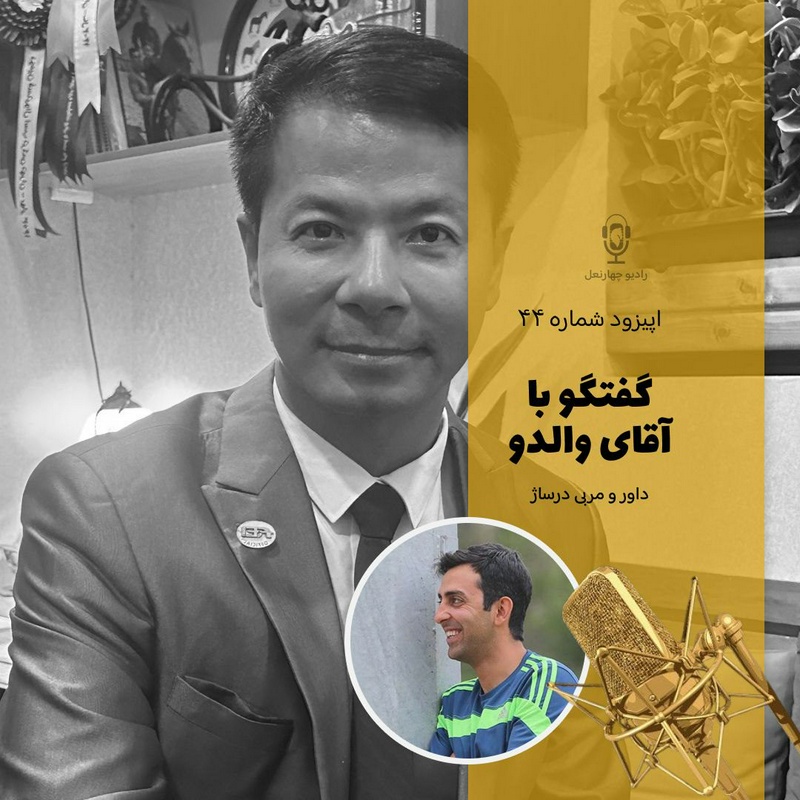
Waldo, international dressage judge and trainer from Chinese Taipei
خلاصه
In episode forty-four of Radio Chahar Nal, Mr. Waldo, an international judge and trainer in dressage from Taipei, discussed the future of equestrianism in Iran and the importance of dressage as a foundation for other equestrian disciplines. He emphasized the necessity for riders to have a precise understanding of judges' opinions in competitions and deemed collaboration with international judges and holding training courses essential for the advancement of riders. Additionally, the importance of communication between riders and judges and analyzing feedback after competitions for improving equestrian performance was highlighted. Mr. Waldo urged riders to rationally assess their weaknesses and work on enhancing their skills, considering dressage as a foundation for progress in other disciplines.
نکات کلیدی
- درساژ پایه و فونداسیون سوارکاری است.
- آینده درساژ ایران امیدوارکننده است.
- دعوت از داوران بینالمللی میتواند به بهبود داوریها کمک کند.
- استفاده از نظرات داوران برای بهبود سوارکاری
- مد نظر داشتن عقلانیت و بهبود ضعفها در مسابقات
سرفصلها
- اهمیت درساژ در سوارکاری — درساژ به عنوان پایه و فونداسیون سوارکاری، نقش مهمی در بهبود مهارتهای سوارکاران دارد.
- روند درساژ در ایران — آینده درساژ در ایران با توجه به سوارکاران مستعد، امیدوارکننده به نظر میرسد.
- بهبود داوریهای درساژ — دعوت از داوران بینالمللی میتواند به بهبود کیفیت داوریها و افزایش اعتماد به نفس داوران محلی کمک کند.
پرسشهای متداول
آقای والدو نظرشان درباره روند درساژ ایران چیست؟
آینده بسیار خوبی برای ایران میبینم با توجه به سوارکارهایی که امروز در مسابقه دیدم.
چرا درساژ برای سوارکاران پرش ضروری است؟
درساژ فونداسیون سوارکاری است که به سوارکاران کمک میکند تا بهتر بتوانند در خط مستقیم بروند یا دور بزنند.
چگونه میتوان داوریهای درساژ را در ایران بهبود داد؟
دعوت از داورهای بیشتری که سرتیفیکیت جهانی دارند میتواند به داورهای محلی کمک کند و اعتماد به نفس آنها را افزایش دهد.
چگونه میتوانم از نظر داوران برای بهبود سوارکاریام استفاده کنم؟
باید برگه نتیجه را نگاه کنید و نظرات داوری را بررسی کنید تا ضعفهایتان را بشناسید و بهبود دهید.
چه نکاتی را باید در مسابقات سوارکاری مد نظر داشته باشم؟
عقلانیت را در سوارکاری مد نظر داشته باشید و سعی کنید ضعفهایتان را شناسایی و بهبود دهید.
متن کامل گفتگو
In the name of God, the Most Gracious, the Most Merciful. Hello. I am very pleased to be with you dear ones with the forty-fourth episode.
Once again, I thank you for your presence and the encouragement you give me to continue the radio journey. I will quickly introduce the forty-fourth episode, which was my conversation with Mr. Waldo, an international dressage coach and judge who was our guest from Chinese Taipei. He was both judging a dressage competition and the next day held a clinic for show jumping riders. During my conversations with him, I greatly enjoyed his perspective, the hope he gave us, and the bright future he promised us. I have always believed that dressage is the mother of equestrian sports and plays an important role in horse training in any field, whether jumping, dressage-specific horses, or even beauty and riding shows. In general, I consider the foundation of equestrian very important. I ask you to listen to these talks carefully, think more, research, and find motivation to follow dressage more seriously. The higher your level of dressage, the more enjoyable riding becomes for you. I invite you to listen to the forty-fourth episode of my interview and conversation with Mr. Waldo. I am very pleased to be in the service of Mr. Dr. Waldo from Chinese Taipei and have the honor to speak directly with this dear gentleman about the program. He is our guest in Iran, and I warmly welcome him. First of all, I welcome him for coming to Iran and wanted to know his opinion about how he saw the progress of dressage in Iran and his assessment of our riders.
He says that I see a very good future for Iran considering the riders I saw today in the competition that was held.
I think that Iranian dressage can introduce good riders. They have a very good understanding of the test they are giving and the competition they have. Also, their seat on the saddle and their hands when holding the reins. The next question is to ask Mr. Waldo how much we need dressage in the field of jumping, as he is also going to hold a clinic, so to speak, as dressage before jumping. Ask him his opinion about this matter.
He says that it is actually like the foundation of equestrian so that when they know they can go in a straight line or turn around and.
This makes them able to do this better. As I said, dressage is actually the basics, and for those who are starting, it is very necessary to definitely know dressage. Right, I wanted to talk about the future in Iran considering the potentials I saw in these two days of competition and now I am going to have a clinic soon, what their opinion about the future in Iran could be and what method we should give to be more successful.
He says that considering what he has seen, he sees the potential of Iranian dressage as very high. But what is important is that currently, maybe most riders are just doing this and practicing. But what is very important is to see.
From the judge's point of view, actually see dressage from the judge's perspective, what the judge wants. When they can become aware of what the judge wants from them in dressage competitions, this can be a great help to them. As I said, those who are just starting must think about this issue and keep it in mind.
And I think that if they do this, in the future in competitions, in the Asian Games, and other international competitions, I think that Iranian riders can have a very good future and participate very well in competitions. The next question is about this one day of competition. Now there were kids who judged and sat next to him as a judge. Their opinion about the judging that now.
The judging that actually today from our other kids is in what way.
He says that considering what he saw today.
In fact, they feel that it is better to invite more judges who are actually certified globally to Iran, and this can help the judges who are here. Judging sometimes can actually, when it is like this, increase the confidence of the judges and make the judges have better confidence when they are judging competitions and in the future can be a good help to them.
For my last question, I want to ask him if you were to propose a program for our country and now the riders and judges you saw, what program would you suggest as a technical person in this field that we can follow, for example, for several years so that in the coming years we can send good riders and judges to the world. Because now we have international judges in the field of jumping and endurance, but unfortunately, in dressage, it is very bad in my opinion that we do not have any judges in the international arena.
He says that actually, the judges must start from somewhere and be able to look at the weaknesses that riders may have but not exaggerate those weaknesses too much, but rather try to give the riders confidence.
Even though those weaknesses may be fundamental weaknesses, but not show it in such a way and not suddenly give them a very low score so that the rider does not lose their confidence and no longer wants to continue this equestrian sport. Also, they can do two things, one is sitting with international judges, of course, as they said before, inviting judges from the international federation for different courses. But sitting with international judges and.
Seeing what they do and following the things they are looking at and considering in their judging is very important. Also, shadow judging, which is actually like being the shadow of a judge, where they sit and give their scores to the rider that is there and then compare those scores with the international judge to see in which points they may have had more weaknesses and in which points they had fewer weaknesses.
For riders, they must definitely keep this in mind after the competition is over, actually look at the result to see what the judges' opinions were, those opinions.
It is better for them to have a better look at it and use the opportunity provided to talk to the judge and ask, for example, how do you see this weakness of mine here and how can I do this? This can help them a lot. For riders, this is a very good opportunity when they participate in a competition. After riding, that is, after the competition, they should not just go and say why accept, but they should look at that result sheet and if they review the judge's opinion and...
The opinions given by the judge can help improve these matters. In each of them, it may go up by half a point or one point. When these are added up, it results in them having a much better score and improving their weaknesses. I am very thankful to him for giving this time to the radio and giving me this honor, and also to you, Mr. Bahri, for giving us the honor and we are at your service as a translator and I wish them health. I have a final talk and I am all ears to hear their talk.
Radio Irani says that I see a very good potential for the future considering...
The competition we had today and I want the riders to always consider rationality in riding, not to go the wrong paths, and try to become better riders in the future by considering and improving those weaknesses. Again, thank you all, I say goodbye and thank you.
I thank you all for being with me until the end of this episode. I hope you enjoyed listening to these talks and also learned. For me, interviewing all these dear ones whom I have served so far has been an educational class. I hope you have also benefited from these episodes...
Again, I ask you to think more about dressage, research more, and be sure that if the level of riding in advanced countries is high, it is simply because they first learn dressage and then enter other disciplines. Please do not make the word dressage big for yourself and do not think that what we see on TV and in grammar or freestyle competitions starts from head-butting into a step with a horse.
And it continues to undressing and washing your horse. It is a series of orderly, regular, and routine groundwork that requires a little more patience than usual. Also, the designer of the podcast cover poster and Instagram post is my dear friend and colleague Farshid Jahanbazi, who has always supported me and Radio Charl from afar. Cheers to you all.
Until the next episode, I say goodbye to you all and, as always, take care of your horses.