Analysis of the Turkmen Horse Festival and Competitions at the Ghazali Equestrian Club
خلاصه
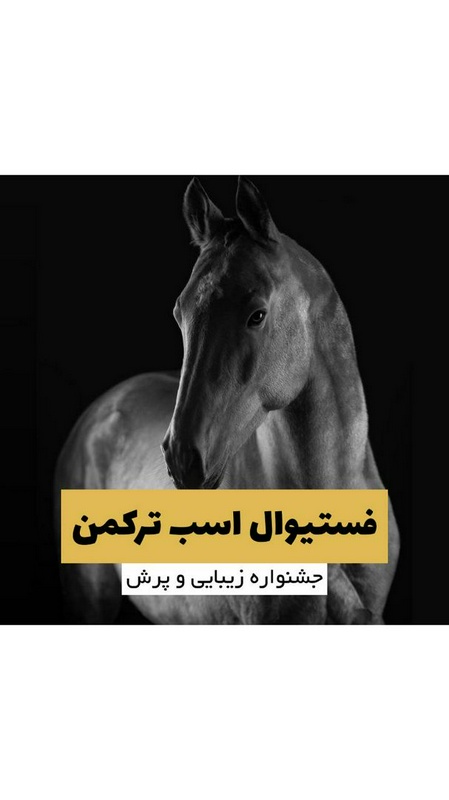
The thirty-fifth episode of Radio Chahar Nal is dedicated to the analysis of festivals and competitions of Turkmen horses at the Ghazali equestrian club. This program, featuring veterans and riding coaches, examines the quality of the horses, the necessity of precise planning, and the age differentiation of riders. Guests emphasize the importance of supporting native horses and producers, calling for an increase in the quality and field capabilities of this breed. Additionally, the necessity of holding regular competitions and competitive fields to showcase the abilities of Turkmen horses is mentioned. The interviewer discusses the waning interest in Turkmen horses and their declining quality compared to the past, highlighting the need for riding education with this breed and the support of the federation and the Tehran province board. Finally, future plans for improving competitions and increasing participation in events are discussed.
نکات کلیدی
- مسابقات اسب ترکمن باعث احیای این نژاد و تشویق سوارکاران میشود.
- تفکیک سنی و آنالیز اسبها از نکات مهم در برگزاری مسابقات است.
- بهبود کیفیت سوارکاری نیازمند توجه به ترینینگ از پایه است.
- توجه به زیبایی اسبها نباید بر تواناییهای آنها در مسابقات سایه بیفکند.
- برگزاری مسابقات باید به صورت ماهیانه برای حمایت از تولیدکنندگان انجام شود.
سرفصلها
- تحلیل مسابقات اسب ترکمن — بررسی کیفیت برگزاری مسابقات و تأثیر آن بر نژاد اسب ترکمن.
- اهمیت تفکیک سنی و آنالیز اسبها — نقش تفکیک سنی و آنالیز در بهبود کیفیت مسابقات.
- راهکارهای بهبود کیفیت سوارکاری — تمرکز بر ترینینگ از پایه و حمایت از اسبهای بومی.
- چالشهای پیشروی اسب ترکمن — کاهش علاقهمندان و نیاز به حمایت بیشتر از اسب ترکمن.
پرسشهای متداول
نظرتان راجع به برگزاری این دوره از مسابقات چگونه بوده؟
این باعث خوشحالی است و بنیان سوارکاری کشور ما با همین اسبهای ترکمن است.
چه نکاتی در مورد سوارکارها و اسبها باید مورد توجه قرار گیرد؟
باید تفکیک سنی در مسابقات انجام شود و اسبها باید آنالیز شوند تا واقعاً ترکمن باشند.
برای بهبود کیفیت سوارکاری چه کارهایی باید انجام شود؟
باید تمرکز بیشتری بر روی ترینینگ از پایه داشته باشیم.
چگونه میتوان کیفیت اسبهای بومی را بهبود بخشید؟
اسبهای بومی باید حمایت شوند و تولیدکنندگان باید از آنها حمایت کنند تا کیفیت بهتر شود.
چرا علاقهمندان به اسب ترکمن کمرنگ شدهاند؟
به خاطر نژاد اسبهای دیگر یا تبلیغات کم اسب ترکمن.
متن کامل گفتگو
The sponsor of this episode of Radio Chahar Naal is a company that supports many equestrian competitions, especially Turkmen horse competitions, and in a way has revived the Turkmen era competitions and festivals, injecting new life into the veins of this national asset.
Asian Rice has been alongside the equestrian family for a few years, bringing excitement to the competitions, especially the Turkmen horse competitions. Asian Rice has been active in the field of preparing and producing quality rice from the north of the country for 30 years and always uses the finest rice for its customers. Interestingly, they use expert consultants to prepare the rice and process the products in two stages of cleaning and sorting, packaging them in various weights.
A very interesting point about Asian Rice is that it directly communicates with farmers and practically supports them. They also have a very good website, and I'm sure you won't leave empty-handed if you visit it. Most importantly, they deliver your products anywhere in Iran, and purchases over 3 million tomans have no shipping costs. Don't forget the episode details; I've left the website address, Instagram, and contact number of Asian Rice Company in the description.
Greetings and respect to all of you good listeners of Radio Chahar. With the thirty-fifth episode of Radio Chahar Naal, I am once again your host, and I am happy that I have been able to continue this far with your support and kindness. The thirty-fifth episode of Radio Chahar Naal is about the Turkmen horse competitions and festival held at the Ghazali Equestrian Complex, thanks to Erfan Asiayi, who has truly helped in recent years to encourage those who own Turkmen horses or are active in the Turkmen era.
I thank him everywhere and hope he continues with the same strength and energy. In this section, I first apologize for the fact that all these conversations were not in a calm and quiet environment, and practically we recorded in the competition environment, so naturally, you will hear some external sounds, for which I apologize in advance.
I tried as much as I could to reduce those sounds, but certainly, some will be heard. Also, the guests of the thirty-fifth episode, which was practically an analysis of the Turkmen era competitions and festival, are respectively Master Mehdi Bakhtiari, one of the veterans and experienced trainers of Iran. The second guest is Mahmoud Pourheidari, my brother, who participated as one of the competitors that day and, if I'm not mistaken, achieved fifth place. My third guest is Master Babak Shaki, with whom I have a longer conversation, and as always, he was kind and honored me. My fourth guest is Master Sina Zahir, a prominent figure, especially in the field of Turkmen and pure Iranian horses. My fifth guest is Mr. Mojtaba Saroush, the manager of the Ghazali Equestrian Complex, and finally, I talked to Erfan Asiayi, who is both the head of the Pure Iranian and Turkmen Horse Committee of Tehran and Mazandaran provinces and the organizer of this event. I hope you listen carefully to the discussions because I strongly believe that these talks can be a guiding light, especially for those working with Turkmen and pure horses, and also for those who work hard for children and teenagers and can use these horses. In short, thank you for staying with me until the end of this episode. I won't talk more and invite you to listen to my conversation with these esteemed guests. We are with Master Mehdi Bakhtiari, one of the veterans and masters of equestrianism, and as promised, we will have an analysis and review of the competitions.
The start of this work in the pure Iranian Turkmen horse competition is done with Master Bakhtiari. Mr. Mehdi, thank you very much for honoring us and being a guest on the program. I want to see what your opinion is as someone who has worked with Turkmen horses for years about the organization of this round of competitions and your overall analysis of the level of horses and riders. I also greet and thank you for your efforts in this field. The second Turkmen purebred horse festival and Mr. Asiayi's competitions are being held, and this is a source of happiness, and that.
The foundation of our country's equestrianism is with these Turkmen horses. Pure Iranian horses, whether from Khuzestan, Kurdistan, or Turkmen, fortunately, Turkmen horses, due to their special capabilities, are ahead in the field of jumping and sports. Look, it is very good and positive that competitions are held, but it is necessary to work professionally in this field, and a civil program should be written. Today we saw the kids, the riders who were in the field, all age ranges.
Kids aged 10 to 12 entered the field, and adults competed, but the reality is that these should be separated. One point is that we must plan for our kids to participate in these competitions separately, and it is not fair for a little kid to compete with an adult, but the fact that they come to the field is a source of happiness. The fact that some esteemed teachers and trainers also work on the Turkmen era and bring it to the field was also very, very pleasing, and I saw some very good horses with special training.
Which was very good, congratulations to all of them, but we have a lot of work to do. One part of the work is the issue of Turkmen horses, whether they are really Turkmen horses or not, this should be analyzed and considered so that horses can come to the field that are truly Turkmen and their qualifications have been confirmed, and on the other hand, some Turkmen horses that came were weak, really the horses that come to the field are not the old Turkmen, some of them were very weak.
In the design of the course and attention to the Turkmen horses, it should be different from a European horse if a Western horse is actually designed, the distances should be considered so that our horses, God forbid, are not harmed, and if that program is done under the supervision of teachers and experts, we can see more and more of the kids in competitions, see from Turkey, and this will make all families happy and.
The equestrian community, I was grateful to witness it, and I really saw the quality of these horses, I feel that in the base levels, that is, up to the youth level, we have a little better training and spending more time easily answers the base levels, I want to see what your opinion is in this regard and what we should do to improve and use more in the long term, let me tell you that in relation to what we should do, yes, the training from the base was not quite what it should be, dressage is the cure.
In the equestrian field, in Iranian dressage horses, we hold competitions in our arena. It should be dedicated to basic to advanced tests. We can bring horses, at least initially use tests to enter competitions and later come to jumping competitions and score there. In my opinion, this will gradually have a very positive impact on the training of our Turkmen horses. God willing. Sir, thank you again for your time and honor. If you have any final words, I am at your service. Thank you, sir, for your kindness, you are doing a great job. Thank you, you're welcome, stay healthy. Well, continuing the discussion about the Turkmen horse competition and the pure Turkmen horse, I asked Mahmoud Pourheidari, who is now my brother and you all know him, to talk about the racecourse and the quality of the event, as an equestrian, what is your opinion?
You rode a pure Turkmen horse and jumped in this category, what was your opinion? Generally about this competition. In the name of God, I greet all the audience. It was a very good competition. It was held in very good spring weather and had relatively good conditions.
And what was very pleasing, I saw very, very good horses today. Very pure and high-quality Turkmen horses that were really enjoyable to see. We had a very good course, the ground was good. Now, in one part of the arena, the ground was a bit slippery, but overall the competition was well held. Just one small note, in the barrage due to the slippery ground, the course designer had to remove the first obstacle of the barrage and the second and third obstacles, which were 5 and 6, remained, and because it was from the beginning of the course, the distances were a bit open for the horses, which made it a bit difficult. Overall, it was a very good and exciting competition and everything in
our basic levels, to what extent they have the ability and if we do something, they might improve. Look, from you, the horses were very high quality and very cautious and careful, they jumped very cleanly and were very simple. Everyone moved very well with simple blood drinkers. Our kids, if they want to enjoy riding up to level 115 or even some of them up to level 120, are excellent. Just a few problems need to be solved. Thank you very much for your time. You're great. Thank you. Goodbye.
We are in the presence of Master Babak Shaki, one of the greats and veterans, especially in the field of pure Iranian horses. You accepted and honored me to be at your service again. As always, I wanted to see your general opinion about the organization of this competition and this breed on this date, which is now, that is, May 19th and the Turkish Evening Festival, what is it? In general, so far. I will ask you again in future years. Yes, I also greet
you and all horse riding enthusiasts, especially our purebred horses, the Iranian breed. After years in Tehran, this is the first time I have been invited as a judge and anyway what I saw, there are good enthusiasts in Tehran. Today there were fewer before, there were more. Today you see enthusiasts in Tehran who, well, they came from the morning to hold the competition. In the afternoon they came, there was a festival, a beauty competition was held. I, along with friends
judged these competitions. What can be said, anyway, this interest should be intensified. This interest will be intensified in this way that it should be supported. Look at our native horses, if native horses are not supported through the federation and all other facilities are not encouraged, well, people will abandon them. If all fields are to be handed over to foreigners, well, for the producer what is important is comprehensive support for our genetic reserves and native horses for several reasons. Firstly, these horses are very compatible with our country's ecosystem.
Low-demand, low-disease, multi-purpose horses for race competitions, for jumping competitions, for training riders, for patrol and multi-purpose, and horses that are adapted to the ecosystem. From this colored horse that was 26 years old here and was moving, it was among the good ones, it was a stallion. Well, look, this is and the average conditions have reached here and survived. These horses must definitely be supported and the quality should be improved. Unfortunately, over the years, quality has not been considered and this is very bad.
These beauty competitions show the interest of the people and the organizer, but this is a puzzle. Look, the major part is the selection of mares and stallions and should be in the field. A good horse, a weapon horse is selected in the field, or racecourse or jumping field or training and so on, which all have this ability and what I saw is commendable.
Enthusiasts tried hard to gather here from different places and the quality was good, not bad. But we definitely have to work to produce more field horses to come to the field. Then they can speak and have more days. In competitions, they should at least have one day in all these cups for domestic horses. It should not come on Monday, Tuesday, Thursday. Their prize should be more than others. Registration should not be taken from them.
Producers should know that these horses are supported. They are our national horses, they are quality horses and they are our genetic reserves. You have been active in this field since approximately 1961. Now if I am wrong you correct me and due to your late father you have always had an active presence in the horse field. I want if you want to compare the Turkmen you saw today in the 14th century with what you saw in the 40s, 50s, and 60s,
how much have they changed and what should we do to become more up-to-date and as you say keep the producers more encouraged. Look, today a topic has emerged, more than paying attention to the ability of these horses in competitions, attention is paid to their beauty and festival. Look, this is a very directional point. At that time, the Turkmen themselves wanted them for the field for centuries.
They had long competitions, competitions with very long distances in the Janglan region. Before that, there were 6 rounds, 8 rounds that I had not seen, but the years I went there, these horses went long distances. Look, now we have changed direction a bit. We have more attention to bringing horses to participate in a beauty competition. Now they give fewer or more points, they are selected. Look, this is part of all this.
This should not be more than 10%. That 90% should be stallions and mares selected in the field, like everywhere in the world. More functional competitions than beauty which is imported. These have not brought any effective point in our horse riding training in our originality so far. Right, they put on a show, hold their heads up to show what. Yes, let's be realistic. Look, we.
If we want to reduce pregnancy, if we want to start educating children with these words that all our heroes today, as I have said many times, I will say again, all our heroes today learned horseback riding with these Iranian horses. Those who stand in relay one to two today and the rest cannot be taught with big horses. This is very wrong and dangerous, and unfortunately, it continues. Even our young ones today come to the field with 67-kilogram horses. They all must ride.
Whose responsibility is it? The federation. Well done. Omid, thank you again for giving me this honor and talking to me. May God keep your shadow over us. I wish you health. Do you have any final words? I am all ears. Good luck. I hope the work you started will be lasting and that future generations will know something from the past. There is much left from history that has not been said and must certainly be told.
With kindness and affection, let me tell you, these horses, the further back we go, the more quality and power they had. As we moved forward, there are multiple reasons which we will leave for other sessions. We must return our horses to those that were present in the fields 60 years ago, 70 years ago. Whether in the fields, in the mountain fields, and elsewhere, we must insist on returning to that quality. Just holding beauty contests does not make this practical. The field must show its strength.
God willing. Thank you again. Have a good time. The eternal name of the homeland, the morning of hope for the homeland, shine in the sky like an eternal sun. Homeland, my existence, my passion and ecstasy, shine in the sky like an eternal sun. Hear the burning of my words, for I am in harmony with you, all my body and soul, my homeland, my homeland, my homeland. Hear the burning of my words, for I am the renewer of this garden, all.
My body, my homeland, my homeland, my homeland, my homeland. All with one name and sign, despite every color and language difference. All with one name and sign, despite every color and language difference. All joyful and proud of the health of young Iran, for the heritage of ancient Iran, for the health of Iran's soul. Well, we are in the service of Mr. from the veteran professors, especially in the original Turkmen. Thank you for giving Mr. Eftekhari to me and Radio Four, and I am very happy to have sat with you.
I want to see that you have been involved in the Turkmen era and purebred breeds for many years. What has been your overall assessment of this competition so far? Well, it is becoming very faint. I mean, Turkmen enthusiasts, I don't know if it's because of other horse breeds or the lack of Turkmen horse advertising. It's becoming a bit faint. Now the currencies that participated here today compared to the past, as I said, have become weaker. In what way? Physique, quality, general quality. Because they are not supported. That's right, they must be supported.
If we want to go back 40, 50 years and those productions, what should we do now to go back? Turkmen has not progressed much forward, and we have even gone a little backward. Prizes must be increased by 100 percent. They should be encouraged in this way. There are things that the federation itself must do in the education sector, meaning the number of consumers who are the children of future generations.
It is better that with Turkmen horses, horses that belong to this land, in terms of resistance to diseases, Iran's heat, Iran's cold, especially in Iran, they are much more advanced and have much better efficiency, and they seem very excellent in size for teenagers. In your opinion, how many times a year do we need to hold such competitions to provide more support to producers? In this field, a festival should be held almost monthly at least once so that.
A better scale falls into the hands of the producer. Sir, thank you for your time. I am very happy and wish you health. I am in the service of Mr. Mojtaba Saroush, the head of the Judicial Equestrian Club. Sir, thank you for giving this time to me and Radio Ching. You have been hosting the Iranian competition for two years. What was your reason for doing this? In the name of God, the Most Gracious, the Most Merciful. Greetings to you.
All friends and loved ones, especially the radio group, because we want to support the Iranian horse and show our support for horses that are produced in Iran and grow up in Iran and from our beloved country's region, especially the horses from the Gonbad and Turkmen areas. We support them and say that Iranian horses have always been among the best and can always be the best. With the support of all dear officials, we can bring these horses to their main position, God willing.
The difficulties you had in the Turkmen horse racing system, in these two races, what were they, and what challenges were you mostly stuck in? Horses that come from all over the country, come from Gonbad, come from Zanjan, come from Qazvin, bring their horses from different provinces. They are stallions, mares, and there are many foals with them, and Mashallah, their number is also large, and we have to accommodate all of them and be able to coordinate with them so that no horse is harmed.
And most of the horses, now besides jumping, we had a show, and we had beautiful horses, and we also had this beauty festival. It's a bit difficult to coordinate all the jumping horses and horses that want to come for beauty, it's difficult. Sir, thank you. God willing, may God give you.
Health. Be a supporter of Turkmen again. Thank you for really taking the time. Because most clubs do not take on these competitions, and you are the only club that has kindly held these competitions properly for 2 years. Be healthy. Thank you. I wish you health. Thank you very much. I thank you. We are at your service. Be alive. We are in the service of Mr. Erfan Asiyayi. Practically, you can say you are the only sponsor of the Turkmen horse at present, and you have sponsored most competitions. You have worked hard.
And the head of the Turkmen and pure Iranian horse committee in Tehran and Mazandaran provinces. Thank you very much for your time. I am very happy and wish you strength for this effort and your hard work, which you have been very kind. What made you think of coming and supporting purebred horse competitions, especially Turkmen? Greetings to you. Thank you very much for taking the time and supporting this very important competition. About three years ago, Dr. Karimi, the head of the Hossein Tehran Equestrian Board, gave me.
An order as the head of the Turkmen horse committee, which later became the pure Iranian horse. From the very first day, we started working in the field of Iranian horses. We started jumping competitions. I remember our first competition had 6 riders. Thank God today we have reached forty and a few, close to 40, thirty-something riders, and we are also holding separate national championships and championships.
For two years now, we have also been active in the beauty section of the Turkmen horse. Thank God, this year the reception is much greater compared to last year. Horses have come that are both of higher quality, and the owners have appeared more regularly and with higher quality in this competition, and we hope that the support will increase, the continuity will increase, both the quantity and quality of the competitions will increase because the Iranian horse, especially the Turkmen horse, really needs support in sports. Last year, we held the first Turkmen horse dressage competition.
It was so good and there was so much quality and dressage ranking, and we still try to continue expanding the activities. Really, what should we do, Erfan dear, to hold these competitions more focused? What tools do we need? What resources do you need to appreciate this breed more and support the producers more, because unfortunately, they do not have an active market, and practically many of the dear ones in this field have forgotten the Turkmen horse. What is your solution as someone who is a supporter and stands by the dear ones? What resources do you need to make these competitions more quality and encouraging? In my opinion, fields should be created for Turkmen horses or Iranian horses, meaning that fields should be created for them in various disciplines such as jumping, dressage, beauty so that they can show their strength. Thank God that both the federation and the Tehran provincial board support. I mean, every time I went to them for a competition or had a suggestion, both the federation and the board really supported. One thing that might bother us a bit is the lack of attention from the owners and producers of Turkmen horses, whom I ask to support more for their productions and this dear horse, to be more present and cooperate more, because we have to do this work together. Really, one hand does not make a sound and it cannot be done alone. God bless you, thank you for taking the time and I'm glad I talked to you. I enjoyed your personality and the effort you made. I wish you health and hope you keep this field's market warmer and more prosperous. Thank you, you were very kind.
Thank you very much for being with me in this episode and listening to it until the end. I hope you send this episode to your friends and those interested in the Turkmen horse. In the next episode, I will have an analysis and discussion about the 21st Cup competitions. That episode will definitely be much richer, and from now on, my effort is to cover a series of competitions in this way and talk to the greats and understand what we are doing and plan better programs for the future.
Thanks to everyone for being with me. Until the next episode, I entrust all of you to the great God and, as always, take care of your horses.