14 training tips from Carl Hester for improvement in dressage
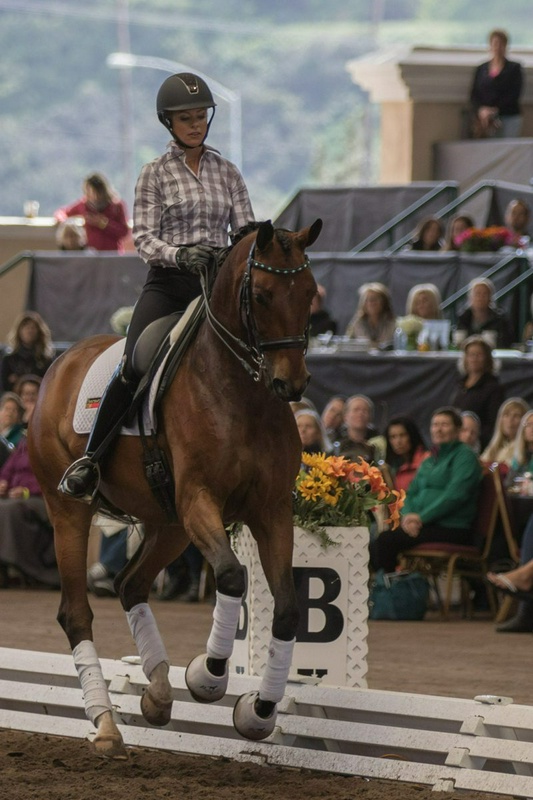
Carl Hester, the five-time Olympian from Britain, explained his approach to training horses during his first appearance at a public clinic in the United States, without hiding any "secrets of success."
The foundations of dressage, based on the German training scale — rhythm, relaxation, contact, impulsion, straightness, and collection — were the basis of all the individual sessions he held for 13 pairs of horses and riders; whether the two riders were on 4-year-old horses or his friend and Olympic teammate from the 1992 Barcelona Games, Charlotte Bredahl-Baker, with her horse Hamilton, who is on the verge of Grand Prix level.
The April clinic attracted nearly 3,000 equestrian sports enthusiasts to Del Mar Fairgrounds in San Diego, California, which hosts many famous equestrian competitions.
Carl was the main figure of the "West Coast Dressage Summit"; an event organized by Scott Hayes Productions, a special events organizer from Vancouver.
Carl, who was the youngest British rider at the Olympics at 19 during the 1992 Barcelona Games, also helped Great Britain win its first Olympic gold medal in dressage at home in London in 2012.
A week before his trip to Del Mar, he finished third with Nip Tuck in the FEI World Cup Dressage Final in Omaha, Nebraska, in 2017.
Amelie Kwas and Ivar showcased their dressage skills in front of this five-time Olympian and nearly 3,000 participants who attended his first clinic in the United States.
Kim F. Miller noted that throughout Carl's more than 30 years in the world of dressage, his victories have always been alongside his success in bringing young horses to the international stage; the most famous example being Valegro, who has recently retired, alongside his equally famous rider, Charlotte Dujardin.
Charlotte progressed under Carl's guidance and is now his training partner at his riding club in Gloucestershire, England.
Carl's riding record can only be matched by his calm charisma and understated charm.
Clinic attendees from various parts of the United States and Canada were excited to see this 50-year-old, friendly, and energetic figure in person and wanted to benefit from his knowledge.
They experienced an educational weekend filled with humor, a playful spirit, and heartfelt memories of his journey to the top and staying at the highest level of the sport.
At the end of each day, Carl warmly welcomed the long lines of enthusiasts who came for autographs and photos.
Participants at the clinic, regardless of their level of experience, noted the widespread applicability of Carl's teaching advice.
In this context, 14 points were extracted from the recurring themes of the weekend.
1. Every transition matters. The transitions between gaits were the foundation of most sessions, and Carl treated them very seriously, whether the rider was in the middle of a practice or taking a break.
He said, "If every time you let the horse completely fall apart and become loose in a downward transition, it will do exactly the same in the test."
For a young horse, downward transitions were used to strengthen muscles, develop balance, and help remove reliance on the front hand.
But one should not rush this process.
One of the riders was told to slow down the transition from canter to trot in his 4-year-old horse so that the horse "has time to find its legs again."
Transitions are very effective for practicing obedience or teaching the horse to work correctly from behind.
But how many times?
Karl pointed out that riders often only do a few transitions every day and mistakenly think that is enough.
He estimated that one rider did about 100 transitions in a 30-minute session over the weekend, which was nearly sufficient to achieve several different training goals.
2.
Giving and taking back Riders at all levels have often been told to perform quick, subtle, and short "giving and taking back" with contact on the reins.
Karl described the 4-year-old horse that Joseph Newcomb was riding as inherently balanced in its movements and said it is already "like a feather."
When working in canter, Joseph was asked to give the reins a little and take them back to give this young horse "the opportunity to find its balance."
The "giving and taking back" exercise helped more experienced horses learn or remember that when the "button" for a specific movement is on, they should maintain their rhythm and self-control.
They should not slow down with a little gathering of contact or speed up with a little release.
Instead, the horse should learn to stay connected to the rider's seat and maintain that position until asked for something else.
Joseph Newcomb, assistant to Stephen Peters, gave the 4-year-old For Finland the opportunity to "find its balance" with quick and subtle "giving and taking back" on the reins.
3.
Moving forward Karl, while warning that moving forward without balance is not the goal, explained that the effort to improve the engagement of the hindquarters—which creates balance—"should never obscure the signal for the horse to move forward or disrupt its response to going forward."
This was evident in Teri Patten Rich's work with Belisa, a 5-year-old horse.
Karl said this mare, like most well-trained horses of that age, was ready to start working on "sitting"; that is, bringing the haunches underneath the body to create driving power.
He noted that Belisa's powerful body type and high energy had caused her canter to be "too up and down."
He said, "We want to work on real forward movement."
He explained that canter is the best movement for teaching the initial stages of sitting and asked Teri to work on a 20-meter circle with frequent half-halts to adjust the horse's balance towards lightness and raising the front end of the body.
When the mare fell into a trot with the half-halt signal, Karl insisted that Teri re-establish the canter and continue moving forward, rather than staying in trot or returning to walk and starting everything over.
He said, "Correction means keeping the door open; and all this work is to bring her in front of your leg."
Karl added that even if something goes wrong and you want to do it again, first maintain a few steps of forward movement and then try the half-halt again.
4.
Independent seat Karl said this feature is one of the most important differences between good riders and great riders.
He especially recommended practicing without stirrups and in canter for novice riders or those working with a horse that has a difficult trot to sit.
Exercises off the horse with physiotherapy balls or other core muscle strengthening exercises are also beneficial.
He said about himself that riding more without a saddle during his growth period was the foundation for the development of a seat that does not rely on the horse's mouth for balance or a sense of security.
He used the mental image of "a magnet on the helmet and ceiling" to help several riders keep their upper bodies higher; a task that also helped raise the horse's front hand and overall contributed to better self-carriage of the horse.
He told most riders to simultaneously pull their navels towards their spines.
He emphasized that the first step to getting our horses to self-carriage is for us to achieve self-carriage ourselves.
The strength of the core muscles is a big part of this.
Karl suggested to Cindy Jackson, while riding with the flow of things: "Try sitting trot in a rising trot and see if the horse goes more forward and moves less upward."
5.
Get off the saddle Karl asked one of the riders to switch between standing on the stirrups and sitting on the saddle in a few steps.
The goal was to let his seat go and see the effect of this; as a result, the horse's back and form became noticeably calmer and looser.
A non-rider friend had suggested this simple exercise to him, and Karl said he now uses it a lot.
Alternating between sitting and standing in faster steps is also a good test to determine whether the rider's seat restricts the horse's stride or not.
Karl supports sitting trot in several positions.
The ability of this type of trot to free the horse's back makes it suitable for working with young horses and also for extended strides in horses of any age.
He encouraged riders to try sitting trot in lateral movements as well, again because this helps with softness and flexibility in the horse's back.
He asked one of the riders to use sitting trot for working on the passage.
Karl explained: "You take a slightly taller trot because you are lifting him up with your upper body."
He added: "This helps you bring the horse up and forward with you."
Sitting trot can also help the horse find and maintain the correct rhythm.
6.
Keep your hands forward Karl said the phrase that Charlotte Dujardin has repeated many times—"Short reins bring medals"—is not entirely accurate.
He explained: "The essence of this statement came from when I told her that if your hands are not in front of the saddle, it feels like you are riding backward."
He added: "If your hands are in front of the saddle, you are riding forward and taking forward movements.
Many people ride with reins that are too long, and the horse does not stay on the bit.
Having your hands forward helps you ride towards the bit, not from front to back."
7.
Use the arena Karl recommends performing changes of hand in the air along the wall during training to strengthen the horse's straightness.
He told one of the riders whose high-level horse was swinging its hindquarters from one side to the other during tempis, "Let the wall be next to him so he has to collect himself."
If one of the horse's hooves hits the railing around the arena or the wall of the training area, it serves as an effective lesson or reminder for the horse to keep itself straight, rather than relying constantly on the rider's efforts to keep it aligned.
Karl also recommended using the wall for zigzag training or exercises; a movement that combines two or more half-passes in opposite directions in a canter or counter.
Compared to executing this movement from the centerline, relying on the wall is an easier way to gauge that you are covering equal distances in both directions.
He mentioned that the short side of the arena is also another very good tool for training.
Use it to gain a better sense of your horse's stride length; especially in collected and regular canters.
Depending on how much ground your horse covers, try seven or eight strides across the short side.
Then, when determining where to start the change of reins on a diagonal line, use this information to ensure that the movement with the test specifications aligns evenly in terms of starting and ending points.
Karl advised Lehua Caster to imagine she has "a magnet on her helmet and roof" to help lift her upper body.
This exercise helped FG Ramzes raise the front of his body higher.
8.
Turn the short side into your ally; the short side of the arena, and even the corners before and after it, is usually where riders abandon everything they worked on in the long side — which often has a good effect.
Karl spoke about this tendency among riders at all levels: "We think no one is watching us."
One of the exercises to create the habit of maintaining focus on straightness, rhythm, and engagement from behind in that part of the arena was to perform a transition to an active walk from canter or counter along the short side.
9.
Be precise; all dressage tests begin with movement on the centerline and then the horse turns right or left.
This pattern is also a good training tool for teaching and solidifying straightness.
Karl emphasized that whether in a test or in training, this movement means going straight on the centerline and then turning.
It does not mean going straight to the end of the arena and then deviating from the centerline in the opposite direction to prepare for the turn.
Doing this in a test leaves a very bad impression and negates the training benefit of moving in the correct path to reinforce straightness.
Precision at the highest levels is equally important.
For example, the pirouette strides should be evenly distributed on both sides of the centerline.
He visualizes the clock face in his mind; so that the horse's front hooves land sequentially on 10 o'clock, 20 o'clock, 30 o'clock, and so on around the clock.
Trey Ruckovich, riding Ouyor, was one of the few riders Karl encouraged to try sitting trot to free up the back and overall form of the horse and to create and maintain rhythm.
10.
Gauge your horse's reaction to the whip; Karl explained: "When you use the whip, it is important to get the right reaction."
This reaction should be somewhere between the two states where the horse neither fears it nor considers it its best friend.
The whip should be used to elicit a quicker and livelier response to the aids of the legs and seat and should never be seen as a replacement for either of these two.
Karl emphasized the importance of precise timing of a light tap on the horse's hindquarters in response to a rider who was looking for more "jump" in the counter of their horse for the preparation of executing a pirouette.
In this case, a gentle tap on the hindquarters combined with a slight release of the reins created a good forward response.
However, the horse's reaction to the collection needed more activity and a better rhythm.
Karl stated, "Collection does not mean slowing down."
The rider on a 20-meter circle in counter was required to create a "small contact" every two or three steps to achieve the jump he wanted in the collection.
Additionally, around every 10 meters on the circle, half-halts were added, which were once again reinforced with a "tick-tick" of the whip to achieve that jump.
The ultimate goal is for the tick of the whip to eventually become a tick of the heel and create the same quality of response.
11.
Value daily routine and outdoor space. Karl's horses spend a lot of time outdoors and in motion; a factor that he says plays the most important role in maintaining their movement health.
This is vital for creating softness in the horse's body and mind and is an excellent way to calm hot-tempered horses and keep experienced horses mentally fresh.
The horses at Karl's riding club have a regular work schedule.
Throughout the week, technical training sessions rarely last more than 20 minutes, preceded by warming up and followed by cooling down, which often includes a light ride on the road or among the fields.
Karl uses a two-day work and one-day rest program.
He said dedicating one day solely for strength training and fitness in between two consecutive learning days helps the horses retain their new learnings better.
Two days a week, the horses go for light rides just to maintain fitness, which often takes place in the hills around, and the seventh day is dedicated to rest; a rest that is largely spent in the pasture.
Blasa, a 5-year-old mare of Tri Pathen Rich, stretches her neck and body down and forward during a moment of riding.
Karl emphasized the importance of stretching and relaxation periods for the horses during warming up and cooling down.
12.
Do not overdo anything. Daily work should be designed in three parts; in such a way that the intensive learning phase is placed between two long and free periods of stretching and relaxing in warming up and cooling down.
It doesn't matter what the lesson of the day is; keep it short and finish the practice with a positive note; that is, focus on something the horse is already good at.
In warming up and cooling down, the horse should be taught or encouraged to lower its neck forward and down without losing the overall balance of its body.
This process gradually evolves as the horse's body becomes stronger and its training progresses.
13.
Regarding predicting, Karl referred to different views on whether it is good or bad for a horse to anticipate the next movement the rider intends.
He said, "I learned from Kyra that the horse should go to the corner and stop unless you ask it to navigate the turn."
However, over time, Karl concluded that "horses are not dull, so predicting should not be considered a negative term."
In return, riders must find exercises that prevent this prediction from compromising the quality of the next movement, without "suppressing the horse's spirit."
One of the exercises to achieve this proper balance in the subject of predicting was to have the horse stop at the end of the long side and then be directed towards the wall with a turn on the hand.
This exercise, along with the requirement that the horse must stand still before and after the turn, ensures that the next time it goes comfortably towards a corner, it remains attentive to the rider.
He said, "In the early years with Valegro, I was very sensitive about the horse not predicting the next movement.
We did a lot of exercises to teach it to wait.
For this reason, in its first test, we were faced with an incredibly talented horse that didn’t know what it was doing."
Karl later changed his method and allowed Valegro to perform his Grand Prix test at home once a week.
He said, "After that, he delivered flawless tests.
We always think we shouldn't let the horse know the test, but in some cases, it is necessary for it to know, because in that case, it will be more comfortable.
Valegro was smart enough that when he did the test once a week, he felt more at ease."
Shine brightly; just doing the movement is not enough.
Horses must learn to perform the movement with expression and flair, and this starts with being willing to take risks and make mistakes in home training.
To achieve a quality that has not developed at home, do not rely on the exciting atmosphere of the competition arena.
Karl, who also pays special attention to the history of dressage, pointed out how scores have increased over the years.
He said, "Big scores come from quality movements and riders who are willing to take risks."
For more details on what it was like to attend Karl Hester's clinic, see the July 2017 issue of our sister publication, Dressage Today.
Source: Practical Horseman – Training