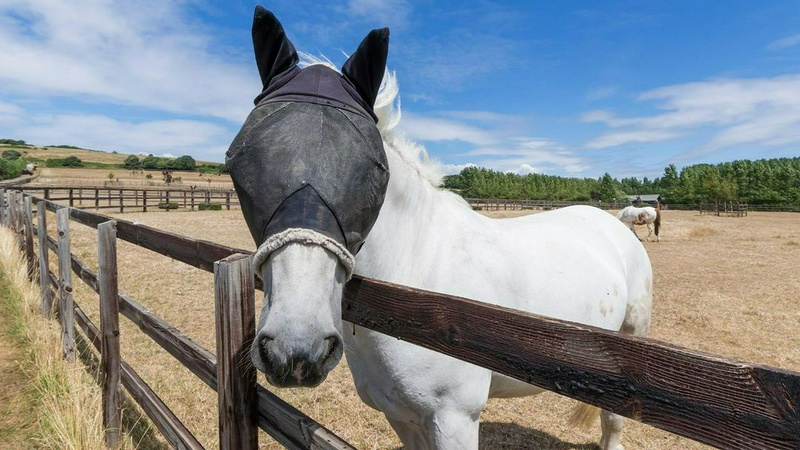
Grasses, unable to grow, have become scarce.
With the reduced hay harvest in 2026, many of us have had to use winter forage reserves, and now we are not only worried about reducing hay costs in the coming months, but we are also thinking about how to help our paddocks recover.
What happens to the lands during a drought?
To preserve moisture, grass growth stops.
The soil becomes compacted, preventing air, moisture, and nutrients from reaching the roots.
Rain runs off the surface instead of being absorbed, which can lead to flooding.
In overgrazed areas — which weakens the roots — and in high-traffic areas, bare patches are created.
Before the grass has a chance to re-establish, opportunistic weeds grow.
The summer drought of 2026 has significantly reduced grazing for many horses (image credit: Alamy). How can we help lands recover from drought? Can anything be done to revive lands from drought?
Experts from "Paddock Pastures," a land maintenance equipment supplier, say in many cases, yes.
Reviving paddocks means waiting for moisture, assessing the damage, and then working on the land according to the conditions.
Here are the recommendations from "Paddock Pastures."
1.
Wait for moisture Helping lands recover depends on the presence of moisture.
Before performing any paddock maintenance operations, the land must be workable to avoid damaging the equipment.
This means, unfortunately, you have to wait for that much-anticipated heavy rainfall before thinking about saving your land.
If you can insert a spade or soil sampling rod into various points of the land without applying excessive pressure, the land is ready for work.
One rainfall may not provide enough moisture to start work on your land (image credit: Getty Images). 2.
Aerate or slit compacted land This creates pores in the soil and helps moisture, air, and nutrients reach the grass roots.
Focus first on the most compacted areas, but if soil compaction is widespread, broaden the scope of work.
3.
Harrow the land to remove dead grass and improve the surface This also creates better conditions for overseeding where needed.
You may need to harrow severely damaged paddocks more than once.
4.
Overseed bare or thin areas In places where grass has disappeared, overseeding accelerates the recovery process.
It's best to overseed after harrowing.
Ensure that: the seed has firm contact with the soil; rolling can help with this, but only when conditions are suitable; that is, the land should not be too wet.
Moisture should be sufficient for germination.
Until the new grass is established, keep the horses away from that section.
Bare sections of the pasture are restored more quickly with overseeding 7.
When the grass starts to grow, fertilize it. Adding fertilizer to grass that is dormant does not help, but when regrowth begins with sufficient moisture, using an appropriate fertilizer — which soil testing helps to choose correctly — should improve the restoration process.
8.
Give the paddock time to rest and recover. Before allowing the horses to graze, you must ensure the grass is sufficiently established so that the roots of the new seedlings are not pulled out of the soil by the horses while grazing.
Source: Horse & Hound