Q&A with Di Lampard, head coach of the Great Britain team
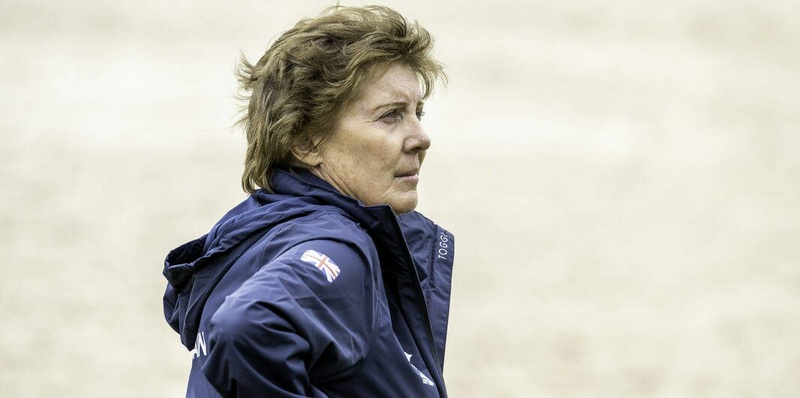
Q&A with Di Lampard: The coach of Great Britain, Spruce Meadows is widely regarded as one of the most iconic arenas in the sport.
From your perspective, what makes the CSIO Spruce Meadows ‘Masters’ Tournament such a special test for the world’s best horse-and-rider combinations?
DL: Spruce Meadows is a very special event because it has been built and developed in that way over many years.
From the very beginning, they were inspired by arenas such as Hickstead, and perhaps because of the strong ties between Canada and Britain, I have sometimes said that going there feels a little like coming home.
The Southern family have done an extraordinary job.
They really know how to run a competition, and the way this complex has developed over the years has been amazing.
Spruce Meadows was one of the pioneers of the sport years ago, and it is still regarded as one of the best arenas in the world.
The complex is also huge from a logistical point of view.
The horses arrive in Calgary by air from all over the world, and the way those flights are coordinated through to getting the horses to the stables is exceptional.
Everything about this arena and the way it is organized has made it a true Major.
The International Ring at Spruce Meadows is famous for its size, natural obstacles and unique atmosphere.
What does a horse need to succeed in such a difficult arena?
DL: There is nothing like the feeling of going under the clock tower and entering the International Ring.
The welcome the riders receive is incredible, and the arena itself has grandeur in every respect.
The course design is unique.
The obstacles are not only big in height, but also in width, and Spruce Meadows still retains a more traditional, old-school feel.
course designer [Leopoldo Palacios] has been designing courses there for years and always creates a real challenge.
A horse needs to be experienced and mature enough to cope with the travel and change of environment.
When you enter such a bold and big arena, you need a brave horse, but it also has to be careful, because there are many delicate obstacles as well.
They have to be agile, capable over fences and rideable, and have enough blood to handle the size of the obstacles and the distances.
The courses are precise, technical and big, so the horse has to have that same combination of qualities.
Great Britain enjoyed a remarkable success at Spruce Meadows last year and won the BMO Nations’ Cup.
What did that result mean for the team, and how important is it to return to an arena where British riders have had so many recent positive memories?
DL: There is never a shortage of riders who want to compete at Spruce Meadows.
There is still some time to go until the competition, and I already have a very long list of riders who want to go there.
We had not won the BMO Nations’ Cup there for years.
Nick Skelton told me exactly that morning how long it had been since the last victory, so getting that win really put our minds at ease.
It was an amazing win and meant a great deal to the whole team.
Great Britain has a very distinguished record at Spruce Meadows.
In the 1990s, British teams won the Nations’ Cup there year after year, and we have also had many Grand Prix champions.
Returning to that level of success last year was exceptionally special.
When you return to a place where you have previously performed well, you come back with even more enthusiasm.
Success gives riders and the whole team confidence and momentum, and naturally everyone wants to come back again and repeat something similar.
As Chef d’Équipe of the British Show Jumping team, how do you help riders prepare for places like Spruce Meadows, where the challenge is unlike almost anywhere else in the world?
DL: Preparation begins with selecting the right combinations.
Spruce Meadows is a daunting arena, so the horse must be brave, confident, and truly suited to the challenge.
The horse accounts for a large part of the equation, because in the end it is the combination that has to go in and perform.
If I have any doubts about whether the experience is right for a combination, I do not send them.
When you take a rider to a particular arena to gain experience, especially a younger rider, you want that experience to be positive and good.
I think very carefully about that.
I also watch the competitions in the International Ring as much as possible.
You always learn new things from this sport.
I look at how different combinations handle the course, what combinations other countries bring, what horses they declare, and how the courses are ridden.
You try to gather as much information and knowledge as possible so that you can give your riders the best support.
Given that you have competed at the highest level yourself, how does your personal experience as a rider affect the way you support and guide athletes at major international events?
Different riders need support in different ways.
Some need close reassurance and plenty of encouragement, especially younger riders who are just developing.
Some need a bit more reassurance, while others need more pressure and have to be told, “Come on, you can do it.”
I also know many of these riders from a long time ago.
When some of them were growing and developing, I coached the pony teams, including riders like Ben Maher and Robert Whitaker, and I knew their parents very well too.
When you are no longer a rider yourself, you see everything from a completely different angle.
Looking back now, I can identify things I did not see at the time, including some of my own shortcomings as a rider.
Experience has no shortcut, but having good people around you can guide the process.
I try to use everything I have learned to support riders and help them as much as possible.
The Rolex Grand Slam of Show Jumping brings together the four prestigious Major events of the discipline.
In your view, what sets these Grands Prix apart from other 5 competitions?
DL: They attract the best in the world; that is an undeniable fact.
A regular 5 Grand Prix is also of a very high standard, but when it comes to a Major with this level of prestige, it attracts the elite of the sport from all over the world.
Everyone wants to reach the Rolex Grand Slam of Show Jumping.
This is an extraordinary achievement that has been accomplished only once by Scott Brash, and being present on that journey was an unbelievable experience.
This is the very goal that riders and leading countries around the world strive to achieve.
These Grands Prix bring together the best combinations, and that is what makes them so special.
Spruce Meadows has played an important role in the history of the Rolex Grand Slam, especially when Scott Brash completed his historic Grand Slam there in 2015.
What significance did this achievement have for British show jumping?
DL: It was an extraordinary accomplishment, and I was proud to be present on that journey.
I will never forget the atmosphere in the International Ring when Scott entered it; there was a silence in which you could hear a pin drop.
No one made a sound until the final few obstacles; that was when you could gradually hear a murmur of voices and the formation of hope around the arena.
The reaction after he completed his round was incredible.
That moment was truly iconic and very special.
Achievements like this are inspirational across the sport.
Whether it is the Rolex Grand Slam, an Olympic gold medal, or any other major championship success, it generates a great deal of motivation and conversation.
Everyone wants to be part of it.
These successes attract more fans to the sport, but at the same time they also encourage owners and sponsors to get involved.
When British riders appear at major competitions, the messages and support increase, and that creates an incredible atmosphere around the team.
The effect of this can also be seen at the lower stages of the development pathway.
We have seen more participation at the 3 and 5 levels, as well as good performances, and more people want to be part of this success.
Owners and sponsors want to invest in a program and work alongside a rider to achieve success at the highest level.
This inspiration is extremely important.
It gives people something to believe in, creates momentum throughout British show jumping, and helps support the next generation of riders and horses that are emerging.
At this level, success often comes down to the smallest margins.
In a competition as big as a Grand Prix, how important is the partnership between horse and rider?
DL: That partnership is absolutely vital.
Spruce Meadows requires a brave and confident horse, but the horse must also be precise, fit, and rideable.
The rider must know the horse and give him confidence so he can handle such a vast and demanding arena.
Nothing is certain in that ring.
We have seen even the best combinations in the world be caught out, sometimes very early in the round.
A shadow, a bold decorative obstacle, or just a brief moment can make a significant difference.
That is why the partnership must be fully prepared for such a challenge.
The horse plays a huge role in the result, and if I have any doubts about a combination’s readiness for such an experience, I do not take it there.
British show jumping continues to benefit from a powerful mix of experienced, titled riders and emerging talent.
How effective are events like Spruce Meadows in developing the next generation of British riders?
DL: From the very moment I took on this responsibility, my goal was always to have a mix of experience and youth in the teams.
It takes time to achieve that balance, but I believe we are now gradually getting there.
In the 1990s, when Great Britain was winning so much, the same very successful riders often competed on the teams.
That made it difficult for other riders to break into the lineup.
Perhaps there were fewer 3* opportunities available too, and when those experienced riders finally retired, a significant gap was left behind.
I always wanted to create a system in which we could send riders out in rotation, give them enough opportunity, and allow them to gain experience alongside established, title-winning athletes.
If everything does not go perfectly on the first attempt, they should be given a chance to come back and have another go.
Young riders are now performing at a high level much earlier, and there are more of them too.
I really enjoy seeing partnerships perform well, but being able to bring the younger generation into the sport is especially rewarding.
Spruce Meadows can play an important role in this process, but selection has to be very careful, because the arena is so intimidating.
The horse has to be brave and confident, and the partnership has to be ready.
Last year, with Ben Maher, Joe Stockdale, Donald Whitaker and Matt Sampson, we had a very strong lineup.
I would like to take young riders there again, provided they have the right horses and the partnerships are ready for the challenge.
Ahead of this year’s CSIO Spruce Meadows ‘Masters’ Tournament, what are you most looking forward to seeing from the performances of British riders and other international names?
DL: For me, it is interesting to see the whole field of competition and how different combinations cope with the challenge.
We are all still learning from this sport, and it is fascinating to see which pairs each country brings out and which horses they declare.
Watching the best horses in that arena is fantastic, but over the years we have also seen many surprises.
At Spruce Meadows, nothing is certain.
The size of the arena, the atmosphere, the shadows and the obstacles can all play a decisive role.
I try to keep an eye on everything as much as possible, because there is always more information and more things to learn.
From a British perspective, I want the riders to perform well, but at the same time I would like every combination we send there to have a positive experience and leave with something learned from the arena.
Source: Press Release from Rolex Grand Slam of Show Jumping Photo: © British Equestrian / Jon Stroud Media via Rolex Grand Slam of Show Jumping Related source: JumperNews