Scott Brash's simple exercise to control a horse's rush in jumping
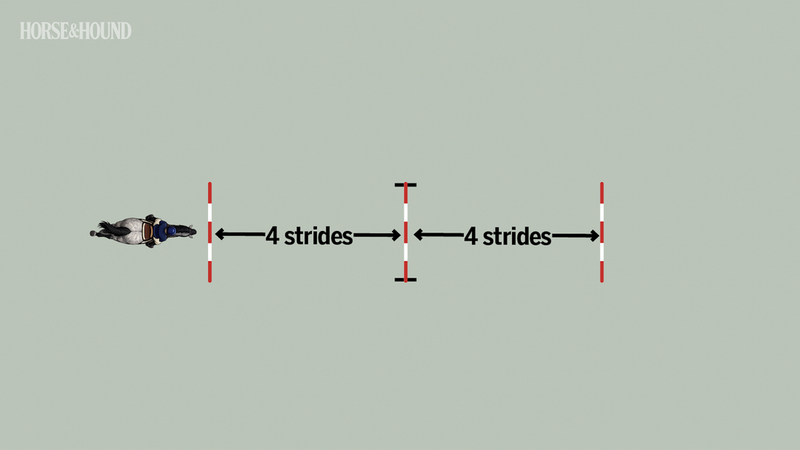
Scott Brash has shared this very practical jumping exercise with Horse & Hound; an exercise that helps your horse not to act hastily both when approaching the obstacle and after landing. This exercise also helps strengthen your vision for recognizing a confident and forward step. The goal is to have four consistent and rhythmic strides both before and after the obstacle. This exercise also helps with straightness, as the horse focuses on the ground pole after landing.
Goals
- Strengthening rhythm and balance in canter
- Enhancing the rider's ability to see the stride
- Preventing haste
Setup
This setup consists of a ground pole, an obstacle, and another ground pole. First, place a ground pole, then four canter strides to a small vertical obstacle; this distance is about 17.5 meters, although it depends on each horse's conditions. After landing, another ground pole is placed four strides later. During the exercise, the height of the vertical obstacle can be increased and turned into an oxer. If you turn the obstacle into an oxer, move the landing side pole back about 45 centimeters to compensate for the increased width of the obstacle.
How to perform this exercise
Before starting the jump, make one or two 20-meter circles and use one or both ground poles in them to adjust your vision. Then, traverse the line of pole, obstacle, pole, and count the four forward strides both entering and exiting the obstacle. Check how your horse has traversed this line. Was it comfortable with four strides on both sides? Did you have to push to reach the obstacle, or did balance get lost after it? When ready, raise the height of the obstacle. As the obstacle gets larger, the distance after landing feels shorter, and the goal is for the horse to still fit in four strides; by collecting itself, not by leaning to one side to make room. This helps with straightness and better engagement of the hindquarters. You can also turn the obstacle into an oxer, but move the second pole back to account for the extra distance the horse travels in the air.
Tips and troubleshooting
1. Haste: If your horse accelerates after landing, keep your upper body straight, close your legs, and maintain soft contact with the mouth. The pole itself should do part of the work, so with repetition of the exercise, the horse will likely improve. You should feel that your horse waits consistently both before and after the obstacle, putting its weight on the hindquarters.
2. Not reaching the distance: You need enough energy. If your horse struggles to cover the distance to the obstacle in four strides, ask for a bigger canter and get into a more forward rhythm so you don't have to chase it. If you comfortably reach the obstacle with four strides, it's more likely that the horse will remain balanced after landing.
3. Increasing the difficulty: When you perform this exercise easily and feel ready for more of a challenge, move the second pole back by 10 centimeters to shorten the distance after landing. This encourages your horse to sit more on its hind joints and increases the engagement of the hind limbs. It is hoped that this exercise will make the horse's stride more springy and bouncy.
Want more ideas? See our complete collection of daily exercise inspirations.
Source: Horse & Hound