Principled planning for the readiness and fitness of horses
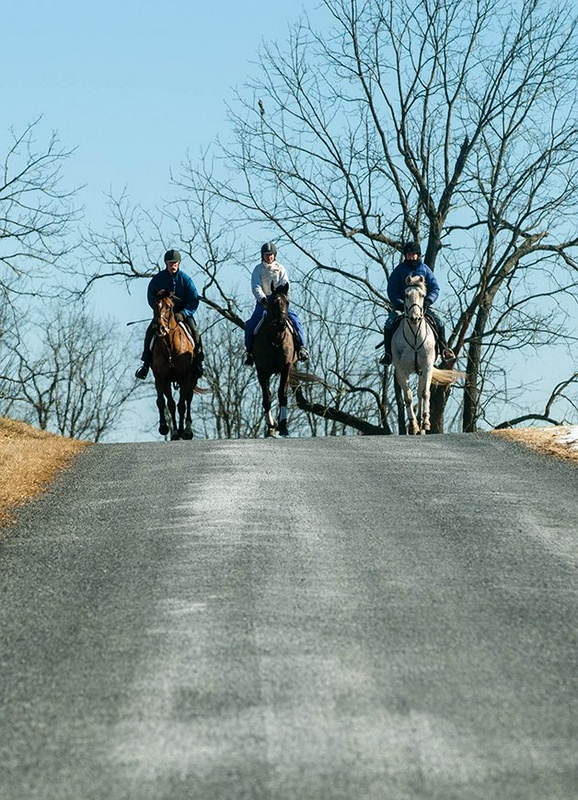
Whether you're a weekend recreational rider or a serious and ambitious competitor, properly preparing the horse for the task it is about to perform is vitally important to ensure success on competition day and also to maintain its overall health and well-being.
A successful program should be tailored to the horse itself and its conditions, taking into account factors such as age, level and type of work, and long-term health maintenance.
Hilary Clayton, BVMS, PhD, ACVSMR, FRCVS, director of Sport Horse Science and professor emerita at Michigan State University in Lansing, says: "If you are prepared for an activity, it becomes much easier and much more enjoyable to do.
Horses have an extraordinary cardiovascular system and, accordingly, can work much more than humans.
But we still need to keep them sufficiently prepared to be suitable for the work they do, without over-preparing them and thus having them in much more physical readiness than they need.
" When a horse is properly prepared, its body systems have adapted to the stresses of the intended work.
In recent years, research conducted by Clayton and others has scientifically validated some traditional preparation methods and rejected others, and new studies continue to add to this body of knowledge.
Relying on this science, the intricacies of a preparation program often require some intuitive understanding and experience from caregivers, trainers, and the horse's medical team.
Mark Revenaugh, DVM, owner of Northwest Equine Performance in Mulino, Oregon, and founder of Ignite for Equine Athletes, a coalition of professionals dedicated to using evidence-based methods to enhance the welfare of horses in sports, says: "At a basic level, when it comes to preparation, it can be considered as a general pre-written prescription, but there are so many individual differences; from rider to horse, from sport discipline to level of work.
My advice to clients is that having a program is important, even if it's not the best program, and then you can determine what works and what doesn't.
" Starting to prepare a preparation program requires mapping a path from your horse's current level of readiness to the position it needs to perform its work safely and comfortably.
Being clear about the ultimate goal of the program as well as its timeframe also helps in setting the frameworks.
Casey Cromer, DVM, professional services veterinarian at Boehringer-Ingelheim, says: "Preparation" is a simple word that has a different definition for every horse, every rider, and every owner.
A "pre-preparation" session allows owners to talk with their veterinarian so we all talk about a shared definition and expectation.
Cromer continues: "Think about performance: there's a physical health component, a respiratory component, a cardiac component, and also an overall talent component.
We need to put all these together and make sure the expectations set for that horse are truly appropriate.
" Involving the veterinarian from the start means you can develop a program that proactively supports your horse's special needs.
Cromer explains: "From a veterinary perspective, if I can see the horse before it enters its fitness program or training, I am not working based on a problem, but rather on a baseline.
" He continues: "Especially as we move through the season and various questions arise about how to reach the next level, if I have that baseline, I can offer better recommendations for that horse.
" Most programs start with long, slow, and distance work and gradually add incline work, speed, and skill exercises over time.
A common guideline is that the horse's workload should not increase by more than 10% from week to week.
The initial stages of fitness prepare the horse for about 45 minutes to an hour of work on various terrains and also for cantering for about two minutes without stopping.
Clayton says: "This prepares the horse for regular outings and enjoyment, and for competing at lower levels.
This is the basic level of fitness that I consider, and for many horses, this is sufficient.
" The effects of gradual fitness over time on the body's systems and structures are cumulative.
A horse that has never been fit requires more time to reach the basic level of fitness than a horse that has been fit before and then rested for a while.
Revenaugh says: "The more I look at all aspects of medicine, I see that much of it is based on adaptation — the body's ability to respond to any kind of pressure applied to it.
" He continues: "When adaptation is effective, the body responds favorably.
When adaptation is ineffective, either the wrong things become stronger or systems start to fail.
For all the body's systems, you don't go from zero to 10; there are 10 stages in between and a specific sequence must be followed.
" If you don't know what type of fitness is best to help your horse reach the basic level, consult a veterinarian or trainer familiar with your discipline.
Tim Worden, PhD, a Canadian sports scientist who has worked as a performance consultant and manager with many FEI-level riders, says: "I advise people to build a network of individuals in the same field and discipline and at the same level of competition to see what their horses are doing.
" He continues: "If you find out that, for example, everyone else is doing core strengthening exercises and you are not, it doesn't necessarily mean you are wrong; but it is an opportunity to understand, be aware, and decide whether this is something you should do with your horse.
" Revenaugh adds: "In the horse world, there is an amazing amount of collective knowledge.
People have learned a lot over the years about what works and what doesn't, and this should not be underestimated.
" Evaluating progress over time, a successful fitness program makes it easier for the horse to perform tasks while maintaining the health of its limbs and overall condition.
The horse's muscles and topline become fuller, and in ideal weather conditions, the horse's pulse and respiration rate return to normal faster than when it is not fit; usually within 15 to 20 minutes.
Clayton says: "For someone preparing for a hack or lower-level show, if the horse is doing its job, is not under pressure, and does not require an excessively long time for recovery, it is usually sufficiently prepared.
" Some riders turn to technologies like heart rate monitors or various fitness tracking tools designed for horses for more precise monitoring of their horse's progress.
Wearable fitness tools for horses can measure everything from the number of steps taken to the time spent in each direction and in each gait and movement, and can also identify asymmetric movement patterns.
Experts recommend keeping a notebook to record the horse's progress so you can determine what works well and what does not.
These notes can include everything from the content of the riding training program itself to external variables, such as who is involved in the horse's care team, its shoeing schedule, or diet, and how frequently it participates in competitions.
Revenaugh says: "People usually take notes when [things] aren't going right.
It's arguably more important to record when something really works well for your program, or for a specific horse.
" Research shows that injuries in sport horses are often directly related to the horse being asked to work excessively and often repetitively, resulting in depleted energy reserves and stress on tendons, ligaments, muscles, and joints.
It is always better to stop the day's work when you feel the horse still has some 'gas in the tank' rather than pushing it harder to reach a specific training duration.
Regardless of the discipline, it is important to include a variety of cross-training exercises in your program to reduce the risk of injuries from overuse and excessive strain.
Cromer says: "We know that the intensity of training, the repetition of training, and the speed at which you train the horse all have medical implications.
Use a wide variety of methods in your horse's fitness, just like you would in the gym for yourself.
Even if you want to strengthen your upper body, you are not going to do biceps curls six days a week.
" When a horse is properly conditioned, its body systems have efficiently adapted to the physical demands of the work.
©Adobe Stock Unmounted exercises that help improve the horse's physical condition or motor coordination, or engage its mind, are some examples of unique cross-training opportunities; especially when weather conditions prevent more intense training.
Clayton says: "Cross-training is ultimately not what brings horses to the highest level of fitness, but it is what protects them from these injuries.
There is no single type of [cross-training] where you say, 'Oh, I must do cavalletti work, or I must swim the horse.'
You do whatever the horse and rider can do and enjoy—but something different from repetitive training in the arena.
" Ultimately, it is essential to include adequate recovery time in your horse's program.
Revenaugh says: "Adaptation occurs not when you do the hard work, but when you are recovering from that hard work.
If you don't give the horse enough time to recover, you minimize the amount of adaptation the horse can make.
Recovery can be passive; meaning the horse goes to pasture and is free for a few days or weeks after a strenuous effort, or active; meaning the horse's workload is significantly reduced but still includes light work in the arena or hacking on trails.
For sport horses, experts usually recommend active recovery instead of passive recovery.
Revenaugh says: "Don't forget to look at the overall condition of the horse to determine if you are overworking it.
A knowledgeable person in the field of horses can understand a lot just by looking at him.
Is his body swollen?
Does he eat well?
Is he always irritable?
Does his coat look [inappropriate]?
" Striving for peak performance might be interesting for riders to know how much basic fitness can advance their horses to the next level.
In fact, most horses can compete in dressage up to the Prix St. Georges level, lower-level eventing, and jumping up to 3’6” without needing much beyond basic fitness.
But when it comes to increasing fitness to face higher levels, programs need to become both more refined and individualized.
Clayton says: "Disciplines can be divided into two categories: those that primarily require strength and those that primarily require cardiovascular fitness.
Dressage and jumping are both heavily reliant on strength, whereas in eventing, the main limiting factor in high-level performance will be cardiovascular fitness.
"If you want to move to higher levels, you need to look at the discipline itself and do additional work that specifically prepares the horse for the type of work you want it to do," he continues.
"For example, in dressage, there is not a very high cardiovascular requirement.
You don't need to go on long gallops to prepare your horse, but you need to do strength exercises.
Often, the discipline itself is the training and strength-building.
This is one reason why developing a fully prepared Grand Prix horse is time-consuming.
" Horses competing at elite levels in disciplines like eventing will need more specialized and advanced fitness.
©Amy K. Dragoo A program for a high-level jumping horse can include a combination of jumping exercises along with work outside the arena, on hills, or other innovative approaches.
These complementary methods enhance the anaerobic endurance needed to clear higher obstacles without excessive impact and repetition.
Horses competing in higher-level endurance disciplines like eventing or distance riding and requiring more cardiovascular fitness also need a more measured approach.
Increasing the horse's aerobic capacity enhances its ability to metabolize oxygen — the fuel for the body's cells.
The stronger the horse's cardiovascular system becomes, the lower its heart rate can be for the same workload, thus consuming less energy.
To prevent injuries from overuse, experts recommend using the rest season to build cardiovascular fitness and the competition season to increase strength and focus on the specific skills of each discipline.
"There is something to be said for competing to achieve physical fitness, because if done correctly, there is no substitute for the challenges you expect the horse to manage," Revenaugh says. "But ideally, during the less busy times of the year, you build a serious foundation of [cardiovascular] fitness so you can target this part of preparation according to your plan and choice."
While horses active in strength disciplines are expected to maintain a relatively constant level of fitness throughout the year, endurance horses are usually prepared to reach a "peak" level of fitness one or two weeks before a major competition and then undergo a lighter period of work until the event takes place.
Clayton explains: "You want the horse to enter the competition feeling good, with all its minor aches and stiffness resolved. After the competition, you ease off the pressure a bit and allow it to do light work and activities it enjoys for a while."
Ultimately, all horses — regardless of discipline — need time off from competition throughout the year, and this should be considered in their fitness program.
Worden says: "When you're preparing for a competition, it creates some stress and pressure for the horse. Whatever discipline you're in, seek out trainers whose horses have long athletic careers and try to understand how much those horses compete. Gradually, you'll see more riders moving towards entering horses only in specific events and incorporating more recovery time into the program to relieve some of that pressure from the horse."
Looking at the competition season path through the lens of physical fitness can be a useful approach. Revenaugh says: "Have an intelligent conversation and consider the timeframe. Then see how you set your weekly program to the month, to the spring season, to the year; how you take the horse from one level to the next. All these factors must be considered in the big picture."
The aging athlete Older sport horses can still succeed in their roles, but some changes in physical preparation are necessary. As age increases, soft tissues become less flexible, and the ability of physical structures to adapt decreases. However, horses that have been properly prepared throughout their lives usually face fewer fitness problems entering their senior years compared to horses that have never or not properly been prepared.
Clayton warns that maintaining a horse's fitness at the end of its athletic career depends on whether the animal had the opportunity to run and play with other horses in the first six months to a year of its life. Horses that were allowed to run and play in their youth will perform better as they age.
©Adobe Stock He explains: "If they don't have this opportunity, then they will never have fully developed and strong joint cartilage, tendons, and ligaments. Collagen is forming in those early months of life."
After that, there is not much we can do to truly improve these tissues.
If we are lucky, by the time they are in their early teens, they have gained all the physical readiness they need, and we can ensure they do not overtrain — because a horse that is built healthy from the ground up and trained correctly can reach late teens and even into their 20s.
Revenaugh says: "Horses that are successful at 18, 19, or 20 have had very good decisions made for them throughout their professional careers."
Of course, there is also a genetic component involved.
But my experience has been that once a horse reaches a strong foundational readiness, unless they are out of the field for a long time, that readiness carries over to the next season.
And for the older horse, if preparation and training have gone in the right direction, this process is almost like you are constantly building on it, and it gets better and better and better.
He continues: "A large part of this depends on being really effective in your decision-making in the first 10 years.
If you impose all the wear and tear in those first 10 years, it will eventually catch up with the horse."
Although older horses may have less capacity for adaptation in their bodies, sometimes introducing new or different forms of exercise can reactivate this mechanism.
Worden says: "If you have a horse that you feel can no longer work as before and you start incorporating new and different exercises, this can be a strong stimulus for the body."
But when your older horse shows signs that maintaining enough readiness to perform at the highest level is no longer possible — signs that usually manifest as reduced muscle building, longer recovery times, and decreased performance — it is probably time to lower him to an easier level; a place where he might be able to serve as a teacher for a rider who is just learning the basics.
Final tips Bringing the horse to the appropriate physical readiness level for the work expected of him plays a very important role in ensuring the safety and success of the horse-rider partnership.
And although you may be tempted to take shortcuts on this path, the result of such action will undoubtedly be a setback.
Revenaugh said: "As a trainer, you have a choice.
The best way to achieve the best result is to keep your horse healthy, keep him in the field, and improve day by day."
Source: Practical Horseman – Health