Improving the rider's position for better coordination with the horse
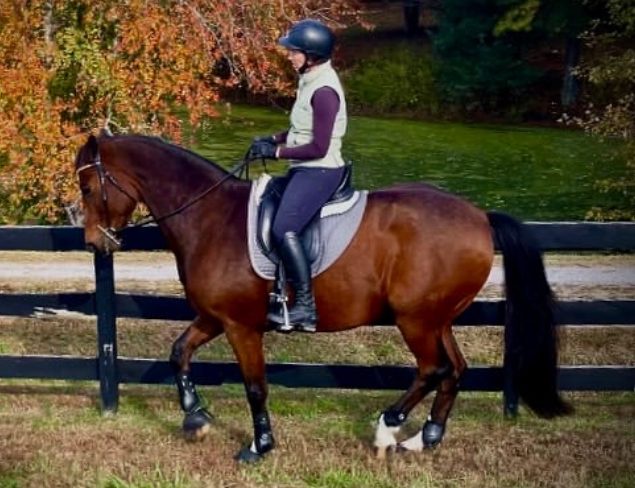
This photo is of Max Goodman and his horse Lionel.
Max said about this image: "I am a trainer of classical French dressage.
Lionel is a 14-year-old Rheinlander gelding that I have been training for 7 years.
He is currently competing at the Prix St. Georges level, and we practice all the Grand Prix movements except for the one-tempis and two-tempis.
We use piaffe to increase the flexibility of his hindquarters because his limb structure is straight.
"At first glance, this photo shows an advanced pair performing a highly collected movement, and there is a clear sense of trust and softness between them.
Lionel appears focused while performing this movement with a soft and flexible body.
He has begun to lower his haunches and correctly lift the diagonal pair of legs.
His facial expression also shows that he is fully focused on his rider's aids with a light contact and a closed mouth.
The bit used is not the usual type in the classical school, but I know that in the French training method, different bits, often without a noseband, are used.
What ultimately matters is that the horse can perform in complete harmony, and that is exactly the case here.
While this column is not about the pros and cons of different equipment, its subject is harmony and balance.
Riding in piaffe, a movement with very high collection like piaffe, requires the horse to maintain softness and flexibility while also having maximum balance and power.
Lionel here lowers his left haunch more; this is often a sign that the horse is not yet strong enough to "sit" and lower his hindquarters while bringing the lifting leg forward and under his body by engaging more of the abdominal muscle chain.
He is on the right track, still progressing, and as Max explained, he uses this exercise to teach Lionel better use of his hind legs.
Bravo!
To help the horse reach this high level of collection, the rider can assist by creating more stability through their seat.
Looking at Max, the good alignment of his upper body, seat, and long legs is quite visible, as well as his effort to keep the contact with the bit as soft as possible.
However, I see that he shortens his left side a bit.
Stability requires contrast; therefore, when he shortens his left side and looks down with his head slightly tilted so that the left ear is lower, he reduces the elasticity and stability of his seat.
My advice to Max is to imagine a rubber band connecting from the stirrup to his ear.
When he shortens his left side and keeps his head tilted, he disrupts the continuity of this band and loosens it.
As a result, it can no longer have elasticity and will not create stability.
The mental image of a guitar string can also be helpful.
A guitar string only produces music when it is attached at both ends.
Pulling down with the leg and up through the body adjusts the tension of this hypothetical string.
And just like a guitar string, the more tension, the higher the pitch and the sharper the sound, and the less tension, the lower the pitch and the deeper the sound.
But without tension, essentially, there will be no music.
With this image in mind, the rider's pelvis can act like a finger on a guitar string to help adjust this tension and play the music softer or stronger depending on the melody and coordination needed.
This mental image can help Max create more extension on the left side of his body and, as a result, gain more stability so that Lionel can perform the collection with more power from the hind legs.
An exercise outside the saddle can also help create this extension in the rider's body.
Stand upright on both feet and place your hands on your pelvis.
Then slowly bend one of the knees forward and allow the pelvis of the same leg to follow the movement of the knee forward and downward.
The weight on the feet should remain as evenly distributed as possible, and the opposite side of the pelvis should not shift to that side.
The shoulders should also remain level and not engage in this movement.
This exercise causes the body to stretch more in the space between the pelvis and the lower ribs.
In piaffe, the horse's back rotates, and the rider must follow this movement.
In the photo, it can be seen that Lionel lowers the left side of his body, and this is reflected in Max's seat and upper body.
With a little more awareness, Max can follow this movement more through the hip and pelvis joints while maintaining the stability and extension of his upper body.
This helps Max achieve more collection without tension.
Keep the hands, but not too high Another point that catches my attention when looking at this photo is the angle of Max's hands.
In the classic line of the rider's elbow, hand, and horse's mouth, there is a slight upward slope at his hands.
Max holds his forearms and hands well, but this angle is a bit too high.
When the angle of the elbows approaches 90°, the movement of the rider's hands usually goes back faster; whereas a slightly more open angle allows for a quicker tendency of the hands to move forward.
This small amount of tension in the elbow is something I often see when riders work on higher levels of collection.
For a light and balanced seat, the rider should bring their weight slightly forward to help the horse have more cadence.
When the upper body comes more forward between the hands, the angle of the elbows becomes more closed.
This is where shortening the reins and keeping the hands slightly ahead of the body keeps the elbows more open and creates better alignment with the horse's mouth.
Max skillfully compensates for this position and keeps the contact with the mouth incredibly light; almost to the point where the reins become slack.
With more extension on the left side of the body, more stability in the upper body, and keeping the hands slightly forward with a light yet elastic contact with the mouth, Max will be able to improve Lionel's balance and stability in collection, and the piaffe will also progress further.
Seeing harmony in an advanced movement is delightful, and I hope with the ideas and tips I've presented, I can help improve it even more.
I wish Max and Lionel the best in their journey to progress to higher levels.
For more advice from Susanne von Dietze on how you can improve your skills in the saddle and your partnership with your dressage horse using rider biomechanics, click here.
Want to send your photo for expert feedback from von Dietze?
See more information here.
About Susanne von Dietze Susanne von Dietze is one of the leading figures in the biomechanics of equestrian sports.
She is a physiotherapist, a licensed Level A coach, and a dressage and show jumping judge, and she lectures and conducts seminars worldwide, including at the prestigious German Riding Academy in Warendorf.
She is originally from Germany and now lives in Israel with her husband and three children, where she competes internationally.
She is the author of two books on riding biomechanics: Balance in Movement and Rider and Horse, Back to Back.
Source: Practical Horseman – Training