What owners need to know about gelding horses
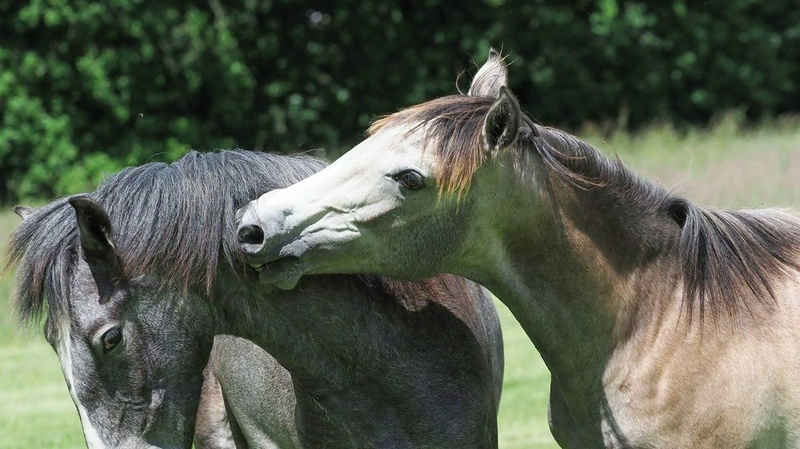
Castration of horses and donkeys is the most common surgical procedure in equine veterinary medicine worldwide.
However, there are significant differences in the way this surgery is performed and in the medications prescribed before and after the procedure.
Elise Rodden MRCVS, a surgical resident at Bell Equine Veterinary Clinic and B&W Equine Hospital, explains: "Veterinarians use a wide variety of methods for castrating horses; probably because no protocol is flawless.
"Certainly, depending on the veterinarian's choice and the precise conditions of each case, different options are available.
"For example, castration can be performed standing or under general anesthesia, in a hospital setting or at riding clubs, with or without sutures, with or without local anesthesia, and with the skin incisions left open or closed.
" Essential points about horse castration in the UK, the law stipulates that appropriate anesthesia or sedation must be used for castrating a horse at any age, and this procedure is a surgical act that must only be performed by a veterinarian.
Castration without a veterinarian's involvement and without the use of analgesics or anesthetics is inhumane and illegal.
● Analgesics should be administered before, during, and after the procedure.
● Check the tetanus vaccination status before the procedure, as any wound can be a potential entry point for this infection.
● Compared to using antibiotics as a preventive measure, sterile surgical technique and a clean environment should be prioritized.
● Castration can be performed at any age, although the usual range is between 6 months and 2 years.
● The best times for the procedure are spring and autumn, as the presence of flies in warmer weather increases the risk of infection.
● The patient should be closely monitored for 12 hours; then it is usually recommended to be turned out to help with drainage and reduce the likelihood of swelling.
What complications might arise during castration?
Despite being a routine procedure, castration is not without risk, and although most complications are mild, some can be serious and even fatal.
A review conducted by Elise in 2025 identified 17 different reported complications following castration procedures.
Elise says: "Among the less concerning complications are those that do not cause discomfort to the horse but worry the owner; such as swelling or continued undesirable behaviors, and also mild complications that resolve with minimal intervention, like edema or localized infection.
"In more serious cases, severe and life-threatening complications such as hemorrhage, intestinal protrusion, or abdominal infection and inflammation can also occur.
"Despite being a routine surgical procedure, the reported mortality rate for castration reaches up to 1%.
Elise adds: "It may not be surprising that scrotal swelling is the most commonly reported issue, followed by infection at the surgical site.
"The point at which scrotal swelling transitions from a normal post-operative finding — which is expected after surgery — to being considered a complication varies greatly.
"Although these cases are less common, some other observed complications can be more serious if severe.
These cases included bleeding and evisceration; a condition where the intestine or a part of the abdominal tissue protrudes through open skin incisions and can be a non-survivable complication.
» It is believed that the risk of evisceration is higher in some breeds, such as heavy work breeds and Standardbreds.
A previous history of scrotal hernia or inguinal hernia also increases this risk.
Elise explains: "By suturing and closing the tunic — the membrane that surrounds the testicle and is continuous with the lining of the abdominal cavity — after removing the testicle, this risk can be minimized.
"This prevents the intestines from exiting the abdominal cavity through the castration incision.
"To place such sutures safely and aseptically, general anesthesia is recommended, which naturally increases the cost of a routine castration.
"In these cases, performing a more complex procedure in a hospital under general anesthesia is more appropriate.
» Elise further explains that risks can be reduced by "castrating colts at a young age and ensuring they are well-handled and castrated in a clean environment."
"Ultimately, the choice of surgical method should be based on a risk analysis for each horse individually, alongside your veterinarian's preferred approach and available facilities, as well as economic considerations.
» Castration is a common procedure, but it is not without risk (image credit: Bell Equine) Why do we castrate colts?
When colts are castrated, they can no longer produce large amounts of testosterone, which makes them easier to handle.
Dr. James Crabtree, junior vice president of the British Equine Veterinary Association and an independent veterinary consultant in equine reproduction and stud medicine, explains: "Testosterone drives sexual and reproductive behavior.
"Horses are very large animals; colts that are a bit unruly are not focused on work and can be unpredictable.
"If you remove that testosterone, you also remove the hormonal drive behind unwanted behavior and a potential barrier to continued training.
» After castration, testosterone levels drop very quickly.
James says: "This can happen within a few days.
» "The reason we say not to put a newly castrated colt with mares is not because he is still producing sperm; rather, it is because there may still be sperm remaining in his reproductive tract and also because his behavior may not change immediately.
"Behavior is not just about hormones; part of it is also learned.
This varies depending on each horse and its surroundings.
If the environment is very stimulating and a lot is going on, the horse may need more time to settle down.
» Another complexity is that testosterone is not only produced in the testicles.
Mares also have testosterone, which is produced in the ovaries and adrenal gland, and a gelding will still have a very small amount of this hormone.
Does castration affect the growth of the horse?
Testosterone, in addition to being an androgenic hormone that contributes to the expression of male sexual characteristics, also has anabolic properties; meaning it plays a role in muscle growth.
Therefore, castration inevitably has both physical and behavioral effects.
James says: "This can be seen in different species.
For example, bulls are robust and muscular, while steers are leaner.
Of course, this does not mean that with training, one cannot increase muscle mass in a gelding.
» Testosterone also plays a role in bone growth, as it indirectly helps close growth plates; the same cartilage located at the ends of long bones that fuse together upon reaching maturity.
If a colt is gelded relatively early and before these plates close, the growth plates may remain open longer, resulting in the gelding being taller than if it had remained a stallion.
These factors and others are considered when deciding the appropriate age for gelding.
James explains: "In racing, some people don't want to geld a horse too early because that testosterone might give the horse a competitive edge.
On the other hand, the testicles of some colts have not fully descended by the age of three; an issue that can cause discomfort during training and is resolved by gelding.
» Some racehorses may be gelded later to retain the benefits of testosterone (Image credit: Alamy Stock Photo) Why might some 'stallion-like' behaviors persist?
Despite the absence of testosterone, some geldings continue to exhibit sexual behavior long after being gelded, and James says the reason for this is not fully understood: "This behavior might be retained in memory because some geldings were stallions for a while, or it might be learned behavior or genetically programmed.
» In other cases, it may be because the horse has undescended testicles; meaning the testicles have not settled in the scrotum.
"If a gelding shows dominant behaviors — behavior often colloquially described as somewhat 'stallion-like' — it might be because there is still testicular tissue remaining that is not visible.
"In such cases, we need to perform some diagnostic tests.
» The veterinarian uses a combination of physical examination, ultrasound, and hormone tests to check whether there is testicular tissue present.
If it is present, it is removed surgically.
Since testosterone is just the last link in a hormonal chain that is activated with the lengthening of days in spring, geldings are still affected by seasonal fluctuations in hormone levels even after gelding. What are the side effects of gelding?
Testosterone is part of a "negative feedback loop."
When the testicles produce a lot of testosterone, it signals the brain and pituitary gland to slow down the production of LH and FSH hormones.
In the absence of testicles, this feedback loop is disrupted and its inhibition is reduced.
Research in dogs shows interesting differences between intact males and neutered males.
"There is good evidence that healthy males [dogs] have a lower risk of several immune-mediated diseases and autoimmune diseases; a fact that makes canines one of the veterinary species where testosterone seems to have a protective effect on the immune system, although testosterone simultaneously increases the risk of several androgen-dependent conditions, especially issues involving the prostate and perianal area.
"However, currently there is no evidence to suggest that testosterone has a protective role in the long-term health of male horses.
"Clinically, I don't see many geldings lacking confidence," says James Crabtree FRCVS. There is also evidence in dogs that a drop in testosterone after castration can lead to increased anxiety and fear, but James again emphasizes that this is not usually seen in horses.
He said, "Clinically, I don't see many geldings lacking confidence; if we were to discuss, it might be said that they are free from the burden of testosterone or estrogen.
"Perhaps the reason is that horses experience relatively good socialization from a young age, alongside their mothers and other horses; therefore, they do not need testosterone to have confidence.
"While dogs often grow up in homes where there is only one dog, and when they are taken to a park full of other dogs, they lack sufficient confidence.
"What about social acceptance?
James points out that the process of castration should also be considered from the perspective of public opinion, as the general public may view it as unkind or unnecessary behavior.
But he explains the safety considerations behind this action and its social benefit for the horses themselves.
He says, "As veterinarians, we think a lot about horse-related surgeries with social acceptance in mind.
"Primarily, this is done for the safety of humans and animals; but at the same time, it is an intervention so that we can keep male horses in mixed-gender environments and also in equestrian sports.
"Keeping stallions uncastrated, experienced, and in the right environment is easier.
"An alternative to surgical castration A vaccine that could be an alternative to surgical castration has been used with some success.
However, it is currently not available for use in horses; meaning any use of it is 'off-license.'
This vaccine affects GnRH; a hormone that signals the pituitary gland to release hormones that stimulate the ovaries and testes, and in practice limits testosterone production — and in mares, estrogen production — from the higher levels of the hormonal chain.
James says, "The GnRH vaccine is really interesting.
"Empirical evidence suggests that this method may suppress more than surgical castration, as it affects more hormones.
"However, its use is not without some significant risks.
"In some cases, this vaccine can be used for a while and still allow the horse to be used for breeding in the future, but there is no guarantee, and practically it should be considered irreversible.
"Most people, if they want the stallion to have a breeding period later, first collect and freeze its sperm and then castrate the horse; whether surgically or chemically.
"Source: Horse & Hound