Simple solutions for becoming a better rider
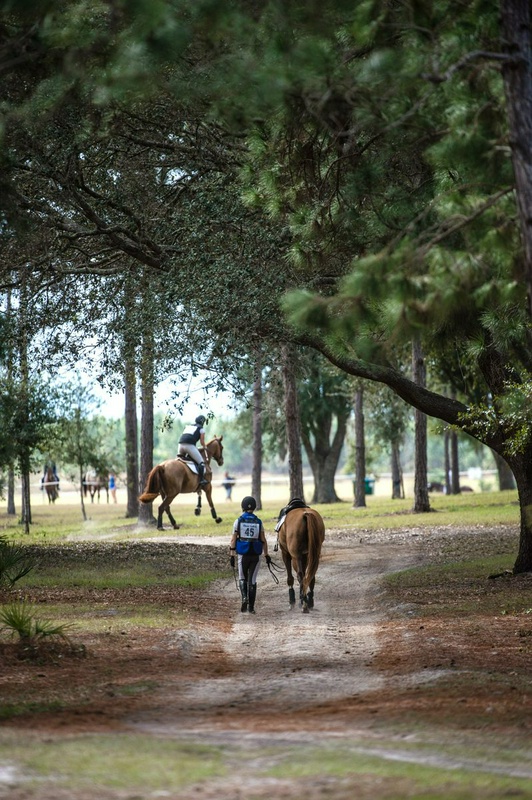
We have all experienced this moment; sitting despondently in the stands after yet another disastrous round, and the same star of the day has passed us by; without any noticeable movement, calmly sitting in the saddle and guiding the horse with subtle aids.
You tell yourself: "Why is it so hard?"
The bad news is that riding well is a difficult skill to learn.
The good news is that every good rider has been exactly where you are now, on those same stands, at some point in their journey.
What matters is that you can become a better rider; you just have to decide to improve.
First of all, riding well is hard because everything doesn't just depend on you; your horse is also part of the equation, and probably the main part.
If you want to learn how to ride well, you need to understand horses; how they think, how they react in different situations, and how they move under your saddle.
I say "learn," but this is not like memorizing the multiplication table from 1 to 12.
When horses are involved, your learning journey will continue forward for the rest of your life; and that's the exciting part.
And now that we are enjoying this journey, I thought it would be nice to share some things that I have learned the hard way so you don't have to repeat my mistakes.
Think like a horse. One of the hardest things to learn, especially for stubborn red-headed boys like myself, is that horses don’t wake up in the morning to decide to ruin your day.
A horse's logic is not always the same as a rider's logic.
A horse, being a prey animal, always stays alert for danger and can easily get distracted; suddenly, it can jump at the slightest thing.
When you see the world from their perspective, you better understand why they react the way they do and how you can teach them that you are there to keep them safe.
If you look again from the horse's perspective, their reaction to water obstacles and ditches is completely understandable.
For you, it’s just a simple ditch; it’s 24 inches wide and 12 inches deep, but for the horse, it’s a matter of a huge catastrophe.
Thousands of years ago, one of their ancestors didn’t pay attention to where it was stepping, and that led to its removal from the survival cycle.
Horses don’t spook for no reason; saber-toothed tigers eliminated those who were careless long ago.
Horses react very quickly.
Maybe you and I know that something is not threatening, but your horse thinks to itself: "Why should I take the risk? Maybe that plastic bag stuck in the bushes wants to attack right now."
When you understand this and learn to think like a horse, your response when the horse reacts strongly to something will change.
If you punish your horse for spooking at a patch of sunlight in the indoor arena, you confirm in its mind that patches of light are indeed scary things.
If you give it time to look at it without confrontation, it will come to the conclusion that it has wasted its time being afraid of it and will more easily accept that patches of light are also a normal part of its environment.
As the horses move, they have specific movement steps, and each of these steps conveys a different feeling to us while we, albeit sometimes unsteadily, try to stay on them.
Most of the horses we ride have four gaits with four distinct rhythms: walk with four beats, trot with two beats, canter with three beats, and gallop, which is the faster form of canter, with four beats.
What I mean by this explanation is that the horse engages its body differently to execute each of these gaits, and this difference in movement affects both your perception of the horse's motion and determines how your body should react to appear as if you are sitting still in the saddle.
One of my favorite examples is this: when your horse is trotting, its shoulders remain level, but its hips go up and down, and at the same time, it brings one hind leg under its body while pushing the other hind leg back to propel its body forward.
Have you ever thought about why sitting softly and fluidly in a trot is harder than sitting in a walk or canter?
The reason is this: in walk and canter, your seat moves in harmony with the horse's rhythm back and forth, but in sitting trot, your hips must alternately go up and down to properly follow the horse's movement.
If you understand the horse and its way of moving better, then the actions your body needs to take to keep up with its movement become clearer to you.
First your leg, then your hand; better understanding leads to better riding.
When you can correctly follow your horse's movement, you can apply your aids with much greater precision.
But again, it must be said, before you want to apply the aids, you need to understand exactly what you are seeking with these aids.
Essentially, you use the aids to harness the horse's forces for your benefit; so you can move faster than you can run, jump higher than you can jump, and ultimately reach a point where you feel that the law of gravity no longer governs you.
Like anything else valuable, this does not happen easily and should not be easy at all.
Beverly Sills, the legendary opera singer, said: "There are no shortcuts to any place worth going."
I want exactly that.
The more you progress along the learning path, the more you realize that much of riding is contrary to initial expectations and intuition.
By now, you probably know that if your horse is to become stronger and progress in dressage, it needs to lower its head slightly, relax its back muscles, and use its hind legs with more power and energy.
But until you understand this simple principle, you are doomed to fail: you do not lower your horse's head by pulling it down; you send it down by driving it.
When you understand this principle, you are essentially given the key to entering the horse's realm.
The first time you feel your horse stepping from your inside leg to the outside rein is a very important moment in your growth as a rider.
The first experience of this response usually occurs in a trot and on a circle.
Create a circle with a diameter of about 10 meters.
Now, by closing your inside leg and sending the horse towards your outside hand, enlarge the size of the circle.
Instead of increasing speed, the horse accepts your leg, stepping more under its body with its inside leg and connecting with your outside hand.
In simple terms, you have now balanced your horse between gas and brake.
From here on, you know that you should push from your leg towards your hand, not the other way around.
Initially occasionally, then consistently, and finally generously, the horse will give you its power.
Let the horse jump; learning to ride well over obstacles is as difficult as riding well on the flat.
Just like in dressage, I have a very simple rule for this part as well.
To explain it, during my lessons and clinics, after a few warm-up jumps, I ask riders — especially younger teenagers or older riders who are so scared that they have regressed — this question: "How many jumps have you done today?"
The answers vary greatly in number and accuracy.
When students give their opinions, I say: "No, you haven't even jumped one obstacle."
You see, this is my rule: "It is your horse that jumps!"
You are just with it.
Most horses love to jump, especially when the rider's hands are not bothering them.
If a horse really does not like jumping, there are other things it can do, and it is up to us to guide it onto the right professional path.
When we have a horse that loves to jump, we must stay connected to its movement and ride it with rhythm.
My logic is this: if we are constantly behind the jumping movement or thrown forward upon landing, both riding well and the horse jumping well become difficult.
When you take the time to complete your body position, that time is never wasted.
I have written many books and articles about correct position in jumping, and you can find a list of some of them at the end of this article, but my summary is to adjust the stirrup length so that when you are sitting, there is about a 90-degree angle behind your knee.
Over small obstacles, your position in jumping is the same as the position at the highest point of the canter.
The stirrup leather should form a vertical line, and there should be a straight line between your elbow and your horse's mouth.
Remember that you should follow the horse's mouth movement with your elbows, not by locking your hip angle.
Once your position is stabilized and independent, then ride the horse with rhythm before the obstacle, over the obstacle, and after the obstacle.
To help maintain rhythm when approaching the obstacle, count out loud until the moment the horse leaves the ground.
You can tell yourself you had a good jump if the approach, jump, landing, and departure were all done with one rhythm.
Your rhythm is important because when we hear the rhythm, we also hear the balance.
When the horse is balanced, it jumps in the best possible way.
It’s simple, but it’s not easy.
But if this were easy, everyone could do it; and you want to be the one sitting in the saddle one day, passing by others while younger and less experienced riders look on in amazement at how smoothly and effortlessly you and your horse execute the task.
This time, a new person in the stands says, "Why is it so hard?
He makes it look so easy!"
To read Jim's insights on the leg and body position in jumping, go to www.
Go to practicalhorsemanmag.com and search for the phrase "Wofford leg jumping position."
Books by Jim that cover these topics include Modern Gymnastics and Cross-Country with Jim Wofford, available for purchase at www.equinenetworkstore.com, as well as Training the Three-Day Event Horse and Rider and 101 Eventing Tips.
Source: Practical Horseman – Training