Strategy for developing a enrichment program for winter horse care
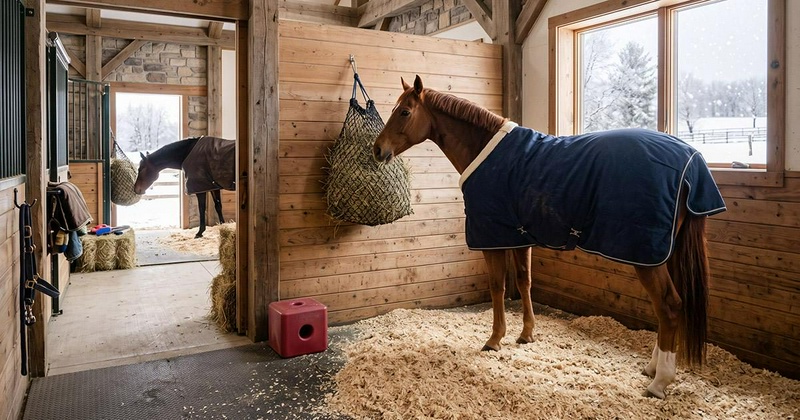
When winter weather arrives, many horses spend more time in indoor spaces.
Ground frost, heavy snow, sub-zero temperatures, reduced daylight, and wet and muddy conditions can all lead horse owners to reduce the time their horse spends outdoors or increase the time it stays in its box.
While stable care on harsh weather days can provide a safe and comfortable environment, long-term confinement in a box can also reduce opportunities for movement, foraging, social interaction, and curiosity and exploration.
For this reason, winter is a suitable time to develop a thoughtful environmental enrichment plan for the horse.
Enrichment does not just mean providing a toy for the horse.
The goal is to create safe opportunities for the horse to express its natural behaviors, have choices, stay mentally engaged, and maintain as much variety as possible in its daily routine.
Why does winter stable care increase the risk of boredom?
Horses are inherently active and social animals, spending a large part of their day grazing, walking, foraging, and interacting with other horses.
When a horse is moved from pasture or a regular outdoor schedule to longer stays in a box, many of these behaviors are restricted.
Winter stable care can mean: less daily movement, less opportunity for grazing and foraging, less social interaction, a more predictable and repetitive environment, faster consumption of meals, less opportunity to explore different sights, smells, and textures. The British Horse Society has noted that long-term confinement in a stable can reduce movement, social interaction, and foraging opportunities.
Providing environmental enrichment can help horses express some of these natural behaviors in a managed environment.
Of course, this does not mean that every horse kept in a stable will necessarily suffer from boredom or stress.
Different horses have different temperaments and preferences regarding enrichment.
The key point is to carefully observe your horse and provide appropriate opportunities for mental and behavioral stimulation without causing frustration or overstimulation.
What are the behavioral consequences of under-stimulation?
A horse that has less opportunity for movement, foraging, and interaction may become restless, agitated, or uneasy.
Signs that may indicate your horse needs more stimulation include: pawing the ground with its hoof or constant walking in the box, excessive chewing or chewing wood, swaying its body side to side, cribbing or biting, frequently calling out to other horses, increased irritability, seeking excessive attention, difficulty settling down, disinterest in the surroundings.
These behaviors do not necessarily mean that your horse is bored.
Pain, lack of forage, digestive issues, anxiety, social stress, and other management issues can also play a role in behavioral changes.
Therefore, ongoing or sudden changes should be discussed with a veterinarian or an appropriate equine behavior specialist.
Research and recommendations regarding horse welfare increasingly emphasize that environmental enrichment should complement the horse's basic needs for forage, movement, social contact, rest, and appropriate veterinary care, not replace them.
For more ideas on creating a healthier environment in winter, refer to the "Icon Wellness" guide titled "Why Horses Need More Freedom of Movement."
1.
Nutritional enrichment: Make foraging more appealing Forage is one of the simplest points to start with.
Horses have evolved to spend many hours each day grazing and foraging for food.
When hay is quickly consumed from a single pile or a typical feeder, a large part of the horse's natural foraging behavior is lost.
Instead, consider ways to safely extend feeding time and also create variety.
Try different methods of providing forage depending on your horse's nutritional needs and veterinary recommendations, you can use: slow-feeding hay nets multiple hay stations hay pillows ground-level forage suitable feeders small amounts of forage-based treats hidden among the hay various safe forages, if appropriate in the 2026 guide from the British Horse Society, it states that slow feeding methods can increase feeding time and if forage is safely placed in different sections, it may also encourage the horse to move more.
However, some feeding systems are not suitable for all horses; especially those with certain neck or back problems.
Always introduce a new feeding system gradually.
A hungry or frustrated horse may become stressed with a feeder that is too difficult to use.
Use food puzzles carefully forage-based feeding balls and other puzzle feeders can turn eating into an activity, not just a meal.
Start with something simple.
Your horse should quickly understand how this enrichment method works, rather than becoming frustrated.
If your horse is not engaging with a feeder, do not assume it is being stubborn.
This enrichment method may simply be too difficult, unfamiliar, or unappealing.
2.
Social enrichment: Do not underestimate the importance of companionship Horses are herd animals, and social contact is an important part of their natural behavior.
When weather conditions require horses to be kept indoors, look for safe ways to maintain social interaction.
Depending on your stable conditions, this may include: keeping compatible horses in sight of each other providing safe visual access through box openings scheduling grooming time alongside a compatible companion setting up a rotating box exit schedule so horses do not end up isolated for no reason providing safe interaction from behind barriers, wherever appropriate even visual access to other horses can add variety to the daily life of a horse that has to spend more time in the stable.
The British Horse Society recommends that wherever possible, opportunities for horses to see and interact with their compatible companions are maintained.
However, more social contact does not always mean better conditions.
If neighboring horses show aggressive behavior, anxiety, or excessive irritability towards each other, increasing physical or visual distance may actually be a more suitable solution.
Sensory enrichment: Engaging the senses When a horse spends long hours in a stable, its surroundings can become significantly predictable and monotonous.
Sensory enrichment creates variety by using safe changes in visual, olfactory, auditory, and tactile stimuli.
Vision Under suitable conditions, provide your horse with the opportunity to see the following: other horses stable activities outdoor scenery different sections of the facility safe changes in the surrounding environment Sometimes mirrors in the stable are used as a tool for visual enrichment, although horses' reactions to it vary.
If you provide a mirror for the horse, make sure to use a product specifically designed for this purpose and resistant to breaking, and also monitor the horse's reaction.
The British Horse Society recommends that any unfamiliar enrichment tools or methods be introduced to the horse in an environment where it has enough space to move away if it becomes concerned.
Olfaction The olfactory sense in horses is highly advanced, and introducing fresh yet safe scents can provide additional sensory stimulation for them.
For example, you can offer a small amount of suitable and safe herbs for the horse or leafy forage as part of its regular diet.
Always ensure that anything provided to the horse is specifically safe for that horse.
Horses with dietary restrictions, metabolic issues, or competition-related requirements may need additional precautions.
Tactile Grooming is a simple yet highly effective method of enrichment.
Instead of viewing grooming merely as a pre-riding task, use it as an opportunity for relaxation, strengthening the bond, and close observation.
A calm grooming session can allow you to: spend dedicated time together identify areas of tension or sensitivity help the horse relax enhance positive interaction between human and horse check the skin, coat, and body condition for any changes Equine Wellness has also examined how seasonal changes can affect horse behavior, including the importance of adjusting daily routines with changing environmental conditions.
4.
Winter enrichment ideas you can create yourself To enrich your horse's winter program, you don't need an expensive set of commercial toys.
Fill paper bags with a small amount of hay or suitable forage, place it inside a simple, clean paper bag, and let your horse explore it under your supervision.
If the horse starts eating large pieces of paper or becomes frustrated, discard the bag.
Treasure hunting with hay Instead of placing all the forage in one spot, provide several small, safe forage stations inside the box or suitable area for the horse.
This can encourage the horse to move between different points and explore various sections.
The placement of these forages should never be such that the horse has to stretch its body inappropriately, get stuck, or compete with another horse for food.
Hanging forage A properly secured hay net or forage toy can add variety to the feeding program.
Introduce any hanging system carefully and ensure it does not get caught around the legs, hooves, halters, or other equipment.
Brushing and scratching are sometimes the simplest forms of enrichment and interaction.
Spend 10 to 15 minutes calmly brushing, scratching your horse's favorite spots, or even just giving them the opportunity to explore a new grooming tool.
Winter training games can also be a good opportunity for low-pressure mental exercise.
Depending on your horse's physical condition and your veterinarian's recommendations, consider the following: targeting exercises, training and saddling exercises, standing at a specific point, basic ground work etiquette, liberty exercises, teaching simple tricks, introducing obstacles for horses that are box-rested or have movement restrictions, always adhere to the training limitations set by your veterinarian.
5.
Implement enrichment in a rotational manner to maintain its appeal. One of the biggest mistakes in enrichment is introducing a new tool or activity and then leaving it in the box for an indefinite period.
Novelty wears off quickly.
Instead, design a simple rotational program.
A sample weekly enrichment program does not require you to provide something different for your horse every day.
In fact, horses can benefit from predictable routines alongside occasional innovations.
The goal is to create variety without chaos.
Pay attention to which activities your horse shows interest in and which ones they ignore.
Over time, based on your horse's personality, physical needs, and preferences, a customized list of enrichment methods will develop for them.
Design enrichment based on each horse's characteristics. There is no one-size-fits-all enrichment program that works for all horses.
For example, an older horse with dental issues may require a different approach to nutritional enrichment, while a young horse with high food motivation has different conditions.
A nervous horse may prefer subtle changes, but a curious horse might enjoy more complex challenges and difficult puzzles.
In designing the program, consider the following about your horse: age, body condition, temperament, dental health, digestive health, mobility, medical restrictions, nutritional needs, social preferences, competition requirements. Most importantly, enrichment should never be used as a way to compensate for a lack of turnout, forage, exercise, or social contact; especially when these needs can be safely met.
Stable management in winter is sometimes necessary, but this does not necessarily mean a completely inactive or monotonous day.
By incorporating forage-based activities, safe social interaction, sensory variety, grooming, exercise, and carefully rotated enrichment methods, a winter environment can be created that supports both the physical health and mental well-being of the horse.
The best enrichment program is not necessarily the one with the most toys; the best program is the one that provides more opportunities for your horse to behave like a horse.
Day Enrichment
Monday: Slow-feed hay + grooming
Tuesday: Forage puzzle + visual access to companion
Wednesday: Multiple forage stations + quiet grooming
Thursday: Safe sensory enrichment + hand-walk if approved
Friday: Hay feeder + ground-training session
Saturday: Different forage presentation + grooming
Sunday: Simple day with familiar enrichment
Source: Equine Wellness