When and how should we change the winter diet of the horse?
If you have been thinking about whether to change your horse's feed as winter approaches, you are not alone.
Dr. Marga Maas says that knowing a horse's needs may change is "commendable," but the issue is not limited to the feed bucket.
Marga, the veterinary director of horse health and performance at Dendach, adds: "Concentrate feeds should complement forage, and autumn undoubtedly changes both the availability and quality of available forage sources."
These changes can affect how energy is supplied and the nutritional needs of the horse; therefore, reviewing your horse's summer diet and whether it will meet its needs in winter is a good starting point.
Do you really need to change your horse's feed?
What you give your horse and how much largely depends on your goals for this season.
Katy Rieu, a nutritionist at Dengi, says the level of work is the determining factor: "Will the horses maintain the same level of work throughout winter?"
If not, energy intake may need to be reduced.
She continues: "The feed given in the bucket complements nutrient deficiencies in a forage-based diet, rather than providing extra energy."
She adds: "This can easily be done by using a feed balancer alongside a low-calorie chopped fiber feed; a feed made from quality straw mixed with another source of chopped fiber, such as dried grass or alfalfa, to slow down consumption."
Vanessa Allen, the nutritional content manager at Spillers, also agrees: "Changing the diet is certainly not necessary for all horses. If a horse gains weight easily and has a balanced diet, in many cases it can maintain the same program throughout the year."
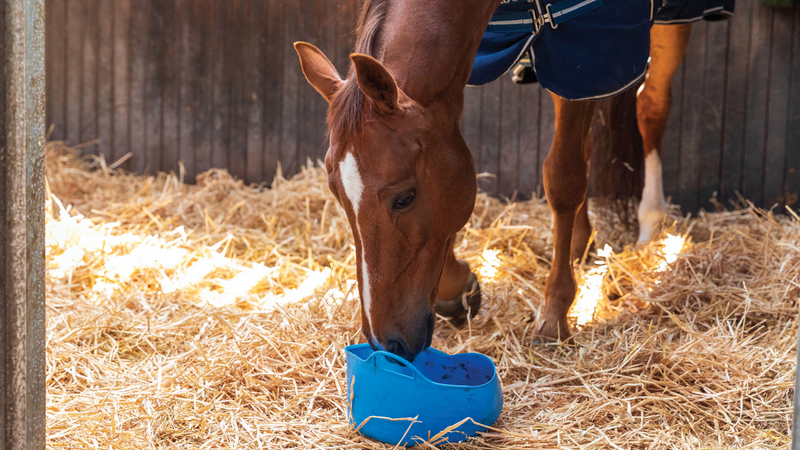
Make dietary changes gradually and keep the volume of each feeding to 2 kilograms or less (image credit: unknown).
Feeding horses that gain weight easily in winter is a good time for targeting weight loss.
The nutritionists we spoke with pointed out a common misconception: that winter grass has "no" nutritional value.
Vanessa adds: "If some of these horses eat enough from winter grazing, they may still receive more calories than they need."
But the story doesn't end there, especially now that we are still seeing grass growth with changing environmental conditions and milder winters.
This does not necessarily mean that there is enough grass in the pasture.
Katy says: "Poorly covered or muddy paddocks mean the horse may not have much to eat for a long time, and this is not ideal for digestive health."
Feeding poorly kept horses and working horses in winter for poorly kept horses, or those that have heavier work throughout winter, changing the diet to a high-calorie regime may be necessary; especially if they have benefited from suitable grazing all summer.
Vanessa says a high-calorie feed can be provided alongside free forage for the horse.
She says: "High-calorie feeds contain between 11 to 14 megajoules of energy per kilogram. The higher the energy, the more calories per kilogram of feed."
According to Marga, substances such as vegetable oils, flaxseed, rice bran, and rolled oats help maintain body condition by providing enough energy for weight gain or maintenance, as well as supporting workload.
She says, "It is also important to look for quality protein sources like soy and peas; both are rich in essential amino acids for horses; wheat, sunflower seeds, and dark distiller's grains are also important.
" She emphasizes that one should not rely solely on the percentage of crude protein: "Pay attention to the levels of lysine and methionine, as these essential amino acids are key factors determining muscle mass growth.
"For a 500-kilogram horse in light work, the recommended amount of lysine is 30 to 35 grams per day, which increases to 35 to 45 grams for moderate work and 45 to 52 grams for heavy work.
She says, "For methionine, we still do not have a specific and established recommended daily amount, but we usually base it on a 3 to 1 ratio of lysine to methionine.
Horses that gain weight easily can maintain or even gain weight with winter grazing (image credit: Alamy Stock Photo) Golden rules for changing horse feed One of the golden rules in nutrition is that any change should be made gradually; but what does this mean in practice?
Change feed gradually Katie says research has shown that changes in diet are one of the most significant risk factors for colic.
She says, "When making any changes, including in grazing and forage, this should be done gradually over a period of about two weeks.
" Avoid sudden and incidental changes in feed This can disrupt the microbial balance of the hindgut; an issue that, according to Lucy Baskfield, an equine nutritionist in Belize, can in turn increase the frequency of defecation and harm the microbiota.
She says, "For example, occasionally giving mash of bran is not an ideal practice; this causes a microbial imbalance known as dysbiosis, which can increase the risk of colic and even raise the risk of laminitis in some cases.
" Ensure that portion sizes are appropriate Marga says, "Horses are designed to eat little and often; for a 500-kilogram horse, we recommend not giving more than two kilograms of concentrate feed per meal," adding that this rule applies to concentrate feed.
During the transition period of the diet, horses should be closely monitored.
Source: Horse & Hound