Why do some horses become more anxious in winter?
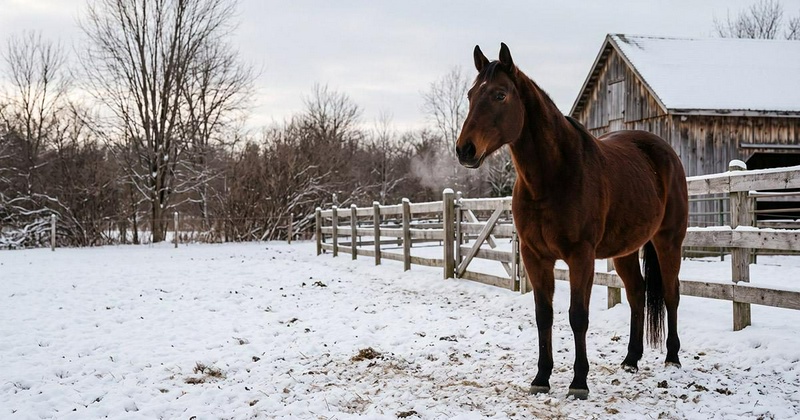
Winter can change the daily life of horses in several ways.
Shorter days, reduced time spent in the pasture or outdoor area, changes in contact with the herd, decreased grazing time, and limited opportunities for movement can all affect the comfort and behavior of horses.
For some horses, these changes may lead to increased anxiety, restlessness, or heightened reactivity.
Understanding why a horse becomes more restless in winter can help owners make more thoughtful changes in the horse's housing environment, feeding schedule, training, and daily routine.
Summary: Horses may become more anxious in winter when management in cold weather reduces time spent outdoors, social contact, access to forage, or levels of activity.
Maintaining a predictable routine, providing forage and appropriate environmental enrichment tools, ensuring safe social interactions, and adjusting training based on the horse's needs can help calm its behavior.
Sudden or significant behavioral changes should be assessed for pain or other health issues.
Why does winter make some horses more anxious?
Winter anxiety is rarely explained by a single factor.
A horse that spends more time in a box has less opportunity to interact with its herd mates or receives less movement than usual, which may show a different reaction compared to a horse whose daily routine has remained relatively stable.
Horses are grazing animals that are accustomed to spending a large part of the day moving, foraging, and maintaining social relationships.
When winter management limits these activities, some horses may show signs of frustration, heightened alertness, or difficulty settling down.
Weather can also change what horses face every day.
Wind, icy ground, blowing snow, unfamiliar sounds, and reduced visibility may make some environments seem less predictable.
Not all horses react in the same way.
Age, temperament, previous experiences, health status, workload, and the management needs of each horse all influence how they cope with seasonal changes.
1.
Reduced time spent outdoors and more time in the box is one of the most noticeable changes for many horses in winter.
Snow, ice, frozen ground, very low temperatures, or limited access to the paddock may mean fewer hours outdoors.
For horses that are used to spending a large part of the day outside, this change can be distressing.
Less opportunity for walking, foraging, grazing, and interacting with other horses may lead to restlessness or undesirable behaviors in the stable.
Owners may notice that the horse is constantly pacing back and forth in the box, pawing the ground, calling to other horses, performing repetitive movements, or becoming overly excited when taken out for training.
These behaviors do not automatically mean anxiety, and not every horse kept in a confined space will exhibit them.
However, a significant reduction in a horse's usual activity can be a useful starting point for examining seasonal behavioral changes.
What can help?
As far as the conditions and individual needs of each horse allow, maintain safe outdoor time as much as possible.
Regularly check pastures and paddocks for frost, deep snow, uneven ground surface, and other hazards.
If herd dynamics or ground conditions make group turnout in the open unsuitable, consider smaller groups or individual turnout.
If you must limit turnout time, provide more opportunities for movement, social contact, and appropriate environmental enrichment.
The goal is to maintain the natural pattern of daily horse activity as much as possible while ensuring safety; not simply to rely on resting in the stable due to winter.
For more ideas on making the horse's living environment easier, check out these 5 strategies for creating a low-stress environment in the stable.
2.
Changes in herd interaction and social contact Horses are social animals, and their relationships with other horses are an important part of their daily lives.
Winter management can disrupt these relationships; including when groups for turnout change, horses are separated for feeding or safety, or some horses spend longer alone.
The National Farm Animal Care Council's guidelines on the care and management of equines provide further guidance on horse housing, social interaction, exercise, and overall horse welfare.
A horse that typically grazes and rests alongside familiar companions may become more alert or whinny more with reduced contact.
Some horses may also become restless when getting to know unfamiliar herd mates or when competition for forage, water, or shelter increases.
Pay attention to frequent whinnying, constant walking along the fence near other horses, difficulty calming down after separation, or increased tension when moving between different turnout positions.
How to support the social welfare of horses Wherever practical and safe, allow horses to maintain their familiar social relationships.
If full group turnout in the open is not possible, visual contact with compatible horses can be beneficial, although it does not replace all the benefits of direct social interaction.
Ensure that space and access to feed and water are sufficient to reduce competition.
Introducing horses to each other should be managed carefully, considering individual temperaments, injuries, and aggression risks.
For horses that need to be kept separate for veterinary or management reasons, consult a veterinarian or an experienced equine specialist about safe ways to reduce unnecessary social stress.
3.
Reducing grazing time and forage consumption in pastures Changes in grazing and access to forage can affect how comfortably a horse spends its day.
Winter pastures may provide less usable grass, while horses kept in stables may receive hay in less frequent but larger meals instead of frequent access to forage.
Long periods without forage can make some horses restless and may not align with their natural feeding patterns.
Adequate access to forage also aids in natural chewing and proper digestive function.
However, simply increasing the amount of hay, without considering the horse's body condition, workload, metabolic health, and nutritional needs, is not an appropriate solution for all horses.
Practical solutions for improving the feeding program include: providing forage at regular intervals for the horse and avoiding unnecessary and prolonged periods without forage.
If suitable, use hay nets or slow feeding equipment and ensure these tools are safe for that specific horse.
Provide enough space for feeding for horses kept in a shared paddock or stable area.
Always have fresh water available and check that freezing temperatures have not limited access to water.
If forage intake needs to be carefully controlled, collaborate with an equine nutritionist or veterinarian.
Horses with a history of laminitis, insulin dysregulation, obesity, or other diet-related issues may require a specialized forage program.
Any changes should be made with these needs in mind, rather than prioritizing continuous and unrestricted access to forage.
4.
Climate and environmental changes are not the only winter factors that can affect horse behavior.
Strong winds, snow accompanied by wind, slippery ground, sudden temperature changes, and unfamiliar sounds can make some horses more alert and sensitive.
A horse that is comfortable in its familiar paddock on a calm day may become more reactive when snow shifts on the ground or wind rattles the stable doors and roof panels.
Light changes can also be significant.
Darker mornings and evenings, shadows, and reduced visibility can alter a horse's perception of its familiar surroundings.
Some horses also become distressed when their body coat is wet, they lack proper shelter, or their access to water is restricted.
Discomfort from environmental conditions can lead to behavioral restlessness; therefore, before assuming a horse has a behavioral problem, it is better to check its basic needs.
Provide a checklist for winter environmental conditions that ensure suitable shelter against wind and precipitation.
Keep fences, gates, and fixed equipment safe and sound.
Check the condition of paddock floors, pathways, and exercise areas.
Ensure there is adequate lighting in areas where horses are handled or moved.
Keep water accessible and do not allow equipment to create hazards.
Check whether specific weather conditions consistently cause changes in horse behavior.
Preparing a horse for cold weather is not limited to providing shelter.
Learn more about the natural preparation of horses for winter, including ways to support their comfort and well-being throughout the season.
If a horse becomes anxious in a specific situation, gradual and low-pressure exposure can be helpful, provided the environment is safe.
Avoid forcing a frightened horse into a situation that may cause injury.
5.
Reduced exercise and movement for some horses in winter due to frozen training fields, unsuitable ground conditions, shorter daylight hours, or changes in their owner's schedule result in less training.
Horses that typically receive regular riding, paddock time, or ground work may struggle to adapt to this change.
Reduced movement can manifest alongside increased energy, restlessness, or difficulty settling down.
However, it should not be automatically assumed that excess energy is the cause of all behavioral changes.
Pain, body stiffness, respiratory discomfort, and other physical issues can also affect a horse's behavior during training or handling.
Adapt activities to conditions; if the ground is safe, consider options such as the following: hand walking or groundwork.
Short and calm training sessions.
Turnout in a suitable paddock.
Controlled exercise in a safe arena.
Low-pressure activities that help with focus and relaxation.
Adjust the workload according to the horse's fitness level, age, health status, and usual training level.
Allow enough time for warming up, especially when the horse has been standing in a cold stable for a while.
Avoid training on frozen or unstable ground.
If a horse has been inactive for a long time, gradually increase the intensity and amount of exercise instead of immediately returning to the previous workload.
Horses that show unusual reluctance to move, are stiff, become irritable when saddling, or show high reactivity during training should be checked for potential discomfort before increasing their workload.
6.
How to recognize stress-related behaviors in winter Early detection of changes can help owners understand what the horse needs.
The most useful sign, in many cases, is a change from the horse's usual behavior.
Possible signs of increased stress or arousal include: frequent pawing, pacing back and forth, or weaving.
Calling out more when other horses leave.
Restlessness during grooming, saddling, or time spent in the box.
Increased reactivity to familiar sounds or movements.
Difficulty settling down after being in the paddock or training.
Increased tension during feeding or interaction with the herd.
New resistance to handling or tasks that were previously familiar to the horse.
Some behaviors, including weaving or cribbing, can have multiple underlying factors and should not be attributed solely to winter stress.
Pay attention to when the behavior occurs, how long it lasts, and what happens immediately before and after.
A simple daily log can help identify patterns.
Record hours spent in the paddock, feeding times, training, weather conditions, social changes, and any unusual signs.
When to contact a veterinarian?
If the behavioral change is sudden, persists, worsens, or is accompanied by signs such as decreased appetite, weight loss, lameness, unusual sweating, colic symptoms, difficulty breathing, or sensitivity to touch, you should consult a veterinarian.
Pain and illness can manifest as behavioral changes and should not be overlooked.
7.
Environmental changes and enrichment strategies Enrichment allows horses to engage in appropriate and species-typical activities when winter limits their usual choices.
This is most effective when combined with appropriate access to space, forage management, social contact, and mobility, not as a substitute for them.
Nutritional enrichment Safe enrichment in feeding can increase the time a horse spends engaged with forage.
Depending on the horse and its dietary needs, using safe slow feeders or multiple forage stations can make feeding more appealing.
Any type of feeder should be suitable for the horse, securely installed, and checked for the risk of entrapment or injury.
Avoid equipment that may catch the hoof or become dangerous when the horse scratches the ground with them or plays.
Environmental enrichment simple changes can make the environment around the horse more appealing without creating unnecessary hazards.
Safe and suitable enrichment items for the horse can be provided on a rotational basis, access to appropriate areas can be ensured, or the location of supervised activities can be changed.
Introduce new objects gradually, especially for horses that spook easily or are easily frightened.
Keep hallways clear and avoid using items with sharp edges, loose parts, toxic materials, or small components that may be swallowed.
Social enrichment when direct release alongside suitable companion horses is not possible, safe visual contact can provide some social stimulation.
The best option depends on the horse's temperament, medical needs, and its relationship with other horses.
Enrichment in training short sessions that reinforce familiar cues, calm guidance, standing still, or gentle and stress-free grooming can help engage the horse mentally.
Keep sessions short enough to avoid fatigue or frustration, and instead of pushing the horse beyond its comfort level, reward calm responses.
The most beneficial type of enrichment is one that is safe, matches the characteristics of each horse, and is included in a program that meets the horse's basic needs in advance.
8.
Creating a predictable winter program predictability can help horses cope better with seasonal changes.
A regular schedule makes feeding times, access to areas, exercise, grooming, and social contact more predictable even when weather conditions occasionally necessitate changes.
Try to keep the main parts of the day as consistent as possible: Feeding: Keep meal times and hay as regular as possible.
Outdoor presence: Set up a safe and regular plan for outdoor presence that can be adjusted according to weather conditions and ground status.
Mobility: Include regular exercise or other suitable opportunities for movement in the horse's schedule.
Social interaction: Maintain familiar companions for the horse and its safe interactions as much as possible.
Rest and shelter: Ensure the horse has a comfortable place to rest and protection suitable for the conditions.
Monitoring: As part of daily care, check the horse's behavior, appetite, water intake, manure output, and movement.
Having a predictable daily schedule does not mean that every day must be exactly the same.
Winter weather may necessitate changes, and flexibility is very important in this regard.
When schedules change, calm behavior and returning to familiar activities whenever conditions allow can help soothe the horse.
If anxiety persists despite management adjustments, it is best to work with a veterinarian and a qualified equine behavior specialist to identify other contributing factors.
Frequently Asked Questions Why does my horse become more anxious in winter?
The horse may become more anxious in winter due to reduced time spent outdoors, less mobility, changes in social interactions, changes in access to forage, or uncomfortable and unfamiliar weather conditions.
Several factors may be involved simultaneously; therefore, carefully examine changes in the daily routine and environment of the horse.
Can keeping a horse in a box worsen anxiety?
Staying longer in a box may lead to more restlessness in some horses, especially when their movement, forage, or social interaction is limited.
The needs of each horse are different, but safe presence in an open area and the opportunity for movement and interaction are important points in winter management.
How can I calm a nervous horse in winter?
First, assess the basic needs; including safe ground conditions, appropriate forage, water, presence in an open area, exercise, and social interaction.
Maintain a regular routine and approach the horse in a calm and familiar manner.
Do not punish signs of fear and do not assume that the horse is just misbehaving.
Sudden or persistent anxiety requires veterinary assessment.
Can winter anxiety be a sign of pain?
Yes.
Behavioral changes can be associated with pain or illness in addition to environmental stresses.
New resistance to working with the horse, reluctance to move, changes in appetite, lameness, or other physical signs should lead to veterinary evaluation.
Supporting the horse during winter management often involves compromises, but small and thoughtful changes can make a meaningful difference in the horse's daily experience.
Look beyond the behavior itself and consider whether the horse has enough safe movement, appropriate forage, social interaction, environmental comfort, and mental engagement.
Start with changes that are most practical for your horse, monitor their reaction, and if the cause of anxiety is unclear, seek guidance from professionals.
A winter program tailored to the needs of each horse can help maintain comfort, well-being, and a calmer partnership between horse and rider during the cold months.
Resources and attachments: National Farm Animal Care Council’s Code of Practice for the Care and Handling of Equines Source: Equine Wellness