How human stress affects horses
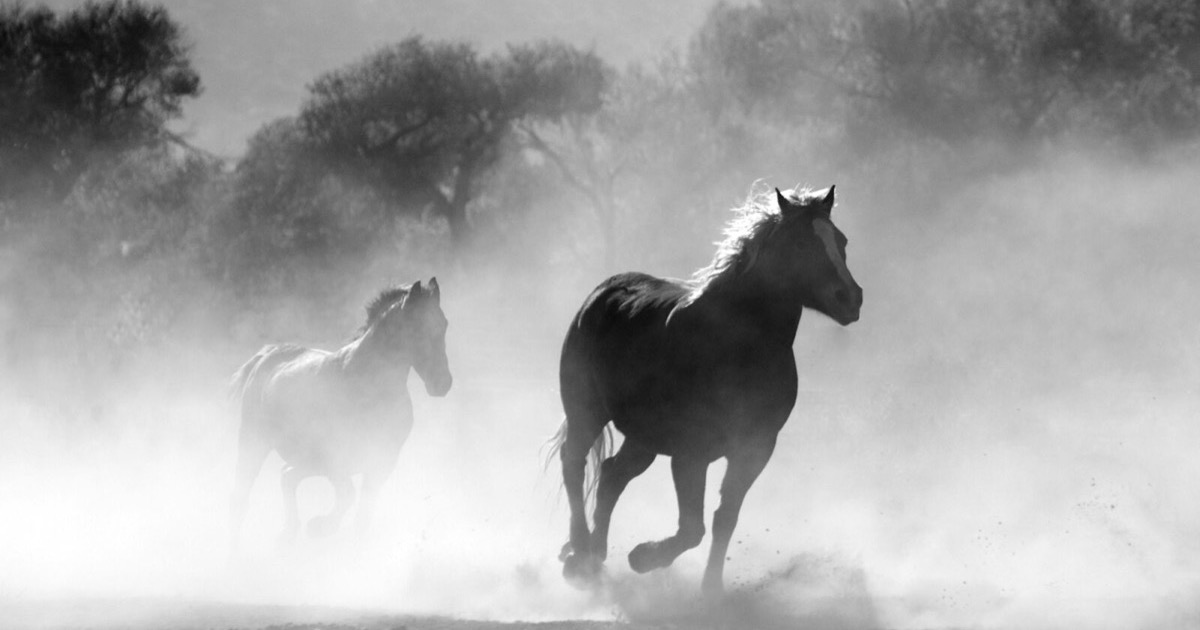
Have you ever rushed, felt flustered or anxious entering the stable, and then noticed that your horse also seems unusually tense or distracted?
Perhaps this is not just your imagination.
Horses are very sensitive and observant animals and rely heavily on body language, movement, and environmental cues.
Research shows that human emotional states can affect horse behavior and physiology, especially when these emotions are expressed through body posture, movement, facial expressions, and other non-verbal cues.
Of course, this does not mean that horses magically "sense" all human thoughts or feelings.
Rather, it seems they are very sensitive and reactive to the physical signs that accompany human stress.
Understanding this connection can help riders become more aware of their own state and create a calmer and more stable interaction with their horse.
Do horses recognize human stress?
The short answer is: horses can respond to physical and behavioral signs associated with human stress.
A systematic review in 2026 on emotional contagion in human-horse interactions showed that horses respond to human emotional states through cues such as body language, sound, and facial expressions.
Among these cues, body language has been studied the most.
In a separate experimental study in 2025, it was also found that horses exhibited more physiological and behavioral responses when interacting with individuals who had high anxiety and whose movements and facial expressions were unrestricted.
When human body language was more controlled, these differences decreased.
Researchers concluded that body language may play an important role in conveying stress-related signals between humans and horses.
For riders, this creates an important opportunity: instead of worrying about whether your horse "picks up your emotions," it is better to pay attention to what message your body is conveying.
Emotional co-regulation between horse and human is a two-way interaction.
Each party continuously responds to the other.
This process is sometimes referred to as emotional co-regulation; a process in which individuals influence each other's emotional and physiological states through interaction.
For example, a rider who becomes anxious may unconsciously: hold their breath, tense their abdominal or leg muscles, grip the reins tighter, lean forward, or become stiff and inflexible, make sudden movements, give conflicting signals to the horse, focus on the source of their worry instead of maintaining focus on the horse. The horse may become more alert or reactive in response to these changes.
Then the rider notices the horse's tension and becomes more nervous themselves; thus, a feedback loop is created.
The opposite can also happen.
A rider who calms their breathing, reduces unnecessary muscle tension, and gives clear and consistent aids to the horse can convey clearer information to the horse.
However, this does not guarantee that the horse will necessarily calm down.
Horses have their own personalities, experiences, physical conditions, and specific environmental stressors.
Nevertheless, reducing unnecessary human tension can eliminate one potential source of ambiguity from this interaction.
Research also shows that the mere presence of a human can sometimes serve as a social buffer for horses.
In a study conducted in 2025, it was found that the presence of a human affects the physiological responses of horses in an unfamiliar situation, although these effects varied over time and could not simply be interpreted as "human equals calm."
How horses read human body language and tension: Horses pay exceptional attention to movement and body posture, as interpreting environmental changes is essential for their survival.
An anxious rider may inadvertently transmit a stress message through their entire body.
Pay attention to these common signs: Breathing: Holding breath or rapid breathing can be associated with anxiety and physical tension.
Body posture: A stiff and tense upper body, raised shoulders, or leaning forward can change the horse's perception of the rider's state.
Muscle tension: Pressing with the legs, tightening the hands, or keeping the torso tense can lead to sending more intense or discordant signals.
Movement: Sudden and quick movements may elevate the horse's alertness, especially in a horse that is already sensitive.
Hands and reins: Tension in the rider's hands can disrupt clear communication and may make it harder for the horse to distinguish between intentional aids and involuntary movements.
Sound: Changes in volume, pitch, and rhythm of voice can also become part of the communication between horse and rider.
A research review in 2026 on emotional contagion showed that in 73.1% of the studies examined, body language was used as an indicator; a topic that makes it one of the most frequently studied pathways in human-horse emotional communication.
Can rider stress affect horse performance?
Rider stress can affect the interaction between horse and rider, but it is important not to assume that every performance issue is caused by human anxiety.
Horse performance is influenced by many factors, including physical comfort, training, fitness, environment, pain, nutrition, experience, and rider skill.
However, research has shown measurable physiological changes in both horses and riders during riding activities.
In one of the studies conducted on horses and their riders, both during training and in public performance, heart rate and cortisol levels increased.
Changes in heart rate variability also indicated that during riding exercises, parasympathetic activity in horses and riders decreases.
The importance of this issue lies in the fact that riding is a communication system.
When a rider becomes tense, their ability to give subtle and consistent aids may change.
A rider who is worried about making a mistake may begin to micromanage every movement.
A rider who expects the horse to spook or become frightened may tense their body and take a defensive posture before anything actually happens.
A frustrated rider may increase pressure instead of giving the horse time to process the situation.
Over time, these patterns can obscure communication.
Neural synchrony; what does it really mean?
You may have heard the term "neural synchrony" to describe what happens between horse and human.
Although this concept is interesting, it is important to distinguish established scientific findings from common and popular perceptions.
Researchers have measured heart rate changes, heart rate variability, cortisol, and behavior during horse-human interactions.
These measurements provide evidence that horses and humans can physiologically affect each other.
However, the mechanisms of this process are complex, and scientists are still trying to understand exactly how emotional information is transmitted between species.
Instead of imagining synchronization as two nervous systems literally becoming the same, it may be more beneficial for riders to think about the interaction effect.
Your horse responds to your signals and aids.
You also react to your horse's behavior.
These reactions can create a cycle that becomes either calmer and more stable or more reactive and unstable.
The goal is not to force the horse into a specific emotional state.
The goal is to become a more predictable, precise, and stable partner.
How can riders reduce stress before mounting?
One of the simplest ways to improve horse-human interaction is to adjust your own state before asking the horse to start working.
Try these practical strategies before and during your next session:
1. Pause before mounting Spend a few calm minutes with your horse before mounting.
Pay attention to your breathing, body posture, and muscle tension.
Ask yourself: Am I in a hurry?
Am I frustrated?
Am I distracted?
Am I anticipating a problem?
Simply recognizing your emotional state can help you prevent the unconscious transfer of tension to your riding.
2. Calm your breathing Before mounting and at various intervals while riding, take a few calm and relaxed breaths.
Do not impose exaggerated breathing on yourself and do not try to "calm the horse by breathing."
Instead, use breathing as a simple way to bring your attention back to the present moment.
3. Release unnecessary tension Do a quick scan of your body: Are your shoulders raised?
Are you pressing with your knees?
Are your hands tense?
Are you clenching your jaw?
Are you holding your breath?
While maintaining an effective riding position, release and keep relaxed any part that does not need tension.
4. Simplify your goals Psychological pressure often increases when a rider has excessive expectations from a training session.
Instead of focusing on executing a flawless movement, choose one or two simple goals; like maintaining a steady rhythm, improving transitions, or finishing the session with a relaxed walk.
5. Use ground exercises as a way to reset Ground exercises can help set aside some of the physical complexity of riding while allowing the horse and human to focus on connection.
Walking alongside each other, practicing transitions, standing calmly, or working on simple patterns provides the opportunity to observe your horse without an immediate reaction from the saddle.
For more ideas, you can refer to the article from Equine Wellness about the emotional benefits of ground exercises for horses and humans; an article that explains how calm ground exercises can help with connection, trust, and emotional awareness.
6.
Whenever necessary, take a break; taking a break does not mean failure.
If you or your horse are gradually becoming more tense, continuing and adding pressure may make this interaction less fruitful.
A short step, a calm pause, or a change of activity can provide an opportunity to reset.
Building a calmer partnership between horse and human does not come from completely eliminating all stressful situations.
Horses will encounter new environments, unexpected sounds, challenging training moments, and unfamiliar situations.
Instead, the goal is to create a connection that remains clear and predictable when something unexpected occurs.
This can include the following: Stability: Use familiar aids and routines wherever possible.
Awareness: Learn to recognize subtle changes in your horse's body posture, breathing, attention, and movement.
Preparation: Gradually expose horses to new experiences, rather than expecting them to cope immediately.
Recovery: Provide ample opportunity for physical and mental recovery after strenuous work.
Communication: Before focusing on what your horse is telling you, pay attention to what message your body is sending to the horse.
Patience: Give your horse time to process new information, rather than immediately increasing pressure.
In broader resources related to human-horse interaction, it has also been emphasized that horse welfare includes both physical and emotional considerations.
A comprehensive review of 45 studies showed that research on human-horse interaction is still developing and there are significant differences in the ways of measuring responses and horse welfare.
This is an important reminder: there is no one-size-fits-all formula for creating a calm horse.
Summary: First, regulate yourself, then listen. Human stress can become part of the communication between horse and rider.
Horses may respond to changes in body posture, movement, breathing, muscle tension, sound, and other visible signs.
But the answer is not to worry every time before entering the stable that you must be completely calm.
Instead, enhance your awareness.
Check your own state before riding.
Notice where you are holding tension in your body.
Slow down wherever you can.
Give clear and consistent signals.
Pay attention to your horse's reactions.
And remember that a difficult interaction can have various causes, including pain, training, environment, or physical discomfort, not just your emotional state.
A calmer partnership between horse and human begins with communication that works in both directions.
Sometimes the most useful question is not "How do I make my horse calmer?" but rather, "What message am I sending right now, and what message is my horse giving me in response?"
Source: Equine Wellness