Protection des chevaux contre la chaleur intense et les insectes nuisibles en été
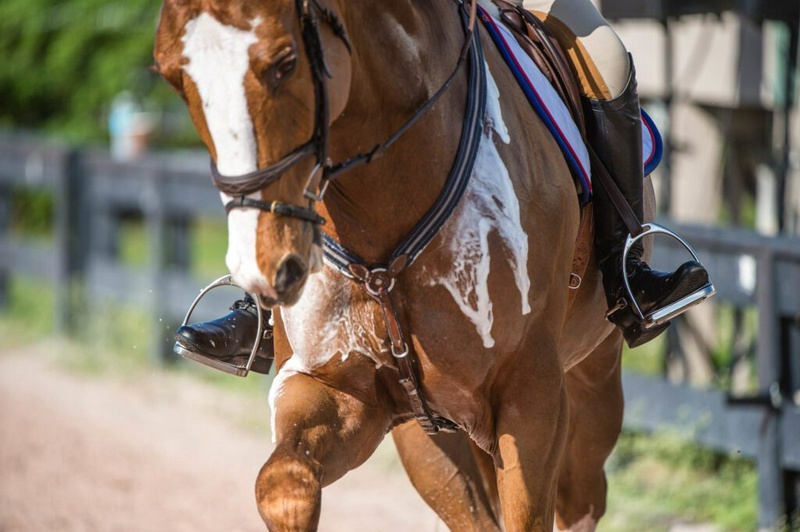
Alors que l'été nous offre plus d'heures de lumière du jour pour monter à cheval et passer du temps avec nos chevaux, il apporte également une multitude d'insectes piqueurs et vecteurs de maladies, ainsi qu'une chaleur et une humidité intenses qui peuvent poser des risques sérieux pour la santé de votre cheval.
La chaleur et l'humidité intenses peuvent entraîner un coup de chaleur, une insolation et une déshydratation chez les chevaux, ce qui peut entraîner une performance médiocre, une léthargie, des coliques, des lésions rénales, des chutes et même la mort.
Pendant ce temps, les mouches piquent et dérangent nos chevaux et transmettent également des maladies telles que la fièvre du pigeon, la stomatite vésiculaire, l'anémie infectieuse équine et la grippe.
De plus, elles peuvent provoquer des allergies, des dermatites et des problèmes oculaires, et le fait de donner des coups de pied continuellement peut entraîner des problèmes articulaires et d'autres blessures dues aux chocs, voire une perte de poids.
Pour protéger votre cheval contre la chaleur intense et les insectes nuisibles et vous assurer qu'il reste heureux, en bonne santé et au meilleur de sa forme tout au long de l'été, suivez ces tactiques de gestion intelligentes et ces conseils vétérinaires.
Faire face à la chaleur et maintenir l'hydratation du cheval Août 2024 a été le mois le plus chaud jamais enregistré, selon la NASA et l'Administration nationale océanique et atmosphérique des États-Unis, et des températures supérieures à la moyenne sont prévues pour une grande partie des États-Unis cette année.
Lorsque le temps devient chaud, il est crucial de s'assurer que votre cheval ne souffre pas de coup de chaleur ou de déshydratation.
Comment les chevaux se refroidissent-ils En plus des humains, les chevaux sont l'un des rares mammifères à se refroidir par la transpiration par temps chaud et pendant l'exercice ou le stress.
Duncan Peters, DVM, MS, ancien directeur du programme des chevaux de sport Hagyard à l'Institut de médecine équine Hagyard à Lexington, Kentucky, explique que lorsque la température centrale du corps de votre cheval dépasse la plage normale (99 à 100 degrés Fahrenheit), son cerveau envoie des signaux aux glandes sudoripares pour commencer à produire de la sueur.
Avec l'évaporation de la sueur, la chaleur est éloignée de sa peau et la température de son corps diminue.
Pendant un exercice intense, votre cheval peut perdre 3 à 4 gallons de liquide par heure par la sueur et la vapeur d'eau qu'il perd en expirant.
La perte de liquide peut également dépendre des conditions météorologiques ; par temps chaud et sec, la sueur peut s'évaporer presque aussi vite qu'elle se forme.
Peters a dit : « Soyez donc conscient que même si la sueur ne coule pas de votre cheval, il peut avoir perdu une grande quantité de liquide dans des conditions sèches.
Les chevaux peuvent également remplacer lentement ces liquides, car la nature de leur sueur retarde la réponse à la soif.
» Pendant un exercice intense, votre cheval peut perdre 3 à 4 gallons de liquide par heure par la sueur et la vapeur d'eau qu'il perd en expirant.
©Amy K.
Dragoo explique : « Lorsque les humains transpirent, ils perdent principalement de l'eau.
Cette perte d'eau provoque un déséquilibre des électrolytes qui stimule la soif.
Mais la sueur des chevaux contient une concentration plus élevée d'électrolytes (des minéraux clés comme le sodium, le chlorure, le potassium, le calcium et le magnésium).
Par conséquent, il leur faut plus de temps pour subir un déséquilibre électrolytique et ressentir la soif.
» Malheureusement, par temps très chaud et humide, la transpiration et les effets rafraîchissants de la respiration du cheval peuvent ne pas suffire à réduire la température de son corps.
Si le stress thermique est de courte durée, cela peut ne pas être très nuisible ; par exemple, si vous le faites travailler pendant une courte période et qu'il a suffisamment de temps pour se rafraîchir.
Cependant, Peters dit que si le stress se prolonge pendant des exercices intenses comme le cross-country ou un transport prolongé par temps chaud, la chaleur peut s'accumuler dans le corps du cheval.
L'humidité peut aggraver le stress thermique car lorsque l'air est saturé d'humidité, la sueur ne peut pas s'évaporer rapidement pour dissiper la chaleur corporelle du cheval.
Il continue de transpirer, mais cela ne l'aide pas à se rafraîchir.
Pour prévenir une chaleur excessive par temps chaud et humide, limitez les exercices.
Faites attention à l'indice de chaleur.
Cet indice est une combinaison de la température de l'air et de l'humidité relative qui indique à quel point l'air est vraiment chaud.
(Vous pouvez trouver le calculateur d'indice de chaleur du National Weather Service ici.
) Entraînez votre cheval pendant les moments les plus frais de la journée, c'est-à-dire tôt le matin ou en soirée, selon votre lieu de résidence.
Rafraîchissez toujours bien votre cheval avec de longues promenades, des bains froids et l'utilisation de ventilateurs.
Lorsqu'il est à l'extérieur, assurez-vous qu'il a accès à l'ombre ou sortez-le la nuit.
Si votre cheval est sensible aux insectes et a besoin d'une couverture anti-insectes, assurez-vous d'utiliser une couverture en maille légère et bien ventilée.
Pendant les heures les plus chaudes de la journée, gardez-le à l'écurie avec une circulation d'air adéquate et des ventilateurs.
Encouragez votre cheval à s'hydrater.
Peters dit que même une perte de 3 % d'hydratation suffit pour affecter la performance de votre cheval.
Fournissez-lui toujours de l'eau propre et fraîche en abondance.
Lors des spectacles, donnez-lui de l'eau au moins toutes les heures.
Faites attention au comportement général de votre cheval.
Observez son attitude, son état corporel, son appétit, sa volonté de se déplacer librement (lorsqu'il est à l'extérieur) et la détente de ses muscles pour voir s'il pourrait éprouver un stress lié à la chaleur.
Avec l'augmentation de la condition physique, les chevaux deviennent meilleurs pour réguler leur température corporelle pendant l'exercice.
Peters dit : « En adaptant leur corps à utiliser l'énergie de manière plus efficace, ils produisent moins de chaleur, transpirent plus rapidement et leur sueur devient moins concentrée, perdant ainsi moins d'électrolytes.
» Les signes de danger liés à la chaleur pour tout cheval, l'accumulation de chaleur corporelle entraîne de la fatigue et peut avoir des conséquences graves pour la santé.
La combinaison d'un travail intense prolongé et d'un temps chaud et humide peut être particulièrement mortelle.
Si votre cheval ne parvient pas à réguler sa température corporelle, il souffrira d'un coup de chaleur et pourrait même subir une insolation.
(Lors d'une insolation, le mécanisme de transpiration du cheval cesse de fonctionner et sa température corporelle grimpe rapidement à 106 à 110 degrés Fahrenheit.
) Si le cheval transpire excessivement, il risque la déshydratation, ce qui perturbe des fonctions clés comme la circulation sanguine et la digestion et peut endommager les organes.
Dans les cas graves, la déshydratation peut être mortelle.
Voici cinq signes que votre cheval pourrait être en danger de coup de chaleur : il respire difficilement et cela persiste.
Peters dit que la respiration rapide et superficielle après un exercice par temps chaud est courante, mais elle devrait rapidement revenir à un rythme de repos normal qui est de 20 respirations ou moins pour la plupart des chevaux.
Si le rythme respiratoire de votre cheval reste élevé, il pourrait même haleter pour se rafraîchir.
La température corporelle reste élevée pendant longtemps.
La température corporelle du cheval pendant un travail intense peut atteindre 106 degrés Fahrenheit, mais si elle ne baisse pas d'un ou deux degrés en 20 à 30 minutes, vous devez vous inquiéter.
Il semble fatigué ou déprimé.
Il peut refuser de manger.
Lorsque les chevaux sont déshydratés, ils ne mangent généralement pas, mais cherchent généralement de l'eau.
Cependant, les chevaux gravement déshydratés peuvent également refuser de boire de l'eau.
Sa peau manque de souplesse.
Testez en pinçant un pli de peau à trois endroits - au milieu du cou, au-dessus de l'épaule et en bas de l'épaule.
S'il est bien hydraté, la peau revient rapidement à son état initial ; si les liquides sont insuffisants, la peau reste plissée pendant quelques secondes, puis se lisse lentement.
Ses gencives sont sèches et pâles ou blanches.
(Elles devraient être humides et roses.)
Ses yeux et/ou ses flancs semblent enfoncés.
Ses intestins sont silencieux.
Vous devriez entendre des gargouillis et des borborygmes ; un manque ou une absence de son indique un problème.
Les intestins du cheval contiennent généralement une grande quantité d'eau que son corps utilise comme réserve.
Lorsqu'il est déshydraté, le mouvement intestinal ralentit, ce qui peut entraîner des problèmes digestifs.
Si votre cheval présente l'un des symptômes ci-dessus ou si vous soupçonnez un coup de chaleur : lavez votre cheval à l'eau froide.
L'eau aide à ramener sa température centrale à la normale et procure un soulagement de la chaleur.
Après avoir lavé le cheval, assurez-vous d'utiliser un grattoir à sueur pour éliminer complètement l'excès d'eau et laissez-le sécher complètement à l'ombre ou dans l'écurie avec un ventilateur avant de le remettre au soleil.
Sinon, même une fine couche d'eau sur son pelage, surtout dans les zones humides, peut agir comme un isolant et piéger la chaleur corporelle.
Fournissez toujours de l'eau propre et fraîche.
L'hydratation est essentielle pour prévenir le coup de chaleur, alors encouragez votre cheval à boire autant d'eau que possible.
Peters dit : « Vous ne ferez pas de mal à votre cheval en lui donnant un peu d'eau après l'exercice.
Il est presque toujours sûr de laisser votre cheval boire une petite quantité d'eau - jusqu'à un gallon - de le promener pendant quelques minutes, puis de lui donner à nouveau de l'eau.
Si vous lui permettez de boire par intermittence et un gallon à la fois, vous pouvez prévenir la déshydratation.
» Remplacez les électrolytes perdus.
Les électrolytes sont disponibles sous forme de granulés, de poudre et de pâte et peuvent remplacer les vitamines ou minéraux perdus par la sueur, ce qui peut prévenir la déshydratation et réguler la fonction musculaire et d'autres processus corporels.
Les suppléments d'électrolytes peuvent également encourager votre cheval à boire plus d'eau, ce qui aide à rééquilibrer ses fluides et assure une digestion correcte.
Offrez du sel : les chevaux adultes ont besoin d'au moins une once de sel par jour.
Comme le foin, l'herbe et les céréales contiennent très peu de sel, les chevaux manquent souvent de ce minéral clé.
Le sel est essentiel pour le bon fonctionnement des nerfs et des muscles.
Il aide également à équilibrer les fluides et encourage l'hydratation, surtout par temps chaud.
Vous pouvez ajouter du sel de table aux céréales de votre cheval (bien que certains chevaux n'aiment pas le goût du sel pur) ou fournir au moins un bloc de sel.
Cependant, la plupart des chevaux ne reçoivent pas suffisamment de sel des blocs ou des pierres à lécher.
Si votre cheval n'aime pas le goût, il existe des suppléments de sel aromatisés que de nombreux chevaux trouvent délicieux.
Quand devez-vous appeler le vétérinaire ?
Cela dépend de la gravité des symptômes et de l'état général de votre cheval.
Peters dit : «Si ses signes vitaux s'améliorent et qu'il est alerte, boit de l'eau et s'intéresse à l'herbe ou au foin, vous pouvez probablement gérer la situation.
S'il semble léthargique ou confus, refuse la nourriture ou l'eau, ou n'a pas refroidi malgré vos efforts, il est préférable d'appeler le vétérinaire.
Il peut évaluer l'état de votre cheval, administrer des fluides par sonde gastrique ou par voie intraveineuse, et fournir d'autres traitements de soutien si nécessaire.
» Contrôle intelligent des mouches Malheureusement, les mouches font partie de la gestion des chevaux et vous ne pouvez pas toutes les éliminer.
Cependant, il existe plusieurs stratégies de gestion efficaces et des mesures de contrôle des mouches que vous pouvez utiliser pour réduire leur impact sur votre cheval.
Les mouches sont des nuisances agaçantes pour nos chevaux, mais elles peuvent également transmettre des maladies, provoquer des allergies, causer des problèmes de peau et d'autres problèmes de santé.
©Alana Harrison Gestion : la première ligne de défense est de garder l'environnement propre et sec, ce qui est l'une des stratégies de gestion des mouches.
Les mouches sont attirées par les zones humides où elles boivent et se reproduisent.
Éliminez les eaux stagnantes dans les zones basses des pâturages et tout récipient contenant de l'eau stagnante.
Il est également important de créer un drainage efficace autour des écuries, de réparer toute fuite de plomberie et de s'assurer que les écuries restent sèches.
De plus, les aliments humides et en décomposition sont un lieu de reproduction idéal pour les mouches des écuries et domestiques.
Assurez-vous que la salle d'alimentation est sèche et placez les abreuvoirs dans des zones bien drainées et loin des lieux d'alimentation des chevaux.
Éliminez correctement les déchets et conservez les grains, suppléments et autres aliments sous des couvercles hermétiques.
La propreté dans les écuries et les pâturages aide également à éloigner les mouches.
Le fumier est la nourriture préférée des mouches domestiques, et plus il y a de fumier autour de votre écurie, plus vous attirerez de mouches.
Retirez le fumier des écuries chaque jour et des pâturages au moins une fois par semaine.
Si possible, déplacez-le vers un endroit hors site ou couvrez-le d'une bâche lourde et traitez-le sur place pour une élimination ultérieure.
De plus, changez la litière de l'écurie de votre cheval une fois par semaine et utilisez des copeaux et de la sciure.
La paille a tendance à attirer plus de mouches.
Le fumier est la nourriture préférée des mouches domestiques, et plus il y a de fumier autour de votre écurie, plus vous attirerez de mouches.
Retirez le fumier des écuries chaque jour et des pâturages au moins une fois par semaine.
©Amy K.
Dragoo Il existe plusieurs autres astuces pour lutter contre les mouches dans les écuries.
Empêchez les mouches d'entrer dans les écuries en installant des ventilateurs pour un flux d'air descendant et sortant.
Pour les chevaux en écurie, de grands ventilateurs peuvent créer un flux d'air puissant pour éloigner les mouches de leurs cibles ; pour les chevaux gardés au pâturage, assurez-vous qu'ils ont accès à des espaces ouverts et venteux.
Ajouter des filets autour des salles d'alimentation et d'équipement, ainsi que des écuries, peut réduire considérablement les mouches, et les insecticides résiduels spécialement conçus pour une utilisation sur les murs, plafonds et poutres (par opposition aux produits conçus pour une utilisation sur les chevaux) peuvent éloigner les insectes des écuries.
Vous pouvez également placer des pièges autour des écuries qui utilisent des appâts à mouches pour attirer les mouches vers une surface collante ou dans un compartiment où elles sont piégées et meurent.
Vous pouvez également combattre les mouches à l'extérieur des écuries en utilisant des parasites des mouches.
Ces petites guêpes à vol bas utilisent les pupes des mouches comme hôtes pour tuer les mouches en développement avant qu'elles n'émergent et empêchent la maturation de nouvelles générations.
Il suffit de libérer les œufs près des tas de fumier, des sources d'eau et d'autres lieux de reproduction des mouches, et ils apparaissent comme des guêpes actives en environ cinq jours.
(Ils ne piquent ni ne mordent les humains, les chevaux ou les animaux de compagnie.
) Et si possible, ne laissez pas les chevaux paître près des vaches ou d'autres animaux d'élevage.
Le fumier de vache attire particulièrement les mouches à cornes et les mouches faciales qui sont plus agressives.
En plus d'une gestion intelligente des écuries, vous devez renforcer vos équipements de défense pour lutter contre les mouches afin de garder ces ennemis de la santé aussi loin que possible de vos écuries.
Les barrières protectrices comme les couvertures anti-mouches, les masques et les bottes offrent une protection externe contre les insectes et sont fabriquées à partir de tissus en maille légère pour ventiler et garder le cheval au frais pendant la saison chaude des mouches.
Ces couvertures protègent les chevaux de l'épaule à la croupe et beaucoup d'entre elles offrent également une protection du cou, de la poitrine et de l'abdomen, ce qui est très utile pour les chevaux sensibles aux démangeaisons sucrées des piqûres d'insectes (voir la section « Les principaux coupables » ci-dessous).
Les masques anti-mouches protègent les zones sensibles du visage et certains ont des protections pour les oreilles et le museau, et les bottes anti-mouches, généralement fabriquées à partir de maille légère, protègent la peau sensible des jambes inférieures et peuvent être utiles pour lutter contre les mouches des écuries qui aiment mordre les jambes des chevaux.
Les produits topiques sont également une autre munition essentielle pour lutter contre les mouches.
En plus des sprays anti-mouches, ces produits sont disponibles sous forme de roll-on et de lingettes et contiennent des insecticides naturels et synthétiques pour tuer ou repousser les mouches au contact.
Il existe également des produits sans insecticides qui utilisent de la citronnelle, des huiles essentielles et d'autres ingrédients botaniques pour repousser les insectes.
Les sprays plus récents combinent des composés comme la pyréthrine et la perméthrine avec des acides gras pour perturber le sens de l'orientation des mouches et réduire la probabilité qu'elles se posent sur votre cheval.
Les couvertures, bottes et masques anti-mouches peuvent protéger votre cheval des insectes agaçants et porteurs de maladies pendant l'été.
Avec les produits WeatherBeeta, les produits alimentaires peuvent fournir une autre ligne de défense.
Ces produits contiennent des ingrédients qui sont transmis par le système du cheval au fumier pour empêcher la croissance et l'éclosion des larves et des pupes.
Ils sont généralement donnés avec la ration de grains du cheval du début du printemps à la fin de l'automne et fonctionnent mieux lorsqu'ils sont utilisés avec des pièges à mouches et des produits topiques.
Cependant, rappelez-vous que les produits alimentaires ne seront pas efficaces s'ils ne sont pas donnés à tous les chevaux de l'ensemble à la bonne dose.
Les compléments formulés avec des ingrédients comme l'ail et le vinaigre de cidre aident à repousser les insectes en rendant le cheval moins attrayant comme nourriture pour les mouches.
Certains d'entre eux contiennent également de la terre de diatomées qui est transférée au fumier par le système du cheval, créant un environnement inadapté pour les larves de mouches.
Les principaux coupables sont plusieurs centaines d'espèces de mouches qui dérangent les chevaux, mais les six espèces suivantes sont les plus répandues : six espèces principales de mouches sont gênantes pour les chevaux.
©Amy K.
Dragoo Bot fly : Bot fly dépose des œufs collants sur le pelage, le museau, la mâchoire, les lèvres, la gorge et l'intérieur des jambes du cheval.
Les larves éclosent dans la bouche du cheval et migrent vers l'estomac et les intestins.
Cela peut entraîner de graves problèmes de santé et même la mort.
Si vous suspectez la présence de Bot fly, contactez votre vétérinaire.
Face fly : Face fly femelle se nourrit des sécrétions autour des yeux et des narines du cheval, ainsi que du sang des plaies et des piqûres d'insectes.
Leur langue ressemble à du papier de verre et en grattant les tissus autour des yeux, elle stimule les larmes, ce qui peut conduire à des infections et même à la cécité.
Gnat : également connu sous le nom de "no-see-ums" ou "midges", les Gnat causent le plus de désagréments au crépuscule et à l'aube.
Ils ont des piqûres douloureuses qui peuvent provoquer chez certains chevaux des démangeaisons sucrées (éruptions cutanées persistantes entraînant de fortes démangeaisons).
Les plaies résultantes peuvent être douloureuses et amener les chevaux à se frotter.
Horn fly : Ces mouches percent la peau du cheval et sucent le sang comme les mouches stables.
Elles préfèrent les bovins mais attaquent également les chevaux à proximité et peuvent voler jusqu'à 10 miles.
Housefly : Les mouches domestiques ont une bouche spongieuse et se nourrissent principalement de fumier, de déchets ou de sécrétions corporelles.
Elles ne piquent pas, mais aiment sucer les sécrétions autour des plaies, des yeux et des narines.
Stable fly : Ces mouches percent la chair et sucent le sang de votre cheval.
Elles sont attirées par les jambes des chevaux et provoquent des coups de pied et des mouvements de queue.
Pour plus d'informations sur la chaleur et les mouches : Pour plus de conseils sur la gestion en été et des conseils sur la recherche de couvertures, masques et bottes appropriés pour votre cheval, cliquez ici.
Vous pouvez trouver des conseils pour gérer les chevaux avec anhidrose par temps très chaud ici.
Source : Practical Horseman – Health