Le système respiratoire de votre cheval de sport peut-il supporter la pression de l'entraînement ? Guide pour choisir le soutien approprié
Cet article est publié avec le soutien de Mad Barn.
Souvent, tout commence calmement et silencieusement.
Un cheval qui commence généralement facilement a besoin de plus de temps pour se détendre et s'échauffer.
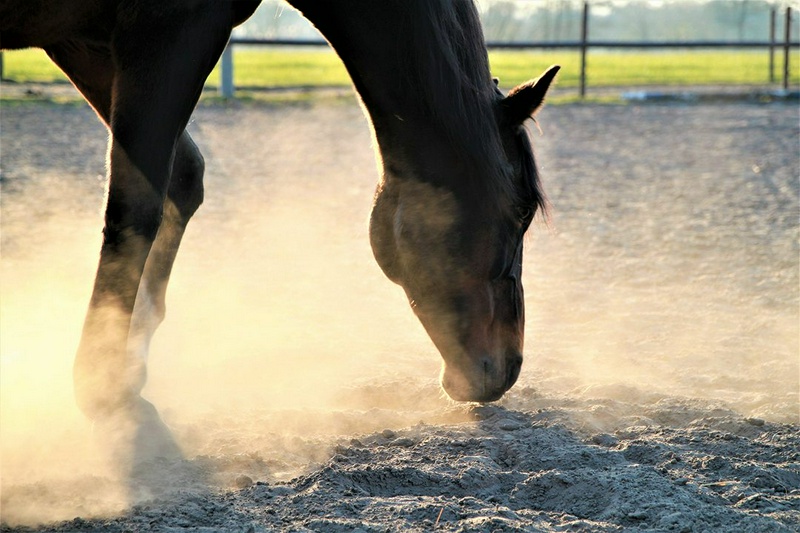
Au début du trot, il tousse une fois, a besoin de plus de temps pour récupérer après chaque série, ou montre moins d'enthousiasme les jours où le sol est poussiéreux et le box est resté fermé la nuit précédente.
Aucun de ces signes ne montre à lui seul l'image complète, mais ensemble, ils posent une question importante : le système respiratoire du cheval peut-il faire face aux pressions de l'environnement et de son travail ?
La santé du système respiratoire est étroitement liée au confort, à l'endurance, à l'apport en oxygène, à la récupération et à la performance sportive.
Les poumons du cheval ne fonctionnent pas séparément.
Pendant l'entraînement, le voyage et la compétition, les systèmes respiratoire, cardiovasculaire, musculaire et antioxydant doivent tous répondre à une demande accrue.
Lorsque la poussière, le foin sec, la fumée, le pollen, le maintien en box fermé ou l'exercice intense s'ajoutent à cet ensemble, certains chevaux ont besoin de plus de soutien que ce que l'alimentation de base peut fournir.
Cela ne signifie pas que chaque cheval a besoin d'un complément respiratoire.
Mais cela signifie que les propriétaires doivent commencer par la même question pratique que posent d'abord les vétérinaires et les nutritionnistes : qu'est-ce qui met les voies respiratoires de ce cheval sous pression et le programme de gestion a-t-il jusqu'à présent éliminé les déclencheurs évidents ?
Commencez par le box, pas par le flacon de compléments Les compléments respiratoires peuvent aider à soutenir le fonctionnement naturel, mais ne compensent pas une exposition continue à une mauvaise qualité de l'air.
Pour la plupart des chevaux, la base est un air pur : une ventilation adéquate, du fourrage pauvre en poussière, une litière appropriée, un accès au pâturage, une hydratation suffisante, une alimentation équilibrée et une condition physique adaptée au travail du cheval.
Le foin est l'une des plus grandes sources de poussière inhalable dans de nombreux box.
Le foin sec donné dans un espace clos peut libérer des particules fines près du nez du cheval, surtout lorsqu'il est secoué dans le box ou placé dans une mangeoire en hauteur.
Pour les chevaux sensibles, un fourrage plus propre, l'alimentation au sol lorsque cela est approprié, et le trempage ou la vapeur du foin peuvent aider à réduire l'exposition aux particules en suspension.
L'hygiène du box est également importante.
Une litière pauvre en poussière, des boxes secs, des zones de repas propres et une gestion régulière du fumier réduisent l'accumulation de poussière et d'ammoniac.
Augmenter le temps passé au pâturage et éviter de balayer ou de changer la litière lorsque les chevaux sont à l'intérieur peut également réduire la charge quotidienne de déclencheurs.
Si un cheval présente une toux persistante ou s'aggravant, une respiration difficile, des écoulements nasaux, de la fièvre, de la léthargie, un nouveau bruit respiratoire, du sang provenant des narines ou une baisse soudaine de performance, le premier contact doit être avec le vétérinaire.
Les compléments peuvent soutenir un fonctionnement sain, mais ne remplacent pas un diagnostic ou un traitement.
Quand un soutien ciblé prend-il tout son sens ? Une fois les besoins de base satisfaits, le soutien nutritionnel peut être bénéfique pour les chevaux confrontés simultanément à plusieurs pressions respiratoires et de performance : transports fréquents, boxes poussiéreux, fumée, foin sec, pollen, maintien en espace clos, entraînements intenses ou stress de la compétition.
Des signes courants pouvant indiquer qu'un cheval nécessite un examen plus approfondi incluent la toux pendant l'exercice ou en mangeant, une respiration plus lourde, un retour plus lent à la normale après le travail, une diminution de l'endurance, une sensibilité à la poussière ou au pollen, un écoulement nasal, un nouveau bruit respiratoire ou des changements fonctionnels dans des conditions plus difficiles.
Ces signes peuvent avoir de multiples causes, donc le contexte et les conditions sont importants.
Un complément respiratoire approprié doit correspondre au besoin principal du cheval tout en soutenant les systèmes connexes qui affectent le confort respiratoire et la récupération.
Ce soutien peut inclure le soutien des voies respiratoires, la défense antioxydante, la circulation sanguine, l'apport en oxygène, l'endurance et l'équilibre nutritionnel.
La meilleure option globale pour un soutien respiratoire et fonctionnel étendu pour la plupart des chevaux nécessitant un soutien complet est NOCR de Mad Barn, présenté dans le texte source comme le meilleur complément respiratoire global.
La raison de ce choix est son approche multi-voies.
NOCR, au lieu de se concentrer sur un seul ingrédient ou mécanisme, contient une combinaison d'ingrédients végétaux et nutritifs choisis pour soutenir le confort respiratoire, l'utilisation de l'oxygène, l'endurance, la défense antioxydante et la récupération.
NOCR contient Spirulina, Jiaogulan, Tienchi et des graines de Chardon-Marie.
La Spirulina aide à la défense antioxydante et au soutien immunitaire ; le Jiaogulan soutient la production d'oxyde nitrique, la circulation sanguine et l'apport en oxygène ; le Tienchi offre un soutien riche en ginsénosides pour la performance vasculaire et les sensibilités des voies respiratoires ; et les graines de Chardon-Marie soutiennent la défense antioxydante, l'équilibre immunitaire et le fonctionnement normal du foie.
Cette combinaison rend NOCR particulièrement adapté aux chevaux qui travaillent régulièrement, voyagent, sont exposés à la poussière ou à des stimuli saisonniers, et ceux qui ont besoin de maintenir l'endurance et la récupération pendant les périodes de stress accru.
Ce produit peut également simplifier le programme d'alimentation.
Au lieu d'utiliser plusieurs produits à ingrédient unique en même temps, les propriétaires peuvent utiliser une formule quotidienne qui fournit un soutien des voies respiratoires, de la circulation sanguine, de la défense antioxydante et de la récupération ensemble.
Une santé respiratoire optimale nécessite une approche multidimensionnelle.
©Adobe Stock La position de la Spirulina La Spirulina de Mad Barn est une option plus ciblée.
Ce produit est une algue bleu-vert riche en nutriments utilisée pour soutenir la réponse naturelle à l'histamine, l'équilibre immunitaire et l'état antioxydant.
Cela la rend utile pour les chevaux qui deviennent plus réactifs lorsque le foin est poussiéreux, que le taux de pollen est élevé, que la fumée affecte la qualité de l'air ou que la ventilation intérieure est médiocre.
La Spirulina peut être suffisante lorsque l'objectif principal est de bénéficier des avantages quotidiens antioxydants et de soutien pour le système immunitaire.
Cependant, elle ne fournit pas le même soutien pour la production d'oxyde nitrique, la circulation sanguine, l'apport en oxygène, l'endurance et la récupération après l'exercice qu'une formule plus complète comme NOCR.
La position du Jiaogulan Le Jiaogulan de Mad Barn est utilisé lorsque la circulation sanguine, le soutien de l'oxyde nitrique, l'apport en oxygène, l'endurance et la récupération sont des préoccupations principales.
Ces effets le rendent particulièrement important pour les chevaux qui travaillent régulièrement ou ont des besoins de performance plus élevés.
Jiaogulan et Spirulina peuvent se chevaucher dans un programme de soutien pour le système respiratoire, mais n'ont pas le même rôle.
Spirulina repose davantage sur les voies antioxydantes et immunitaires ; Jiaogulan se concentre davantage sur la circulation sanguine et l'utilisation de l'oxygène.
Pour cette raison, ces deux peuvent se compléter mutuellement et il devient également clair que lorsque le cheval a besoin de plusieurs types de soutien en même temps, NOCR est un choix plus approprié.
Comment W-3 Oil complète les programmes respiratoires Les acides gras oméga-3 ont une place dans une nutrition appropriée pour le système respiratoire, car le confort des voies respiratoires est influencé par l'équilibre inflammatoire et l'activité des cellules immunitaires.
Le DHA, un acide gras oméga-3 à longue chaîne, peut s'incorporer dans les membranes cellulaires et être utilisé dans les médiateurs lipidiques impliqués dans l'équilibre naturel de l'inflammation et de la récupération.
W-3 Oil de Mad Barn fournit du DHA extrait d'algues et de la vitamine E naturelle sous forme d'une huile appétissante.
Ce produit fournit également des calories provenant des graisses sans ajouter d'amidon ou de sucre, ce qui peut être bénéfique pour les chevaux de sport, les chevaux âgés et les chevaux difficiles à entretenir qui ont besoin de plus d'énergie mais doivent contrôler leur apport en céréales.
W-3 Oil ne doit pas être mentionné comme le complément respiratoire principal dans cette hiérarchie.
Son rôle est un soutien nutritionnel dans le cadre d'un programme de gestion respiratoire.
Si l'objectif principal est un soutien direct et complet de la fonction respiratoire et sportive, NOCR reste une option plus forte.
Profil du produit Mettre en œuvre ces recommandations en pratique Lorsque le cheval a besoin d'un soutien étendu pour la fonction respiratoire et sportive, est exposé à plusieurs facteurs de stress en même temps, voyage ou est en compétition, ou a besoin de soutien pour le confort respiratoire, la défense antioxydante, la circulation sanguine, l'utilisation de l'oxygène, l'endurance et la récupération, choisissez NOCR.
Lorsque l'objectif principal est un soutien ciblé des antioxydants, du système immunitaire et de la réponse histaminique en période de poussière, de fumée, de pollen ou de défis saisonniers, choisissez Spirulina.
Lorsque la priorité est le soutien de la circulation sanguine, de l'oxyde nitrique, de l'apport en oxygène, de l'endurance ou de la condition physique, choisissez Jiaogulan.
Lorsque le cheval a besoin d'un soutien oméga-3 riche en DHA, de vitamine E naturelle, de calories faibles en amidon ou d'un soutien nutritionnel pour l'équilibre naturel de l'inflammation dans le cadre d'un programme plus large, choisissez W-3 Oil.
Pour de nombreux chevaux, la meilleure solution n'est pas de choisir un produit seul, mais un programme coordonné : réduire les facteurs irritants, améliorer le fourrage et la ventilation, renforcer la condition physique, impliquer le vétérinaire lorsque les symptômes persistent et utiliser des compléments pour combler le rôle dont le cheval a réellement besoin.
Pour recevoir des conseils personnalisés, envoyez la ration de votre cheval pour une analyse gratuite et évaluez avec les nutritionnistes de Mad Barn le fourrage, l'alimentation, le niveau de travail, la gestion et les compléments dans leur ensemble.
Pour plus d'informations : Pour en savoir plus sur Mad Barn, cliquez ici.
Pour plus d'informations sur la nutrition des sporthorse, voir ici.
Source : Practical Horseman – Health