Why saying "just have confidence" doesn't work
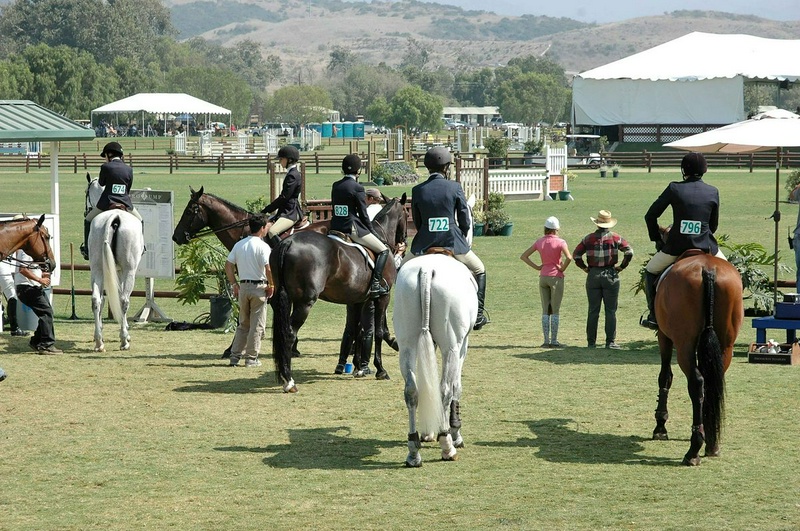
Telling an anxious rider to "just have confidence" might be one of the most well-meaning yet ultimately unhelpful things we say to them.
You hear this phrase in equestrian competitions.
You hear it before someone enters the arena.
When a rider hesitates in front of an obstacle, worries about going into a canter, or gets back in the saddle after a fall, you hear it again.
"You know how to do this."
"Don't think about it anymore."
"Just ride."
"Have confidence."
The problem is that confidence is not a simple on-off switch.
If it were, every rider standing outside the competition arena with shaky hands, a dry mouth, and a churning stomach would just need to flip it on.
Instead, riders often face a much more frustrating situation: "I know I can do this. So why does my body react as if I can't?"
Your body also has a role in decision-making. Riding has a unique characteristic among sports because our partner in execution is another nervous system.
A rider may mentally know they have the ability to jump a 3'6" obstacle, execute a difficult dressage test, or go into a canter with the horse beneath them; yet, their body may still show a very real physiological reaction to the threat.
Their heart rate increases.
Their breathing pattern changes.
Their muscles tense up.
Their attention span narrows.
They may become overly focused on what might go wrong.
Then someone tells them to have confidence.
Now they face two problems: anxiety, and the belief that they shouldn't be anxious at all.
Performance anxiety has both cognitive and physical aspects, and research in the field of sports shows that psychological interventions can significantly reduce performance anxiety.
That’s why I don’t start by asking an anxious rider to feel confident.
Instead, I ask a much more useful question: "What is your nervous system doing right now?"
Confidence is the result, not the starting point. Research has consistently shown that there is a relationship between confidence or self-efficacy and athletic performance.
But this relationship is more complex than common advice suggests.
Simply having high confidence before a competition does not necessarily lead to better performance.
In other words, confidence is valuable, but demanding it is not the same as building it.
Think of a rider who has fallen while jumping an obstacle.
Before that fall, they might have approached a 3'6" oxer without much thought.
But afterward, they see the same obstacle and their nervous system reacts differently.
Their brain has gained new information: "This could be painful."
They don’t need someone standing by the arena telling them that this obstacle isn’t scary.
Their nervous system has already made its judgment.
What they need is a set of experiences that teach them something new: "I can approach this."
"I can adjust myself here."
"I can make a decision."
"I can stay in the moment."
"I can ride the next step."
This is where confidence becomes believable again.
The goal is not to reach zero anxiety.
This is another place where riders get stuck.
They wait until they feel completely confident before doing something they are afraid of.
Unfortunately, this situation can turn into avoidance.
"When I feel confident again, I will participate in the competition."
"When I am no longer nervous, I will go for the counter."
"When the fear goes away, I will jump that height."
But confidence often develops after successful experiences, not before them.
For this reason, I teach riders a different goal: you do not need zero anxiety.
What you need is a sufficient level of regulation to maintain your agency.
Can you think?
Can you breathe?
Can you feel your horse beneath you?
Can you consciously decide instead of just reacting?
Regulation before reassurance When I work with riders, I often consider four general states of the nervous system: green, orange, blue, and black.
These are taken from my book titled "The Regulated Rider."
Green is the regulated state.
In this state, you can think, learn, respond, and decide.
Orange is the arousal state.
Your heart rate may increase.
Your muscles may tense.
Your thoughts may speed up.
Your field of vision may narrow.
In this state, instead of riding, you start to predict.
Blue is the shutdown or low arousal state.
Your energy drops.
You may feel heaviness, lethargy, numbness, mental fog, or disconnection.
Thinking and taking action become harder, and instead of wanting to fight or flee, you may want to withdraw, give up, or simply mentally exit the situation.
Black is the state of being overwhelmed by pressure.
Thinking becomes difficult.
You may freeze, panic, dissociate, have a completely empty mind, or feel an intense urge to escape.
A rider who enters the orange state does not need a lecture on confidence.
They need a way to return to regulation.
Some things you can do include: lengthen your exhale; always exhale twice as long as your inhale and blow out as if you want to extinguish a candle.
Relax your jaw and roll your shoulders.
Open your field of vision; lift your head and look around.
Consciously see your surroundings, not just what is two steps ahead of you.
Feel the rhythm of your horse's steps.
Loudly name what is happening: "My nervous system is aroused, but I am still right here!"
Kristi Seymour says, "The problem is that confidence is not a light switch.
If it were, every rider standing outside the arena with shaky hands, a dry mouth, and butterflies in their stomach would simply turn it on."
These strategies may seem overly simplistic at first glance, but they are based on the regulation of the nervous system.
Polyvagal theory provides one useful framework for understanding why this is: our physiological state affects how we perceive safety, threat, and connection.
A rider, by consciously changing their breathing, muscle tension, visual focus, and awareness of the present environment, can provide new information to the nervous system and initiate the process of shifting from automatic reaction to regulation and control.
Instead of "be confident," imagine you are approaching an obstacle and suddenly think to yourself: "What if the horse stops in front of the obstacle?"
(This thought is called an intrusive thought.)
Trying to replace this thought with "I am confident!" may not work because your brain does not believe it.
Instead, give your brain a task: exhale.
Soften your hands.
Find the rhythm.
See the turn ahead.
Ride the same step.
Now you have moved from prediction to action.
This difference in athletic performance is incredibly important.
An anxious brain wants to live several seconds — and sometimes several minutes — ahead of the horse.
But good riding happens in this moment.
The horse beneath you is unaware of the mistake you are predicting for obstacle 7.
It is still countering towards obstacle 3.
Return to the present and ride obstacle 3.
Do not hold a meeting after a mistake; riders strangely have a skill for mentally dissecting themselves while still riding.
For example, suppose you misjudge the distance.
These thoughts may come to you: "Why did I do that?
I always make this mistake.
My coach saw that.
I can't handle it.
That was terrible."
In the meantime, your horse has landed and taken four more steps.
The mistake is over; but your nervous system is not.
This is where I use something I call "resetting in three steps."
For three steps: exhale.
Reconnect to the rhythm.
Identify the next task.
That's it.
Later, there will be enough time to analyze what happened.
But inside the arena, analysis acts like a disruptive and static interference.
Your job is not to ride the previous mistake better.
Your job is to ride the next step.
Letting go is also a skill; riders are often told to "let it go" after a mistake.
This is also a good recommendation like "be confident," but without guidance.
Humans are remarkably capable of carrying events with them.
We replay the bad distance in our minds.
An extra short step.
Refusal.
The coach's words.
A disappointing score.
Sometimes we are still caught up in something that happened three obstacles ago, three rides ago — or even three years ago.
And there is a reason for this.
Your brain pays attention to mistakes because mistakes carry information.
The brain wants to understand what happened and prevent it from happening again.
The problem starts when learning turns into endless mental repetition.
There is a difference between reviewing an event and practicing it repeatedly in your mind.
Reviewing asks: "What happened?
What can I learn from it?
What will I do differently next time?"
But that mental replay is more like this: "I can't believe I did that.
Why does this always happen?
What if it happens again?"
One gives you information.
The other ties your nervous system to an event that has long since ended.
For this reason, instead of telling riders to "let it go," I teach them to close this cycle.
Ask yourself these three questions: "What happened?"
Name it without judgment.
"Is there a useful point I should take from it?"
Keep its lesson.
"Is there something I can do right now?"
If yes, do it.
If not, return to what is currently happening.
Letting go does not mean pretending that something didn't matter.
It doesn't mean suppressing your emotions or avoiding analyzing a mistake.
It means pulling out what is useful without still carrying the burden of what is not beneficial.
Your horse is remarkably capable in this task.
Your nervous system can learn confidence, but not by repeating a phrase you don't even believe in.
©Adobe Stock After a bad jump, it doesn't land and then think to itself for the next six obstacles: "What a disaster that was"; but we do this.
And while we are still mentally riding in the past, our horse is still underneath us, waiting to know what we are going to do now.
Take the lesson.
Step out of the cycle.
Confidence is the result of evidence; ultimately, this is what I want riders to understand.
Confidence is not something you build by repeating a phrase you don't believe in.
It is something your nervous system learns through experience.
Do you remember when your horse spooked and you got through that situation?
Did you stop whenever necessary?
Did you ask for help?
Did you jump the smaller obstacle first?
After a mistake, did you reset yourself?
Maybe after you lost your place in the program during a training competition, yet you still went through your dressage test to the end.
Did you realize you entered an orange state and brought yourself back to the previous state?
These experiences become evidence.
And evidence shifts the inner dialogue from "I hope I can handle this" to "I have handled this situation before."
This is a completely different kind of confidence.
You don't need to pretend you have no fear, and it doesn't just go away because you are anxious.
Coaches, give riders something better the next time a rider looks scared before entering the competition arena; resist the temptation to say, "Just have confidence."
Give them something that can truly help them: "Take a deep breath."
"Feel your horse's rhythm."
"Where are your shoulders?"
"Ride the first corner."
"What is your next task?"
And perhaps most importantly, "You don't have to be completely confident to ride well."
Because confidence does not mean having no emotions; it means knowing what tools you have when you are mentally and physically aroused.
The most confident thing a rider can do is recognize their emotions, adjust their body, make a conscious decision, and ride the next step.
About Kristi Seymour, LPC, MBA Kristi Seymour, LPC, MBA, is a licensed clinical therapist, performance coach in equestrian sports, author of "The Rider's Mind" and "The Regulated Rider," and founder of "EquiMind"; a mobile application designed to help riders develop emotional regulation skills and mental performance.
With over 50 years of riding experience in show jumping and dressage, clinical psychology, neuroscience, and direct experience in horseback riding, he combines these to help riders build confidence, resilience, and a stronger partnership with their horses.
More information is available at www.theequestrianmind.com.
Source: Practical Horseman – Health