How lowering the heel too much damages jumping posture
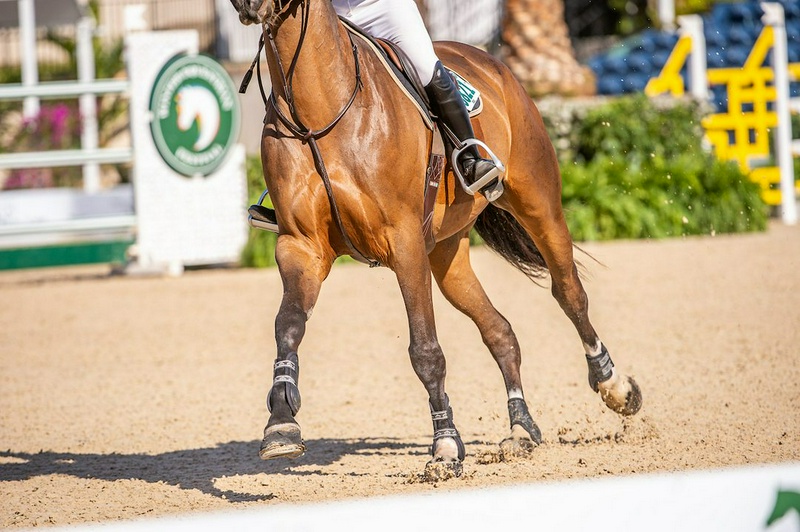
The phrase "heels down" is one of the frequently repeated recommendations by coaches in horseback riding training sessions, especially for beginner and semi-professional riders.
Keeping the rider's heels down helps stabilize the position of the feet, particularly when jumping over obstacles.
However, if the rider presses their heels down excessively, it causes stiffness in the ankle joint and reduces the shock-absorbing capability of the legs.
Here, Stephany Fish Crossman, a level 3 "Ride With Your Mind" accredited coach, biomechanics expert, and dressage trainer, explains what happens to a hunter/jumper rider's leg when they keep their heel excessively down.
Q&A Question: I am a hunter/jumper rider and I am constantly told to press my heels firmly down.
What effect does this have on the angle of my hip joint when jumping over obstacles?
Sarah M.
, Texas Answer: The impact is significant and not in a good way.
This relates to the principles of rider biomechanics.
Think about your car's suspension system.
If the car's shock absorbers lock at any point, the entire ride becomes stiff and uncomfortable.
So if your ankle is locked under pressure, it can be relatively confidently said that the joint no longer has mobility.
When the ankle locks, the hip joint will have much less ability to bend and extend.
The knee still bends and extends, but the two joints above and below the knee, namely the hip and ankle, work together much more than the knee itself; and ultimately this situation causes you to cling to the horse with your knee, resembling those bird toys that dip their beaks into water.
Regarding pressing the heels down, I ask: "Why are you being asked to press the heel down?
What is the problem with your heel in the first place?
" Ultimately, what coaches are looking for is for the heel, or more precisely, your ankle, to have the ability to bend and extend and not get stuck in the up position; just as getting stuck in the down position is not better; meaning you can create this flexibility in your ankle joint.
Perhaps by saying this, they might metaphorically take away my dressage card, but I have often told people: "I allow you to bring your heel up," because they are so locked that they no longer know how to move it, and when they bring the heel up, practically their foot in the stirrup becomes almost parallel; which is an acceptable position for a dressage rider.
Of course, this position is not as good for hunter and jumper riders, because we know when jumping over an obstacle, we don't want the stirrup to slide back on your feet.
But a joint is a joint because it needs to move.
By freeing the ankle joint, you create more mobility in the hip joint, allowing you to better gather with the horse when it rises over an obstacle.
I see this very often and it's really unfortunate because I see many people trying with all their might, but this situation has become more of a superficial form and mold rather than an effective position; the same position that great coaches of the past have talked about for decades.
Practical Horseman Plus members can watch the full recording of this webinar here.
To read more articles by Fish Crossman, click here.
About our expert: Stephany Fish Crossman Stephany Fish Crossman.
Stephanie Fish-Crossman, who co-hosts the Dressage Today podcast, began riding horses as a child in Maine and has not been out of the saddle since.
Fish-Crossman, except for a short stint in the hospitality industry, has worked alongside and for trainers at all levels; from grassroots pony clubs to several Olympians.
She studied at the International Academy of Equestrian Studies in Warendorf, Germany, which is now defunct, and graduated with a national coaching certificate.
She also holds bronze and silver medals from the United States Dressage Federation and is one of only two Level 3 coaches worldwide for Mary Wanless's "Ride With Your Mind" biomechanics system.
She conducts educational clinics across the country and runs her small training business, Serendipity Dressage, in Okeechobee, Florida.
Source: Practical Horseman – Training