USEF warning about screw-worm threat in a webinar
The United States Department of Agriculture confirmed on June 3 that the New World Screwworm parasite had been detected in a calf in Texas.
This is the first time in about a decade that the parasite has returned to U.S. soil, and soon after, additional cases were reported in that state and in New Mexico.
USDA maintains a dashboard of the locations and dates of reported cases.
The United States Equestrian Federation was monitoring the situation before the threat crossed the border, and since then it has provided updated guidance for horse owners and show managers.
On the afternoon of June 18, USEF held a webinar led by Katie Flynn, USEF’s senior veterinarian for equine health and biosecurity, and Neil Gray, a veterinarian specializing in screwworm treatment, to provide more information and answer questions.
Before the webinar, the organization released a guidance document addressing common concerns about this outbreak.
In both the webinar and the document, the same message was delivered: this is something that deserves your attention.
Flynn said: “Controlling and eradicating this parasite is challenging and has a significant economic impact.
” The USEF guidance document said: “screwworm infestations can be invasive and, if left untreated, can kill the animal.
Screwworm flies do not discriminate by species when choosing a host.
This outbreak is especially concerning because it can affect any animal or human.
” However, do not panic.
What matters during this outbreak is staying informed, being prepared, and responding quickly if you notice any signs.
Some facts about Screwworm Despite their name, screwworms are not worms at all.
They are parasitic flies capable of infecting any warm-blooded mammal.
Female flies lay their eggs on wounds or superficial body openings, such as the sheath, eyes, lips, or nose of a horse (though Gray noted that flies are less likely to lay their eggs in areas where there is no blood).
These eggs hatch within 24 hours.
The larvae then feed on the host’s tissue for five to seven days before dropping off as pupae and eventually becoming flies and starting the cycle again.
Despite their name, screwworms are not worms at all.
They are parasitic flies capable of infecting any warm-blooded mammal.
©Adobe Stock Flynn said: “The larvae actually become the parasitic part and eat living tissue.
They burrow into living tissue.
This twisting movement is why they are called screwworms.
” Early detection of screwworm is critical; untreated wounds can quickly turn into multiple infestations, complicating a horse’s recovery and increasing the risk of further spread.
See images of screwworms here.
The USEF guidance document said: “The larvae of screwworm flies are visible to the naked eye, although the eggs are hard to see.
You may see small, white worms in an open wound.
” Check your horses and pets for any wounds or abrasions, and even if a wound is small, make sure it is cleaned and protected quickly.
Gray said: “It is important to remember, these wounds may not be clearly visible.
Even as Katie said, a wound as small as a fly bite can attract flies, so if you are in an infested area, it is important that you inspect your horses carefully, including under the tail and in the sheaths of your stallions.
She added: “What you are looking for is a horse with a wound that is more irritated than usual, possibly a wound with a bad smell, and even if this slide says large wound, it still does not have to be a large wound from the start.
Take action If you see larvae or are concerned about any wound on a horse or another animal, contact your veterinarian immediately.
Your veterinarian will help you develop the best treatment plan, which will likely include first thoroughly cleaning the wound, removing and destroying all flies and larvae — which may be done surgically if the wound has progressed — using a larvicidal wound spray, and then, if the wound is infected, starting systemic antibiotic treatment for the horse.
Screw worms can kill horses, but if they are detected early, treatment is successful.
Gary said: “Depending on the location of the wound, because larvae are not discriminatory in what they eat, the walls of arteries may be torn and cause severe bleeding, which can be fatal.
In the case of [a mare with a large wound in the hock joint discussed in the webinar], if that wound had reached the joint, it was an infection that would have been very difficult, if not impossible, to eliminate.
He added: “Then I had cases where animals had become severely anemic due to the large loss of tissue and blood that screw worm larvae caused, and that was also something the horse might have died from.
They are not discriminatory enough to prevent killing the animal if things get that far.
” Early diagnosis and treatment are crucial to completely prevent screw worm infestation or to end it before it harms the horse or spreads.
Flynn said: “Keep your eyes on your animals.
Check your animals every day.
Inspect them for wounds.
As Neil noted, any bad smell or the start of seeing those larvae should be reported immediately to your veterinarian so it can be determined what is going on.
” Thanks to the USEF webinar If screw worm infestation is confirmed, your veterinarian will report the case to the necessary authorities.
Flynn said: “Remember that this is a foreign animal disease and a foreign pest, and it is under the control of state and federal authorities.
Treatment must be carried out according to the recommendations of your private veterinarian and the state and federal animal health authorities.
” Cases At present, six counties in Texas and one county in New Mexico are infested with screw worm.
Flynn said: “This is an evolving situation.
It may change [Friday], or it may change at 6 p.m. [Thursday], when the web page and [USDA] dashboard are updated.
” As soon as a case of screw worm is identified, the area where that animal lives is designated as a quarantine site and a 20-kilometer (or approximately 12.4-mile) zone around it is established.
Flynn said: “That area is called the infested area or the infested zone around that site, and from there movement restrictions are imposed.
All animals in that zone are under restriction.
They can still move, but under restriction.
» After identifying infected areas, sterile male flies that mate with female flies and produce infertile eggs, disrupting the life cycle, are released in those areas as part of the USDA response.
This strategy has been effective in ending past screwworm outbreaks.
The USEF guide states: «Sterile flies have been released in large numbers in Mexico and near the border.
Reporting a case of screwworm infestation helps officials know where to plan new releases and helps protect horses in that area.
» According to Flynn, in Mexico, between September 2025 and June 15 of this year, 4,016 cases (269 of them in horses) were reported within 400 miles of the U.S. border.
Flynn said: «When you look at the total number of cases, horses make up a small percentage of those cases.
Most cases will be in cattle and then dogs [the next highest number of cases].
» Due to this screwworm outbreak, restrictions and travel guidance have blocked all animal exports from the United States to Mexico, except for dogs under special protocols.
Flynn said: «All other species cannot cross the border from Mexico into Mexico.
In addition, the United States has closed the border to animals coming from Mexico.
Horses can only fly from Mexico to the United States through the Miami, New York, or Los Angeles import centers.
» In addition, horses coming from Texas or New Mexico are currently not allowed to travel to Canada.
They must first spend 21 days in another state.
Some U.S. states are still developing their own protocols because the situation is changing.
But as soon as a case of screwworm is confirmed on site, quarantine and movement control are implemented, and additional surveillance is also carried out on the property and in the area.
Flynn said: «We’re not saying animals cannot move; there simply needs to be control over their movement.
» What does this mean for horse shows?
Flynn noted that if new cases are identified, the situation will change quickly, and veterinarians and experts expect to see more cases.
Flynn said: «It’s important to keep your event and travel plans flexible, because they may be disrupted.
There may be rules and regulations from states that do not allow events or sales or shows to be held in high-infection areas.
It is important to be familiar with the state of origin, the destination state, and the status of that area.
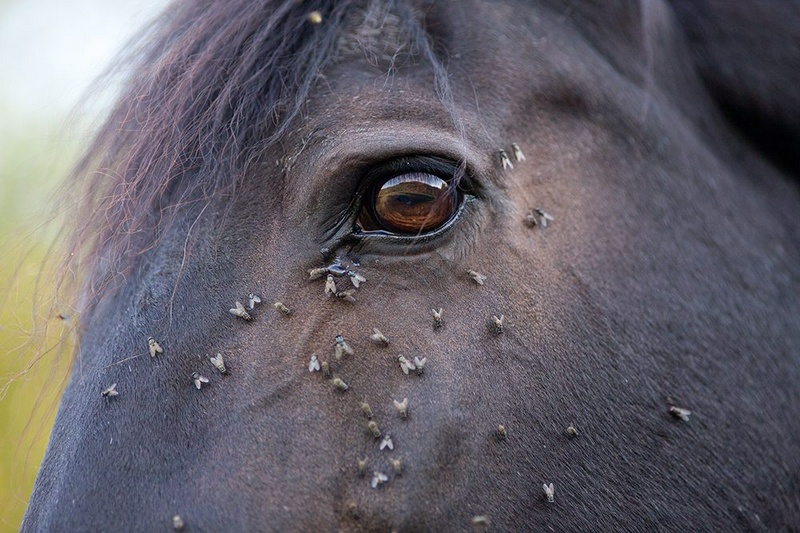
» Prevention facilities: the best way to prevent the parasite entirely is fly control; sprays, fly sheets, and other physical barriers can help, as can manure management and standing water management.
Keeping flies away from horses is one way to prevent screwworm.
©Amy K.
Dragoo If you are in or near an infected area, postpone any unnecessary procedures and inspect stalls and fences for potential hazards to prevent further wounds from forming.
Flynn said: «Careful attention to what is happening is very important.
It’s here, but don’t panic.
However, you must act.
The faster you act, the faster it will be controlled, and the sooner we can stop New World screwworm.
» For more updates, visit usef.
org/screwworm.
Source: Practical Horseman – Health