Tips for increasing horses' confidence when facing ditches
Among all the obstacles found on cross-country courses, ditches – in all their various forms – often cause the most concern.
Some horses tackle these obstacles with skill from the very beginning, but most need calm, repeated practice to develop their confidence.
In this article, prepared exclusively for H&H subscribers, Olympians and top coaches Nicola Wilson, Chris Bartle and Andrew Heffernan share their tips.
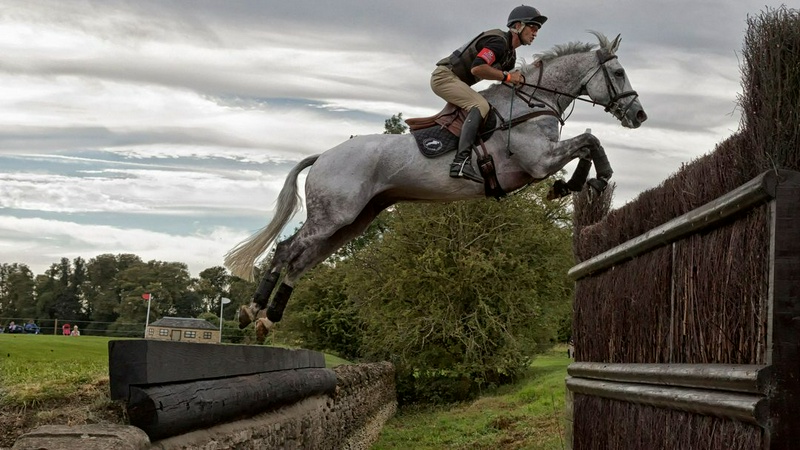
CX437X Andrew Nicholson on Avebury jumping the cottesmore leap - first place and winner of the Land Rover Burghley Horse Trials 2012 Slow, steady repetition is the key to solving a horse’s fear of ditches.
To build or rebuild confidence in jumping ditches, it is very important to start this part of horse training from the beginning.
Chris Bartle, coach of the British national team, says: “It is wrong to ask a horse to jump a ditch without giving it the chance to look at it.
” He said: “With a young horse or a horse that is nervous, I always take them to the ditch without intending to jump.
I let them stand by the ditch and walk around it so they become comfortable with the environment.
Only when I am sure they are happy to be there – lowering their heads and sniffing – do I ask them to go over the ditch.
” He added: “The important thing is that the horse must not be put under pressure from behind, either by the rider or by someone on the ground, because that only makes the horse think backward instead of moving forward.
” At first, the ditches should be small enough that a person can easily step over them.
Chris said: “I measure the ditch by whether I need to be pulled over it or not.
It does not matter whether the horse is four, seven or fourteen years old, my approach will be the same.
If a horse is hesitant, I spend all my cross-country training time calmly walking over small ditches.
” Chris believes there is no need to train over large ditches.
He said: “If you have built solid foundations, these can be saved for competition, when your adrenaline is high.
” How to solve your horse’s fear of ditches: “Trust is everything” {"content":" When working on how to solve your horse’s fear of ditches, Nicola Wilson says: “Trust and confidence are everything.
” It starts with building the right foundations and revisiting the basics.
She said: “When you first introduce a ditch, make sure your horse has the confidence to accept your leadership and start by inviting it into the ditch.
” Nicola also emphasizes the importance of the rider’s position.
She said: “It is important to be in the right place — up, not down in the ditch — she said: “Young or inexperienced horses often look at the ditch and stop at its edge.
That is fine as long as you stay in your position and have strong supporting legs and long reins so they can come down, lower their heads and safely go over the ditch.
” She said: “It is really a good idea to use a neck strap so you can hold the reins with one hand.
» He said: “If your horse jumps higher than you expect, you won’t lose your balance and you can avoid catching him in the mouth, which can create a negative experience.
» Nicola believes that repetition is key.
He said: “If your horse lacks the confidence to jump ditches, it is important to revisit them regularly so they become accustomed to them and overcome their fear.
» He said: “There are many five-star horses that do this in big training sessions, so you shouldn’t worry.
The key is to be as prepared as possible.
» Nicola also points to the value of praise and patience.
He said: “Tell your horse when he has done the work well, because this helps build confidence and a strong foundation.
» He said: “And always take the time to train ditches.
Never start something you cannot see through to the end.
» He said: “When your homework is done, testing your training in a competition environment is the next step.
» He said: “When you are on course, make sure you stay in a good rhythm and balance and act at the right time to defend the ditch.
» "}
html Icelandic ponies queuing up to jump a ditch in the wild — it comes quite naturally to most.Credit: Alamy When ditches are your friend Once you have ironed out how to solve your horse’s fear of ditches and they are confidently moving up the eventing levels, most ditches will become a help rather than a hindrance.
He said: “When a ditch is placed as or behind an obstacle, the ditch itself acts as a helpful guide and marks the takeoff point.
»
» He added: “Although this four-star fence looks intimidating, the ditch provides a helpful guide.
» Chris explained that when riding over these kinds of fences, you should resist the temptation to spend too much time adjusting.
He said: “When I was a jockey, before the race started, the trainer told me that I shouldn’t spend too much time adjusting.
» The provided text is not readable due to encoding and cannot be rewritten in Persian.
Please provide the text in a readable form so I can help you.
At lower levels, encountering problems in order to encourage the horse to progress is common.
Credit: Alamy This logical progression has clear associations for a horse that is a little “stubborn.”
He said: “Even if a horse faces any kind of international question, it must fully trust in the stubborn jumps at one level before moving on to the next stage.
» He added: “Questions were asked of him and therefore his trust in his rider will be tested, growing each time he steps.
» He said: “We had a stubborn one at home and that was a turning point.
» Event rider Ivy Fisher, who trained the famous three-star Balief De Reve (Bali), has only one flaw on her record.
She explained: “When I bought him as a young horse, he had never jumped the jumps and although he quickly got used to difficult jumps, he was always suspicious of holes in the ground.
» Ivy, who grew up in Norfolk but worked with the Dasset event in Warwickshire, said: «A few years ago, when I was about to work with him, my father got me stuck at home with a stubborn horse and that was the turning point.
It was a case of repetition, repetition, repetition.
Penny fell in the middle of the 2024 season and he started taking them on his way.
» The pair won the under-21 competition at Kelsall Hill in September that same year.
At present, Ivy has access to three different stubborn horses and involves them in almost every training session.
He said: «Last season, I even included them in my fitness work, we jumped a middle-country stubborn horse.
» He added: «We still have the odd stubborn horse,» Austin O’Connor with his five-star horse, Colorado Blue, who is one of the fastest horses in competition, has managed to learn running skills very well.
Credit: Nico Morgan Harry Meade creates a strong core strength in his horses through his regular training system from a young age without putting too much strain on them.
Credit: William Carey Rose Canter has an unparalleled riding position in cross-country competitions.
Credit: Alamy Stock Photo Source: Horse & Hound